Support

Qavam House

About

Immerse yourself in the atmosphere of 19th-century aristocratic luxury by visiting Qavam House — a magnificent palace complex located in the city of Shiraz. This historic mansion, also widely known as Narenjestan Qavam, is one of the most sophisticated examples of Persian architecture from the Qajar era. Iran is rightly proud of this place, where the harmony of a traditional garden meets the incredible skill of decorative finishes.
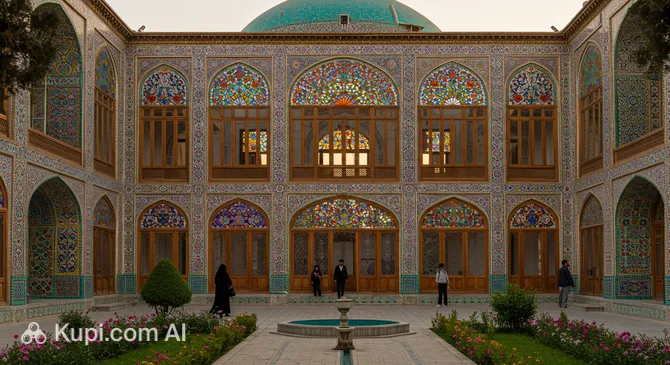
Qavam House
Qavam House. Иллюстрация. Источник: Kupi.com AI

The main feature of the complex is its stunning interiors. The mansion's halls are decorated with exquisite mirror mosaics, hand-painted ceilings, and carved panels. The building's facade draws attention with bas-reliefs inspired by ancient Persepolis, emphasizing the continuity of the country's cultural traditions. The entire ensemble is surrounded by the fragrant Narenjestan garden ("Orange Garden"), where among citrus trees and fountains, you can feel the true spirit of Eastern hospitality.

Today, it houses a museum containing valuable artifacts, including the famous Abnun Bowl — a unique item associated with ancient rituals. Visitors can see rare ceramics, vintage photographs, and everyday objects that provide a glimpse behind the scenes of the life of Iran's upper class from the century before last.

Contacts

For more information about visiting or organizing group tours, you can use the official contact details.

How to contactContact
AddressFars Province, Shiraz, Lotf Ali Khan Zand St, JH53+63Q, Iran
Phone+98 71 3222 4381

What to Do

Begin your exploration of the complex with a stroll along the symmetrical paths of the Narenjestan Garden. The scent of orange trees and the gentle whisper of water in the canals create the perfect mood for contemplating the architecture. This place is a true paradise for photographers: the play of light on mirrored surfaces and bright stained-glass windows allow you to capture stunning shots that will become the crown jewel of your collection.

Inside the mansion itself, be sure to linger in the central hall to examine the intricate mirror mosaics and painted ceilings. Every inch of the walls here is a work of art. In the museum rooms, pay attention to the Qajar-era collection: here you can see antique furniture, documents, and personal belongings of the owners, as well as archaeological finds, among which the Abnun Bowl stands out.

For a deeper immersion into the context, it is recommended to study the bas-reliefs on the facade, depicting scenes from Persian mythology and history. If you appreciate quiet time, spend some time in the shaded galleries, watching the sunlight filter through the colored glass, creating a kaleidoscope of patterns on the floor — one of the most meditative experiences in Shiraz.

Getting There

Finding Qavam House is easy, as it is located in the heart of the city's historic district on Lotf Ali Khan Zand St. Most tourists prefer to get here on foot, combining the walk with a visit to nearby landmarks like the famous "Pink Mosque" (Nasir al-Mulk).

If you are in a more distant part of the city, it is most convenient to take a taxi — a fast and inexpensive way to get around. You can also take public transport to the Lotf Ali Khan Zand area, from where the gates of the complex are just a few minutes' walk away.

For those who prefer the metro, the nearest stations are within walking distance, although the walk may take about 15–20 minutes. Look for the Vakil Bazaar, which is located about a 15-minute walk from the mansion, allowing you to create a perfect day-long walking route.

Ближайший город: Shiraz

History & Facts

The history of this magnificent ensemble is inextricably linked with the influential Qavam ol-Molk family, who held high government positions. Construction of the complex took place during the Qajar dynasty between 1879 and 1889. The residence was founded by the Chief Justice Ali Mohammad Khan, and its exquisite decoration was completed by his successor, Ebrahim Qavam.

In the early 20th century, specifically in 1922, the complex was expanded by the founder's grandson. The Qavam family, whose roots trace back to merchants from Qazvin, reached the peak of their power during the Zand dynasty, and this house became a symbol of their high social status and wealth. The architecture of the building reflects 19th-century aesthetics, skillfully combining residential functions with grand reception halls.

In later years, from 1969 to 1979, the mansion housed the Asia Institute Museum under the direction of renowned scholars Arthur Upham Pope and Richard Nelson Frye. Since 1998, part of the complex has been under the management of Shiraz University, serving as a base for the Faculty of Art and Architecture. Today, Narenjestan Qavam carefully preserves the heritage of Persian architecture for future generations.

Time Needed

Typically, visitors need 1 to 2 hours to leisurely explore all the mansion's rooms and enjoy the tranquility of the garden. This time is sufficient to carefully examine the finest details of the mirror mosaics and study the exhibits in the museum section.

If you are planning an artistic photoshoot, it's worth setting aside a bit more time, as the play of light in the stained-glass windows and the symmetry of the garden provide an endless number of great angles. The morning hours are usually quieter here, which helps for a deeper immersion into the atmosphere of the Qajar era.

Working Hours

The complex is open to guests daily, making it a convenient stop on any travel itinerary. The opening hours remain the same throughout the week:

Monday — Sunday: 08:00 to 20:00.

This schedule allows you to visit Qavam House either early in the morning to avoid the crowds or in the evening, when the soft light of the setting sun beautifully highlights the details of the facade.

8:00 – 20:00

Nearby

Exploring the surroundings of the mansion will allow you to dive deeper into the atmosphere of the old city and find entertainment for every taste. The historic center of the city is literally packed with interesting locations, from ancient houses to modern recreation parks.

If you would like a change of scenery after your cultural program, consider the following sites located nearby:

NameDistance
Zinat ol-Molk House0.1 km
Nasir al-Mulk Mosque0.4 km
Shah Cheragh Shrine0.9 km
Vakil Bazaar0.9 km
Vakil Bathhouse1 km
Vakil Mosque1 km
Karim Khan Citadel1.3 km

What to see in nearby cities

Reached the end of the page?

That means the route is fully explored