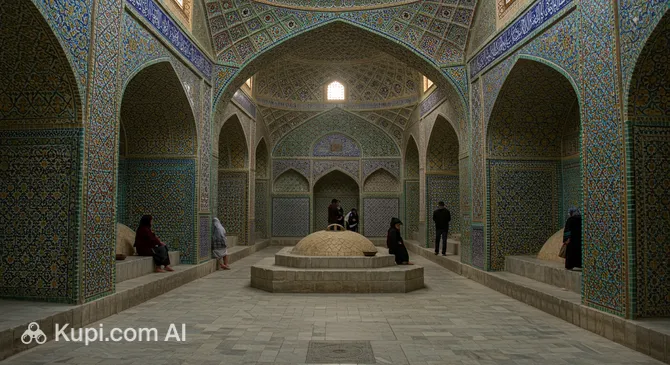
Imagine a place where time seems to have stood still, preserving the grandeur of the Persian era. The Vakil Bath is an outstanding historical monument located in the colorful city of Shiraz. Built in the mid-18th century, it is one of the most impressive examples of traditional architecture in Iran.
Vakil Bathhouse. Illustration.
Source: Kupi.com AI
Traveler photos:
This ancient structure was part of the ambitious project of Karim Khan Zand, who sought to make his capital a symbol of prosperity. The bath is part of the famous Zandieh complex and demonstrates the incredible craftsmanship of the builders of that time. Today, the site functions as an ethnographic museum, offering visitors a unique opportunity to peek into the past and get acquainted with the lifestyle of ancient Persia.
The building is striking with its vaulted ceilings, skillfully decorated halls, and well-thought-out communication systems. Vakil Bath is rightfully considered a cultural treasure, reflecting not only architectural preferences but also the social traditions of the Iranian people, for whom visiting public baths was an important social ritual.
Contacts
To clarify details before your visit to this unique location, you can use the official contact details. Remember that up-to-date information about opening hours during holidays can also be obtained from local tour guides in Shiraz.
During your visit to the Vakil Bath, you can immerse yourself in the study of Persian architecture. The main highlights are the spacious halls with majestic domes, whose walls are decorated with intricate paintings and traditional tiles. Be sure to pay attention to the engineering solutions: ancient systems for heating water and distributing steam that worked here centuries ago.
Since it is now a museum, you will see realistic wax figures depicting townspeople of different social classes during bath procedures. This allows you to vividly imagine the important role the bath played in Iran's social life. You can examine traditional accessories: copper bowls, oil vessels, and ancient towels carefully preserved in the exhibition.
For aesthetics lovers, this is the perfect place for a photoshoot. The play of light penetrating through the skylights in the ceiling creates a mystical and inspiring atmosphere. Interior details, massive columns, and ornaments on the vaults will provide a beautiful backdrop for photographs capturing the authentic spirit of the East.
Getting There
Reaching this architectural masterpiece is easy, as the Vakil Bath is located in the historical heart of Shiraz on Lotf Ali Khan Zand Street. If your hotel is in the central part of the city, a walk to the Zandieh complex will be a pleasant addition to your tour.
For trips from more distant areas, it is most convenient to use a taxi — a fast and affordable way to get around in Iran. Also, metro stations and city bus stops are within walking distance, making logistics as simple as possible for independent travelers.
If you are planning a trip from the airport, the drive to the city center will take about 20–30 minutes. Most tourists prefer to visit the bath as part of a walking route, combining it with a visit to the neighboring Vakil Bazaar and the Karim Khan Arg (Fortress).
Nearest city: Shiraz
History & Facts
The history of this magnificent structure dates back to the 18th century, during the reign of Karim Khan Zand. It was he who, having chosen Shiraz as the capital of Persia, ordered the construction of a large-scale complex, of which the bath was a part. The main work was carried out between 1766 and 1767, when the ruler sought to turn the city into a cultural and architectural center of the region.
The best craftsmen and architects of the time were invited to create the bath. Notably, the building materials were chosen with great care: some were brought from other provinces of Iran to ensure the durability and aesthetic perfection of the building. The Vakil Bath became the embodiment of engineering thought of the Zand period, demonstrating a high level of development in water supply and thermal insulation systems.
After the change of dynasties, the building continued to serve the city's residents for its intended purpose for many years. Over time, it was recognized as a cultural heritage site and converted into a museum. Today, this place is carefully protected by the state, allowing guests from all over the world to touch the authentic history of old Persia.
Time Needed
Usually, travelers need about 1–1.5 hours for a detailed inspection of all the halls and exhibitions of the Vakil Bath. This time is quite sufficient to slowly study the architectural details, examine the wax figures, and take atmospheric photos in the 18th-century interiors.
If you are planning a comprehensive tour of the entire Zandieh ensemble, including the mosque, the fortress, and the oriental bazaar, we recommend setting aside a whole day for this area. The density of attractions here is very high, and each of them deserves thoughtful study without any unnecessary rush.
Working Hours
To ensure your visit is as comfortable as possible, we recommend taking the museum's schedule into account. The Vakil Bath is open to visitors daily during the following hours:
Please note that the site is closed on Fridays, as it is the official day off in Iran. You should also consider possible changes in the schedule during national holidays or religious dates, so it's best to plan your visit for the morning.
Day
Working hours
Monday
9:00 – 19:00
Tuesday
9:00 – 19:00
Wednesday
9:00 – 19:00
Thursday
9:00 – 19:00
Friday
Closed
Saturday
9:00 – 19:00
Sunday
9:00 – 19:00
Nearby
Exploring the surroundings of this historical monument will allow you to feel the atmosphere of Shiraz much more deeply. Since the bath is located in the heart of the ancient quarter, you can easily combine your tour with a visit to parks and entertainment venues that will add bright emotions to your trip.
Below are interesting locations and recreation areas nearby that may be of interest to both adults and children.