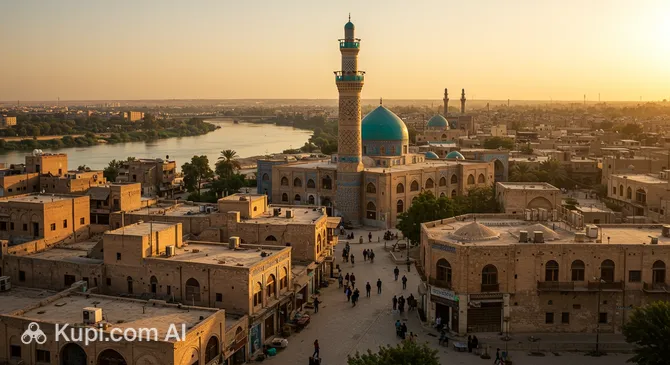
Mosul is one of the oldest and most significant cities in Iraq, stretching along the picturesque banks of the Tigris River. Its name, translated from Arabic as "the junction," perfectly highlights the city's role as a historical crossroads of trade routes and cultures. Here, among the ancient quarters, various traditions have coexisted for centuries, creating a unique atmosphere where Assyrian heritage meets the Islamic Golden Age.
Mosul. Illustration.
Source: Kupi.com AI
The city's geographic location in the northern part of the country makes it a gateway to the world of ancient civilizations. As the second-largest city in the state, with a population of over 1.6 million, it impresses with its scale and grandeur. Guests can explore the region's rich historical heritage, which is reflected in the production of famous fine muslin and unique Mosul marble.
The main magnets for travelers here are the majestic ruins of ancient Nineveh and historic mosques, whose minarets have shaped the city's skyline for decades. Mosul invites those who appreciate authenticity, the depth of history, and want to see with their own eyes how the legendary monuments of the past are being revived in the very heart of Mesopotamia.
Weather Overview
The climate of Mosul is characterized as a hot desert climate, which dictates the city's rhythm of life. Summer here is long and sweltering, lasting from May to October. During this period, daytime temperatures often exceed +40°C, especially in July and August, when the air becomes dry and the sky cloudless. Nights bring only relative coolness.
Winter months, by contrast, are quite mild and pleasant. The average temperature in January is about +9°C, while during the day the thermometer can rise to +13°C. Most of the precipitation falls during the winter-spring period. To plan your wardrobe in more detail, check the weather in Mosul by month.
The most comfortable time to visit the city is considered to be spring (March-April) and autumn (October-November). During these periods, moderately warm weather sets in with temperatures ranging from +19°C to +25°C, which is ideal for long walks among the ruins of Nineveh and through the narrow streets of the Old City.
Average monthly temperature
Average monthly precipitation
Interesting Facts
Mosul is a city that knows how to surprise with its secrets and records. Here are a few facts that reveal it from an unexpected side:
A world-renowned fabric: The famous muslin — an incredibly fine cotton fabric — got its name specifically in honor of Mosul, where it began to be produced and exported to Europe as far back as the Middle Ages.
City of Five Bridges: Mosul is historically known for its crossings over the Tigris, which connect the ancient eastern part with the more modern western bank.
Its own marble: A unique type of limestone quarried in the surrounding areas, known as "Mosul marble," was widely used in the decoration of local mosques and palaces, giving them a characteristic blue-grey tint.
A record number of shrines: In the 12th century, during the peak of the Zangid dynasty, the city had nearly 500 mosques and religious centers, making it one of the main spiritual strongholds of the region.
Ancient neighbors: Just a few kilometers from the city center are the ruins of Nineveh, which was once the largest city in the world and the capital of the Assyrian Empire.
How to Get There
There are several ways to reach this historical center in the north of the country, given its strategic position. The main hub for air travelers is Mosul Airport (IATA: OSM), which accepts flights from the region's largest cities. When planning a flight, it is worth checking the current schedule, as the city is actively developing its transport links.
For those who prefer land routes, transport connections to Mosul are provided through a developed network of highways. A popular option is a bus or taxi ride from nearby Erbil or Kirkuk. The journey follows the scenic Tigris River, allowing you to see the diversity of Iraqi landscapes.
The city also has a railway station, which historically linked the northern regions with Baghdad. Traveling by train can be a great way to see the country through the eyes of the locals, although this mode of transport is more commonly chosen for longer journeys.
Station
Passenger traffic
Distance
Nusaybin railway station
3
190 km
Urmia Railway Station
2
218 km
Gökçe Train Station
1
240 km
Van railway station
6
242 km
Batman railway station
1
248 km
Main Attractions
Mosul is a true treasure trove for lovers of archaeology and Eastern architecture. One of the most recognizable landmarks in the city is the Al-Nouri Mosque, built in the 12th century, which was famous for its 52-meter "hunchback" minaret, Al-Hadba. Despite the trials of time, this site remains a symbol of the region's resilience and cultural identity.
For those who want to touch the era of great empires, the ruins of ancient Nineveh are a must-see. Here, you can see the remains of the majestic Palace of Ashurbanipal, massive fortress walls, and the famous sculptures of winged bulls that guarded the city gates thousands of years ago. The scale of these structures allows one to fully sense the power of the Assyrian civilization.
The city's religious diversity is highlighted by Christian shrines, such as the Al-Tahera Church, founded in the 7th century, and the Church of the Miraculous Virgin with its elegant clock tower. It is also worth paying attention to the defensive architecture — the 12th-century Bash Tapia Castle and the ruins of the "Black Palace" (Qara Saray), which rise majestically over the banks of the Tigris.
Local Cuisine
The gastronomy of Mosul is a true feast for foodies, combining the best traditions of Mesopotamia. The star of the local table is lamb, which is prepared masterfully here. Be sure to try the Mosul-style kebabs and the famous dolma — vegetables stuffed with tender meat, rice, and aromatic spices that give the dish a unique flavor.
Dough-based products hold a special place in the diet. Local samsa and traditional flatbreads are always served fresh from the oven. Mosul is also famous for its appetizers, among which bulgur and fresh vegetable dishes stand out. A characteristic feature of the local cuisine is the moderate use of hot spices, making the dishes accessible to most travelers.
The food culture here is inextricably linked to the markets, where you can try street food or buy the freshest ingredients. It is customary to end a meal with a cup of strong Arabic coffee or fragrant mint tea. Traditional restaurants in the Old City area offer an authentic atmosphere, where eating turns into a leisurely ritual of socializing.
Travel Tips
A trip to Mosul requires some preparation to ensure your journey is as comfortable as possible and brings only positive emotions. Here are some tips from experienced travelers:
Seasonality and Clothing: The optimal time for a visit is spring (March-April) or autumn (October-November), when there is no exhausting heat. Choose modest clothing that covers shoulders and knees, especially when visiting religious sites.
Transport: Taxis are the most convenient way to move within the city. You should agree on the price before you get into the car.
Finance: The main currency is the Iraqi dinar. Cards are rarely accepted, so always carry a sufficient supply of cash. It is best to change money at official exchange offices or banks.
Safety: Always carry your passport or a copy of it. It is recommended to use the services of official guides when visiting the archaeological zones of Nineveh.
Communication: The main language is Arabic. English is understood in hotels and major tourist spots. Knowing a couple of phrases in Arabic ("Shukran" — thank you, "Salam Alaikum" — hello) will help win over the locals.
Etiquette: Always remove your shoes when entering a mosque or a private home. Show respect for local traditions and do not take photos of people without their permission.
What to Avoid: You should not engage in discussions on political or religious topics. Also, refrain from smoking in public places during Ramadan.
Water and Sun: Always carry bottled water and use sunscreen, even if it is cloudy outside.
Following these simple rules will help you fully immerse yourself in the atmosphere of ancient Mosul and enjoy its hospitality!
Entertainment & Nightlife
Leisure in Mosul is closely intertwined with its rich past and traditional way of life. Local residents and guests spend most of their evenings in the atmospheric tea houses of the Old City. Here, you can not only taste strong, authentic tea but also observe the slow pace of life, listen to stories from the elders, or play a game of backgammon.
Strolling along the Tigris River embankment is one of the most popular activities during the day and at sunset. Wide views of the river and passing boats create a calm, peaceful atmosphere. On holidays, folk celebrations are often held on the banks of the Tigris, highlighting the hospitality and vitality of the people of Mosul.
For those seeking cultural enrichment, the city offers visits to local craft workshops. Traditional open-air markets become a center of attraction in the evenings, where you can see performances by folklore groups or purchase unique handmade products. Nightlife in the classic Western sense is practically non-existent in the city, giving way to heartfelt gatherings and cultural festivals.
Parks & Museums
A cultural immersion into the region's history is unthinkable without a visit to the Mosul Museum. Founded in the mid-20th century, it is the second most important museum in the country. Its halls house priceless artifacts from the Assyrian period, including elements of the famous Nergal Gate and unique cuneiform tablets found during excavations in Nineveh.
Lovers of spiritual heritage and breathtaking views should head to the ancient monasteries. Dair Mar Elia and the Rabban Hormizd Monastery, built directly into the cliffs, are unique architectural complexes dating back to the 6th century. These places not only tell the long history of Christianity in the region but also serve as wonderful viewpoints offering panoramas of valleys and hills.
While there are few classic urban parks in Mosul, their role is successfully filled by extensive archaeological zones, such as the ruins of Nineveh. These open spaces, with their historical landscape and green slopes in the spring, become a great place for outdoor walks. It is also worth visiting the area around the Mar Mattai Monastery, where natural beauty harmoniously complements the grandeur of the ancient walls.
Getting Around
Getting around Mosul is organized quite simply and clearly for a tourist. The basis of city transport consists of buses and numerous microbuses (marshrutkas). Main routes run through key transport arteries along the Tigris River, connecting residential neighborhoods with central markets and historical zones.
The most convenient and fastest way for travelers to move around remains the taxi. It is easy to catch a car on the street or call one through local services. The cost of the trip is usually negotiated in advance, as meters are rarely used. The city's wide avenues contribute to relatively free movement, although congestion can occur in the center during peak hours.
For trips out of town to monasteries or the ruins of Nineveh, it is best to arrange a full-day trip with a taxi driver or use the services of private carriers. Car rental is also available, but requires confidence in driving in busy Eastern traffic conditions. The railway service is mainly oriented toward intercity travel, connecting Mosul with other regions of the country.
Accommodation
Various accommodation options are available for tourists in Mosul, most of which are concentrated in the central part of the city. Hotels located on the Tigris embankment are the most popular, offering beautiful views of the river and the historic quarters of the left bank. Here, you can find both modern mid-range hotels and simpler options.
In the Old City district and near the ruins of Nineveh, small budget guesthouses are frequently found. This is an excellent choice for those who want to be within walking distance of the main attractions. The service in such places is usually very warm, allowing you to better experience local hospitality.
It is recommended to book accommodation in advance through international services, especially if your trip coincides with religious holidays or festivals. Although the hotel infrastructure is undergoing active renovation, you can always find a comfortable room with basic amenities for a proper rest after your excursions.
Nearby Cities
Thanks to its location, Mosul serves as an ideal starting point for exploring the northern regions of the country. Very close to the city are unique settlements that preserve ancient traditions and a distinctive culture. Exploring the surroundings will allow you to see a completely different, multifaceted Iraq.
Just 20 kilometers away is the town of Bartella, known for its Christian traditions, and a bit further is Qaraqosh (Bakhdida), where you can see ancient churches and feel the atmosphere of quiet provincial life. For nature and thermal spring lovers, an interesting destination is Hammam al-Alil, famous for its healing waters on the banks of the Tigris.
A longer trip can be planned to Duhok, which is surrounded by mountains and famous for its picturesque views. These destinations are easily accessible by taxi or rental car, making them excellent options for day trips that expand your understanding of the richness of this ancient land.
Shopping & Souvenirs
Shopping in Mosul is, first and foremost, a journey through noisy and colorful Eastern markets (souks). The Old City is traditionally the main point of attraction, where rows of shops stretch for hundreds of meters. Here, the scent of spices lingers in the air, and the stalls overflow with a variety of goods that will make your eyes wander.
Look for products made from the famous Mosul marble and textiles reminiscent of the former glory of local muslin. As souvenirs, tourists often choose handmade carpets with traditional patterns, copperware, and jewelry. The markets near the ancient mosques offer the most authentic goods that are difficult to find in modern shopping centers.
Shops usually operate from early morning until late evening with a short break during the hottest time of the day. In most shops and markets, payments are made in cash in the local currency, and the ability to bargain politely is welcomed and helps significantly reduce the price. For more familiar European-style shopping, you should check out the modern districts on the west bank of the Tigris.