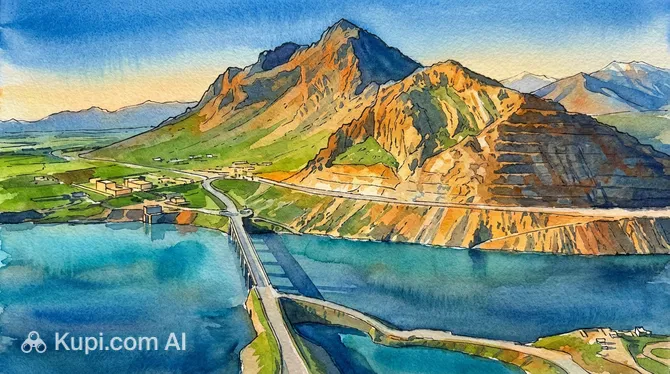
Located in the picturesque northeastern part of Iraq, Ranya is a distinctive center of the Sulaymaniyah Governorate. Nestled in the foothills of Kurdistan at an altitude of about 576 meters above sea level, this city charms visitors with its calm atmosphere and traditional way of life. As an important administrative hub, Ranya preserves the spirit of a provincial Kurdish settlement, where daily life is closely intertwined with the rugged beauty of the surrounding nature.
The city's geographical location deserves special attention: it lies north of the majestic Dukan Reservoir, which significantly influences the local landscape. Rania. Illustration.
Source: Kupi.com AI
The region's population reaches 257,577 people, making it a significant point on the map of Iraqi Kurdistan, even though the city itself maintains the scale of a cozy and compact settlement.
Tourists are primarily drawn here by authenticity. In Ranya, there are no noisy tourist attractions, but there is an opportunity to see the real Kurdistan—with its colorful markets, hospitable residents, and magnificent mountain scenery. The eventful history of Ranya and its role in regional processes make this place interesting for those who want to better understand the cultural code of the northern region.
A visit to Ranya is an invitation to contemplative relaxation. The city is ideal for travelers seeking to escape standard routes and who appreciate the sincerity of local traditions against the backdrop of majestic mountain ranges.
Weather Overview
The climate of Ranya is typical for the mountainous regions of Iraqi Kurdistan and is characterized by pronounced seasonality. Summers here are hot and dry: in July and August, daytime temperatures often rise to +38°C. However, thanks to the altitude, nights bring long-awaited coolness, and the air remains cleaner than in the lowland parts of the country.
The winter months, conversely, can be quite mild but wet. The coldest month is January, with an average temperature of about +3.2°C, and night frosts down to -2°C are possible. The bulk of precipitation falls between November and April, making spring an ideal time to visit when the region is in bloom. The current climate of the city involves moderate winds and a significant number of sunny days per year.
The proximity to the Dukan Reservoir can create a special microclimate, softening the summer heat. If you are planning a trip to Ranya, aim for the spring months (March–May) or mid-autumn, when the temperature is most comfortable for walking and exploring the surroundings.
Average monthly temperature
Average monthly precipitation
Interesting Facts
Ranya is located at strategically important coordinates in the mountain zone of northern Iraq, at an altitude of 576 meters above sea level.
The city is situated just 85 kilometers from Sulaymaniyah, making it an important link between the regional center and the mountainous areas.
The close proximity to the Dukan Dam and Reservoir creates a unique hydrographic environment in the city's vicinity.
Its status as the administrative center of the district highlights the city's significance, despite its compact residential quarters.
The population of the city itself is just over 52,000 people, while the entire Ranya District is home to more than a quarter of a million residents.
How to Get There
Transport accessibility to Ranya is shaped by its location in the mountainous terrain of northern Iraq. The city does not have its own airport, so the main way to get here is by land transport. Travelers should plan their route in advance to make the trip as comfortable as possible and learn more about how to get to this region.
The nearest air gateway is in Sulaymaniyah—an international airport that receives flights from various cities in the region. The distance from Sulaymaniyah to Ranya is about 85 km. The road passes through picturesque mountain passes, and a trip by taxi or rented car usually takes 1.5 to 2 hours, depending on road conditions and weather.
There is no direct rail connection to Ranya, which is typical for the mountainous relief of Kurdistan. The main flow of passengers and cargo is provided by road. From Baghdad, the journey to Ranya (about 315 km) will take at least 4–6 hours. Regional buses and shared taxis connect the city with other settlements in the province, though their schedules can be irregular.
Station
Passenger traffic
Distance
Urmia Railway Station
2
142 km
Azarshahr Railway Station
7
191 km
Salmas railway station
5
232 km
Tabriz Railway Station
12
236 km
Van railway station
6
286 km
Main Attractions
While Ranya does not boast world-scale monuments, the city attracts visitors with its authentic atmosphere and natural surroundings. The main points of interest for walks are the central squares and administrative quarters, where you can observe the leisurely rhythm of local life. The city's architecture is typical of modern Kurdistan—functional and concise, reflecting its status as a regional center.
Nature lovers should turn their attention to the city's surroundings. The Dukan Reservoir, located south of Ranya, is a popular spot for outdoor recreation. The mountain landscapes surrounding the city offer excellent opportunities for easy walks and contemplating scenery that is especially picturesque in the spring when the slopes are covered in greenery.
The local bazaars can also be considered a unique attraction. There are no specially equipped souvenir shops for foreigners here, but it is in these markets that the true life of the city pulses. A walk through the trading rows allows you to get acquainted with the lifestyle of Kurdish families, see traditional goods, and feel the true flavor of northern Iraq.
Local Cuisine
The gastronomic traditions of Ranya are inextricably linked to the culture of Iraqi Kurdistan, offering guests hearty and aromatic dishes. The basis of the local cuisine consists of lamb, rice, fresh vegetables, and an abundance of spices. While walking around the city, be sure to try traditional kebabs and dolma, which local establishments prepare according to old family recipes.
One of the most popular dishes in the region is kabsa—spiced rice with meat, often served on large trays for the whole group. Street food in Ranya is represented by various types of flatbreads and snacks available at markets. The culinary scene here is devoid of pretension: the best dishes are usually served in simple family restaurants or tea houses, where the main focus is on the freshness of ingredients and flavor.
Tea culture occupies a special place in the lives of the townspeople. Strong, very sweet tea is an essential attribute of any meeting or the end of a meal. For refreshing drinks, try ayran, which is perfectly cooling on a hot day. Alcoholic beverages are practically non-existent in the city, as traditions and the way of life are oriented toward Islamic norms of behavior.
Travel Tips
A trip to Ranya will be an interesting experience of immersion in Kurdish culture if you familiarize yourself with the practical features of life in this region in advance.
Clothing and Items: Choose modest clothing that covers shoulders and knees out of respect for local traditions. For mountain walks, comfortable shoes with good grip are essential, and for sun protection—a hat and sunscreen.
Transport: The best way to get around the city is by taxi. Agree on the cost of the trip in advance or ask to turn on the meter if there is one.
Finances: The primary currency is the Iraqi Dinar. Cards are rarely accepted, so always have a sufficient supply of cash. It is better to exchange currency in Sulaymaniyah or at official points in the center of Ranya.
Health and Safety: Drink only bottled water. The city has pharmacies with a basic set of medicines, but it is better to bring specific medications with you. After dark, stick to the well-lit central streets.
Communication: The main language is Kurdish (Sorani). English is not widely spoken, so learn a few basic phrases or use an offline translator.
Local Etiquette: Greet people politely, use your right hand for gestures and eating. Kurds are very hospitable; don't be surprised by an invitation to tea.
What to Avoid: Do not photograph military installations, government buildings, or people without their explicit consent. Avoid discussing political topics.
Additional Tip: Check the transport schedule to Sulaymaniyah in advance, as regular service may end quite early.
Following these simple rules will help you feel confident and enjoy the hospitality of this mountainous region.
Entertainment & Nightlife
Entertainment in Ranya is primarily quiet and family-oriented. You won't find noisy nightclubs, bars, or discos here—the cultural characteristics and traditions of the region dictate a more reserved format for leisure. Life in the city after sunset moves to local cafes and cozy tea houses, where men gather for conversation over a cup of strong tea, and families spend time together.
In the evening, walking along the central streets and visiting the markets, which remain lively until dusk, are popular activities. This is the best time to feel the friendly atmosphere of the city. If you are looking for a more modern entertainment industry, cinemas, or large shopping and entertainment complexes, residents usually head to Sulaymaniyah, located a couple of hours away.
For those who prefer daytime activities, Ranya offers natural beauty. Mountain hikes or picnics along the shores of the Dukan Reservoir are the primary ways to spend free time. Within the city itself, you can visit small public recreation areas that serve as meeting places for residents of all ages.
Parks & Museums
In Ranya itself, there are no large state museums or art galleries, which is typical for a small administrative town. The main cultural leisure of the residents is focused on learning about traditions through direct communication and visiting local community centers. The history of this region lives in the stories of the elders and in the very appearance of the old quarters, rather than in museum display cases.
Natural areas replace organized parks for the townspeople. The mountain slopes surrounding Ranya are natural recreational zones where many wildflowers bloom in the spring. Greenery within the city is scattered, and locals prefer to spend their free time outdoors outside the residential areas.
The Dukan Reservoir is of particular importance for recreation. Its shores near the city often become places for picnics and informal gatherings. The lack of formal park zones is compensated for by the freedom of access to majestic landscapes and clean mountain air, making Ranya attractive for fans of ecotourism and secluded relaxation.
Getting Around
The transport system of Ranya is adapted to the needs of a small city and the characteristics of the mountainous terrain. The main modes of transport within the city are private cars and taxis. Taxis are considered the most convenient and affordable way to get around for tourists: cars can be easily found on central streets or called through local operators.
Public transport is represented by a network of shared taxis (minivans) and small buses that connect Ranya with neighboring villages and major cities like Sulaymaniyah. Fare payment is usually made in cash to the driver; there is no fixed system of transit cards here. Trip prices are quite affordable, but it should be noted that delays are possible on narrow roads during peak hours.
For moving around the outskirts and trips to the Dukan Reservoir, many prefer renting a car with a driver, as mountain roads require certain driving skills. Walking through the very center of the city is also quite comfortable, as most administrative and commercial facilities are within walking distance of each other.
Accommodation
Accommodation options in Ranya are primarily geared toward local travelers and professionals visiting the city on business. There are virtually no large hotel chains or luxury resort complexes here. The main housing stock consists of small private guesthouses and apartments, which are often rented out for long periods.
Most available places to stay are concentrated in the central part of the city, near administrative buildings and markets. This location is convenient for logistics and access to dining options. Service in local establishments may be modest, but it is compensated for by traditional Kurdish hospitality and low prices.
Those accustomed to a high level of comfort and a wide range of additional services are recommended to consider staying in Sulaymaniyah and making day trips to Ranya. If you decide to stay in the city itself, try to book accommodation through verified local contacts or specialized services in advance, as the number of quality rooms is quite limited.
Nearby Cities
Ranya is an excellent starting point for exploring the northern regions of Iraq, offering travelers the chance to see diverse landscapes and neighboring settlements. Proximity to borders and key transport arteries allows for the planning of interesting day-trip routes.
One of the nearest interesting destinations is Qaladiza, located just 23 kilometers to the east. It is also worth visiting Rawanduz, which is famous for its breathtaking canyons and mountain views. For those ready to drive a bit further, the path opens to the picturesque Shaqlawa—a town surrounded by forests and considered one of the best places for summer vacations in the region.
Don't miss the opportunity to visit Sulaymaniyah, located 85 kilometers away. It is a major cultural and commercial center where you can spend a busy day combining shopping with visits to modern parks and museums. Exploring the surroundings of Ranya will allow you to see the multifaceted nature of Kurdistan and enjoy its natural wealth.
Shopping & Souvenirs
Shopping in Ranya is primarily an introduction to traditional bazaars, which are the heart of the city's economy. You won't find huge modern shopping centers with glass windows here, but you can immerse yourself in the atmosphere of a classic oriental market. The main shopping points are concentrated in the central part of the city, where the rows are filled with fabrics, spices, and everyday goods.
As souvenirs from Ranya, it is worth bringing back items made by Kurdish craftsmen. Pay special attention to textiles and traditional clothing, distinguished by bright colors and unique embroidery. You can also find high-quality local products in the markets: mountain honey, nuts, and various spices that will remind you of the trip with their aroma for a long time.
Shops in the city usually open early in the morning and stay open until late in the evening, with a lunch break during the hottest hours. Payment is mostly made in cash in the local currency (Iraqi Dinars). Larger shopping centers and specialized stores are better sought in Sulaymaniyah, as Ranya maintains the format of traditional retail trade oriented toward the needs of local residents.