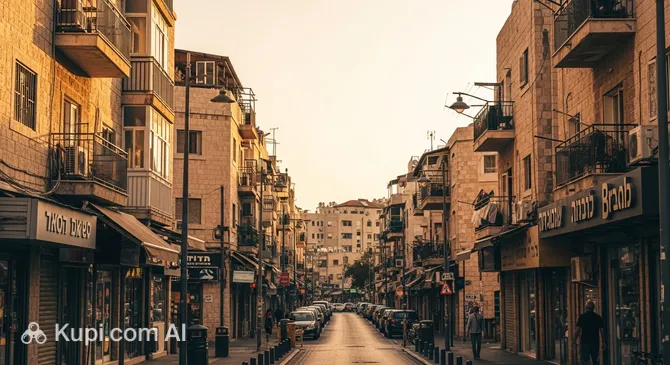
Bnei Brak is a unique city in Israel, located in the heart of the Tel Aviv metropolitan area. Founded in 1924 as a religious settlement, it has evolved into one of the most densely populated and distinctive cities in the country. Its atmosphere is steeped in tradition and spirituality, making it strikingly different from its modern and bustling neighbor, Tel Aviv.
Bnei Brak. Illustration.
Source: Kupi.com AI
Geographically, the city occupies a small area of about 7.3 km², yet it is home to nearly 194,000 people. The history of the city's foundation and development is inextricably linked with the preservation of Jewish heritage, which is reflected in the architecture, the lifestyle of its residents, and even the rhythm of the city streets. You won't find typical tourist skyscrapers here; instead, you can see numerous synagogues and religious schools.
While Bnei Brak is not a classic tourist hub, it attracts those who want to experience the authentic life of the Ultra-Orthodox community. A walk through its lively streets offers a view of Israel from a completely different perspective—more conservative, yet incredibly dynamic. We invite you to visit this city to feel its unique character and learn more about the traditional way of life.
Weather Overview
The climate in Bnei Brak is classified as subtropical Mediterranean, typical for the central coast of Israel. The city is characterized by hot, dry summers and mild but rainy winters. Due to the high building density and abundance of asphalt, a "heat island" effect is often observed here, which can make temperatures in the center feel a few degrees higher than in less developed surroundings.
The summer months, especially July and August, bring heat with daytime temperatures above +30°C and high humidity. Winter in the city is comfortable: the average January temperature is around +14°C, although it can cool down to +11°C at night. Most precipitation falls between November and March. If you want to know more about what the weather in Bnei Brak will be like during your visit, we recommend checking the current forecast before you leave.
The most pleasant time for walking around the city is spring (April–May) and autumn (October–November). During these periods, the weather is moderately warm without exhausting heat or prolonged rains, making it ideal for exploring local attractions and walking routes.
Average monthly temperature
Average monthly precipitation
Interesting Facts
Population Density: Bnei Brak is among the world leaders in population density, reaching 25,000–30,000 people per square kilometer, comparable to the busiest metropolises on the planet.
Center of Tradition: The city was founded in 1924 by a group of Hasidim from Poland and has since maintained its status as a vital center of Orthodox Judaism in Israel.
A Young City: About a third of the population consists of children under the age of 7, reflecting a very high birth rate and making the city one of the "youngest" in the country in terms of demographics.
Special Rhythm: Life in Bnei Brak is strictly governed by the Jewish calendar—during Shabbat, life here comes to a virtual standstill, and vehicle traffic is restricted on many streets.
Compactness: Despite its impressive population, the city's area is less than 8 square kilometers, allowing it to be crossed on foot in just a couple of hours.
How to Get There
Bnei Brak boasts excellent transport accessibility thanks to its location within the country's largest metropolitan area. The city is closely linked to the transport network of Tel Aviv and other major settlements in Israel. Detailed information on routes and schedules can be found on the page describing how to get to Bnei Brak.
The main air hub for travelers is Ben Gurion International Airport (TLV), located approximately 15–20 kilometers away. This is the country's main gateway, from where the city can be reached by taxi, rental car, or by taking a train with a transfer in Tel Aviv. The drive by car, depending on traffic, takes about 30–40 minutes.
Railway communication also plays an important role in logistics. While there are few stations in the very center of the city, nearby hubs in Ramat Gan and Tel Aviv provide quick connections to Haifa, Jerusalem, and the airport. For moving within the metropolitan area, the extensive bus network is very convenient.
Station
Passenger traffic
Distance
Bnei Brak – Ramat HaHayal railway station
9
2 km
Tel Aviv – Savidor Central railway station
14
3 km
Petah Tikva – Kiryat Aryeh Railway Station
10
4 km
Tel Aviv – University railway station
10
4 km
Tel Aviv – HaShalom railway station
12
4 km
Tel Aviv – HaHagana railway station
14
6 km
Main Attractions
Bnei Brak is not a tourist destination in the traditional sense, and you won't find world-class museums here. However, the city is fascinating as a living monument to traditional culture. The main points of interest are the numerous synagogues and yeshivas (religious educational institutions), which define the community's architectural style and spiritual life. For those interested in architecture and social structure, the Municipality building, the administrative heart of the city, is worth a look.
Special attention should be paid to local markets and shopping streets, such as Hazon Ish Street. These are not just places to shop, but centers of social life where you can observe the daily routines of the residents. Traditional goods, religious items, and kosher products that are hard to find in other parts of the country are sold here. Visiting such places allows tourists to see the real, unvarnished life of an Israeli suburb.
Most travelers view the city as part of a broader itinerary through the Tel Aviv District. Due to its compactness and high building density, Bnei Brak itself is an attraction—its narrow streets, abundance of bookstores, and specific rhythm of life create a unique urban landscape that is interesting to explore on foot.
Local Cuisine
The gastronomic scene in Bnei Brak is a true paradise for lovers of authentic Jewish cuisine. All establishments here strictly adhere to the rules of kashrut, which determines the menu. The city has many small bakeries where you can buy fresh challah, poppy seed rolls, and traditional pastries early in the morning. The aroma of fresh bread and spices is an integral part of the atmosphere on the local streets.
Classic Israeli dishes are a must-try: smooth hummus, crispy falafel in pita, and various types of shawarma. Special attention should be given to Saturday dishes such as cholent (a thick stew of meat, beans, and potatoes), which in some places begins to be sold as early as Thursday evening. The food culture here is simple and soulful: locals prefer small eateries where portions are generous and prices are quite affordable.
Popular drinks include strong coffee, traditional mint tea, and freshly squeezed juices, which can be found in stalls throughout the city. It is worth remembering that on Shabbat (from Friday evening to Saturday evening), all restaurants and cafes are closed. If you want to get to know the culinary traditions without rushing, it is best to visit the city on weekdays when the markets and eateries are in full swing.
Travel Tips
Visiting Bnei Brak is a unique experience of immersion into traditional culture, and our tips will help make this journey comfortable and respectful toward the local residents.
Clothing and Dress Code: Choose modest clothing. Men are advised to avoid shorts and sleeveless shirts, and women should wear skirts below the knee and cover their shoulders. This is a sign of respect for the religious feelings of the residents.
Observing Shabbat: Remember that from sunset on Friday until Saturday evening, the city "goes to sleep." Transport does not run, and shops and restaurants are closed. Refrain from driving a car in deeply religious neighborhoods during this time.
Transport: The best way to get around is by bus or taxi. To pay for buses, be sure to get a Rav-Kav card, as cash is not accepted.
Finances: The local currency is the Israeli Shekel (NIS). Cards are accepted almost everywhere, but for small purchases at the market, it's better to have some cash. Tips in cafes are usually 10–12%.
Communication: The primary language is Hebrew, and Yiddish is also frequently heard. Many people understand English, especially the youth. A short greeting of "Shalom" is always appropriate.
Photography: Be careful with photography. Always ask for permission before photographing locals, especially children. Photography on the streets is strongly discouraged during Shabbat.
Etiquette: Avoid public displays of affection (hugging, kissing). In a religious environment, this is considered inappropriate.
Safety: The city is generally very safe, but the streets are extremely narrow and crowded. Keep a close eye on your belongings and be careful when crossing roads.
We are sure that your visit to this unusual place will leave you with vivid impressions. Be open to new experiences, follow local rules, and Bnei Brak will reveal its most interesting side to you!
Entertainment & Nightlife
Entertainment and nightlife in Bnei Brak have their own specifics, dictated by the religious character of the city. You won't find the nightclubs, bars, or discos that are so popular in neighboring Tel Aviv. Evening life in the city focuses on family walks, attending lectures, and religious events. The atmosphere here is calm and measured, oriented toward spiritual values and community interaction.
For those seeking active nightlife, the best solution is to head to the center of Tel Aviv, which can be reached by taxi in 15–20 minutes. That is where the region's best concert venues, theaters, and clubs are concentrated. Bnei Brak residents often visit neighboring districts for cultural entertainment such as cinemas and large shopping complexes with play areas for children.
Daytime entertainment within the city includes visiting parks and playgrounds in family residential areas. During holidays, the city streets host festive processions and events that can be extremely interesting to tourists due to their scale and traditional nature. To ensure safety and comfort during night trips, it is recommended to use verified taxi services that operate 24/7.
Parks & Museums
Green spaces in Bnei Brak are a precious resource, given the city's extremely dense development. You won't find huge national parks here, but the municipal authorities strive to create cozy squares and playgrounds that become recreational hubs for local families. Small parks, such as the squares in residential neighborhoods, are places for meetings and quiet walks away from busy shopping streets.
The museum infrastructure within the city limits is limited, as the focus of cultural life is shifted toward religious education and the study of sacred texts. However, for those seeking cultural enlightenment, the famous museum clusters of Tel Aviv and Ramat Gan are in the immediate vicinity. Of great interest to tourists are the Tel Aviv Museum of Art and the Museum of the Jewish People (ANU), which can be reached from Bnei Brak in just a few minutes.
Despite the lack of its own large parks, city residents actively use nearby Yarkon Park—the largest urban park in the country, which is within walking distance of some city districts. There you can find shaded alleys, bike paths, and picnic spots, making it an ideal complement to Bnei Brak's urban environment for those who miss nature.
Getting Around
The public transport system in Bnei Brak is based primarily on an extensive network of bus routes. The city is served by major Israeli carriers such as Dan and Egged, which provide regular connections not only within the city but also to all key points in the Tel Aviv District. Buses run frequently; however, they can be crowded during rush hours, and traffic can be slow due to the city's narrow streets.
Fares are paid using a "Rav-Kav" smart card or via mobile apps (such as Moovit or Pango). It is important to remember that drivers no longer accept cash, so the card must be purchased and topped up in advance. The fare is standard for the region and includes the possibility of free transfers within 90 minutes within a certain zone.
Taxis serve as an alternative to buses and can be easily summoned via the Gett or Uber apps. This is a convenient option for those who want to avoid crowds or are traveling with luggage. Bike rentals and scooters are also popular, but the high density of pedestrians on the sidewalks should be taken into account. The main feature of local transport is the total shutdown on Shabbat (from Friday evening to Saturday evening), when the only way to get anywhere is by private car or special taxi.
Accommodation
Choosing accommodation directly in Bnei Brak can be a challenge for the average tourist, as the city is not geared toward mass tourism. There are practically no large hotel chains here. Accommodation options are mainly represented by short-term rental apartments or guest rooms, which are often oriented toward religious pilgrims or relatives of local residents.
If you plan to visit the city, the most convenient option would be to stay in neighboring Ramat Gan or Tel Aviv. A wide range of housing is available there: from budget hostels to luxury five-star hotels. Thanks to excellent transport links, you can reach Bnei Brak in minutes while enjoying all the benefits of the metropolitan area's developed tourist infrastructure.
When booking apartments in the city itself, be sure to consider the local specifics: check the rules for staying during Shabbat and the availability of necessary conditions (for example, a kosher kitchen). Rental prices here are usually lower than in the coastal areas of Tel Aviv, but during Jewish holidays, demand for housing rises sharply, so we recommend planning your trip and booking in advance.
Nearby Cities
Bnei Brak is an excellent starting point for exploring the central part of Israel thanks to its strategic position. Some of the country's largest cities are literally just a few kilometers away, each offering a unique experience and attractions.
First on the list to visit is neighboring Tel Aviv—the cultural and economic capital. It is a city of contrasts with magnificent beaches, museums, and a vibrant nightlife. Also very close by is Ramat Gan, famous for its safari park and large shopping centers. For those who prefer quieter walks, Givatayim or Givat Shmuel are excellent choices.
Exploring the surroundings of Bnei Brak will allow you to see the full diversity of Israeli life: from ultra-modern skyscrapers and embankments to quiet residential quarters. The developed network of buses and taxis makes such trips easy and effortless.
Shopping & Souvenirs
Shopping in Bnei Brak has a distinct local flavor and is primarily oriented toward the needs of large families and the observance of traditions. You won't find boutiques with global luxury brands here, but you can discover many interesting specialized shops. Most commercial activity is concentrated along the central streets, where shops with religious literature stand alongside stores selling modest clothing and household goods.
If you are interested in modern shopping centers, look for options in neighboring areas, such as the large malls in Ramat Gan. However, inside the city itself, there are large supermarkets like "Rami Levy" and "Tiv Taam," where you can buy groceries and home goods at good prices. For those looking for authentic souvenirs, Bnei Brak offers a huge selection of Judaica: from silver candlesticks to intricately embroidered matzah covers and books.
The city's markets deserve special mention—these are places where life is in full swing. Here you can buy the freshest fruits, vegetables, and spices at prices significantly lower than in the tourist areas of Tel Aviv. Shops usually open early in the morning and close in the evening, with the workday ending around noon on Friday, and everything being closed on Saturday. Card payments are accepted everywhere in large stores, but it is better to have some cash shekels for the markets.