Support

Mitzpe Ramon

About

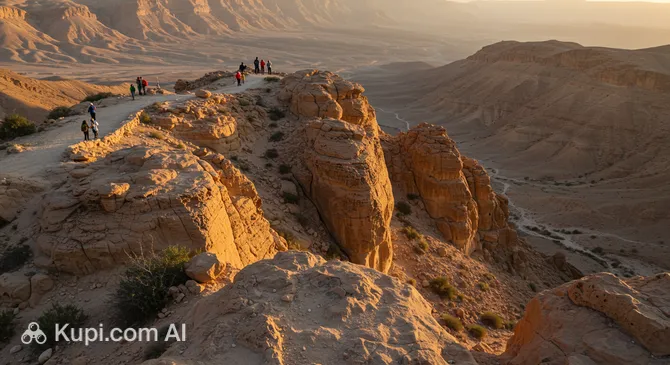
Mitzpe Ramon is an amazing oasis located on the very edge of the Negev Desert, seemingly perched above a giant natural phenomenon. This small town in the south of a country like Israel attracts travelers with its unique atmosphere of solitude and cosmic panoramas. Here, at an altitude of more than 800 meters above sea level, the air is always clear, and the views from the observation decks resemble Martian landscapes.

Mitzpe Ramon. Illustration.
Source: Kupi.com AI

With a population of only about 5,400 people, Mitzpe Ramon maintains a cozy and intimate feel, without claiming the noisy rhythm of a metropolis. This place has long been favored by artists, musicians, and astronomers, who find inspiration here in the silence and the boundless starry sky. The unique history of Mitzpe Ramon has transformed it from an isolated settlement into a popular center for ecological and adventure tourism.

The town serves as the perfect "gateway" to the wonders of the Ramon Crater. Guests can look forward to exciting jeep tours, leisurely camel rides, and the chance to witness incredible sunrises over the desert. Come here to feel the magic of the "edge of the world," enjoy the scents of desert herbs, and see the region from a completely new and mesmerizing side.

Weather Overview

The weather in Mitzpe Ramon is shaped by the influence of the desert climate and the town's high-altitude location. Thanks to an altitude of over 800 meters above sea level, it is not as muggy as in the lowlands, and the air always remains dry and clear. Expect a hot, sunny summer without precipitation and a cool, bracing winter.

The summer months, from June to September, are characterized by stable heat: the average temperature in August is about 27.6°C, and daytime highs often reach 34°C. There is no rain at all during this time. Winter brings coolness: in January, the coldest month, the average temperature stays around 11.4°C, and at night it can drop to 7°C. Precipitation occurs very rarely even in winter — in February, only about 4 rainy days are recorded with a minimum amount of moisture.

The shoulder seasons, especially April and October, please with comfortable warmth in the 19–22°C range, which is ideal for walking. When planning your trip, be sure to check the current weather in Mitzpe Ramon, as sharp temperature fluctuations are typical for the desert: even after a hot day, the evening may require a warm jacket.

Average monthly temperature

Average monthly precipitation

Interesting Facts

In addition to breathtaking landscapes, Mitzpe Ramon holds many amazing stories and features that make it a truly unique place on the map of Israel. Here are a few facts that will let you look at this desert town in a new way:

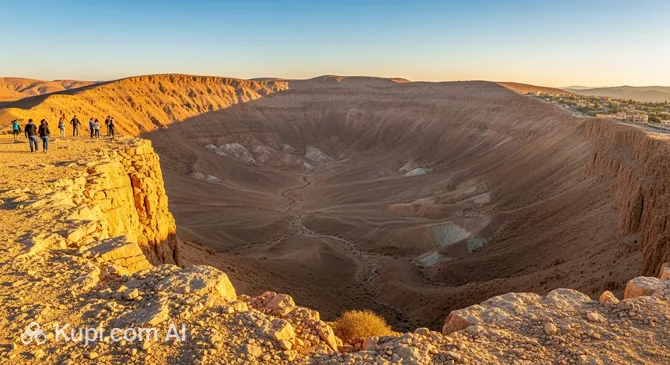
  • A geological phenomenon of global scale. Makhtesh Ramon is not a volcanic crater or a meteorite impact site, but a very rare erosion cirque. There are only five such natural features, called "makhtesh," in the entire world, and three of them are in Israel. Ramon is the largest and most impressive: its length is about 40 km, and its depth reaches 500 meters. To understand the nature of this wonder, it's worth checking out the Mitzpe Ramon Visitor Center, located on the very edge of the cliff.

  • Named after the crater. The town was founded in 1956 as a small camp for workers building the highway through the desert to Eilat. There is a touching story that the parents named the first child born in this settlement Ramon — in honor of the majestic natural neighbor that defined the town's destiny.

  • A starry sanctuary. Due to its high elevation, dry air, and distance from large metropolises, Mitzpe Ramon is considered the best place in the country for astronomical observations. Light pollution is minimal here, which is why one of the most important observatories operates in the town, and night tours with telescopes are regularly organized for tourists.

  • Desert traditions. The cultural life of the town is inextricably linked to its surroundings. An annual desert arts festival is held here, and local guides offer authentic entertainment: from camel tours to workshops on brewing real Bedouin coffee over a fire.

Camel Hill. Illustration.
Source: Kupi.com AI

Traveler photos:

How to Get There

Mitzpe Ramon is located deep in the Negev Desert, so the final part of the journey here is always by road. A trip to the Ramon Crater usually begins with a flight to one of the international airports or a train ride to the nearest major transport hub followed by a transfer. You can find out more about all routes and current schedules on the how to get to Mitzpe Ramon page.

For most tourists, the main point of arrival is Ben Gurion Airport (TLV). This is the country's main air gateway, located near Tel Aviv, at a distance of about 156 km from the crater. Travel time depends directly on the chosen transport: a trip by rental car or taxi will take approximately 2.5 hours. If you decide to use public transport (train to Beer Sheva plus a bus), be prepared to spend more than 4 hours on the road.

An alternative option, convenient for those planning to visit the south of the country, is Ramon Airport (ETM). It is located near the resort of Eilat, about 100 km south of Mitzpe Ramon. The journey from here by car will take only about 1.5 hours. Travel by public transport (bus) will be longer, at about 3 hours.

Below is summary information on the airports through which you can reach the region:

AirportPassenger trafficDistance
Ramon Airport1.8 mln100 km
King Hussein International Airport309 000113 km
Taba International49 000113 km
Ben Gurion International Airport21.1 mln156 km
Queen Alia International Airport9.2 mln168 km

Regarding rail connections, there is no train station directly in the town of Mitzpe Ramon. The nearest major railway station is in the city of Beer Sheva, located about 85 km to the north. This is a key transport hub where trains regularly arrive from Tel Aviv, Haifa, and other cities. Regular bus routes run from the Beer Sheva central bus station (located next to the train station) to Mitzpe Ramon, making this combined method of travel quite comfortable and budget-friendly.

Main Attractions

The main magnet for travelers in this region is undoubtedly the majestic Ramon Crater, and most of the town's attractions are somehow connected to this natural wonder. Exploring the local beauties allows you not only to enjoy breathtaking views but also to dive deep into the history and geology of the Negev Desert.

A good place to start your acquaintance with the town is at the gateway to the crater world — the Mitzpe Ramon Visitor Center. Perched on the very edge of the cliff, this modern complex offers a unique opportunity to learn about the origin of the giant erosion cirque. However, it is not just a nature museum: part of the exhibition is dedicated to the memory of Ilan Ramon, the first Israeli astronaut, which gives the place a special emotional resonance. Tourists come here for the interactive exhibits and the best starting point for understanding the scale of the surrounding desert.

For those looking for the perfect spot for panoramic photos, a visit to Mount Camel (Har Gamal) is a must. This small hill got its name from its peculiar shape, resembling the silhouette of the "ship of the desert." The climb to the top does not require special training and takes just a few minutes, but the reward is one of the most impressive views of the crater, especially at sunset when the rocks are painted in fiery shades.

Camel Hill. Illustration.
Source: Kupi.com AI

Traveler photos:

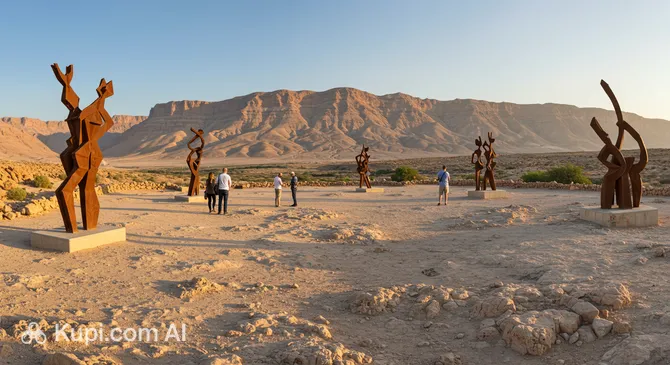
Art lovers should take a walk along the scenic route where the Sculpture Garden is located. This open-air space features massive stone statues created by various artists that engage in a dialogue with the harsh desert landscape. A walk here gives a sense of harmony and silence, and the figures placed along the cliff seem to frame the endless horizon, making this place ideal for quiet contemplation.

Local Cuisine

The gastronomic life of Mitzpe Ramon is a true oasis of flavors in the middle of the harsh Negev Desert. Despite its distance from large metropolises, the town surprises with the variety and quality of its products. The "farm-to-table" concept thrives here: local farms grow organic vegetables, herbs, and fruits that reach the guests' plates as fresh as possible. A special pride of the region is the goat cheeses produced at small family dairies. They are typically served with aromatic honey and hot pita, and this simple yet exquisite delicacy has become a hallmark of local breakfasts.

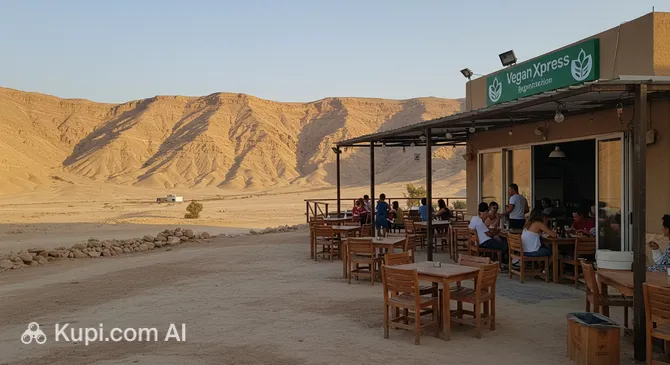
For those who prefer light and healthy food, the Vegan Express restaurant is an excellent choice. This place perfectly illustrates the locals' approach to nutrition: using the freshest ingredients grown in the desert sands and creatively reimagining familiar recipes. Here you can try original salads and appetizers that will energize you before a hike to the crater.

Vegan Xpress. Illustration.
Source: Kupi.com AI

Traveler photos:

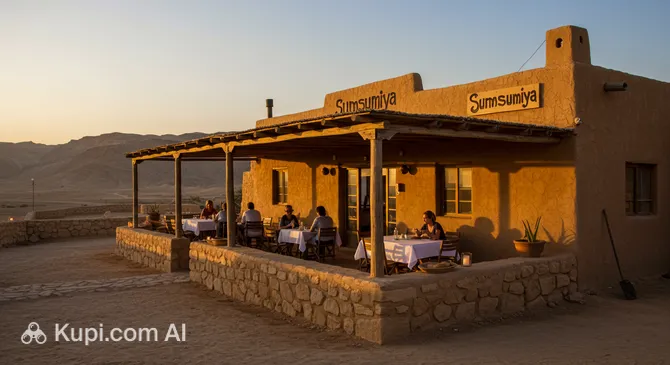
Traditional dishes in Mitzpe Ramon are a colorful mix of Middle Eastern and Bedouin cuisines. Be sure to try shakshuka, made with sweet local tomatoes and plenty of herbs, or classic hummus, generously seasoned with olive oil and spices. Meat lovers should look for meat baked in a tannur (a traditional oven), as well as lamb and chicken dishes marinated in spicy desert herbs. For an authentic atmosphere and a hearty dinner, you can head to the Sumsumia restaurant, where hospitality is combined with the rich flavor of Oriental dishes.

Local drinks deserve special attention. In recent years, the Negev Desert has turned into a promising wine region. Thanks to the unique microclimate and temperature fluctuations, grapes are grown here that produce wines with a special, full-bodied character. Tasting local wines and liqueurs produced right in the desert is a must-do for gourmets.

The food culture in the town is democratic and relaxed. Street food is popular here: in markets and small shops, you will be offered crispy falafel and freshly baked flatbread. The town regularly hosts gastronomic festivals, including cheese fairs and harvest festivals, turning every meal into a small culinary adventure.

Travel Tips

Traveling to Mitzpe Ramon is an immersion into the unique atmosphere of the Negev Desert in Israel, which dictates its own rules. To make your holiday as comfortable as possible and without surprises, we have prepared a list of important practical recommendations considering the specifics of this secluded town.

  1. Clothing and equipment. The desert climate is treacherous: even if it's hot during the day, nights here can be chilly, and in winter — truly cold. Be sure to bring layered clothing and a warm fleece jacket. For walks around the crater, comfortable closed shoes with a stiff sole (sneakers or trekking boots) are vital, as well as a hat and sunglasses for protection from the active sun.

  2. Transport. The town itself is very compact, and it's pleasant to get around on foot. However, to explore the remote corners of the crater, it's better to rent a car. Public transport within the town is poorly developed, and taxis can be hard to catch on the street — it's better to have local dispatch numbers. Remember that from Friday evening to Saturday evening (Shabbat), bus connections with other cities stop completely.

  3. Finances. The official currency is the New Israeli Shekel. Most hotels and restaurants accept cards without problems, but it is strongly recommended to have cash with you. You will need it to pay in the small shops of the Spice Route Quarter, at local fairs, or when buying falafel at kiosks. There are few ATMs in the town, and they are mainly concentrated in the commercial center.

  4. Health and safety. Mitzpe Ramon is a very safe place, but the desert demands respect: always carry a large supply of water to avoid dehydration. You can often see Nubian ibexes walking right through the town streets. Under no circumstances should you feed or pet them — these are wild animals that may show aggression if disturbed. There is only one pharmacy in town and it doesn't work around the clock, so it's better to pack a personal first-aid kit in advance.

  5. Communication and navigation. The main language is Hebrew, but due to the tourist specifics, many locals speak English well, and Russian speech is also frequently encountered. Wi-Fi is available in most cafes and hotels. Important tip: download offline maps in advance, as mobile connection and internet may disappear at the bottom of the crater or in remote canyons.

  6. Local etiquette. A relaxed atmosphere prevails here, so a strict dress code is not required, but politeness and patience ("savlanut") are welcome. You can greet locals with the universal word "Shalom." During Shabbat (Saturday), try not to make noise in residential neighborhoods and respect the peace of the residents, many of whom observe traditions.

  7. What to avoid. It is strictly not recommended to go off marked tourist trails during hiking — the rock at the edges of the cliff can be loose and unstable. Also, avoid hiking alone in extreme heat and carefully monitor the weather forecast in winter: at the slightest threat of flash floods, descending into dry riverbeds is strictly prohibited and life-threatening.

  8. Tip for stargazers. Mitzpe Ramon is a recognized dark sky reserve. To see the Milky Way, you don't necessarily need to buy an expensive tour. It's enough to dress warmly, take a flashlight (preferably with a red light so as not to disrupt night vision), and step a little away from the streetlights, for example, to the Sculpture Garden. The sight will be unforgettable!

We hope these tips help you plan the perfect trip. Mitzpe Ramon is a place where you can slow down, hear the silence, and touch eternity, so come with an open heart and readiness for amazing discoveries.

Entertainment & Nightlife

The nightlife in Mitzpe Ramon is fundamentally different from the noisy parties of Tel Aviv or Eilat. You won't find neon signs of huge night clubs or crowded dance floors here. Instead, the town offers a unique "desert chill-out" concept: atmospheric pubs, jazz nights, and cozy restaurants where time flows slowly and the silence of the desert becomes the best soundtrack. The center of attraction in the evening is the Spice Route Quarter (Rova ha-Bsamim) — a former industrial zone that has turned into a trendy hipster district with bars, art studios, and cafes.

The atmosphere in Mitzpe Ramon's establishments is very democratic and relaxed. Tourists come here after hiking, alongside local artists, musicians, and soldiers. There is no dress code at all: you will feel just as comfortable in trekking boots and a fleece jacket as in evening wear. Most places open closer to sunset and stay open until midnight or a bit later, depending on the number of guests. On weekends (Thursday and Friday nights), live music often plays here — ranging from jazz and blues to ethnic motifs.

For a pleasant evening with delicious food and drinks, it's worth stopping by the Sumsumia restaurant. This establishment is very popular thanks to its warm atmosphere and excellent signature Middle Eastern cuisine, which pairs perfectly with a glass of local beer or wine. Friends often gather here to discuss the day's impressions. If you prefer a lighter and healthier dinner in a modern setting, Vegan Express is an excellent choice, where you can try original dishes made from fresh ingredients.

Sumsumiya. Illustration.
Source: Kupi.com AI

Traveler photos:

The main "nightclub" of Mitzpe Ramon is rightfully considered to be the sky itself. Since the town is a recognized dark sky reserve, many tourists prefer night picnics on the edge of the crater with a bottle of wine over bars. This is perfectly safe: the crime rate in the town is practically zero. You can safely walk the streets or sit at the observation decks even in the dead of night. However, it's worth remembering about taxis: it's impossible to hail a car on the street at night; you need to have a local dispatcher's number, or better yet, arrange a trip in advance if your hotel is far from the center.

During the day, the town's entertainment program shifts toward educational and contemplative activities. There are no large amusement parks here, but cultural leisure is quite rich. Be sure to visit the Mitzpe Ramon Visitor Center, which offers a fascinating immersion into the history of the region. There are also small galleries of local craftsmen in the Spice Route Quarter, where during the day you can attend pottery workshops or simply admire art born in the desert.

Parks & Museums

Mitzpe Ramon offers travelers a unique combination of natural wonders and cultural discoveries that are harmoniously integrated into the harsh but fascinating landscape of the Negev Desert. Instead of the usual shady alleys with lawns, the local "parks" are impressive observation decks and open-air art spaces, and the museums serve as a window into the planet's geological history.

One of the most picturesque walking areas is the Sculpture Garden, stretching along the very edge of the crater. This is not just a park, but an open-air gallery where massive stone statues created by Israeli and foreign masters engage in a silent dialogue with the desert. A walk here is especially good at sunset, when the figures cast long shadows and the rocks turn crimson. Another iconic natural attraction is Mount Camel. Although it is more of a geological monument than a park, the well-maintained area around it and the easy climb to the summit make it a favorite spot for family walks and picnics overlooking the endless expanses.

Sculpture Garden. Illustration.
Source: Kupi.com AI

Traveler photos:

The main cultural and educational center of the town is undoubtedly the Mitzpe Ramon Visitor Center. This modern museum complex performs a double function: it tells the fascinating history of the Ramon Crater's formation through interactive exhibits and simultaneously serves as a memorial to the first Israeli astronaut, Ilan Ramon. Visitors can take a virtual journey into space and into the depths of the earth, making a visit interesting for both adults and children.

Located near the Visitor Center is the "Bio-Ramon" wildlife corner. This is a small but fascinating zoological and botanical garden dedicated to the flora and fauna of the desert. Here you can see the elusive inhabitants of the Negev — from lizards and snakes to rodents and hedgehogs — in their natural habitat, allowing for a better understanding of how life thrives even in such extreme conditions.

For those seeking informal cultural experiences, the Spice Route Quarter will be a real discovery. Although it is not a museum in the classical sense, the area is filled with open artist studios, pottery workshops, and small galleries where you can observe craftsmen at work. Insiders advise stopping by on Friday morning, when the creative atmosphere mixes with the scents of fresh bread and coffee from local bakeries.

Getting Around

The transport system in Mitzpe Ramon differs significantly from what tourists are used to in large metropolises. Due to the town's compactness, there is no metro, trams, or an extensive network of city routes. Most distances within the residential area can be easily covered on foot in 15–20 minutes. Public transport is represented exclusively by buses that connect the town with the outside world and make several stops within the settlement itself.

The main bus operator in this region is the Metropoline company. Routes pass through the town connecting it with Beer Sheva (to the north) and Eilat (to the south). These buses serve as the primary means of transport for both local residents and tourists arriving without a personal car. Stops are located on key streets and near main hotels, but service intervals can be quite long, so the schedule should be studied in advance.

The fare payment system in Mitzpe Ramon, as in the entire region, is completely cashless. Bus drivers do not sell tickets and do not accept cash. To pay for your fare, you will need a «Рав-Кав» (Rav-Kav) unified transport card, which can be purchased and topped up at central bus stations in major cities (for example, in Beer Sheva or at the airport) or in some pharmacy chains. The card must be tapped against the validator when entering the bus.

A more convenient alternative for tourists is payment via mobile apps such as Moovit or HopOn. To do this, you need to link a bank card to the app and scan the QR code posted in the bus cabin upon boarding. The app will automatically calculate the fare. This eliminates the need to search for Rav-Kav card sales points in a small town.

If you plan to explore remote corners of the crater or surrounding attractions, public transport may prove inconvenient. Taxi services operate in the town, but their fleet is limited, and a car often has to be ordered in advance by phone. Popular ride-hailing apps (like Uber) may not be available here or may work inconsistently due to the small number of drivers.

The most popular option for freedom of movement remains car rental. This allows you to reach observation decks and hiking trails that buses do not go to. Also, bicycle rentals are well-developed in Mitzpe Ramon, which is an eco-friendly and pleasant way to see the town and the edge of the crater. It is important to remember about Shabbat: from Friday evening until the end of Saturday, public transport (buses) stops working completely, so plan your movements on these days in advance.

Accommodation

Accommodation in Mitzpe Ramon is as unique and contrasting as the Negev Desert itself. Despite the town's modest size, the tourism infrastructure here is excellently developed and offers options for every taste and budget: from one of the most luxurious hotels in Israel to authentic Bedouin tents and open-air campsites. Choosing accommodation here is not just finding a place to sleep, but part of the immersion into the atmosphere of the region.

Accommodation Types and Areas:

The geography of accommodation in the town is quite simple. The most prestigious and expensive options are located along the edge of the crater. Here you will find hotels with windows offering a direct panorama of the Martian landscapes of Makhtesh Ramon. Staying in this zone guarantees unforgettable sunrises and sunsets without leaving your room, but the prices here correspond — often higher than the national average.

For more budget-conscious travelers and young people, the Spice Route Quarter is an ideal location. In this part of town, among art studios and workshops, you'll find cozy hostels, loft-style boutique hotels, and guesthouses (zimmers). The atmosphere here is more democratic and creative, and the edge of the crater is a 10–15 minute walk away.

A special category of accommodation in Mitzpe Ramon is glamping and khans (traditional inns). Many tourists come here specifically for the experience of spending the night in the desert. Special sites are equipped around the town where you can stay in heated yurts, geodesic domes, or simply in a sleeping bag under a "million-star hotel." This is a great option for those who want maximum unity with nature.

Booking Tips and Prices:

The price range in Mitzpe Ramon varies from budget (hostels and campsites) to premium luxury. It's worth considering that weekends (from Thursday evening to Saturday) and Jewish holidays are peak demand times. During these periods, prices can increase by 1.5–2 times, and the best places are booked several months in advance.

If you are planning a weekend trip, it is highly recommended to book your accommodation in advance (at least 3–4 weeks). For weekdays, finding a free room is usually easier, and prices become more attractive. Booking is available through all popular international online platforms, but many small guesthouses and campsites also take orders directly through their websites or by phone.

Nearby Cities

For those who want to explore the surrounding area, Mitzpe Ramon serves as an excellent starting point for day trips to several interesting nearby locations. The town's location deep in the desert allows you to combine a secluded stay by the crater with visits to the country's major cultural and historical centers.

The nearest large city is Beer Sheva, often called the "capital of the Negev." The drive here takes about an hour, and it's a great opportunity for a change of scenery. Here you can visit the "Abraham's Well" archaeological park, stroll through the old city which has preserved Ottoman-period architecture, or go shopping in modern shopping malls, restocking supplies unavailable in small Mitzpe Ramon.

If you are up for a longer journey, it's worth heading to Jerusalem. The trip takes about two hours one way, but it is well worth it. The majestic city with its ancient walls, markets, and holy sites of three religions will create a striking contrast with the silence of the desert landscapes. This journey will allow you to see two different facets of Israel in one day: the natural power of the crater and the spiritual depth of the ancient capital.

CityPopulationDistance
Ein Yahav34042 km
Ben Zakkai (Conceptual/Non-Existent)42 31449 km
Dimona34 13556 km
Nevatim68 km
Beersheba209 00071 km

These nearby destinations provide an insight into the diverse culture and landscapes of the region.

Shopping & Souvenirs

Shopping in Mitzpe Ramon is not about chasing brands or large-scale sales, but rather a continuation of getting to know the soul of the desert. The town cannot boast huge shopping centers; however, it offers something more valuable: unique handmade items and authentic products created by local craftsmen. Purchases here become part of the cultural experience, allowing you to take a piece of the Negev atmosphere with you.

The main place for interesting and non-trivial shopping is the Spice Route Quarter (Rova ha-Bsamim). This former industrial zone has turned into a vibrant creative cluster where artist galleries, ceramic studios, and cozy boutiques are located in hangars. Here you can not only buy ready-made products but often watch the process of their creation. A stroll through this area is like visiting an open-air museum where every shop is a separate world of art and craft.

There are no large malls in the town, which is quite expected for such a small settlement. The main commercial activity related to daily needs is concentrated in a small commercial center in the heart of the town. Here you will find a supermarket, a pharmacy, and several shops with essentials, tourist equipment, and clothing. This place is suitable for restocking food and water before a hike into the crater.

Although there is no classic oriental bazaar in Mitzpe Ramon, the atmosphere of the Spice Route Quarter largely replaces it. On weekends and holidays, local fairs and "open house days" are often held here, where residents sell homemade pastries, farm products, olive oil, and jewelry. This is a great opportunity to chat with the townspeople and find something truly special.

As souvenirs from Mitzpe Ramon, it is worth bringing back products born in the desert. Natural cosmetics and handmade soaps produced at a local factory are especially popular. Gastronomy lovers will enjoy wines from Negev wineries, which are distinguished by a rich flavor, as well as local spices. For more traditional keepsakes — T-shirts, books about nature, and magnets — you can stop by the souvenir shop located in the complex of the Mitzpe Ramon Visitor Center.

When planning your shopping, it's important to consider the operating hours. Shops are usually open Sunday through Thursday from 9:00 to 19:00 or 20:00. Pay attention to Shabbat: on Friday, most establishments, including supermarkets and souvenir shops, close around 13:00–14:00 and resume work only on Saturday evening or Sunday morning. Bank cards are accepted almost everywhere, but having some cash in shekels for small purchases in private shops will not be out of place.

Regarding tax returns (Tax Free), it's worth remembering that Mitzpe Ramon, unlike Eilat, is not a duty-free trade zone. Prices here include VAT. Tourists can apply for a tax refund when leaving the country if they have made a purchase of over 400 shekels in a participating store (look for the "Tax Refund" sticker), however, in the town's small craft workshops, such an option is very rare.
Reached the end of the page?

That means the route is fully explored