Support

Yotvata

About

Yotvata is a true oasis of life located in the heart of the Arava Desert in the south of the country. This kibbutz, stretched along the famous Highway 90, is a prime example of how human industriousness can turn harsh sands into a blooming garden. If you are planning a trip to Israel and heading toward Eilat, a stop here will be a breath of fresh air and a chance to see a unique way of life amidst vast desert landscapes.

Despite its modest size—with a population of only about 500–700 people—Yotvata is known for its hospitality and close-knit community. There is an atmosphere of peace and coziness here that contrasts so sharply with the wild, rocky hills around it. Situated at an altitude of about 80 meters above sea level, the settlement is surrounded by breathtaking views where golden dunes meet majestic mountains, creating a unique backdrop for relaxation.
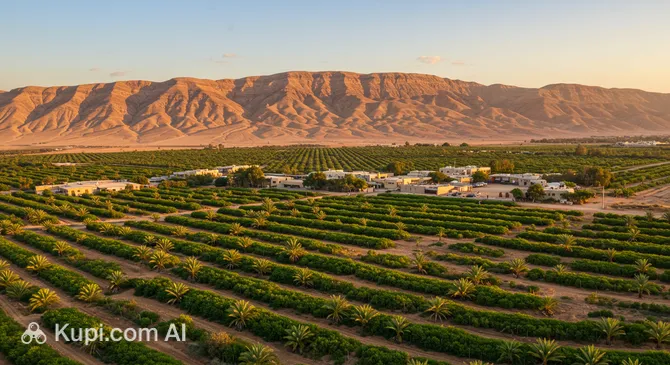
Yotvata. Illustration.
Source: Kupi.com AI

Founded in 1957, the kibbutz has become a symbol of innovation and respect for nature. The fascinating history of Yotvata demonstrates the journey from a small settlement of enthusiasts to a thriving center known for its agricultural achievements. This place is ideal for those who want to experience authentic kibbutz life and understand how locals have learned to live in harmony with the harsh climate.

The surroundings of Yotvata offer travelers a wealth of experiences. Just a few minutes' drive away are the famous ancient copper mines in the Timna Valley—one of the region's most mysterious sites. Yotvata itself attracts lovers of silence and ecotourism: here you can go for a walk, observe rare species of desert animals, or simply enjoy incredible sunsets that paint the sky in fiery tones.

Yotvata is not just a point on the map, but a place where you can slow down and feel the pulse of the desert. Be sure to include this cozy corner in your itinerary to gain unusual impressions, take a break from the urban hustle, and feel the warmth of genuine local hospitality.
Weather Overview

The climate in Yotvata is typical for the Arava Desert: dry and sunny weather prevails year-round. Summer in this region is very hot and long. From June to September, the average temperature stays above 26°C, and in peak months like July and August, daytime heat can reach 36°C. During this period, there is no rain at all, with precipitation at 0 mm, so you definitely won't need an umbrella.

Winter is the most comfortable time for those who cannot stand the heat. In January and February, the average temperature is about 11-13°C. Days are warm (up to 17-18°C), but nights can be cool, with temperatures dropping to 6-7°C, so a light jacket will come in handy. Precipitation is extremely rare even in winter: on average, no more than 3 rainy days per month are recorded with minimal moisture.

Expect a very hot, dry summer and a mild winter with virtually no precipitation. Spring (especially April with a maximum around 27°C) and late autumn are considered ideal times for travel. To plan your trip as accurately as possible, see what the expected weather in Yotvata is for the dates of your visit.

Average monthly temperature

Average monthly precipitation

Interesting Facts

In addition to its main attractions, Yotvata holds many fascinating secrets that only curious travelers discover. This desert oasis surprises not only with its gastronomic achievements but also with its deep connection to biblical history and unique natural experiments.
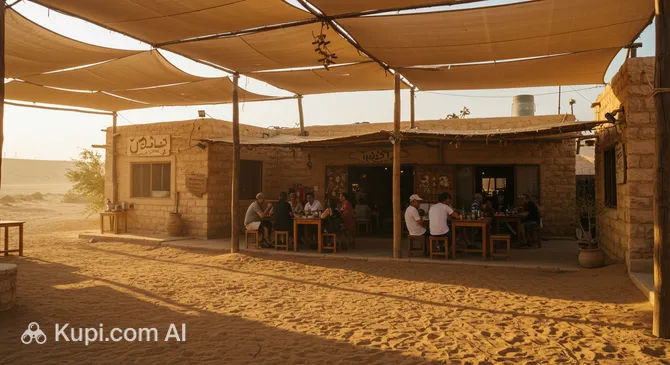
Yotvata Inn. Illustration.
Source: Kupi.com AI

Traveler photos:

  • A Biblical "Noah's Ark" of the Desert. Near the settlement lies the unique Hai-Bar reserve, whose mission is to return animals mentioned in the Bible to the wild. They successfully breed white oryxes, African ostriches, and wild asses (onagers), which disappeared from these parts thousands of years ago. It is one of the few places on the planet where you can see biblical landscapes literally coming to life.

  • Cult Status of Chocolate Milk. The local roadside complex, Yotvata Point, has become a true phenomenon of Israeli culture. There is an unwritten tradition: a trip to Eilat is not considered complete without stopping here for a glass of the signature chocolate drink. Every year, tourists and locals drink hundreds of thousands of liters of this treat here, and the milk tap in the cafe has become a symbol of abundance in the middle of the arid Arava.

  • Ancient Guardian of Water. On the hill behind the modern kibbutz hide the ruins of a Roman fortress built during the reign of Emperor Diocletian. This fort guarded a strategically important water source and an ancient road used to transport copper and spices. Archaeological finds confirm that life was bustling here long before the foundation of modern Israel.

  • A Land of Water Brooks. Yotvata is one of the few places in the desert whose name and geographical location precisely match the biblical text. In the Book of Deuteronomy (Devarim), this place is mentioned as "Jotbath, a land of water brooks." Despite the surrounding sands, rich groundwater truly exists here, which allowed for the creation of a thriving oasis.

How to Get There

When planning a trip to this green oasis in the middle of the desert, it's worth thinking through the logistics in advance. Yotvata is located on the main transport artery of the country's south—Highway 90, making it accessible for road travelers and bus passengers. To explore all possible routes and schedules, we recommend visiting the page that describes in detail how to get to Yotvata by various means of transport.

The most convenient way to reach the region by air is to fly into Ramon Airport (IATA: ETM). This is the modern air gateway to the south, serving both domestic flights from Tel Aviv and international planes. There is no airport in Yotvata itself, but you can fly into Ramon Airport in Eilat (Timna Valley), which is just 19.6 km from Yotvata. The journey by taxi or bus will take about 50 minutes. The airport has a moderate passenger flow and offers comfortable conditions for arriving tourists.

An alternative option for travelers combining their trip with a visit to Jordan could be King Hussein International Airport (IATA: AQJ). It is located in the city of Aqaba, approximately 31.8 km from Yotvata. However, you should consider the need to cross the state border and pass through customs control, which will significantly increase travel time. Also operating in the region is the large Queen Alia International Airport (IATA: AMM) in Amman, but it is much further away—more than 200 km.

For clarity, here is summary information on the main airports:

AirportPassenger trafficDistance
Ramon Airport1.8 mln20 km
King Hussein International Airport309 00032 km
Taba International49 00044 km
Neom Bay Airport250 000220 km
Queen Alia International Airport9.2 mln221 km

As for rail connections, trains do not currently run directly to Yotvata. The country's railway network ends further north, and there are no tracks in the Arava Desert. For tourists who prefer ground transport, it is most convenient to use intercity buses running along Highway 90 or rent a car for the trip from the center of the country or from the nearest transport hubs.

Main Attractions

Despite its modest size, Kibbutz Yotvata is one of the most recognizable spots on the map of southern Israel. This place serves not only as an important stopover for travelers heading to Eilat but also as a standalone tourist destination with unique natural and gastronomic attractions. Here are the main highlights that make a stop here worthwhile.

The ultimate symbol of this place is the legendary Yotvata Point. It is much more than just a roadside cafe or rest area. The complex has become a cult site for Israelis and tourists alike, thanks to the products of the local dairy farm. People come here specifically to drink the famous chocolate milk from the tap, try the freshest ice cream in various flavors, and enjoy hearty meals in the restaurant. The atmosphere here is always lively, and the taste of the local dairy desserts is considered a benchmark in the region.

Yotvata Inn. Illustration.
Source: Kupi.com AI

Traveler photos:

For nature lovers, a real discovery will be the Hai-Bar Yotvata Nature Reserve, located in the immediate vicinity of the kibbutz. This is a unique zoological center created for the breeding and reintroduction into the wild of animals mentioned in the Bible. Here you can go on a fascinating safari in your own car and see white oryxes, African ostriches, wild asses, and gazelles in their natural habitat. It is a rare opportunity to observe desert fauna at arm's length.

If you want to take a piece of the desert with you, be sure to stop by the Yotvata Business Center. It is located next to the rest area and is a convenient place for shopping. Here you can buy the famous Arava dates, local honey, olive oil, natural cosmetics, and original souvenirs. It is a great opportunity to support local producers and buy high-quality gifts for friends and family.

History buffs should pay attention to the ruins of the Roman Fortress (Mezad Yotvata), located on a hill to the north of the kibbutz. This ancient fort was built during the reign of Emperor Diocletian to guard a strategically important water source and trade routes. By climbing up to the ruins, you can not only touch the ancient stones but also enjoy a panoramic view of the Arava Valley and the Edom Mountains, which is especially beautiful in the rays of the setting sun.

Local Cuisine

Yotvata's gastronomic map is inextricably linked to the history of the kibbutz itself, which managed to turn an arid desert into a thriving dairy production center. The local cuisine here is a true paradise for lovers of natural dairy products, whose freshness and quality are known throughout Israel. The main emphasis is on simple but incredibly tasty dishes made from ingredients produced literally in the neighboring building.

The main culinary attraction and a mandatory stop for all foodies is the famous Yotvata Point. In this cozy complex, you can try signature delicacies that people specifically turn off the highway for. In the cafe's menu, a special place is held by homemade curd desserts, fluffy cheese pancakes (syrniki), and various dishes made from goat's and cow's milk. If you want a full meal, order a traditional Israeli breakfast: it includes an assortment of fresh local cheeses, a vegetable salad made from produce grown in desert garden beds, and warm pastries.

Yotvata Inn. Illustration.
Source: Kupi.com AI

Traveler photos:

Speaking of drinks, it's impossible not to mention the iconic symbol of Yotvata—chocolate milk (in Hebrew—"shoko"). This thick, sweet, and cold drink has become a true legend: it is said that a trip south doesn't count if you haven't drunk a glass of local "shoko" straight from the tap in the cafe. In addition, they serve magnificent milkshakes and freshly squeezed juices that are perfectly refreshing on a hot day. Alcohol is not dominant here, giving way to natural soft drinks.

The food culture in Yotvata has a "slow food" character in a roadside oasis format. Here, it is customary to enjoy food unhurriedly, taking a break from the road. Besides the main restaurant, takeaway street food is popular: at the entrance to the kibbutz, people often buy hearty halloumi cheese sandwiches and homemade pies. And for those who want to take the taste of the desert with them, the Yotvata Business Center offers a rich selection of edible souvenirs: from the famous Medjool dates to olive oil and honey.

Travel Tips

Welcome to Yotvata—a legendary oasis in the middle of the Arava Desert! To make your journey to this cozy corner of southern Israel as comfortable and carefree as possible, we have prepared a list of useful practical recommendations to help you plan the perfect stop.

  1. Clothing and Equipment: Given the desert climate, choose light, breathable clothing made of natural fabrics in light colors. A headpiece, sunglasses, and high-SPF sunscreen are your main companions year-round. If you plan a visit in winter (November-March), be sure to bring a fleece jacket or windbreaker, as the temperature drops sharply after sunset. For visiting the Hai-Bar reserve, wear comfortable closed-toe shoes.
  2. Transport Logistics: Within the kibbutz and the tourist complex itself, everything is within walking distance. However, a rental car is best for exploring the surroundings, as public transport (buses) only runs along the main Highway 90. Note that taxi services are based in Eilat, so calling a car to Yotvata can take time and be expensive.
  3. Finances and Payment: International bank cards (Visa, MasterCard) are accepted everywhere in the Yotvata Point tourist complex and the local shop. Cash shekels may only be useful for small purchases or tips, although these are also most often included in the bill or left at your discretion. There is an ATM on the rest area premises, but it's better to have a small supply of cash in advance.
  4. Health and Safety: The main rule in the desert is to drink water, even if you don't feel thirsty, to avoid dehydration. The area is very quiet and safe for tourists. The nearest pharmacy with a full range and 24-hour medical assistance is in the city of Eilat (about 40 minutes away), so it's better to have a basic travel first-aid kit with you.
  5. Communication: The tourist center staff and locals generally speak English well, and many understand Russian. Free Wi-Fi is available in the rest area, but the signal may be unstable in the parking lot. For navigating the highway and surroundings, we recommend downloading offline maps in advance or purchasing a local SIM card.
  6. Kibbutz Etiquette: Yotvata is not just a tourist site but also a home for hundreds of families. While walking around the territory, keep noise down and respect the residents' privacy: do not enter the yards of residential houses or photograph locals without permission. A friendly "Shalom" greeting will always help win over a conversationalist.
  7. What to Avoid: It is strictly not recommended to feed wild animals (especially ibexes and birds) that may approach fences or the parking lot—human food is harmful to them. Also avoid long hikes in open areas during midday hours in summer (from 12:00 to 16:00) due to the risk of heat stroke.
  8. Sweet Advice: Don't leave without a box of local Medjool dates. They are grown right here in the Arava palm groves, and in the kibbutz store, they are sold at their freshest and at a great price. This is not just a souvenir, but a true gastronomic symbol of the region.

By following these simple tips, you can fully enjoy the unique atmosphere of Yotvata's desert hospitality, feeling confident and safe. May your acquaintance with this green oasis leave only the warmest and tastiest memories!

Entertainment & Nightlife

Nightlife in Yotvata is fundamentally different from the rhythm of major metropolises. Here you won't find noisy blocks with neon signs, nightclubs, or bar-filled streets. Yotvata is primarily a quiet kibbutz in the desert, where the main entertainment after dark is contemplating the incredibly starry sky and enjoying the silence of the Arava Desert. "Nightlife" here has a relaxed, contemplative character, ideal for taking a break from the city bustle.

The center of attraction in the evening is the famous Yotvata Point complex. This is a place that never sleeps by desert standards. Tourists and locals flock here to grab a bite after a long journey or simply spend time in pleasant company. In the evening, a special atmosphere reigns: the heat subsides, the lights come on, and visitors leisurely enjoy dinner. The dress code here is completely casual and democratic—comfortable casual clothes are as appropriate as ever.

If you want to buy something as a keepsake or get groceries for an evening picnic under the stars, it's worth checking out the Yotvata Business Center. Located next to the rest area, it offers a wide selection of local goods. While it's not a nightclub, browsing the complex's shops can be a pleasant end to the day before heading to bed.

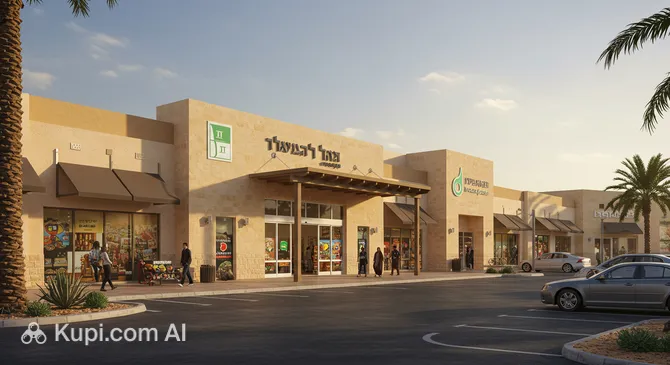
Yotvata Business Center. Illustration.
Source: Kupi.com AI

Traveler photos:

For those looking for classic night entertainment—dancing until dawn, cocktail bars, and loud music—the best solution would be a trip to neighboring Eilat. The resort capital is just a 40–50 minute drive south on Highway 90. There, a promenade with pubs, discos, and beach parties awaits you. Many tourists staying in quiet Yotvata prefer to spend their evenings there, returning to the kibbutz for a peaceful night's sleep.

Safety and Tips: Yotvata is an exceptionally safe place. You can walk around the kibbutz territory at any time of day without fear. Lighting on the main paths is good, but for walks deeper into the desert, it's better to have a flashlight. If you decide to go to Eilat by taxi, it's better to book a car in advance through your guesthouse administration, as "catching" a taxi on the highway at night is practically impossible. The average cost of a trip to Eilat can be high, so renting a car is a more practical option.

During the day, Yotvata's entertainment is of an educational and natural character. Guests can visit the unique Hai-Bar nature reserve, where the population of biblical animals is being restored, or learn more about life in the desert at the local information center. But it is in the evening, when the desert cools down, that this place reveals its true charm of peace and tranquility.

Parks & Museums

Even though Yotvata is a small settlement in the heart of the desert, it offers tourists amazing opportunities to get to know the unique nature and history of the region. Here, amidst the sands of the Arava, green zones and reserves have been created that allow you to see biblical landscapes and rare animals, while historical monuments tell of the times of Roman rule.

The main natural gem of the area is the Hai-Bar Yotvata Nature Reserve. This is a large-scale project for the breeding and reintroduction into the wild of animals mentioned in the Bible. The reserve's territory is divided into several zones: an open area for herbivores where you can go on a safari and see herds of white oryxes, ostriches, and wild asses, and a predator center. This place is a real living museum of nature, where visitors can observe desert fauna in its natural habitat.

For a more relaxed outdoor break, the landscaped area around the Yotvata Point complex is perfect. Although technically a rest area for the kibbutz, it is a true oasis with green lawns and shady picnic spots, which is a great rarity in an arid climate. Here, travelers can rest in the coolness of the trees after a long journey and enjoy the peaceful atmosphere of the settlement.

History lovers should visit the ruins of the Roman Fortress (Mezad Yotvata), located on a hill north of the kibbutz. This archaeological site functions as an open-air museum. The fortress was built in the era of Emperor Diocletian to guard a water source and a strategic crossroads of trade routes. Information plaques tell about the life of Roman legionnaires in the desert, and from the top of the hill, there is a breathtaking view of the valley, which allows you to appreciate the strategic importance of this place.

Another educational site is the Predator Center inside the Hai-Bar reserve. It is a kind of specialized fauna gallery where nocturnal desert inhabitants—foxes, wild cats, wolves, and hyenas—are kept in darkened rooms. The exhibition is designed so that visitors can observe the active life of animals during the hours when darkness usually reigns in the desert. This is a unique opportunity to see the hidden side of Arava life.

Insider Tip: If you want to see the desert in its pristine form, head to the Samar Sand Dunes, located just a few minutes' drive from Yotvata. These are the last surviving dunes in the Arava Valley, which are especially beautiful at sunset when the sand takes on a reddish hue. The place is ideal for meditative walks and beautiful photos away from tourist groups.

Getting Around

Given that Yotvata is a small kibbutz with a population of about 500 people, rather than a major metropolis, it lacks the usual city public transport system such as subways, trams, or trolleybuses. Within the settlement, distances are so small that they can easily be covered on foot in 10–15 minutes. However, the kibbutz is located on the strategically important Highway 90, which provides excellent connections to the outside world thanks to intercity buses.

The main and virtually only form of public transport linking Yotvata with the rest of the country is the bus. The "Yotvata Junction" stop is located right on the highway at the entrance to the kibbutz. Routes from the national company Egged regularly pass through it, heading to Eilat and back north to Tel Aviv, Jerusalem, Beersheba, and Haifa. The buses are modern, equipped with air conditioning (critically important in the desert), and Wi-Fi.

Fare Payment System in Israel is unified and completely converted to a cashless format. Bus drivers do not accept cash and do not sell tickets. To pay for your trip, you will need:

  • Rav-Kav card — a rechargeable transport card that can be bought at major bus stations (for example, in Eilat or Ramon Airport) or from the driver (anonymous card only, and it cannot be topped up through him).
  • Mobile apps — the most convenient way for tourists. Install Moovit, Pango, or Cello (HopOn). You need to link a credit card in the app and scan a QR code when boarding the bus. The system will calculate the trip cost at the end of the month.

If you plan active travel around the Arava Desert region, the best alternative to the bus is renting a car. This will give you freedom of movement and the opportunity to visit remote attractions where public transport does not reach, such as Timna Park or the Red Canyon. Rental offices are available at Ramon Airport and in Eilat. Taxi services are not based in the kibbutz itself; a car must be called from Eilat, which can be quite expensive due to the distance (about 40–50 km).

Practical Tips for Tourists:

  • Be sure to check the schedule in advance via the carrier's app or website. During Shabbat (from Friday evening to Saturday evening) and on Jewish holidays, public transport completely stops operating.
  • If you are waiting for a bus on the highway, be sure to signal the driver with your hand, otherwise he may drive past.
  • When using payment apps, make sure you have internet roaming or a local SIM card, as validation requires a network connection.

Accommodation

Staying in Yotvata is a unique experience that is very different from staying in standard city hotels. Since it is a small kibbutz, you won't find high-rise international chain hotels or luxury resort complexes with massive pools here. The main format of accommodation here is "Kibbutz Country Lodging," which offers tourists a cozy, homey atmosphere and a chance to get acquainted with the lifestyle in a desert oasis.

Typical accommodation in Yotvata consists of guest houses or small ground-level apartments (zimmers) located in the settlement's green zone. These are usually one-story buildings with simple but functional interiors, air conditioning (a must in the desert), a kitchenette, and a private veranda. This option is ideal for families with children and travelers seeking peace and union with nature. Stays here often include breakfast, which may be served in the kibbutz's communal dining hall or in a local cafe.

As for areas, the choice here is limited: all accommodation options are located directly on the kibbutz territory. This is very convenient, as the main attractions, such as the Hai-Bar reserve and the famous Yotvata Point complex, are within walking distance. Life inside the settlement is safe and quiet, allowing children to play freely on the lawns while adults relax after their journey.

For those who prefer a more "wild" holiday, there are specially equipped areas for camping and glamping in the surroundings of the Arava Desert. This is a budget-friendly option that allows you to sleep right under the starry sky. If you are looking for luxury, spas, and 5-star service, it makes sense to consider staying in the neighboring city of Eilat, located about 40 minutes away by car to the south, and visiting Yotvata for excursions.

Price Range and Booking:

The cost of staying in the kibbutz usually falls into the mid-price segment. It is more expensive than a hostel but more affordable than luxury hotels on the Red Sea coast. It is recommended to book accommodation in advance, especially if your trip falls on Jewish holidays (Passover, Sukkot) or weekends when demand from domestic tourists is very high. You can do this through popular international online platforms or by contacting the guesthouse administration directly.

Nearby Cities

For those who want to explore the surrounding area, Yotvata serves as an excellent starting point for day trips to several interesting nearby locations:

Beersheba — often called the "Capital of the Negev," this city is the closest major center on the list. A trip here will allow you to get acquainted with the history of the patriarchs at Abraham's Well, visit the Negev Zoo, or stroll through modern shopping centers and parks. It is a dynamically developing metropolis in the middle of the desert, combining antiquity and modernity.

Jerusalem — although the journey will take longer, a trip to this eternal city will be an unforgettable experience. World-significant holy sites, the colorful markets of the Old City, and unique museums are concentrated here. This destination is suitable for those ready to dedicate a day to a deep immersion in history and culture.

Ashkelon — an ancient port city on the Mediterranean coast. It attracts tourists with its national park featuring archaeological finds and beautiful beaches. This is an excellent choice for those who want to swap Yotvata's desert landscapes for sea breezes and green alleys.

CityPopulationDistance
Ovda14 km
Eilat51 93539 km
Aqaba148 39841 km
Taba4 00047 km
Haql25 64969 km

These nearby destinations provide an insight into the diverse culture and landscapes of the region.

Shopping & Souvenirs

Shopping:

General Overview: Shopping in Yotvata has its own unique characteristics, dictated by its location in the heart of the desert. You shouldn't expect multi-story malls or streets with brand boutiques here. Yotvata is primarily a kibbutz and a popular stop for travelers, so local trade is focused on selling authentic products of the region, souvenirs, and essential goods for those on the road. It is an ideal place to purchase "delicious" gifts and high-quality products from local farmers.

Main Shopping Areas: All the commercial life of the settlement is concentrated along Highway 90, in the famous roadside complex. This is the only location where tourists can find shops. Thanks to its compactness, you won't have to spend time searching: everything interesting is within walking distance of the parking lot and rest area, making shopping here quick and convenient.

Shopping Centers: The main point of attraction for buyers is the Yotvata Business Center. Despite the business-like name, it is more like a cozy shopping gallery with a wide range of goods. Here you can find departments with clothes and shoes (including the famous sandals and hats indispensable in the desert), cosmetics, books, and household goods. The store is designed in a modern style and offers comfortable air-conditioned shopping, which is especially valuable in the summer heat.

Gastronomic Shopping: Although there are no classic markets here, the grocery sections in the Yotvata Point complex and the neighboring store fulfill this role. There is an atmosphere of abundance here: shelves are bursting with the freshest dates of various varieties (the "Medjool" variety is especially prized), local honey, olive oil, and, of course, the famous dairy products. Tourists often buy nuts, dried fruits, and spices here, sold by weight or in beautiful gift packaging.

Souvenirs: It is customary to bring gifts from Yotvata that reflect the spirit of the desert and the craftsmanship of the kibbutzniks. Here is a list of what to look out for:

  • Dates and date products: silan (date honey), paste, and candies. This is the main sweet brand of the region.
  • Natural cosmetics: creams and lotions based on Dead Sea minerals or local herbs, which are often sold in the business center.
  • Branded merchandise: T-shirts, caps, and mugs with the Yotvata logo—a great souvenir for those who fell in love with this place.
  • Ceramics and jewelry: works by local artisans, which can be found in the souvenir sections.

Opening Hours and Payment: The shops in the Yotvata complex are oriented toward the flow of tourists, so they operate on a convenient schedule. Usually, the doors are open from early morning until late evening, without long breaks. Cash (New Israeli Shekels) and international bank cards are widely accepted for payment. It is worth remembering that Yotvata is not part of the Eilat duty-free zone (which starts further south), so prices here include VAT, and the Tax-Free system works according to standard Israeli rules.

Reached the end of the page?

That means the route is fully explored