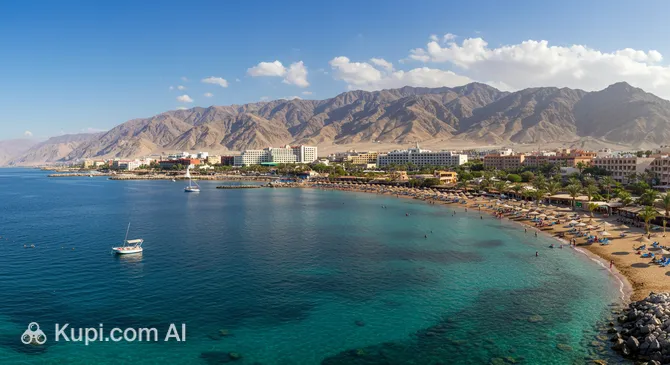
While Taba is not defined by manicured city parks or vast exhibition halls, its "green spaces" are spectacularly wild, encompassing protected desert reserves and vibrant underwater marine gardens. The city's cultural heritage is equally impressive, preserved within ancient fortifications and small galleries that celebrate the region's Bedouin roots and strategic history.
For nature enthusiasts, the Taba Protected Area is the region's most significant natural sanctuary. Spanning over 3,500 square kilometers, this desert reserve showcases the raw beauty of the Sinai Peninsula. Instead of grassy lawns, visitors will find dramatic geological formations, deep valleys, and natural freshwater springs known as "Ein." The park is a haven for biodiversity, home to rare species such as the Nubian ibex and the hyrax, as well as a multitude of resident and migratory birds. It offers a profound silence and a stark, majestic landscape that stands in contrast to the coastal resorts.
The city's other great "park" lies beneath the waves. The waters surrounding Taba, particularly around Pharaoh’s Island, function as a protected marine park. These coral gardens are among the most pristine in the Red Sea, teeming with lionfish, moray eels, and colorful anthias. Unlike a traditional botanical garden, this underwater realm invites exploration through snorkeling and diving, offering an immersive experience into a living, breathing ecosystem that has thrived for centuries.
In terms of museums, the Taba Museum is a modest but culturally significant venue located within the city. It houses three main halls dedicated to the history of South Sinai. One hall focuses on the region's ancient history, displaying artifacts from the Pharaonic to the Islamic periods. Another highlights the rich heritage of the local Bedouin tribes, showcasing traditional jewelry, clothing, and tools. The museum also documents the modern history of the Taba border dispute and its peaceful resolution, making it an educational stop for those interested in the town's geopolitical significance.
Architecturally, the landscape is dominated by the Citadel of Salah El-Din. While primarily a fortress, it serves as an open-air museum where visitors can walk through restored towers, sleeping quarters, and mosques from the 12th century. The site offers a tangible connection to the Ayyubid dynasty and the Crusades, providing historical context to the stunning views.
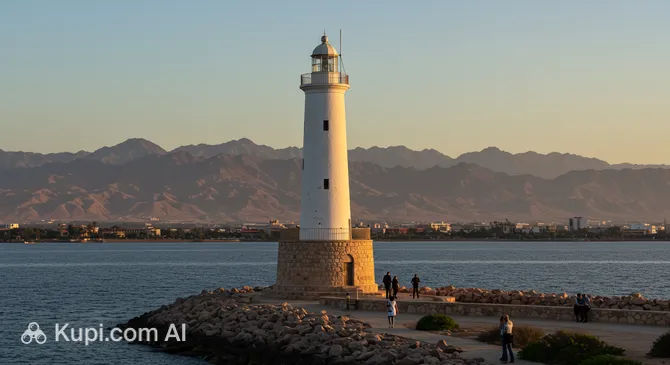
Another unique cultural landmark is Castle Zaman. Although it is a modern construction, it was built using ancient techniques to replicate a medieval fortress. Perched on a cliff, it functions as a slow-food venue and a cultural retreat rather than a traditional museum. From its terraces, visitors can enjoy a panoramic view of the Gulf of Aqaba, spotting landmarks across the water such as the Eilat Lighthouse, which shines as a beacon from the neighboring coast, symbolizing the close proximity of nations in this region.
For a truly authentic experience, look beyond the standard tour stops and visit the Wishwashi Canyon, located a short drive away in the Nuweiba direction. Often missed by mainstream tourism, this hidden gem features a natural rainwater pool nestled between towering granite walls. It is a favorite spot for locals and adventurous travelers seeking a refreshing swim in a surreal, secluded setting.