Support

Nazareth

About

Nazareth is a city where antiquity is harmoniously interwoven with modernity, and the air is literally steeped in legends. Located in the heart of Galilee, on the picturesque hills of Northern Israel, Nazareth enchants with its cozy streets, vibrant bazaars, and unique oriental flavor. Surrounded by green valleys and olive groves, its panoramic views serve as an inspiration for artists and photographers from all over the world.
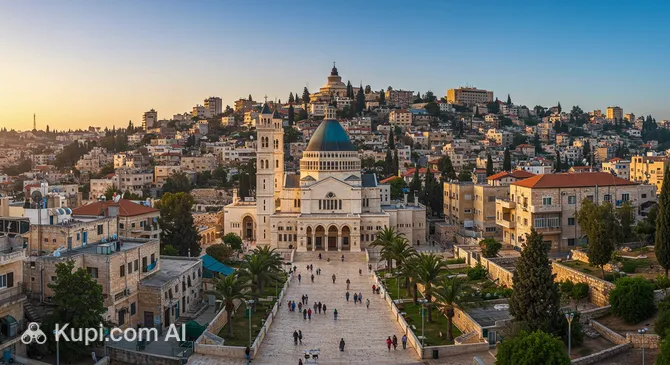
Nazareth. Illustration.
Source: Kupi.com AI

With a population of about 83,400 people, Nazareth is considered the largest Arab city in the country and one of the most important Christian centers. According to tradition, it was here that Jesus Christ spent his childhood and youth, making the city a place of pilgrimage for millions of believers and travelers. A unique feature of Nazareth is that Sunday is an official day off, unlike most other Israeli cities where Saturday is the day of rest.

The atmosphere of Nazareth is an amazing combination of an oriental fairy tale, sincere hospitality, and spiritual greatness. The city seems designed for leisurely strolls: from majestic cathedrals housing centuries of history to bustling markets where the air is filled with the aromas of spices and fresh pastries. Visiting local coffee shops will allow you to dive deeper into the authentic atmosphere and get acquainted with local traditions.

Nazareth is a place where every stone holds its own story, and locals are happy to share legends passed down from generation to generation. A trip here will give you the opportunity to feel the breath of antiquity, enjoy original cuisine, and recharge with the special energy of this amazing corner of the Earth.

You can find more interesting facts on the history of Nazareth page.
Weather Overview

The weather in Nazareth is characterized by hot, dry summers and mild, wetter winters. In summer, especially in July and August, average temperatures reach 28-29°C, and maximums can rise to 34°C, with almost no precipitation. Winter months, such as January and December, bring cooler weather with average temperatures around 12-15°C and the highest amount of rainfall, although it remains moderate.

Spring and autumn are transitional seasons with comfortable temperatures and few rainy days. For example, in April the average temperature is about 19°C, and in October it is about 24.5°C. In general, expect hot, dry summers with temperatures often exceeding 30°C, and mild, wetter winters where the average temperature stays around 12-15°C and precipitation is more likely. For more detailed information on the weather by month, you can visit the Nazareth Climate page.

Average monthly temperature

Average monthly precipitation

Interesting Facts

In addition to its worldwide fame, Nazareth holds many fascinating secrets and little-known stories that make it even more attractive to travelers. Here are just a few that can surprise and inspire a deeper acquaintance with this ancient city:

Church of the Annunciation. Illustration.
Source: Kupi.com AI

Traveler photos:

  • One of the main shrines and architectural gems of the city is the Basilica of the Annunciation. This majestic temple, built on the site where, according to tradition, the Archangel Gabriel announced the coming birth of Jesus to the Virgin Mary, is recognized as one of the most beautiful and significant Christian churches in the world. Its interiors are decorated with unique mosaics donated by Catholic communities from different countries.

  • The city is shrouded in many legends, and one of the most famous is associated with Mary's Well (also known as the Well of the Virgin Mary). Tradition says that the water from this spring has healing powers, and to this day many pilgrims and tourists seek to collect some water as a souvenir or in hope of healing.

  • In Nazareth, you can take a real trip back in time by visiting a unique open-air museum — Nazareth Village. Here, the atmosphere of a Galilean village from the time of Jesus is recreated with amazing precision: you can see traditional houses, craft workshops, and even agricultural land. Actors in historical costumes conduct fascinating tours and workshops, immersing visitors in the life of that era.

How to Get There

When planning a trip to the north of the country, it is important to think about logistics in advance, so we recommend studying all the ways to get to the city. Since Nazareth itself does not have its own airport, the main hub for foreign tourists is Ben Gurion Airport (TLV). It is located near Tel Aviv, about 86 km from Nazareth. This is the country's main air gateway with a huge passenger flow, receiving flights from all over the world. A trip from the airport to Nazareth by taxi or rental car will take about 1.5 hours. There is also a convenient public transport connection: you can take a train to Haifa or Afula and then transfer to a bus.

If you are looking for a closer option, pay attention to Haifa Airport (HFA). It is located in the city of Haifa, just 27 km from Nazareth. This airport is much smaller and mainly serves local and short-haul flights, but its geographical proximity allows you to reach your destination in just 30–40 minutes by car. For travelers arriving via neighboring Jordan, Queen Alia International Airport (AMM) in Amman (about 126 km) may be relevant. When choosing this route, it is important to consider the need to cross the state border between Jordan and Israel, which will require additional time for border control.

For clarity, here is summary information on the main available airports:

AirportPassenger trafficDistance
Haifa Airport275 00027 km
Ben Gurion International Airport21.1 mln86 km
Beirut-Rafic Hariri International Airport5.6 mln126 km
Queen Alia International Airport9.2 mln126 km
Damascus International Airport2.1 mln138 km

Main Attractions

Nazareth, a city with a rich history and deep spiritual significance, attracts pilgrims and tourists from all over the world. It is home to many shrines and interesting places that allow you to touch the past and feel the special atmosphere of this ancient city.

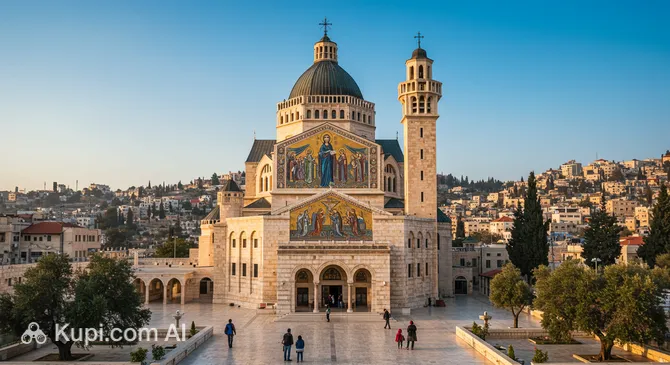
Church of the Annunciation. Illustration.
Source: Kupi.com AI

Traveler photos:

One of the main jewels of Nazareth is the Basilica of the Annunciation. It is the largest Christian church in the Middle East, built, according to tradition, on the site where the Archangel Gabriel announced the future birth of Jesus to the Virgin Mary. The majestic architecture, mosaics donated by different countries, and the Grotto of the Annunciation inside the basilica leave an indelible impression on visitors.

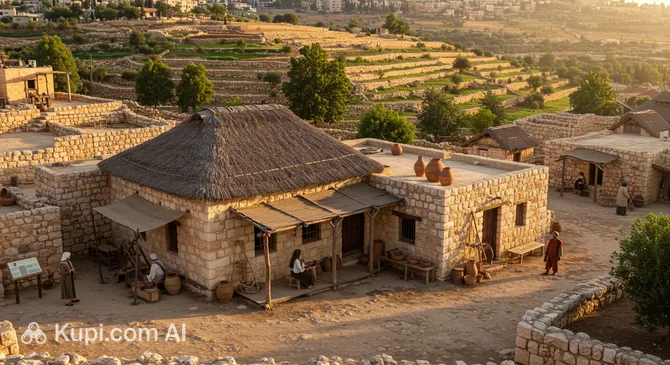
To immerse yourself in the atmosphere of Jesus' time, it is worth visiting Nazareth Village. This is a unique open-air museum that recreates the life and culture of first-century Galilee. Here you can see reconstructed houses, a synagogue, an oil press, as well as observe artisans working in historical costumes, which makes this place especially interesting for those who want to visually imagine life in that era.

Nazareth Village. Illustration.
Source: Kupi.com AI

Traveler photos:

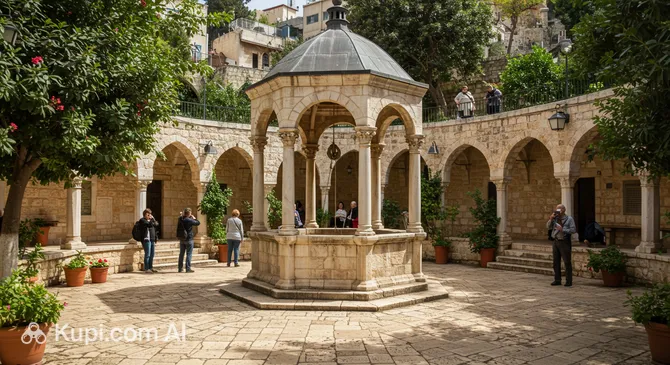
An equally significant place is Mary's Well, also known as the Well of the Virgin Mary. According to tradition, it was here that the Virgin Mary drew water. Today it is a pilgrimage site where you can see the ancient spring, over which the Greek Orthodox Church of the Annunciation is built. Visiting the well allows you to feel a connection with biblical events and traditions.

Mary's Well. Illustration.
Source: Kupi.com AI

Traveler photos:

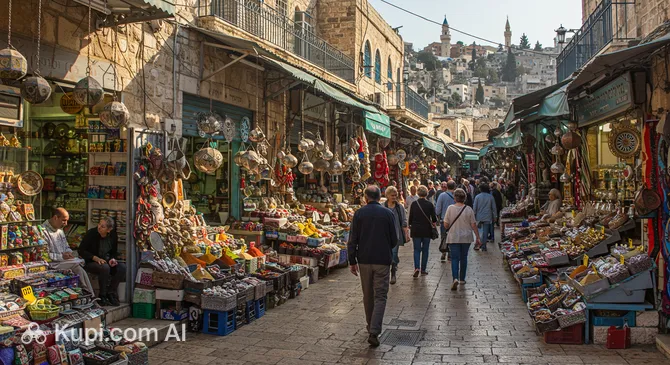
For those who want to feel the flavor of modern city life and purchase souvenirs, the Nazareth Market is a must-see. This lively oriental bazaar, located in the Old City, offers a wide selection of spices, sweets, local delicacies, clothing, and handmade products. Walking through the narrow streets of the market is a true immersion into local culture and an opportunity to find unique gifts.

Local Cuisine

The gastronomic scene of Nazareth is a bright and fragrant journey where Arabic, Middle Eastern, and Mediterranean culinary traditions are closely intertwined. The city is famous for its authentic cuisine, offering dishes that will delight any gourmet. Here everyone will find something to their taste, from hearty main courses to delicious desserts and drinks.

Be sure to try the local hits: hummus and falafel. Nazareth is rightfully considered one of the best places in Israel for tasting hummus — it is prepared here in dozens of family cafes according to ancient recipes passed down from generation to generation. No less popular is falafel — crispy chickpea balls served in fresh pita with vegetables and sauces. Also, pay attention to meat dishes cooked over charcoal, which exude an incredible aroma.

For those with a sweet tooth, Nazareth offers a rich selection of traditional desserts. Try ma'amoul — crumbly cookies filled with dates or nuts, or qatayef — delicate pancakes with nut filling, especially popular during holidays. In local markets and street stalls, you will find fresh dates, halva, baklava, and many other oriental sweets.

Regarding drinks, you should prefer fresh pomegranate juice, which is sold everywhere, especially in season. Don't miss the opportunity to enjoy a cup of aromatic coffee with cardamom — it is brewed here with special skill. As for alcoholic beverages, you can find local beer and wine in restaurants, as well as the traditional anise-flavored drink, arak.

The food culture in Nazareth is very diverse. Locals and tourists alike love to visit small family restaurants serving home-cooked meals. Street food is also very popular — it's a quick and tasty way to grab a bite. Markets hold a special place, such as the famous Nazareth Market. Here you can not only buy the freshest products — vegetables, fruits, spices, local cheeses — but also dive into the true atmosphere of the East, try street food, and simply observe the life of the city.

Nazareth Market. Illustration.
Source: Kupi.com AI

Traveler photos:

Nazareth often becomes a venue for gastronomic festivals where you can get acquainted with the culinary diversity of the region, try unique delicacies, and even participate in workshops from local chefs. These events turn the city into a true celebration of taste and hospitality, attracting fine food connoisseurs from all over the world.

Travel Tips

Welcome to Nazareth! To make your journey through this ancient and spiritually rich city as comfortable and memorable as possible, we have prepared some practical tips.

  1. Clothing and Essentials:

    The climate in Nazareth is Mediterranean, with hot, dry summers and mild winters. In summer, choose light, breathable clothing made of natural fabrics, a hat, sunglasses, and sunscreen. In winter, layered clothing, including a sweater and a light jacket, will be useful. Key point: when visiting the numerous holy sites (churches, mosques), modest clothing covering the shoulders and knees is mandatory for both men and women. Bring comfortable shoes for walking the hilly streets of the old city and a universal adapter for electronics.

  2. City Transport:

    The most convenient way to get around Nazareth itself is on foot, especially in the Old City with its narrow streets. Public transport is mainly represented by buses that connect different parts of the city and the surrounding areas. Taxis are available; you can use local services or apps. Renting a car can be useful if you plan to explore the Galilee region, but keep in mind that parking in the center of Nazareth can be problematic.

  3. Finance and Currency:

    The official currency in Israel, including Nazareth, is the Israeli New Shekel (ILS). You can exchange currency at banks or exchange offices. Credit and debit cards (Visa, MasterCard) are widely accepted in most hotels, restaurants, and shops. ATMs are easy to find throughout the city. Tipping in restaurants is usually 10-15% of the bill and is often not included, so be prepared to leave it in cash or add it to the card payment.

  4. Health and Safety:

    Nazareth is generally considered a safe city for tourists. Follow usual precautions: watch your belongings in crowded places and avoid displaying valuables. Pharmacies are available in the city, but not all are open 24/7. In case you need medical assistance, Israel has a high level of medical care; ensure you have valid travel insurance.

  5. Communication and Language:

    The official languages in Israel are Hebrew and Arabic. In Nazareth, Arabic is widely spoken. Many residents, especially in the tourism sector, speak English well. Learning a few simple phrases in the local language will always be appreciated: "Shalom" (hello/peace in Hebrew), "Salam" (hello/peace in Arabic), "Toda" (thank you in Hebrew), "Shukran" (thank you in Arabic). A local SIM card can be purchased at the airport or in the city. Wi-Fi is available in most hotels and many cafes.

  6. Local Etiquette and Traditions:

    Residents of Nazareth are generally hospitable. When communicating, be polite and respectful of local customs. A handshake is a common form of greeting. Given the city's religious significance, show special respect when visiting holy sites — besides the dress code, behave quietly and with restraint. Only take photos of people with their permission.

  7. What to Avoid:

    Try not to dress too revealingly, especially when visiting religious quarters and shrines — this may be perceived as disrespectful. Avoid loud arguments or discussing sensitive political topics in public places. Also, do not photograph military facilities or personnel without permission.

  8. Shabbat Features and Markets:

    Although Nazareth has a significant Arab Christian and Muslim population, and the influence of Shabbat (from Friday evening to Saturday evening) may be less pronounced than in other Israeli cities, some Jewish establishments may be closed or work on a reduced schedule. Be sure to visit the colorful market in the Old City — it is a great place for buying souvenirs, spices, and getting to know local life.

We hope these tips help you better prepare for your trip and get the most out of your visit to amazing Nazareth. We wish you an unforgettable experience!

Entertainment & Nightlife

Evening Nazareth offers its guests a special atmosphere, different from noisy metropolises. Here, nightlife is more conducive to cozy get-togethers, delicious dinners, and leisurely walks rather than wild parties. Nevertheless, it is quite possible to find a pleasant place for evening relaxation in the city, especially if you appreciate authenticity and hospitality.

The main evening activity in Nazareth is concentrated around restaurants and cafes, many of which offer local and Middle Eastern cuisine. The streets of the Old City are particularly atmospheric, where small establishments beckon with the aromas of spices after dark. In newer parts of the city, you can also find modern restaurants and bars with a more familiar European menu. The atmosphere in most places is quite relaxed and conversational. The dress code is usually casual, unless it is a particularly fine-dining restaurant.

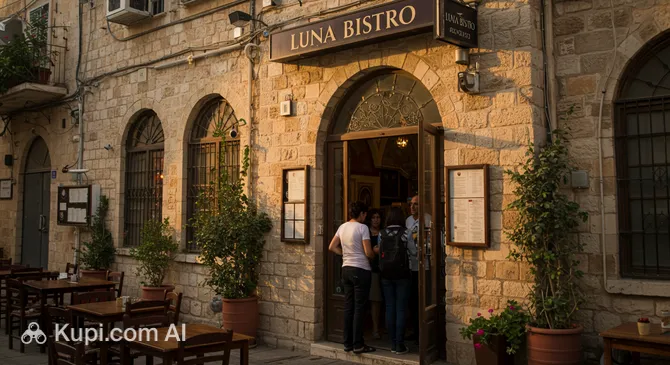
Among the places where you can spend a pleasant evening, it is worth noting, for example, Luna Bistro, known for its cuisine and atmosphere. Another popular option for dinner is Asado Restaurant, where you can enjoy meat dishes. Although Nazareth is not famous for a large number of nightclubs, some bars and restaurants stay open until late evening, offering drinks and light music. It's best to start an evening out around 8-9 PM. Prices in establishments can vary but generally remain moderate.

Luna Bistro. Illustration.
Source: Kupi.com AI

Traveler photos:

The most convenient way to get around the city at night is by taxi. It is recommended to use official services or order a car through apps. In general, Nazareth is considered a safe city, but as everywhere, it is worth sticking to well-lit and busy streets after dark, especially if you are walking alone.

During the day, Nazareth offers a rich cultural program. You can explore numerous historical and religious shrines, such as the famous Basilica of the Annunciation or the Greek Orthodox Church of the Annunciation. Be sure to stop by the colorful Nazareth Market to find souvenirs and local products, or visit the unique Nazareth Village complex, which recreates life from the time of Jesus. For shopping enthusiasts, there are shopping centers like Nazareth Fashion.

Parks & Museums

Nazareth, a city with a rich history and spiritual heritage, offers its guests not only pilgrimage routes but also an introduction to unique cultural objects. Although Nazareth is primarily known for its shrines, you can also find interesting places here to immerse yourself in history and culture, and the surrounding Galilean landscapes add charm to this ancient city.

While there are not many extensive park areas in the heart of Nazareth's old city, its location among the hills of Lower Galilee opens up opportunities for enjoying nature. Walks in the surrounding area or a climb to one of the observation decks will reward you with panoramic views of the city and picturesque landscapes. Within the city itself, you can find small squares and landscaped areas at churches where you can take a break.

A key place for understanding the historical context is Nazareth Village — a unique open-air museum recreating the life and atmosphere of Nazareth at the time of Jesus. Visitors can see restored houses, a synagogue, olive presses, and observe the work of craftsmen dressed in historical costumes. This place offers a live immersion into history and will be of interest to both adults and children.

Nazareth Village. Illustration.
Source: Kupi.com AI

Traveler photos:

Among the city's main cultural and architectural landmarks, the Basilica of the Annunciation stands out. It is one of the largest churches in the Middle East, built on the site where, according to tradition, the Archangel Gabriel announced the future birth of Jesus to the Virgin Mary. The modern building of the basilica, consecrated in 1969, impresses with its architecture and mosaics donated by Christian communities from all over the world. Nearby is the Church of Saint Joseph, which is also worth visiting.

Church of the Annunciation. Illustration.
Source: Kupi.com AI

Traveler photos:

No less significant is Mary's Well (also known as the Well of the Virgin Mary), located inside the Greek Orthodox Church of the Annunciation. According to Orthodox tradition, the first Annunciation took place here. This place attracts pilgrims and tourists with its ancient history and spiritual atmosphere.

Mary's Well. Illustration.
Source: Kupi.com AI

Traveler photos:

In addition to these iconic places, the historical center of Nazareth is an attraction in itself. Stroll through the narrow streets of the old city, and check out the Nazareth Market, where you can feel the local flavor and buy souvenirs and spices. It is also worth visiting the Salesian Church of Jesus the Adolescent, which offers a magnificent view of the city.

For a more authentic experience, turn off the main tourist paths deep into the residential quarters of the Old City to see the everyday life of Nazareth. Also, do not miss the opportunity to try local Arabic cuisine in one of the many restaurants — it is an important part of the cultural experience.

Getting Around

Public transport in Nazareth is mainly represented by a bus network that connects various areas of the city and provides links to surrounding towns. To get around the historical center and see many of the city's sights, it is convenient to travel on foot, as distances here are short.

The main way to pay for bus travel is the Rav-Kav transport card. This card can be purchased and topped up at machines, the central bus station, or at special points of sale. There are anonymous cards that can be bought without registration, and personal cards that require registration. The card can be topped up with a specific amount ("electronic wallet" mode) or used to purchase various types of passes. When entering the bus, the Rav-Kav card must be tapped against a special validator, usually located near the driver or at the doors, to register the trip. In some cases, cash payment directly to the driver is possible, but using Rav-Kav is usually more profitable and convenient. The approximate cost of a single trip on a city bus when paying with a Rav-Kav card is about 5-7 New Israeli Shekels, but it may vary depending on the distance and type of route.

Buses in Nazareth run according to a schedule, which can be checked at bus stops, on transport companies' websites, or using mobile travel planning apps (e.g., Moovit or Google Maps). Transport hours usually cover the period from early morning until late evening. It is important to consider that on Friday evening and Saturday (during Shabbat), public transport services may be significantly restricted or completely absent. It is recommended to plan your trips in advance, especially on weekends and holidays.

As an alternative to buses, taxis are always available in Nazareth. They can be called by phone, via mobile apps, or found at special taxi stands. The cost of a taxi trip will be higher than by bus, but it is a convenient option for door-to-door trips or at night. Another common type of transport is shared taxis, known as sheruts. They often follow popular bus routes or connect Nazareth with other cities. Sheruts can be hailed with a wave of the hand along the route (if there are free seats) or found at special stands. Payment in sheruts is usually made in cash directly to the driver upon boarding or exiting. Car-sharing and bike rentals are less common in Nazareth as primary ways of moving around for tourists, however, for exploring the surroundings, you can consider renting a car at one of the rental points.

Accommodation

In Nazareth, tourists have access to a wide range of accommodation options capable of satisfying various preferences and budgets. Here you can find both inexpensive hostels and guesthouses, as well as comfortable mid-range hotels and apartments for those who prefer more independence. There are fewer luxury resorts in the traditional sense in Nazareth itself; the emphasis is on more authentic and cozy stays.

The most popular areas for tourists are those located near the Old City and the main attractions, such as the Basilica of the Annunciation or Mary's Well. Staying here allows you to easily reach shrines and historical sites on foot. Accommodation options with good access to transport hubs are also convenient if you plan trips around the surrounding area.

When planning a trip to Nazareth, especially during Christian holidays or at the height of the tourist season, it is recommended to book your accommodation in advance. This will allow you to choose the best option in terms of price and quality, as well as guarantee availability. The main booking methods are popular online platforms and, in some cases, direct contact with the hotel or guesthouse.

The price range for housing in Nazareth varies from budget options to mid-range and above-average offers. You can always find something suitable, whether it is a modest room in a hostel or a cozy room in a hotel with good service.

Nearby Cities

For those who want to explore the surrounding area, Nazareth serves as an excellent starting point for day trips to several interesting nearby locations:

CityPopulationDistance
Migdal HaEmek25 6006 km
Afula60 00010 km
Shefa-Amr41 60017 km
Sakhnin31 10018 km
Yokneam Illit21 38319 km

These nearby destinations provide an insight into the region's diverse culture and landscapes.

Shopping & Souvenirs

Nazareth offers tourists a unique shopping experience that combines modern shopping centers with the flavor of oriental bazaars. The city is famous for its religious artifacts, handmade products, aromatic spices, and traditional sweets. Here you can find both unique souvenirs reminiscent of the holy places and everyday goods.

The main shopping spots are concentrated in the Old City, where narrow streets abound with small shops and workshops. Here you can immerse yourself in the atmosphere of an ancient market while choosing souvenirs, ceramics, textiles, and local delicacies. Shops can also be found along the main streets leading to the primary attractions.

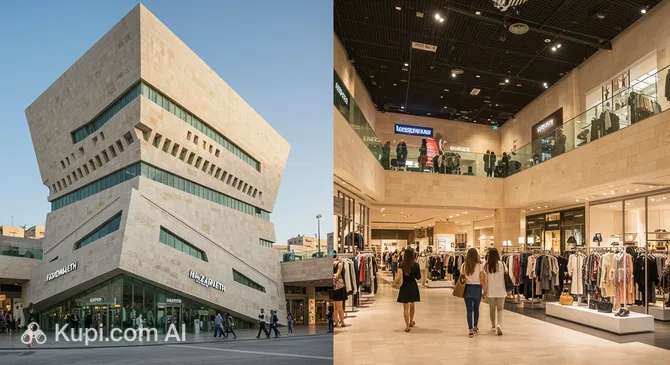
For those who prefer modern shopping, there are several shopping centers in Nazareth and its surroundings. One popular option is Nazareth Fashion, offering a wide selection of clothing, footwear, accessories, and home goods from well-known brands. It is also worth paying attention to the Nof HaGalil Center, where you can find a variety of goods and spend time in a cafe.

Fashion Nazareth. Illustration.
Source: Kupi.com AI

Traveler photos:

The heart of commerce in Nazareth is undoubtedly the famous Nazareth Market (souk) in the Old City. This is a lively place where you can buy fresh produce, fruits, vegetables, oriental sweets, spices, olives, as well as souvenirs, clothing, and household items. The atmosphere of the market, its smells, and sounds make it a must-visit place, even if you are not planning any major purchases.

As souvenirs from Nazareth, tourists often bring back religious items (icons, crosses, rosaries), olive wood products (figurines, dishes), handmade ceramics, embroidered tablecloths and scarves, as well as local spices, dates, olive oil, and cosmetics based on Dead Sea minerals. Traditional Arabic sweets are also popular.

Shops in Nazareth are usually open from Sunday to Thursday, from approximately 9:00-10:00 AM to 7:00-8:00 PM. On Friday, many shops close earlier in the afternoon ahead of Shabbat. Saturday is predominantly a day off, especially in Jewish areas, but some shops in the Arab part of the city may be open. In tourist zones and shopping centers, the schedule may be more flexible. Both cash (Israeli shekels) and bank cards are accepted for payment. In small shops and at the market, cash is preferred.

Tourists in Israel can take advantage of the VAT refund system (Tax Free) on goods purchased in participating stores. Usually, this requires making a purchase of a certain amount and correctly filling out the documents in the store. The tax refund can be obtained at the airport when departing from the country.

Nearby cities

Reached the end of the page?

That means the route is fully explored