Support

Lecce

About

Lecce is a true gem of southern Italy, a city often called the "Florence of the South" thanks to its incredible Baroque architecture. Located on the Salento Peninsula in the heart of the Puglia region—on the so-called "heel" of the Italian boot—Lecce is just a few kilometers from the Adriatic and Ionian Seas. This cozy city, with a population of about 95,000 people, is the administrative center of the province of the same name and enchants visitors with its unique atmosphere where history meets a vibrant cultural life.

Lecce's main pride is its unique architectural style, known as "Lecce Baroque". Strolling through its historical center, you will be amazed by the abundance of churches, palaces, and houses richly decorated with exquisite carvings. The buildings are constructed from local golden limestone, which gives the city a particularly warm hue, especially at sunset. Every street and square here breathes history, inviting you to get lost in the labyrinths of the old town and discover its treasures.
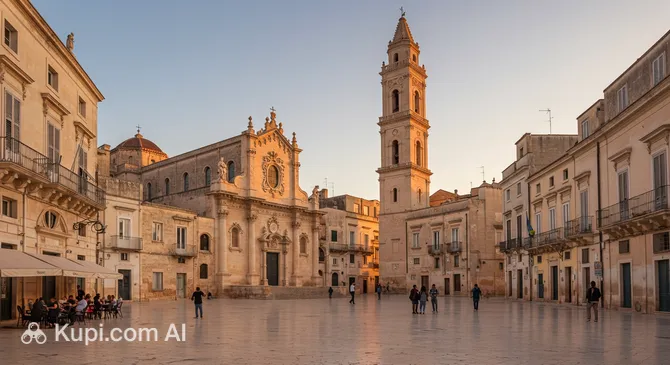
Lecce. Illustration.
Source: Kupi.com AI

The atmosphere in Lecce is special—a spirit of leisurely enjoyment of life, or "la dolce vita," reigns here. Cozy squares with cafes where you can drink a cup of aromatic coffee, the sounds of street musicians, and the scent of fresh pastries all create a unique local flavor. The city is ideal for those who appreciate art, magnificent local cuisine, and the authentic Italian spirit.

If you are looking for a place to immerse yourself in a rich culture, enjoy architectural masterpieces, and feel true Southern Italian life, then Lecce should undoubtedly be on your list.

You can find more interesting facts on the Lecce city history page.
Weather Overview

The weather in Lecce is characterized by a typical Mediterranean climate. Summers here, especially during the peak months of July and August, are hot and very sunny. The average temperature during this period stays around 28°C, with maximum values often exceeding 30-32°C. Precipitation in summer is minimal; in July, there is almost none. Winters in Lecce are mild: the average temperature in January is approximately 10.5°C, while night temperatures rarely drop below 7-8°C. In winter, the number of rainy days increases compared to summer, but heavy precipitation is not typical. Overall, expect hot and predominantly dry summers, and mild winters with a few rainy days. For a more detailed study of weather conditions by month, we recommend visiting the Lecce climate page.

Average monthly temperature

Average monthly precipitation

Interesting Facts

In addition to its magnificent Baroque churches and palaces, Lecce holds many fascinating secrets and unexpected details that make it even more alluring to the curious traveler. Ready to learn a few of them?

Basilica of Santa Croce. Illustration.
Source: Kupi.com AI

Traveler photos:

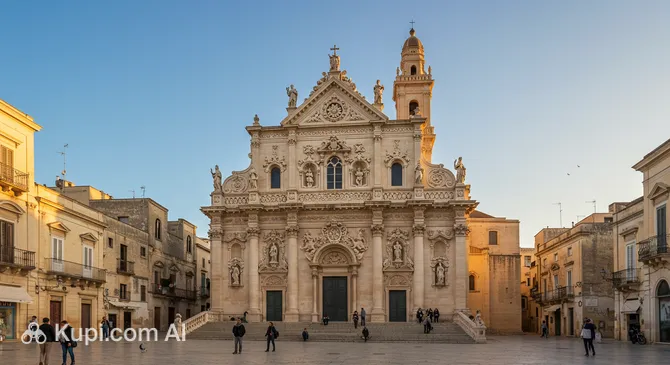
  • The city's unique architectural style, known as "Lecce Baroque" (barocco leccese), owes its lush forms and incredible detail to a special local stone—"pietra leccese." This soft and pliable golden-hued limestone allowed 17th-18th century masters to create complex sculptural compositions directly on building facades. One of the most striking examples of this style is the Basilica of Santa Croce.

  • In the very heart of Lecce, on the busy Piazza Sant'Oronzo, you can see the impressive ruins of a 2nd-century AD Roman amphitheater. It once held up to 25,000 spectators, and today part of it is excavated, serving as a reminder of the city's ancient history. Nearby is the Roman Theater of Lecce, which also dates back to antiquity and is still occasionally used for cultural events.

  • A true underground world is hidden beneath the paved streets of Lecce. One of the most amazing pieces of evidence for this is the Faggiano Museum. During restoration work in an ordinary private house, the owners accidentally discovered an entire complex of archaeological layers dating back 2,500 years: from the tombs of the Messapians (an ancient people who inhabited this territory) to Roman cisterns and medieval passages.

  • Lecce's coat of arms depicts a she-wolf standing under an oak tree. This symbolism is linked to ancient legends about the city's foundation. According to one version, the city's name comes from the word "lupiae" (wolf's place), indicating ancient roots that go back to pre-Roman times. Thus, the she-wolf symbolizes the strength and antiquity of the city.

How to Get There

Reaching Lecce, the Baroque jewel on the "heel" of the Italian "boot," is possible in several ways. The most popular options are flying to one of the nearest airports followed by a transfer, as well as traveling by train, as the city has excellent rail connections with other regions of Italy.

The main airport serving Lecce and the entire Salento region is Brindisi – Salento Airport (IATA: BDS). It is located in the city of Brindisi, about 39 km north of Lecce. This is a major airport that receives many flights from Italian and European cities. A trip from Brindisi Airport to Lecce by taxi or rental car takes about 30-40 minutes. Bus shuttles connecting the airport with the center of Lecce are also available.

Another option, especially if you are flying from more distant points or looking for more flight options, could be Palese Airport (IATA: BRI) in Bari. This is a very large international airport located about 150 km north of Lecce. From Bari Airport, you can reach Lecce by train (first to Bari Central Station, then a direct train to Lecce), by bus, or by car, which will take about 1.5-2 hours.

For clarity, here is summary information on the airports that may be convenient for a trip to Lecce:

AirportPassenger trafficDistance
Brindisi - Salento Airport3.0 mln39 km
Palese Airport6.5 mln148 km
Ioannis Kapodistrias Airport4.1 mln170 km
Tirana International Airport10 mln176 km
Crotone310 000177 km

Lecce has its own central railway station (Stazione di Lecce), which is an important transport hub in Puglia and the terminal station for many routes along the Adriatic coast. Trenitalia trains regularly arrive here, including high-speed Frecciargento and Frecciarossa services from major cities in Italy such as Rome, Milan, Bologna, Turin, and Venice, as well as from Bari and other regional centers. This makes train travel a very convenient way to arrive directly in the heart of the city.

If your route passes through neighboring cities or you are considering alternative railway hubs, the nearest station from the provided list is Brindisi Railway Station. It is located in Brindisi, approximately 37 km from Lecce. Frequent regional trains run from Brindisi station to Lecce, with a travel time of about 20-30 minutes. This station can be convenient if, for example, you arrive in Brindisi by another mode of transport and plan to continue your journey to Lecce by train.

For additional information, here are details on some railway stations in the region that may be part of your route:

StationPassenger trafficDistance
Brindisi Railway Station2.5 mln37 km
Bari Centrale Station14 mln139 km
Durres Railway Station2 000152 km
Lamezia Terme Centrale Railway Station1 mln229 km
Salerno Railway Station6 mln291 km

Additionally, Lecce is easily accessible by car. The city is connected to the main network of Italian motorways. For example, the SS16 Adriatica highway passes directly next to Lecce, providing convenient access from Bari and other cities along the Adriatic coast. Renting a car can be a good option for exploring the Salento region with its many beaches and charming towns.

Main Attractions

Lecce, often called the "Florence of the South," is famous for its unique Baroque architecture made from local, pliable, honey-hued limestone. The city offers many amazing places to explore, each preserving a piece of its rich history and culture.

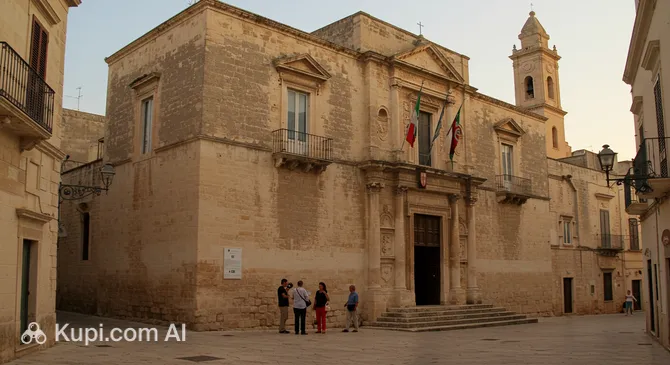
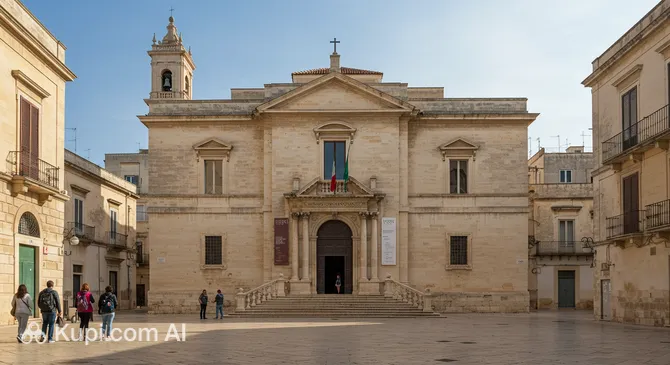
The jewel of Lecce's architecture is undoubtedly the Basilica of Santa Croce. This magnificent temple is the most striking example of the "Lecce Baroque" style. Its facade captures the imagination with an incredible amount of detail, sculptures, and ornaments carved from local golden limestone. Inside, the basilica is no less impressive, with a richly decorated interior and altars, making it a must-visit for art and architecture lovers.

Basilica of Santa Croce. Illustration.
Source: Kupi.com AI

Traveler photos:

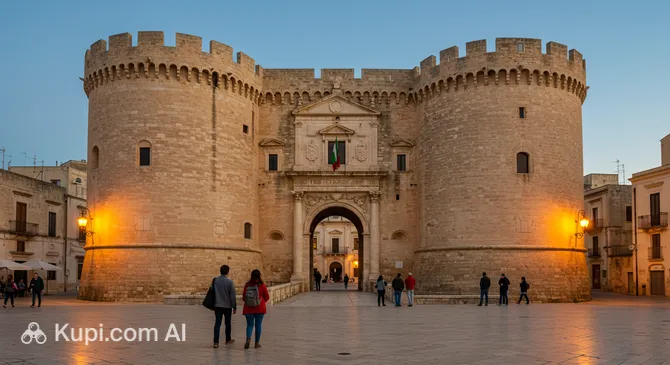
Not far from the basilica stands the mighty Castle of Charles V—a witness to centuries of the city's history. Built in the 16th century by order of Emperor Charles V on the site of earlier fortifications, it served as an important defensive structure. Today, the fortress is open to visitors and frequently hosts exhibitions and cultural events. Walking along its walls and courtyards allows you to feel the spirit of the past and enjoy panoramic views of Lecce.

Castle of Charles V. Illustration.
Source: Kupi.com AI

Traveler photos:

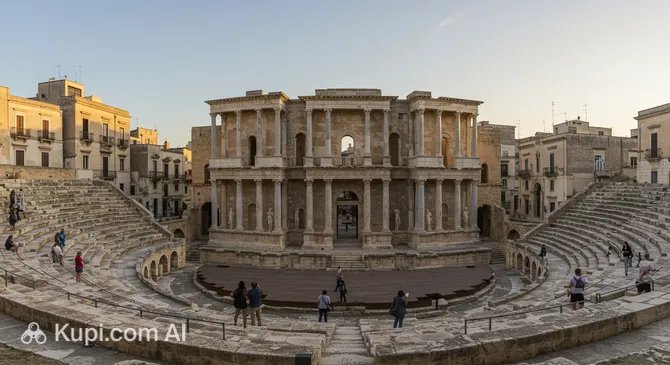
An amazing find in the heart of the Baroque city is the Roman Theater in Lecce. Discovered by chance in the early 20th century, this 2nd-century AD theater testifies to Lecce's ancient history, which dates back to the Roman Empire. Although only part of the structure has survived, its size and architecture are impressive, transporting visitors back thousands of years. This site allows you to touch the city's ancient past, contrasting with the surrounding Baroque buildings.

Roman Theatre of Lecce. Illustration.
Source: Kupi.com AI

Traveler photos:

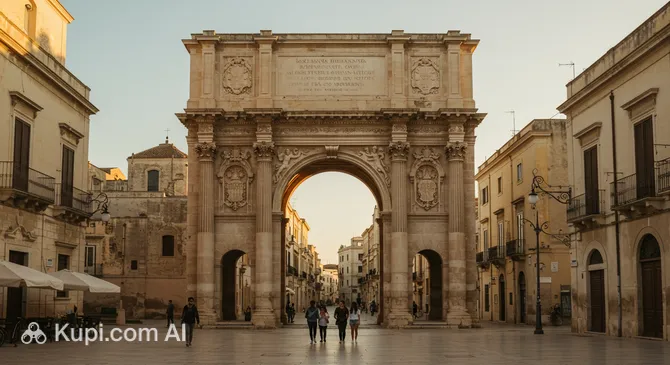
One of the symbolic entrances to the historical center of Lecce is Porta Napoli. This triumphal arch was erected in 1548 in honor of Emperor Charles V, who was heading to Naples. The arch is decorated with the imperial coat of arms and serves as a reminder of the city's important status in the past. Passing through Porta Napoli, you will immediately immerse yourself in the atmosphere of Lecce's ancient streets leading to other city treasures.

Porta Napoli. Illustration.
Source: Kupi.com AI

Traveler photos:

For those looking for something truly unusual and wanting to dive deeper into the city's history, a visit to the Faggiano Museum is a must. This unique private museum is located in a historical building where, during renovation work, archaeological layers covering 2,500 years of history were discovered—from Messapian settlements to the Middle Ages and later periods. The exhibition includes tombs, cisterns, granaries, and even an underground river, offering a fascinating journey through the centuries under one house.

Faggiano Museum. Illustration.
Source: Kupi.com AI

Traveler photos:

Local Cuisine

The gastronomy of Lecce is a true discovery for connoisseurs of authentic Italian cuisine, where the simplicity of recipes is combined with the rich taste of the freshest local products. The hallmark of the city is undoubtedly the pasticciotto leccese—a delicate shortcrust pastry shell filled with aromatic custard. This dessert is traditionally served for breakfast or as a sweet accompaniment to a cup of coffee, and it is a must-try for every visitor to the city.

Among other culinary hits of Lecce is the puccia—a round flatbread, often stuffed with juicy tomatoes, olives, and capers, baked in wood-fired ovens. Be sure to try the traditional orecchiette pasta (ear-shaped), served here with a thick tomato sauce and fresh ricotta cheese. Fans of savory snacks will enjoy frigitelli—small green peppers fried to a golden crust, which pair perfectly with local drinks. On a hot day, a hearty minestra made of legumes and greens is very refreshing.

Speaking of drinks, one cannot fail to mention the local wines. The star of the region is the red wine made from the Negroamaro grape variety, which has a deep flavor and aroma. it makes an excellent accompaniment to local dishes. For non-alcoholic options, you can always find freshly squeezed juices or traditional Italian coffee.

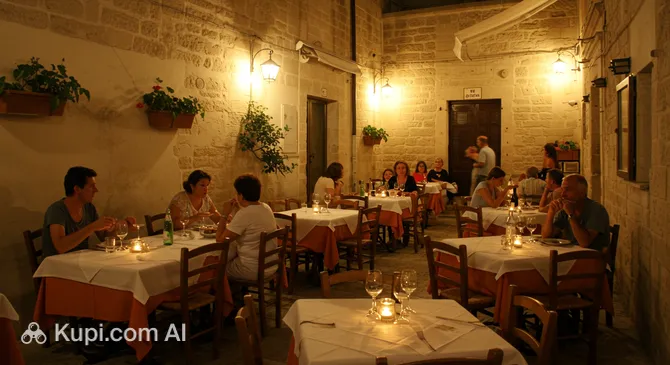
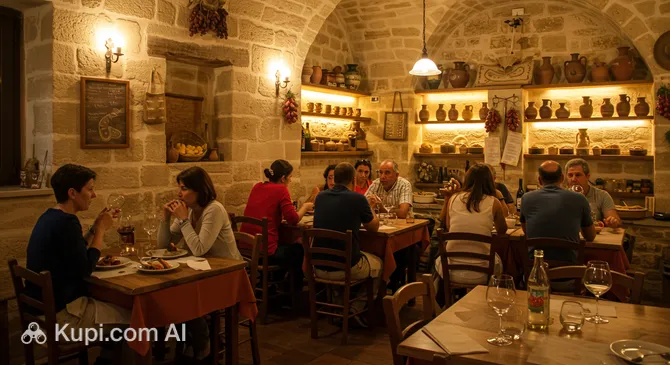
The food culture in Lecce encourages leisurely meals and enjoying every moment. Locals and tourists prefer cozy trattorias where you can try homemade dishes based on ancient recipes. One such place to immerse yourself in the atmosphere of traditional cuisine is the restaurant Tabisca il Vico dei Tagliati. Street markets offering fresh produce and local delicacies are also popular, as is street food that can be sampled on the go, for example, during gastronomic tours.

Tabisca il Vico dei Tagliati. Illustration.
Source: Kupi.com AI

Traveler photos:

The gastronomic scene in Lecce is a vibrant combination of tradition and a desire to surprise. The city often hosts food festivals where you can get acquainted with both classic recipes and modern culinary interpretations. Every meal here is a small celebration, and the hospitable locals are happy to share the secrets of their kitchen, making the gastronomic experience in Lecce truly unforgettable.

Travel Tips

Welcome to Lecce, the Baroque gem in southern Italy! To make your trip to this charming city as comfortable and memorable as possible, we have prepared some practical tips.

  1. Clothing and Essentials: The climate in Lecce is Mediterranean, with hot summers and mild winters.
    • In summer (June-August), choose light, breathable clothing made of natural fabrics; don't forget sunscreen, a hat, and sunglasses.
    • In spring and autumn, the weather is pleasant, but it can be cool in the evenings—a light jacket or sweater will come in handy.
    • In winter (December-February), temperatures rarely drop below zero, but rain is possible, so bring an umbrella and a waterproof jacket.
    • Comfortable shoes are your main companion for walking the paved streets of the historical center.
    • When visiting Lecce's many churches, follow the dress code: shoulders and knees must be covered.
    • Don't forget a plug adapter (Types F and L are used in Italy).
  2. City Transport:
    • Lecce's historical center is quite compact and best explored on foot.
    • To get around the city and its surroundings, you can use local buses from the SGM Lecce company. Tickets are sold at tobacco shops (Tabacchi) and newsstands.
    • Taxis are available but can be expensive. Taxi-hailing apps are less common here than in major cities.
    • Renting a car makes sense if you plan to explore the Salento region. However, be aware that there are many Limited Traffic Zones (ZTL) in Lecce's historical center, and parking can be a problem.
  3. Finances:
    • The local currency is the Euro (€).
    • Credit and debit cards (Visa, Mastercard) are accepted in most hotels, restaurants, and shops. However, it's always useful to have some cash for small purchases, markets, or small establishments.
    • ATMs (Bancomat) are easy to find throughout the city. Check with your bank about foreign cash withdrawal terms before your trip.
    • An approximate daily budget (excluding accommodation) could be from 50-70 euros per person if you eat in trattorias and don't overindulge in expensive entertainment.
    • Tipping: A service charge ("coperto") is often included in the bill at restaurants. If you particularly enjoyed the service, you can leave an additional 5-10%. In bars, it's common to leave small change.
  4. Health and Safety:
    • Pharmacies (Farmacia) are easily recognized by a green cross. Generally, they work on a standard schedule with a lunch break, but there are always on-duty pharmacies (farmacia di turno) that work 24 hours or at night.
    • For EU citizens, it is recommended to carry a European Health Insurance Card (EHIC). For tourists from other countries, it is highly advisable to take out travel insurance that covers medical expenses. The emergency number is 112.
    • Lecce is generally a safe city. Take usual precautions: watch your belongings in crowded places, especially at the station and markets, and avoid walking in poorly lit or deserted areas after dark.
  5. Communication:
    • The official language is Italian. A local dialect, Salentine, is also common in Lecce.
    • English is understood in tourist areas, hotels, and large restaurants, but not everywhere. Knowing a few basic phrases in Italian will be very helpful and appreciated by locals: "Ciao" (Hello/Goodbye), "Grazie" (Thank you), "Prego" (You're welcome), "Scusi" (Excuse me), "Parla inglese?" (Do you speak English?).
    • A local SIM card can be purchased at mobile shops (e.g., TIM, Vodafone, WindTre).
    • Wi-Fi is available in most hotels and many cafes and restaurants. Sometimes you can find free hotspots in public places.
  6. Local Etiquette:
    • When entering a shop or a small establishment, it is customary to say hello ("Buongiorno" – Good day, "Buonasera" – Good evening).
    • Italians value politeness very much. Don't hesitate to say "grazie" and "prego."
    • In Italy, it is not customary to rush, especially during meals. Enjoy the moment and the leisurely pace of life characteristic of the south.
    • When communicating with locals, try to be friendly and open. An attempt to speak Italian, even if you only know a few words, is always received positively.
  7. What to Avoid:
    • Don't expect shops to work without a break. Many close for "riposo" (siesta) from approximately 1:00 PM to 4:00 or 5:00 PM.
    • Avoid criticizing local cuisine or traditions—Italians are very proud of their cultural heritage.
    • Avoid overly revealing clothing when visiting churches and religious sites.
  8. Must-Try: Don't miss the chance to enjoy the local cuisine! Be sure to try "pasticciotto" (traditional cream-filled pastry), "rustico leccese" (puff pastry with tomato, mozzarella, and béchamel), and, of course, famous Puglian wines such as Primitivo and Negroamaro. Also, look out for "cartapesta" (papier-mâché) items—a unique local craft.

We hope these tips help you better prepare for your trip and get the most out of your stay in sunny Lecce. Enjoy its Baroque architecture, delicious food, and the hospitality of the Salento region!

Entertainment & Nightlife

Lecce, known for its Baroque architecture, transforms as evening falls, offering guests and locals a lively and diverse nightlife. The atmosphere here is more relaxed and conducive to socializing than a wild club scene, but everyone will find entertainment to their liking.

The main hub for evening and night entertainment is the historical city center. The narrow streets around the main squares, such as Piazza Sant'Oronzo and Piazza del Duomo, as well as Via Umberto I and its adjacent alleys, come to life at sunset. This area is home to many bars, wine cellars (enotecas), and restaurants where you can enjoy an aperitivo, dinner, and spend time until late at night. The crowd here is mixed: from students of the local university to tourists and couples. The style of establishments ranges from traditional trattorias to trendy cocktail bars. Most bars are open until 1–2 AM, especially during the summer season.

Among the popular spots are cozy bars like Quanto Basta, known for its atmosphere and drink selection, or the stylish Al Ventuno, where you can try signature cocktails. While Lecce is not famous for massive nightclubs, you can find places with live music or DJ sets, especially on weekends. The atmosphere in such places is usually casual, and the dress code is smart-casual.

Quanto Basta. Illustration.
Source: Kupi.com AI

Traveler photos:

Practical Tips:

  • Nightlife in Lecce, as in all of Italy, starts quite late. An aperitivo is usually served from 7:00 PM to 9:00 PM, and dinner is eaten after 8:00 or 9:00 PM. Bars fill up closer to 10:00 or 11:00 PM.
  • Average prices for a cocktail in a bar are 7–12 euros, and a glass of local wine is 4–6 euros.
  • Lecce's historical center is compact enough to get around on foot. At night, you can use a taxi to return to your hotel. You can order a taxi by phone or find one at designated taxi stands.

Safety: Lecce is considered a very safe city. Walking along the well-lit central streets in the evening and at night is generally safe. Nevertheless, it is always worth taking standard precautions: keep an eye on your personal belongings and avoid poorly lit or deserted areas.

During the day, Lecce also offers plenty of interesting activities. You can visit numerous historical sites such as the Basilica of Santa Croce or the Castle of Charles V. Art lovers will appreciate the Sigismondo Castromediano Museum or the unique Faggiano Museum. For quiet relaxation in the fresh air, the Giuseppe Garibaldi Public Gardens or Belloluogo Park are ideal. The city also has theaters offering various productions, but the main focus of entertainment in Lecce remains on evening leisure and enjoying local gastronomy and atmosphere.

Parks & Museums

Lecce, the Baroque gem in southern Italy, offers its guests not only magnificent architecture but also pleasant green spots for relaxation and fascinating museums that house the region's rich cultural heritage. Here, you can harmoniously combine walks through the historical center with visits to shady parks and educational trips to treasures of history and art.

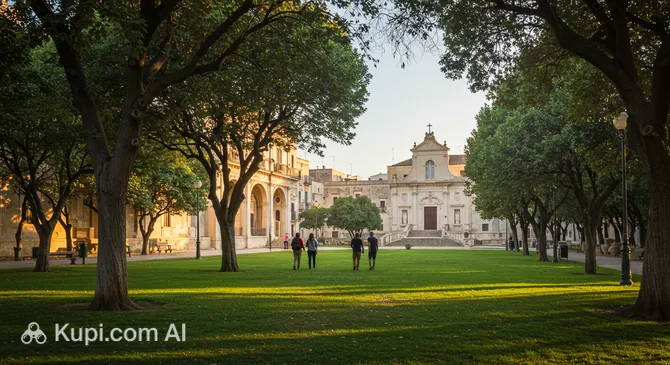
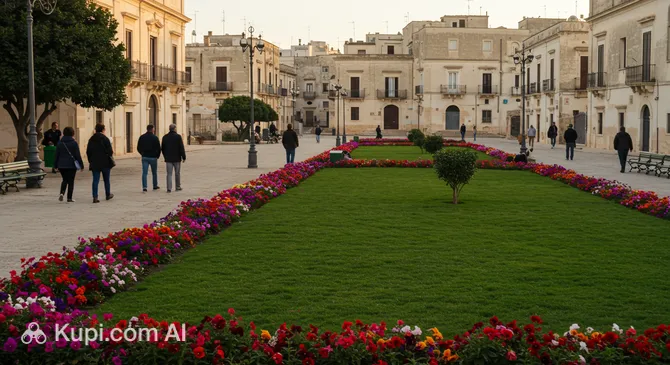
Among the city's green oases, the Giuseppe Garibaldi Public Gardens (Villa Comunale) stands out. This historical park, located near the center, is a favorite spot for leisurely strolls among well-kept flower beds, fountains, and sculptures. It offers shade on a hot day and a chance to rest from the city's hustle and bustle.

Giuseppe Garibaldi Public Gardens. Illustration.
Source: Kupi.com AI

Traveler photos:

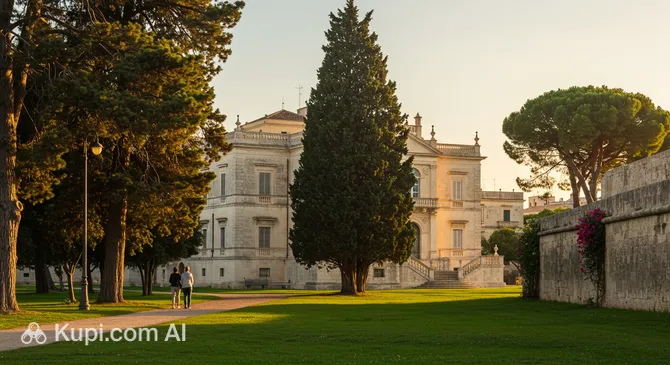
Another noteworthy place is Belloluogo Park, spread around the medieval tower of the same name. This park is larger and offers space for active recreation, picnics, and an opportunity to touch history by exploring the ancient structures on its territory. For those who prefer a more intimate atmosphere, the Parco dei Fiori (Park of Flowers) is charming with its variety of plants.

Belloluogo Park. Illustration.
Source: Kupi.com AI

Traveler photos:

Park of Colors. Illustration.
Source: Kupi.com AI

Traveler photos:

The main repository of Puglia's history and art is considered the Sigismondo Castromediano Museum. It is the oldest museum in the region, with an exhibition covering a vast period—from prehistoric times to the beginning of the 20th century. Here you can see archaeological finds, a collection of ceramics, paintings, and sculptures that allow for a deep dive into Salento's past.

Sigismondo Castromediano Museum. Illustration.
Source: Kupi.com AI

Traveler photos:

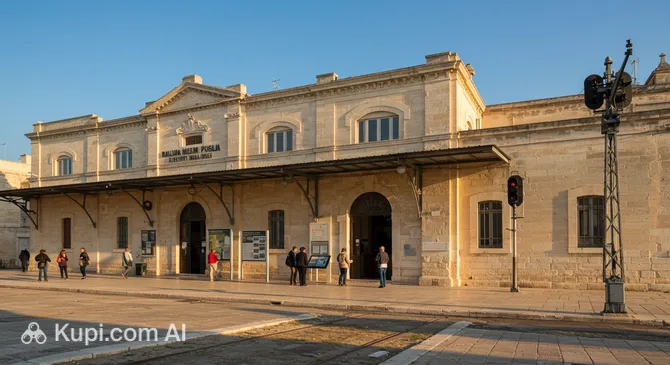
A visit to the Faggiano Museum will be a unique experience. This private museum arose accidentally during renovation work in an ordinary house when archaeological layers dating back 2,500 years were discovered. The exhibition clearly demonstrates the history of Lecce from the Messapians to the present day. No less interesting is the Railway Museum of Puglia, which presents the history of the development of the region's railways, something technology enthusiasts will particularly enjoy.

Railway Museum of Puglia. Illustration.
Source: Kupi.com AI

Traveler photos:

In addition to specialized museums, Lecce itself is an open-air museum. Strolling through the city, you will discover gems such as the Roman Theater, testifying to the city's ancient history, and the majestic Castle of Charles V, which often becomes a venue for exhibitions and cultural events, complementing the city's museum map. These sites, along with numerous Lecce Baroque churches like the famous Basilica of Santa Croce, create a unique atmosphere of cultural immersion.

For authentic impressions, peek into the inner courtyards of ancient palazzos, many of which hide small gardens or unexpected architectural details. Also, when planning a visit to the Faggiano Museum, try to get a tour with the owner—his stories will add a special touch to your visit.

Getting Around

When planning your travels around Lecce, it is worth noting that the most developed form of public transport here is the bus. The city bus network covers the main areas quite well, connecting the center with the outskirts and nearby suburbs. In the historical center, which is mostly a pedestrian zone, buses do not run, but they stop along its perimeter.

The payment system in Lecce is typical of many Italian cities. Bus tickets must be purchased in advance. They can be found in tobacco shops (tabaccheria), newsstands (edicola), or in some bars that have the appropriate license. Sometimes tickets can be bought from the driver, but this will be more expensive and is not always an option. There are single-trip tickets, and sometimes day passes or multi-trip tickets are available, which can be more economical if you use transport frequently. The approximate cost of a single ticket is usually 1-2 euros. After boarding the bus, the ticket must be validated in a special yellow or orange machine. An unvalidated ticket is considered invalid and is subject to a fine.

Buses in Lecce usually run from early morning until late evening, but schedules can vary depending on the route and day of the week (intervals may be longer on weekends and holidays). It is best to check the current schedule at stops or on the website of the local transport company SGM Lecce (Società Gestione Multipla).

As an alternative to public transport, you can use taxi services in Lecce. Taxi stands are usually located at the railway station, in central squares, and near major hotels. A taxi ride will naturally be more expensive, but it is a convenient option for quick travel, especially with luggage or at night. Also, given the compactness of Lecce's historical center, walking is an excellent way to explore it. For longer trips to the surrounding areas, you might consider renting a car or a scooter. In recent years, bike rentals have also been gaining popularity in the city, allowing you to comfortably see the sights and enjoy the atmosphere of Southern Italy.

Accommodation

In Lecce, you will find a variety of accommodation options to satisfy any traveler's needs. The city offers a wide choice: from cozy guest houses (B&Bs) and apartments—ideal for those who value home comfort and independence—to boutique hotels located in historical buildings and larger hotels with a full range of services. Budget options, such as hostels, are also available for economical tourists.

The most popular area for tourists to stay is the historical center (Centro Storico). Staying here allows you to be within walking distance of Lecce's main attractions, such as the Basilica of Santa Croce, the Castle of Charles V, and numerous Baroque churches. Living in the old town immerses you in the unique atmosphere of Lecce, with its narrow streets, hidden courtyards, and lively squares. Outside the historical center, you can also find good options, often more modern and with convenient access to transport hubs, such as near the railway station.

The price range for accommodation in Lecce varies from budget to mid-range and high-end, depending on the type of accommodation, its location, and the season. During the peak tourist season, especially in summer, it is recommended to book accommodation in advance to ensure the best choice and prices. The most common booking methods are popular online platforms such as Booking.com, Expedia, and Airbnb, as well as direct booking through the websites of hotels or guest houses.

Nearby Cities

For those who want to explore the surroundings, Lecce serves as an excellent starting point for day trips to several interesting nearby locations:

Among them, several stand out particularly:

  • Nardò: This city is known for its magnificent Baroque architecture, especially the Piazza Salandra, and its charming historical center, perfect for leisurely strolls. A trip to Nardò will allow you to immerse yourself in the Salento atmosphere of past centuries.
  • Galatina: Galatina attracts visitors primarily with the Basilica of Saint Catherine of Alexandria, decorated with impressive 14th-15th century frescoes, as well as its connection to the ancient tradition of the "tarantella" dance. This place is rich in history and unique culture.
  • Copertino: The main attraction of Copertino is its imposing Angevin-Aragonese castle, one of the largest in Puglia. The city is also known as the birthplace of Saint Joseph of Copertino, which adds spiritual significance to it.

Below is information about some of these cities in a convenient table:

CityPopulationDistance
Cavallino12 8085 km
Surbo15 1156 km
Lequile8 6896 km
Lizzanello11 9347 km
Monteroni di Lecce13 9237 km

These nearby destinations offer insight into the diverse culture and landscapes of the region. Every trip promises new discoveries, whether it's charming historical centers, local culinary delights, or the picturesque landscapes of Puglia.

Shopping & Souvenirs

Lecce, the charming "Florence of the South," offers its guests not only rich history and Baroque architecture but also pleasant shopping opportunities. The city is famous for its handmade products, especially papier-mâché (cartapesta leccese) and local ceramics, as well as high-quality food products and wines from the Salento region.

The main shopping arteries of Lecce are concentrated in its historical center. Stroll along Corso Vittorio Emanuele II, where you will find many stores selling clothing, shoes, and accessories from famous Italian and international brands. Via Trinchese is also popular with shoppers, offering boutiques and department stores. Small streets branching off from the main square, Piazza Sant'Oronzo, hide cozy shops with souvenirs and works by local craftsmen.

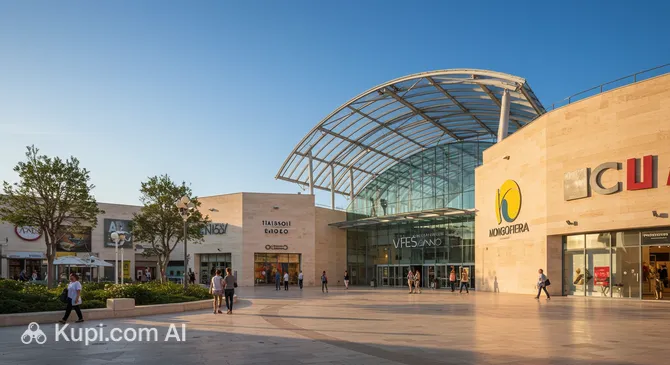
For those who prefer shopping in large malls, there are several options in and around Lecce. For example, you can visit the Mongolfiera Lecce Shopping Center or the Spazio Shopping Center, where shops of various categories, from clothing and electronics to household goods and hypermarkets, are gathered under one roof.

Mongolfiera Lecce Shopping Center. Illustration.
Source: Kupi.com AI

Traveler photos:

While Lecce doesn't have one giant central market like some other Italian cities, you can find typical morning food markets selling fresh fruits, vegetables, cheeses, cured meats, and seafood. This is a great place to feel the local flavor and buy fresh products. Occasionally, on weekends or certain days of the month, flea markets or antique fairs may be organized, where you can find interesting vintage items and souvenirs.

As souvenirs from Lecce, it is worth bringing home, first and foremost, items made of cartapesta—these can be figurines, Christmas nativity scenes, or decorative elements. Local ceramics with characteristic patterns are also popular. Gastronomic souvenirs include extra-virgin olive oil, wine (e.g., Negroamaro or Primitivo), handmade pasta (especially orecchiette), as well as traditional sweets and pastries like pasticciotto leccese.

Shops in Lecce typically operate from Monday to Saturday. Typical opening hours are from 9:00-10:00 AM to 1:00 PM and then after the lunch break (siesta) from 4:00-5:00 PM to 8:00-8:30 PM. Large shopping centers may operate without a break and on Sundays. Both cash and bank cards (Visa, Mastercard) are accepted. In small shops and markets, it is preferable to have cash on hand.

Tourists from non-EU countries can take advantage of the Tax Free system for purchases made in participating shops. This is usually possible when spending a certain amount in a single store. Don't forget to ask the seller for a special Tax Free form and present it along with your purchases and receipts at customs when leaving the EU.

Nearby cities

Reached the end of the page?

That means the route is fully explored