Support

Procida

About

Procida is a small gem of the Bay of Naples, located just a few kilometers from the coast of Campania. This picturesque island covers an area of just over 4 square kilometers, but within this modest space lies a whole kaleidoscope of colors and experiences. Travelers drawn to sunny Italy are enchanted by Procida's authenticity and the lack of the bustle typical of major resorts.
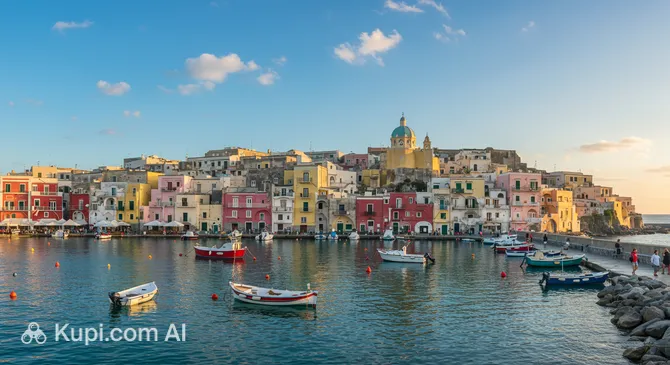
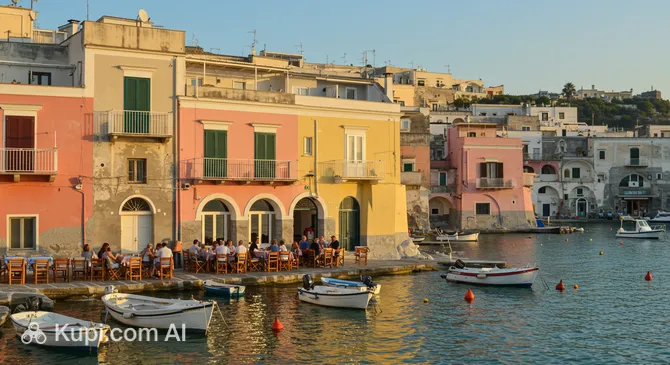
Procida. Illustration.
Source: Kupi.com AI

With a population of about 10,500, the town maintains the cozy atmosphere of a secluded retreat where life flows at a measured pace. Procida is the smallest of the inhabited islands in the Phlegraean archipelago, easily recognized by the bright, multi-colored facades of its houses, which are picturesquely reflected in the turquoise waters of the Tyrrhenian Sea. The main port, Marina Grande, greets guests with the noise of markets, the aroma of fresh pastries, and the hospitality of the locals.

Despite its size, the island possesses a rich cultural heritage. The history of Procida is full of interesting events, and in 2022, the town was awarded the title of Italian Capital of Culture, a recognition of its unique charm. It is well worth strolling through the narrow streets of the fishing villages, enjoying views of the colorful architecture, and relaxing on golden sand beaches.

Visiting Procida is worth it for the special feeling that time slows down here, allowing you to savor every moment. It is an ideal destination for those seeking inspiration, tranquility, and authentic Italian beauty away from the beaten tourist paths.
Weather Overview

Procida's climate is a classic example of mild Mediterranean weather, making the island attractive to visit almost year-round. Expect hot, sunny summers with minimal rainfall and mild but rather humid winters. Thanks to the influence of the sea, it is rarely too cold or unbearably stifling here.

The peak tourist season falls in the summer. In July and August, the average temperature is around 26°C, with highs often reaching 29°C. This is the driest time of year: for example, in July, there is almost no rain, and the number of days with precipitation is minimal.

The shoulder seasons are ideal for those who prefer long walks without the scorching sun. In May, the air warms up to an average of 17.9°C, while September retains summer warmth with a comfortable 22.7°C. To choose the perfect time for your trip and pack correctly, we recommend checking what the weather in Procida is expected to be during your travel dates.

Winter on the island is warm by European standards. In January and February, the average temperature stays around 10-10.5°C, and nightly lows rarely drop below 7°C. However, this period is characterized by high humidity: November is considered the "wettest" month with 17 rainy days, and rain is quite frequent in winter (up to 13-14 days per month).

Average monthly temperature

Average monthly precipitation

Interesting Facts

Beyond its famous colorful facades, Procida holds many surprising stories and secrets. This island, steeped in a spirit of creativity and antiquity, reveals itself to travelers from unexpected angles.

  • The island has repeatedly served as a natural set for world cinema masterpieces. Scenes for "The Talented Mr. Ripley" and the cult film "Il Postino" (The Postman) were filmed here; the latter made Pozzo Vecchio beach so famous it earned the nickname "The Postman's Beach."

  • Procida is of volcanic origin, and its history dates back to the era of the Ancient Greeks. In Roman times, the island served as a resort for the nobility, and in the Middle Ages, it inspired great writers such as Virgil, Juvenal, and Giovanni Boccaccio.

  • The oldest district, Terra Murata, stands on an impregnable cliff offering the best panoramas. Here you can see the Abbey of San Michele Arcangelo, founded in the 11th century, and the somber Palazzo d'Avalos, which was used as a prison for a long time.

  • Procida is connected by a bridge to the neighboring islet of Vivara—a strictly protected nature reserve. This site attracts ecotourism enthusiasts with the chance to see rare birds and archaeological evidence of Bronze Age life.

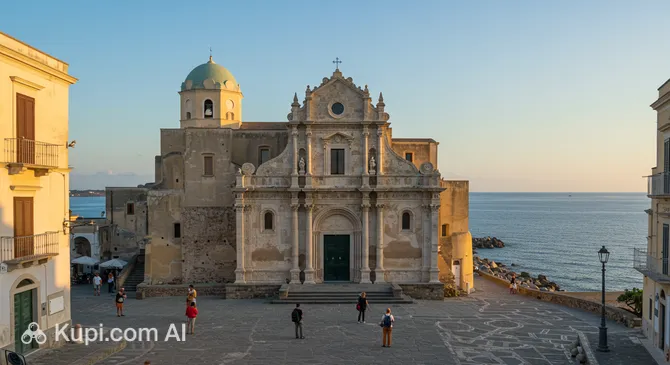
Abbey of San Michele Arcangelo. Illustration.
Source: Kupi.com AI

Traveler photos:

How to Get There

Procida is an island, so the journey here always involves a sea crossing, but first, you need to reach one of the transport hubs on the mainland. You can explore all ways to get to Procida in more detail in our dedicated article; below, we look at the main air and rail gateways to the region.

There is no airport on the island of Procida itself, as its size does not allow for one. The closest and most convenient option is Naples International Airport (IATA: NAP), located in the city of Naples. It is approximately 27.3 km from Procida (including the necessary ferry crossing). The journey from the airport to the port of Naples by taxi or bus takes about 60 minutes, after which you will transfer to a ferry.

An alternative is to fly into Rome, for example, to Rome Ciampino Giovan Battista Pastine International Airport (IATA: CIA). It is located in the city of Rome, about 166 km from Procida. The journey from here is significantly longer: a car trip to the Neapolitan port will take roughly 4.5 hours, so this option should be considered if you plan to visit the capital or find very cheap tickets.

For convenience, here is summary information on the main airports:

AirportPassenger trafficDistance
Naples International Airport12.7 mln27 km
Pontecagnano400 00077 km
Gino Lisa60 447148 km
Ciampino–G. B. Pastine International Airport3.9 mln166 km
Abruzzo Airport872 701187 km

Traveling by train is a popular way to reach southern Italy. There is no train station on the island of Procida itself, but you can arrive at the region's main station—Napoli Centrale (IATA: INP) in Naples. The station is only 24.2 km from the island (as the crow flies and across the sea). From the station to the ports of Molo Beverello or Calata Porta di Massa, you can get there by taxi or metro in about 30-40 minutes, where ferries depart for the island.

Another important transport hub is the Napoli Afragola station (IATA: NHR), which serves high-speed trains. It is located in the suburbs of Naples, about 33 km from Procida. This is a modern station, convenient for those traveling from northern Italy on high-speed trains while bypassing the city center.

Below is information about the nearest railway stations:

StationPassenger trafficDistance
Naples Centrale Station50 mln24 km
Mergellina Railway Station6.2 mln26 km
Napoli Afragola High-Speed Railway Station12 mln33 km
Salerno Railway Station6 mln65 km
Ostiense Railway Station5.8 mln178 km

Main Attractions

Procida is the perfect place for leisurely walks, where every turn reveals postcard-perfect views. Start your introduction to the island with its trademark—the ancient fishing village of Marina di Corrichella. This place looks as if it has come straight off an artist's canvas: a cascade of colorful houses descends right to the sea, creating a unique 17th-century architectural ensemble. Traffic is prohibited here, allowing tourists to enjoy the silence, broken only by the splash of waves and the quiet conversations of fishermen untangling their nets on the quay.

Marina di Corricella. Illustration.
Source: Kupi.com AI

Traveler photos:

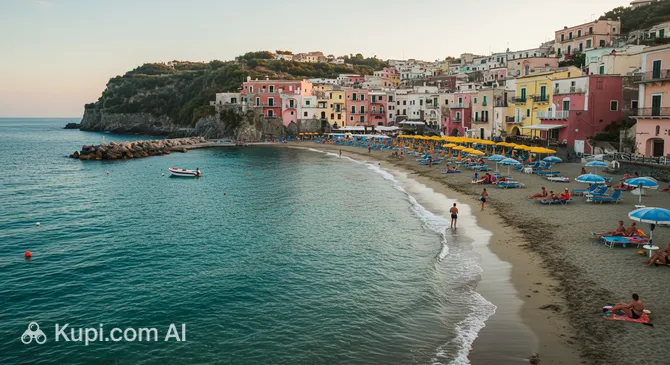
Beach lovers should definitely visit Chiaia Beach. This is one of the most picturesque beaches on the island, located in the eastern part. To get here, you have to descend a long staircase of 186 steps, but the effort is well worth it. The beach is reliably protected from the wind by cliffs, and its dark volcanic sand and gentle entry into the water make it an excellent choice for a comfortable break. The shore offers a magnificent view of the old town's fortified walls.

The spiritual and historical heart of Procida is the majestic Abbey of San Michele Arcangelo. Located at the highest point of the impregnable Terra Murata promontory, this complex was founded by Benedictines back in the 11th century. Visitors are drawn not only by the rich architecture, valuable works of art, and ancient library but also by the opportunity to descend into the mysterious catacombs. This place is literally steeped in history and legends about the island's patron saint.

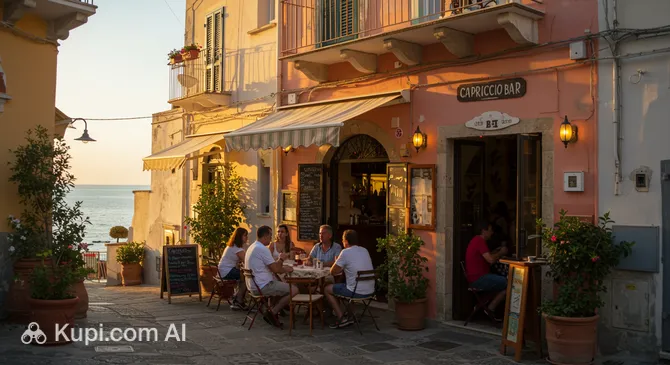
To fully immerse yourself in the "dolce vita" atmosphere, stop by Bar Capriccio. This is a popular meeting spot for both locals and tourists, perfect for discovering the gastronomic traditions of the region. Here you can try the famous "Lingua di Procida" (Procida's Tongue) dessert—a puff pastry filled with delicate lemon cream that serves as a sweet conclusion to your island stroll.

Local Cuisine

Procida's gastronomy is a true feast for gourmets, based on centuries-old traditions and the freshest gifts of the Tyrrhenian Sea. The local cuisine is centered around seafood: oysters, mussels, squid, and fish that fishermen deliver to restaurants just hours after the catch. The main dish every traveler must try is "spaghetti alle vongole" (pasta with clams). Here, it is prepared according to a special recipe, generously adding aromatic olive oil and fresh herbs, giving it a unique richness of flavor.

Famous lemons play a special role in the island's culinary culture. They are known for their large size and sweet white pith, which locals call "bread." These citrus fruits are used to make the legendary limoncello liqueur, as well as in desserts and pastries. Sweet lovers should definitely try the local lemon cake or aromatic biscotti with zest, which make an excellent accompaniment to an afternoon break.

Capriccio Bar. Illustration.
Source: Kupi.com AI

Traveler photos:

The food culture on the island is steeped in a relaxed southern atmosphere. For a full lunch or dinner, venues in the Marina di Corrichella area are ideal, where tables stand right by the water and the view of the colorful houses creates a romantic mood. Those who prefer a quick snack on the go should look for "cuoppo"—paper cones filled with fried fish—and hearty seafood paninis. The island also has many small markets where you can buy fresh fruit, vegetables, and homemade cheeses.

In summer, gastronomic life bustles at festivals. Fish and lemon festivals turn the island into one large open-air tasting venue. At this time, the streets fill with music, laughter, and the mouth-watering aromas of freshly prepared dishes, allowing guests to immerse themselves in Procida's authentic traditions.

Travel Tips

Welcome to sunny Procida! To ensure your trip to this colorful island goes smoothly and leaves only warm memories, we have prepared a list of useful recommendations to help you feel at home and avoid typical tourist mistakes.

  1. Clothing and Footwear. The island is hilly, with many steep stairs and old cobbled streets, so comfortable flat shoes (sneakers, sandals) are your top priority; heels will only get in the way here. In summer, choose clothes made of natural, breathable fabrics and always wear a hat. For evening walks by the sea, a light windbreaker or wrap wouldn't hurt, as the breeze can be cool.
  2. Transport. Procida is very compact (only 4 sq km), and the best way to explore it is on foot. To move between districts, it is convenient to use local minibuses (lines L1, L2, C1, C2). Car rental for tourists in the summer season is often restricted and unnecessary due to the narrow roads. If you don't want to walk, the ideal option is renting an e-bike or a scooter.
  3. Finances. The official currency is the Euro. While cards are accepted in most restaurants and hotels, you will need cash in small shops, kiosks, and on buses. ATMs are mainly concentrated in the Marina Grande port area; they are harder to find in the heart of the island, so make sure to have a supply of small bills in advance. Tipping is not a strict obligation, but rounding up the bill is appreciated.
  4. Health and Safety. Procida is a safe place with a low crime rate; however, standard precautions don't hurt. Pharmacies (Farmacia) operate on a schedule with a lunch break (siesta). Keep in mind that the sun is very strong in the middle of the day—be sure to use a high SPF sunscreen. The universal emergency number is 112.
  5. Connection and Communication. The primary language is Italian. In tourist areas, staff speak English, but knowing basic phrases like "Buongiorno" (Good day) and "Grazie" (Thank you) will endear you to the locals. It is better to buy a SIM card in advance in Naples or at the port upon arrival. Wi-Fi is available in many cafes, but signal strength may be weak in old stone buildings.
  6. Local Etiquette. Islanders value politeness: it is customary to say hello when entering small shops. Strictly follow the dress code: beachwear is only appropriate on the beach. Walking through town or visiting cafes in swimsuits and without a shirt is considered bad form and disrespectful to traditions.
  7. What to Avoid. Don't plan dinner too early. Restaurants in southern Italy open for the evening meal no earlier than 7:30–8:00 PM; before then, kitchens may be closed. Also, avoid rushing: the rhythm of life here is slow (piano-piano), and attempts to hurry service will be met with confusion.
  8. Gastronomic Secret. Don't miss the chance to try the unique lemon salad (Insalata di Limoni). Local "pane" lemons have such a sweet and thick white pith that they are eaten whole, seasoned with oil, garlic, mint, and chili flakes—it’s an authentic taste of Procida that is hard to find anywhere else.

By following these simple tips, you can easily blend into the relaxed rhythm of island life and enjoy the true Italian "dolce vita." We wish you an unforgettable holiday full of bright colors and delicious discoveries on Procida!

Entertainment & Nightlife

Nightlife on Procida is strikingly different from the noisy parties of neighboring Ischia or glamorous Capri. You won't find massive nightclubs with thumping bass or neon signs inviting you to foam parties. Evenings on the island are a hymn to "dolce far niente" (the sweetness of doing nothing), long candlelit dinners, leisurely strolls, and heartfelt conversations over glasses of local wine.

The epicenter of evening attraction is the picturesque Marina di Corrichella. As dusk falls, this fishing district is transformed: the colorful houses are lit up with soft lights that reflect in the dark harbor waters, creating an incredibly romantic atmosphere. The island's best restaurants and bars are concentrated here, with tables set right out on the waterfront. It’s an ideal spot for a romantic date or a quiet evening with friends.

Marina di Corricella. Illustration.
Source: Kupi.com AI

Traveler photos:

The nightlife culture here is built around the aperitivo. Locals and tourists gather in bars around 7:00 PM for a Spritz or a glass of Falanghina before dinner. One of the most famous meeting points is Bar Capriccio, strategically located in Marina Grande square. While it is famous for its desserts during the day, in the evening it becomes a lively spot to watch port life while enjoying drinks and light snacks surrounded by a colorful crowd.

The port area of Marina Grande serves as a second center for evening activity. The rhythm here is slightly faster, with more movement and sound. Along the main street, Via Roma, there are bars and cafes that stay open late. The crowd is diverse: from local fishermen discussing their catch to elegant tourists waiting for a ferry or simply enjoying the sea breeze. The dress code is relaxed yet elegant: smart casual or light linen clothing is most appropriate.

Regarding safety, Procida is one of the quietest places in the region. You can walk around the island without concern even late at night. However, keep in mind that public transport (buses) stops running quite early, around 10:00–11:00 PM (schedules vary by season). Taxi services are available, but cars are few, so it's better to arrange your return to the hotel in advance or be prepared for a walk. The average check in bars and restaurants is lower than on neighboring Capri: a cocktail will cost between 6 and 10 euros.

The daytime entertainment program on the island is just as rich but carries a more cultural and contemplative character. Travelers can visit the majestic Abbey of San Michele Arcangelo to touch history or spend time by the sea. For instance, Chiaia Beach is a great place to watch the sun dip below the horizon before heading off to enjoy Procida's cozy nightlife.

Parks & Museums

While Procida may not boast large urban parks in the traditional sense, the island itself is a unique nature reserve where architecture is harmoniously integrated into the landscape. Cultural heritage here is concentrated not so much in classic exhibition halls but in historical complexes that preserve the memory of centuries.

The main natural gem in the town's vicinity is the islet of Vivara. This tiny, crescent-shaped piece of land is the remnant of an ancient volcanic crater, connected to Procida by a footbridge. Vivara is a state nature reserve and a true paradise for flora and fauna lovers: rare seabirds nest here, and wild orchids grow. You can only visit on certain days by appointment, which helps keep the pristine ecosystem untouched.

Another important natural area is Chiaia Beach. This is not just a swimming spot, but a picturesque natural amphitheater surrounded by high cliffs that protect the coast from winds. The descent here is a walk through dense Mediterranean vegetation, and the shore offers one of the most beautiful views of the Terra Murata fortress and fishing boats.

Chiaia Beach. Illustration.
Source: Kupi.com AI

Traveler photos:

The cultural center of Procida is undoubtedly the Terra Murata district, home to the Abbey of San Michele Arcangelo. This is not just an active church but a complete museum complex. Its lower floors house an ancient library containing 16th-century manuscripts and a museum of sacred art. Tourists are particularly interested in the catacombs and the collection of votive offerings (ex-voto)—items brought by the faithful as a sign of gratitude for miraculous escapes, often related to sea storms.

Nearby stands the monumental Palazzo d'Avalos. Built in the 16th century as a palace, it was later converted into a prison that operated until 1988. Today, it is an impressive museum and historical complex. Visitors can walk through former cells, see the courtyard for inmates' exercise, and even view preserved clothing and everyday items belonging to the prisoners. It is a place with powerful energy, telling a somber but important page of the island's history.

To dive into local folklore, it’s worth visiting the Graziella House-Museum (Casa di Graziella). This small ethnographic museum is located in the Palace of Culture and recreates the interior of a typical 19th-century Procida house. The exhibition is dedicated to the heroine of Alphonse de Lamartine's famous novel "Graziella," who became a symbol of the island. It houses antique furniture, clothing, tools, and personal belongings of the islanders, providing insight into how people lived here two hundred years ago.

Insider Tip: If you plan to visit Vivara, book your visit a few days in advance on the reserve's official website—groups are small and spots fill up quickly. After your tour of Palazzo d'Avalos, be sure to stay at the viewing platform near the prison walls—it offers perhaps the best panorama of the Bay of Naples, which you won't see from standard tourist paths.

Getting Around

Procida's transport system is perfectly adapted to the island's miniature size and its narrow, winding streets. There are no metros or trams here; instead, the backbone of public transport is small buses that locals call "pollicino" (Hop-o'-my-Thumb). The transport operator is EAV, and its orange-and-white minibuses circulate throughout the island, linking the port of Marina Grande with key beaches and attractions.

The route network consists of four main lines covering almost the entire territory. Lines L1 and L2 connect the main port with the Chiaiolella district at the opposite end of the island, but they follow slightly different paths to cover more streets. Circular routes C1 and C2 are convenient for trips to central parts, including the Terra Murata district. Buses typically run every 15–30 minutes, although wait times can be longer on weekends and in the evenings.

The fare payment system is standard for the Campania region. Tickets must be purchased in advance, as drivers generally do not sell them. You can buy travel tickets at ticket offices by the ferry pier, at newsstands, or at tobacco shops (Tabacchi) marked with a "T" sign. A single trip costs about €1.50–€1.70. Be sure to validate your ticket immediately upon entering the bus using the special yellow or orange validator to avoid a hefty fine.

As an alternative to public transport, taxis are popular on Procida. However, these are not classic sedans but colorful micro-cars and converted three-wheeled scooters (Ape Cars). They are perfectly suited to the dimensions of local roads and can deliver you and your luggage right to your hotel door. The taxi rank is located right at the exit of the Marina Grande port. It is best to agree on the price of the trip with the driver before boarding, although most trips on the island have fixed rates.

For independent exploration of the island, tourists often choose to rent two-wheeled transport. Due to the hilly terrain, electric bicycles are particularly popular, allowing you to easily tackle climbs to the fortress or viewpoints. Scooter and bike rental points are located near the port. However, it is better to skip renting a car: the roads here are too narrow, and in the summer season, there are strict restrictions on entry and movement for non-resident vehicles.

Accommodation

Accommodation on Procida perfectly matches the spirit of the island: you won't find massive skyscraper hotel chains or pretentious all-inclusive resorts here. The bulk of the accommodation consists of cozy boutique hotels, family-run bed and breakfasts (B&Bs), and apartments, often located in renovated historical buildings. This allows tourists not just to stay overnight, but to feel like part of local life, waking up in a room overlooking a lemon grove or a fishing harbor.

Choosing an area to stay depends on your travel goals and the amount of luggage you have. The most convenient area in terms of logistics is the Marina Grande port district. This is where ferries dock, bus terminals are located, and most shops are found. It is the ideal choice for those staying for a few days who don't want to expend energy climbing hills with suitcases.

For a romantic getaway and the best views, travelers choose the Marina di Corrichella area. Living in one of the colorful houses right by the water is a dream for many, but there is an important detail to consider: this area is pedestrian-only, and steep stairs lead to most hotels. If you are looking for a beach holiday, consider the Chiaiolella district in the south. It is close to popular beaches and a yacht marina, offering a calmer, resort-like atmosphere.

A feature of Procida in recent years has been the rise of "glamping"—comfortable camping in nature. This is a great way to save money without sacrificing convenience, staying in stylish tents or bungalows surrounded by Mediterranean greenery. The private rental market is also widespread: many locals rent out "case vacanza" (holiday homes), which is particularly cost-effective for families and groups.

Booking tip: Procida is a small island, and demand for accommodation in high season (July–August) and during the Easter period is huge. The best sea-view options are often booked as early as winter, 3–4 months before the trip. Prices are generally lower than on neighboring Capri or Ischia, but on peak dates, the cost of an average room can increase significantly. Using popular online platforms is convenient for finding accommodation, but sometimes contacting small guesthouse owners directly can secure better terms.

Nearby Cities

For those who want to explore the surrounding area, Procida serves as an excellent starting point for day trips to several interesting nearby locations. Thanks to convenient maritime connections, travelers can easily reach the mainland part of the Campania region.

One of the most popular destinations is Naples. This city, full of contrasts, energy, and architectural masterpieces, is very close by. You can spend a day here exploring the exhibits of the National Archaeological Museum, walking along the famous Spaccanapoli street, or enjoying the taste of authentic pizza in its historical birthplace.

Another interesting option is Pozzuoli, located just 12 km from the island. This is a city with a rich ancient heritage, home to the grand Flavian Amphitheatre—the third largest in Italy. Additionally, Pozzuoli is the center of the unique volcanic zone of the Phlegraean Fields, making it attractive to geology and history buffs.

CityPopulationDistance
Monte di Procida12 7435 km
Ischia20 1186 km
Bacoli26 4127 km
Barano d'Ischia10 0019 km
Pozzuoli81 14112 km

These nearby destinations offer a glimpse into the diverse culture and landscapes of the region.

Shopping & Souvenirs

Shopping in Procida is not about chasing global brands or finding massive sales in huge malls. It is more of a leisurely exploration of local traditions and crafts that perfectly complements the island's relaxed atmosphere. Here you will find many small family shops, boutiques with designer clothing, and gourmet shops where every item is steeped in the spirit of southern Italy. The main value of local shopping is its authenticity and uniqueness.

The main commercial life is concentrated in the Marina Grande port area. The main artery for shopping enthusiasts is Via Roma, which stretches along the waterfront. Here, immediately after the ferry arrives, tourists are greeted by souvenir kiosks, beachwear shops, and stalls selling local delicacies. If you go a little higher to Via Vittorio Emanuele, you can find more diverse stores: from bookstores and jewelers to boutiques with quality Italian shoes and linen clothing.

It is important to know that there are no large shopping centers or department stores on Procida. The island is too small and unique for mass-market giants. All shopping here is intimate, allowing you to personally interact with shop owners, who often stand behind the counter themselves and are happy to tell the story of each item.

Markets on the island serve as a way of life rather than just a tourist attraction. In the morning in the Marina Grande area, you can find a spontaneous fish market where fishermen sell their freshest catch right from the boats—a colorful sight worth seeing even if you don't plan to cook. Additionally, stalls with fresh fruit and vegetables periodically appear on the central streets, where you should buy the famous local lemons.

As souvenirs from Procida, people take home items that reflect the soul of the island. First and foremost, this includes everything related to lemons: a bottle of limoncello, aromatic soap, or lemon candies. Local ceramics with bright hand-painted scenes of Marina di Corrichella are also popular. Additionally, look for handmade products: embroidery, maritime-style textiles, and unique jewelry made from coral and shells by local artisans.

When planning your shopping trip, be sure to account for the siesta. Most shops open around 9:00–9:30 AM but close for a lunch break from 1:00 PM to 4:30 or even 5:00 PM. In the evening, trading continues until 8:00–8:30 PM. In small souvenir shops and at markets, cash is preferred, although larger stores and boutiques accept bank cards without any issues.

The Tax Free system is rare on the island, as most shops are small businesses and purchase amounts rarely reach the required minimum (usually over €154.94 in a single receipt). However, if you make a large purchase in a jewelry store or a high-end clothing boutique, it’s worth asking the seller about the availability of a special tax refund form.

Nearby cities

Reached the end of the page?

That means the route is fully explored