Support

Capri

About

Capri is a truly legendary island city, located in the heart of the Tyrrhenian Sea, just a few kilometers from the coast of Italy and the Gulf of Naples. From a bird's-eye view, Capri resembles a precious emerald set in azure: its steep cliffs, picturesque coves, vibrant greenery, and incredibly clear waters make the island one of the most scenic and desirable corners of the Mediterranean.
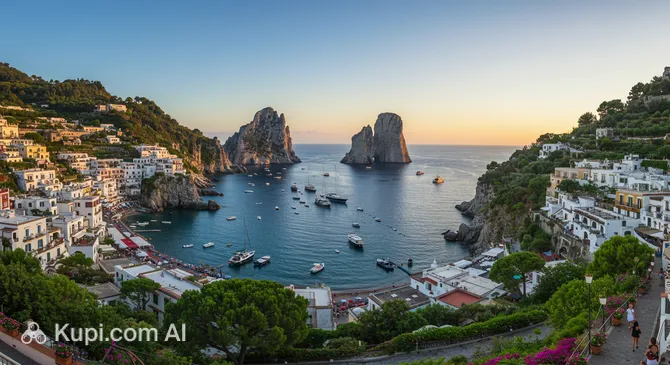
Capri. Illustration.
Source: Kupi.com AI

The area of this enchanting island is only about 10 square kilometers, and its permanent population does not exceed 7,200 people, which gives it a special atmosphere of intimacy and coziness. Administratively, Capri is part of the Italian region of Campania. The main hub of island life is the town of Capri itself, where social life thrives and the narrow streets are filled with the scents of blooming gardens and fresh pastries. For those seeking a more peaceful and secluded holiday, Anacapri — the island's second commune, located on higher ground — is the perfect choice.

Capri is world-famous for its unique attractions and natural beauty. The famous Faraglioni rocks, majestically rising from the sea and serving as a true symbol of the island, are a must-see. Equally impressive is the mysterious Blue Grotto (Grotta Azzurra), where sunlight, penetrating through an underwater opening, dyes the water an incredible sapphire color. The heart of social life is the famous Piazzetta (Piazzetta di Capri) – a tiny but incredibly lively square, the ideal spot for people-watching and enjoying a cup of coffee.

The atmosphere of Capri is unique: it wonderfully combines luxury and simplicity, bustling squares and secluded paths, ancient history and modern fashion. This city, steeped in myths and praised by poets, is definitely worth visiting at least once in a lifetime — for its breathtaking views, unique monuments, and that very feeling that you have found yourself at the boundary between dream and reality.

You can find more interesting facts on the history of Capri page.
Weather Overview

The weather on Capri is characterized by a mild Mediterranean climate. Summers here are generally hot and sunny, with minimal precipitation. The average temperature in July and August stays around 25-26°C, and rain is very rare. Winters are mild, with average temperatures around 10-12°C in January and February, and more frequent but not heavy rainfall, especially in November, which is the wettest month. Spring and autumn offer comfortable temperatures, ideal for walking and exploring the island. Expect a warm, mostly dry summer and a cool, wetter winter.

To learn more about weather conditions, including average monthly temperatures, rainfall, and sunny days, you can explore detailed information about the Capri climate.

Average monthly temperature

Average monthly precipitation

Interesting Facts

In addition to its world-famous landscapes and luxurious villas, Capri holds many surprising stories and little-known details. Here are just a few that will add a touch of intrigue to your journey:

  • The Roman Emperor Tiberius loved Capri so much that he built twelve villas here. The most famous of them is Villa Jovis, from where, according to legend, he would throw those who displeased him into the sea. Although historians debate the truth of these stories, the site is still shrouded in an aura of ancient mystery.

  • The famous Blue Grotto, a sea cave with an incredible blue glow in the water, once instilled superstitious fear in locals. They believed it was the home of nymphs and sirens and tried to avoid it. Today, it is one of the main attractions for tourists.

  • There are only two main settlements on the island – Capri and Anacapri. They are connected by the ancient Phoenician Steps, carved directly into the rock and consisting of 921 steps. It is not only a historical monument but also a breathtaking route for lovers of panoramic views.

  • The three majestic Faraglioni rocks rising from the sea are one of the most recognizable symbols of Capri. There is a romantic belief: if lovers kiss while sailing under the arch of the middle rock (Faraglione di Mezzo), their love will be eternal.

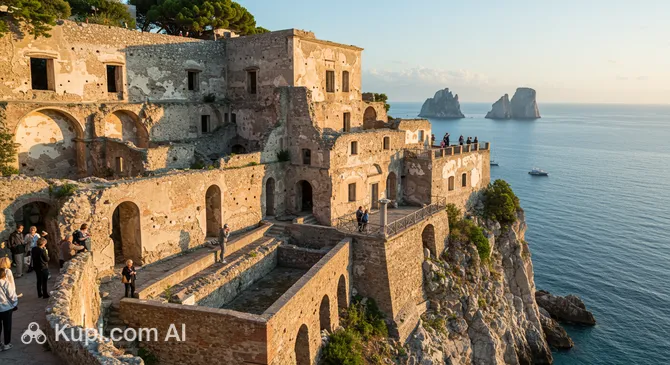
Villa Jovis. Illustration.
Source: Kupi.com AI

Traveler photos:

How to Get There

The island of Capri is the pearl of the Gulf of Naples, and it can be reached exclusively by sea. The main route to the island lies through the ports of Naples or Sorrento, as well as other coastal towns in Campania, from which ferries and high-speed hydrofoils (aliscafi) depart regularly.

Air Travel:

There is no direct air service to the island of Capri, as it lacks an airport. The nearest airports are located on the Italian mainland. The main and most convenient option for most travelers is Naples Capodichino Airport (NAP). This large international airport is located in Naples, approximately 37 km from Capri (distance in a straight line to the island). From the airport, you will need to get to one of the Neapolitan ports (Molo Beverello for high-speed hydrofoils or Calata Porta di Massa for ferries), which takes about 20-30 minutes by taxi or the special Alibus shuttle. From there, the sea journey to Capri takes between 50 and 80 minutes.

Another option is to fly into one of Rome's airports, such as Rome Ciampino Giovan Battista Pastine International Airport (CIA) or Fiumicino Airport (FCO). Rome is significantly further from Capri (about 195 km from Ciampino to the island). From the Roman airports, you will first need to take a train to Naples (about 1 hour 10 minutes by high-speed train from Roma Termini station to Napoli Centrale), and then follow the route described above via the port of Naples.

A smaller but potentially convenient option for some routes is Pontecagnano Airport (QSR) in Salerno, located approximately 59 km from Capri. From there, you can reach the port of Salerno (about 20-30 minutes by taxi) and take a ferry to Capri. Ferries from Salerno may run less frequently, especially in the low season, and the travel time is about 70-90 minutes.

For clarity, here is a summary of the main airports:

AirportPassenger trafficDistance
Naples International Airport12.7 mln37 km
Pontecagnano400 00059 km
Gino Lisa60 447147 km
Ciampino–G. B. Pastine International Airport3.9 mln194 km
Abruzzo Airport872 701209 km

Rail Travel:

There are no railway stations on the island of Capri itself. Travelers who prefer trains usually go to Naples or Salerno and then transfer to sea transport.

The main railway hub is Napoli Centrale station in Naples. This is a very large station where trains arrive from all over Italy and abroad. It is located approximately 34 km from Capri (distance in a straight line to the island). From Napoli Centrale station to the ports of Molo Beverello or Calata Porta di Massa, you can take a taxi (10-15 minutes), a bus, or partly use the metro followed by a short walk. Then follows the crossing to Capri.

An alternative option is Salerno Railway Station. It is located approximately 48.5 km from Capri. The port of Salerno is near the station, and ferries to Capri also depart from there, which can be convenient if your route passes through the southern regions of Italy.

For clarity, here is a summary of the main railway stations on the mainland:

StationPassenger trafficDistance
Naples Centrale Station50 mln34 km
Mergellina Railway Station6.2 mln37 km
Napoli Afragola High-Speed Railway Station12 mln43 km
Salerno Railway Station6 mln48 km
Ostiense Railway Station5.8 mln207 km

After arriving at the port of Capri (Marina Grande), you can use the funicular to ascend to the town of Capri, or take local buses and taxis to move around the island.

Main Attractions

Capri, the jewel of the Gulf of Naples, is famous for its breathtaking landscapes, crystal-clear sea, and rich history. This charming island offers many attractions to satisfy even the most discerning taste. Here are just a few that are definitely worth a visit.

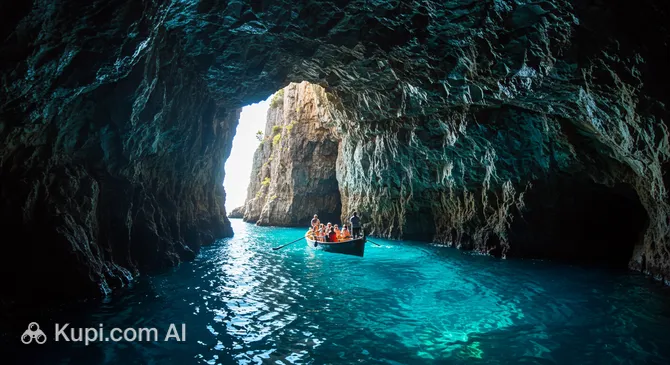
One of the most famous symbols of Capri is the Blue Grotto (Grotta Azzurra). This sea cave is known for the amazing blue glow of the water, created by sunlight entering through an underwater opening. Visiting the grotto in a small boat is a truly magical experience that leaves a lasting impression. The mysterious atmosphere and extraordinary beauty of this place attract tourists from all over the world.

Blue Grotto. Illustration.
Source: Kupi.com AI

Traveler photos:

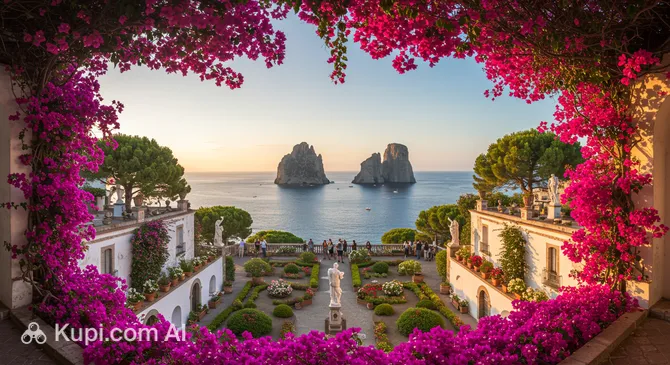
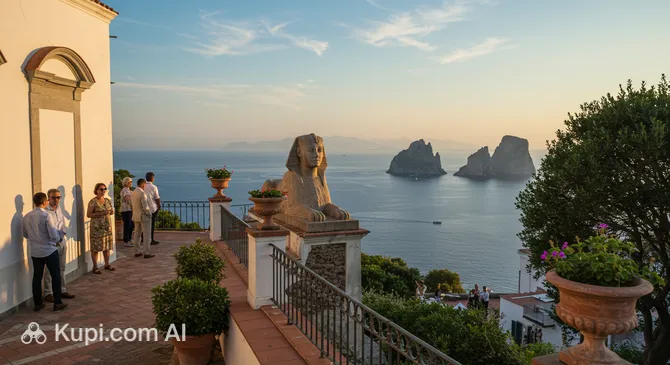
Equally impressive are the Gardens of Augustus (Giardini di Augusto). These magnificent terraced gardens, established in the early 20th century, offer panoramic views of the famous Faraglioni rocks and the bay of Marina Piccola. Strolling along the well-kept paths among flowers and sculptures, you can enjoy the tranquility and beauty of the island. It is an ideal place for photoshoots and peaceful relaxation.

Gardens of Augustus. Illustration.
Source: Kupi.com AI

Traveler photos:

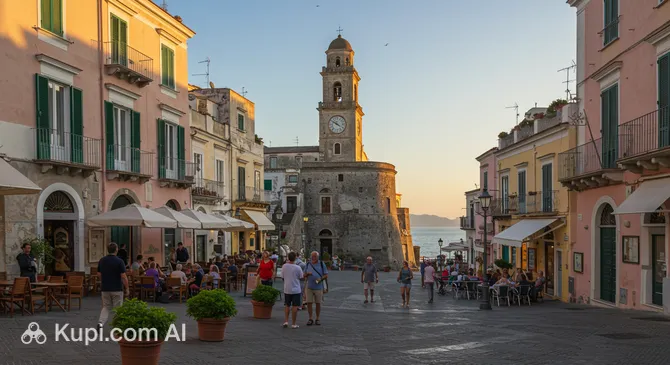
The heart of the island's social life is undoubtedly the Piazzetta of Capri (Piazzetta di Capri), officially known as Piazza Umberto I. This small but lively square is a popular meeting spot where you can have a coffee in one of the many cafes while watching people pass by. In the evening, the Piazzetta transforms into the center of social life, filling with an atmosphere of elegance and fun.

Piazzetta of Capri. Illustration.
Source: Kupi.com AI

Traveler photos:

For history buffs, a visit to Villa Jovis is a mandatory part of the itinerary. These are the ruins of one of the twelve palaces of the Roman Emperor Tiberius, built in the 1st century AD. Located on top of Mount Tiberio, the villa offers not only an immersion into ancient history but also breathtaking views of the entire island and the Gulf of Naples. The scale of the structure and its historical significance are truly impressive.

Villa Jovis. Illustration.
Source: Kupi.com AI

Traveler photos:

Finally, it is worth mentioning the Punta Carena Lighthouse (Faro di Punta Carena), one of the oldest and most important lighthouses in Italy. It is located on the southwestern tip of the island and is a wonderful place to watch the sunset. The surrounding area, with its rocky coves and pristine water, also attracts fans of swimming and secluded relaxation.

Local Cuisine

The gastronomy of Capri is a true celebration of freshness, simplicity, and sophistication, reflecting the soul of the Mediterranean. The island's signature dish is undoubtedly the legendary "Caprese" salad. This simple yet genius combination of ripe juicy tomatoes, delicate mozzarella, and fragrant fresh basil leaves, generously drizzled with top-quality olive oil, wins you over from the first bite. It is said to have been invented in one of the local restaurants for guests looking for something light and truly Italian.

For seafood lovers, Capri offers an incredible variety. Local restaurants take pride in dishes made from fresh fish and seafood – squid, octopus, mussels, and sea urchins are always top-notch here. Be sure to try the seafood pasta, where the taste of the sea perfectly combines with the skill of Italian chefs. Another culinary gem of the island is "Torta Caprese". This delicious chocolate-almond dessert was, according to legend, created by accident when a pastry chef forgot to add flour. The result was a wonderfully tender, moist, and aromatic cake that is now the pride of every cafe on Capri.

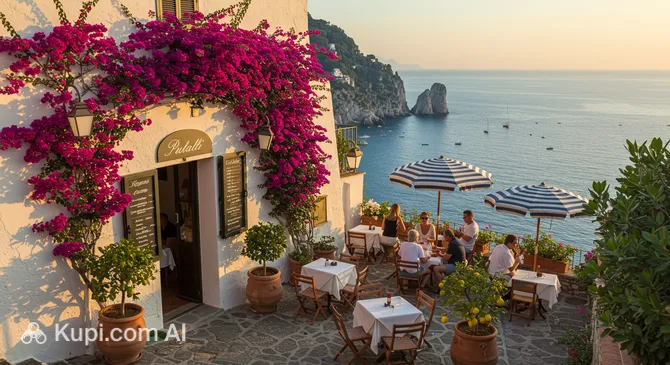
Pulalli. Illustration.
Source: Kupi.com AI

Traveler photos:

Capri lemons, known for their intense aroma, are the true pride of the island and the base for many drinks. On a hot day, be sure to try a refreshing freshly squeezed lemon juice or traditional homemade lemonade. Equally popular is granita al limone – a delicious icy dessert that perfectly quenches thirst. Of course, one cannot overlook the famous Limoncello – a bright yellow liqueur often served as a digestif. In addition to lemon drinks, you can find excellent local wines on the island that perfectly complement fish or meat dishes. The dining culture on Capri is diverse: from elegant restaurants where you can enjoy fine dining, such as at Pulalli, to cozy trattorias and cafes serving traditional dishes. Don't miss the chance to visit local farmers' markets selling fresh fruits, vegetables, cheeses, and homemade delicacies – the perfect set for a picnic with a view of the azure sea.

Travel Tips

Welcome to the fairytale island of Capri! To make your journey through this jewel of Italy as comfortable and memorable as possible, we have prepared some practical tips. They will help you better navigate the island and enjoy every moment of your vacation.

  1. Clothing and Essentials:

    The climate on Capri is Mediterranean, so in summer (June-August) bring light clothing made of natural fabrics, swimwear, a hat, sunglasses, and sunscreen. In spring and autumn, the weather is changeable, so layered clothing, including a light jacket or sweater, will be useful. Comfortable shoes are an absolute necessity, as the island is hilly and you will be walking a lot. For visiting churches, choose clothing that covers shoulders and knees. Don't forget a European adapter for electronics (type F/L).

  2. Transport on the Island:

    Getting around Capri is most convenient on foot, especially in the central parts of the towns. To connect Marina Grande (port), Capri town, and Anacapri, there is a funicular and small buses. Buses can be crowded in high season. Taxis on the island are often colorful convertibles, but they are quite expensive. Car rental is usually not necessary for tourists and can be restricted, especially in the summer months. Boat tours are popular for exploring the grottoes and coastline.

  3. Finances:

    The local currency is the Euro (EUR). Credit and debit cards (Visa, Mastercard) are accepted in most hotels, restaurants, and shops. American Express may not be accepted everywhere. ATMs are available in the main settlements. Capri is considered a fairly expensive destination, so plan your budget accordingly. Tips in restaurants are often included in the bill as "coperto" (service/table setting charge), but an additional 5-10% for excellent service is always welcome.

  4. Health and Safety:

    Capri is a very safe place. Nevertheless, follow standard precautions: keep an eye on your personal belongings in crowded areas. Pharmacies ("Farmacia") are located in the towns of Capri and Anacapri. During the summer season, a tourist medical service (Guardia Medica Turistica) is available, and there is a hospital on the island (Ospedale Capilupi). Drink plenty of water, especially on hot days, and use sunscreen.

  5. Communication:

    The official language is Italian. However, in tourist areas, staff in hotels, restaurants, and shops generally speak English well. Learn a few simple phrases in Italian: "Ciao" (Hello/Goodbye), "Grazie" (Thank you), "Prego" (You're welcome), "Scusi" (Excuse me). Wi-Fi is available in most hotels and many cafes. A SIM card with internet access can be purchased on the mainland or possibly on Capri itself.

  6. Local Etiquette:

    Italians are friendly and sociable. It is customary to greet people ("Buongiorno" – Good day, "Buonasera" – Good evening). On Capri, elegant casual style is valued in clothing, especially in the evening. Avoid overly revealing clothing outside the beach. Try not to make noise and show respect to the local residents and their traditions.

  7. What to Avoid:

    Do not walk in swimwear through the streets of Capri and Anacapri or visit restaurants and shops in it – this is considered bad manners. Also, don't expect low prices for everything; Capri is a premium destination, and prices are corresponding.

  8. Useful Advice:

    Planning to visit the Blue Grotto (Grotta Azzurra) or go up Monte Solaro? Book tickets and tours in advance, especially in peak season (July-August), to avoid long queues. Also, consider visiting the island in the shoulder season (April-May or September-October) when the weather is still beautiful and there are significantly fewer tourists.

We hope these tips make your stay on Capri even more pleasant and worry-free. Enjoy the incredible beauty of the island, its atmosphere, and its hospitality!

Entertainment & Nightlife

When the sun sets over the Tyrrhenian Sea, Capri transforms, offering its guests a sophisticated and lively nightlife. The island is famous not so much for loud discos until dawn, but for its elegant lounge bars, restaurants with panoramic views, and the opportunity to enjoy an evening in a refined atmosphere. Evening entertainment here begins with the tradition of the aperitivo and flows smoothly into late dinners and leisurely conversations under the stars.

The heart of the island's evening life is undoubtedly the famous Piazzetta of Capri. As dusk falls, this small square fills with people; locals and tourists meet here to have a cocktail, chat, and simply enjoy the moment. Numerous bars and cafes are concentrated around the Piazzetta and on the adjacent streets. The atmosphere here is quite glamorous, and many guests prefer a stylish dress code (smart casual or elegant). Establishments usually stay open until late at night, especially during the peak season.

Piazzetta of Capri. Illustration.
Source: Kupi.com AI

Traveler photos:

Among the popular spots for evening pastimes are restaurants offering not only exquisite cuisine but also a wonderful atmosphere for dinner and drinks. For example, the Hotel Caesar Augustus is known for its views and sophisticated setting, while the Pulalli restaurant offers local delicacies in a cozy atmosphere. Although there aren't many traditional nightclubs on Capri, some hotels and bars host parties with live music or DJs, especially in the summer months.

Practical Tips: The best time to start the evening is during the aperitivo hour, roughly from 6:00 PM to 8:00 PM. Prices in bars and restaurants on Capri can be quite high, especially in places with a view or on the Piazzetta. You can get around the island at night on foot (especially in the centers of Capri and Anacapri), by taxi, or by the funicular that connects Marina Grande with the town of Capri (check its evening schedule). Taxis on the island are not cheap, but they are a convenient way to reach remote hotels or restaurants. Capri is considered a safe island, but it's always worth taking standard precautions, especially during night walks.

During the day, Capri offers many other forms of entertainment. You can explore historic villas such as Villa San Michele or Villa Jovis, stroll through the picturesque Gardens of Augustus with their breathtaking views, or take a boat trip to the famous Blue Grotto. There aren't many museums in the traditional sense on the island; the main focus is on natural beauty and open-air historical monuments.

Parks & Museums

Capri is not only about dazzling seascapes and luxurious villas, but also a place where nature and history have created unique corners for inquisitive travelers. The island offers both peaceful green zones for walking and iconic cultural sites that preserve the memory of centuries.

Among the island's natural beauties, the famous Gardens of Augustus stand out. These terraced gardens, established in the early 20th century, offer some of the most breathtaking views of the Faraglioni rocks and the bay of Marina Piccola. It is an ideal place for a leisurely stroll and a photoshoot. Another wonder of nature is the Natural Arch (Arco Naturale), an impressive rock formation of Paleolithic origin, reminding us of nature's power. A picturesque trail leads to it, and the walk itself is an adventure.

Gardens of Augustus. Illustration.
Source: Kupi.com AI

Traveler photos:

Capri's cultural heritage is rich and diverse. Be sure to visit Villa San Michele in Anacapri. Built by Swedish physician and author Axel Munthe, this villa-museum charms with its architecture, collection of ancient artifacts, and magnificent garden with panoramic views. No less interesting is Villa Jovis (Villa of Jupiter) – the ruins of one of the twelve palaces of the Roman Emperor Tiberius. This site breathes history and offers stunning views of the Gulf of Naples.

Villa San Michele. Illustration.
Source: Kupi.com AI

Traveler photos:

Among other significant places is the Church of San Michele in Anacapri, known for its unique 18th-century majolica floor depicting the expulsion of Adam and Eve from Paradise. Historically interesting is the Phoenician Steps, an ancient path that connected the port of Marina Grande to Anacapri, carved right into the rock. And for lovers of maritime romance, it's worth seeing the Punta Carena Lighthouse, one of Italy's oldest active lighthouses, which is particularly beautiful at sunset.

Villa Jovis. Illustration.
Source: Kupi.com AI

Traveler photos:

For an authentic experience, walk along less-known paths, such as the one to the Punta Cannone Viewpoint, which offers a magnificent view that often escapes the attention of most tourists. It is also worth looking into the small artisan shops in Anacapri, where you can find unique handmade souvenirs.

Getting Around

Getting around Capri is quite simple, although the island is small and many distances can be covered on foot. The backbone of public transport consists of buses and the famous funicular.

Buses on Capri are small, as they have to maneuver through narrow mountain roads. They connect the main points of the island: the town of Capri, Anacapri, Marina Grande (port), and Marina Piccola. Buses run quite frequently, especially during the tourist season. Schedules can be found at bus stops or in tourist information centers.

The funicular is perhaps the most famous mode of transport on Capri. It quickly takes you from the port of Marina Grande to the center of Capri town, right to the Piazzetta. It is not only a convenient but also a scenic way to ascend, taking only a few minutes.

The payment system is straightforward. Usually, single tickets (biglietto unico) are used, which are valid for one trip on a bus or the funicular. The cost of a bus or funicular ticket is typically around 2-2.50 euros. There are also day passes (biglietto giornaliero), which can be advantageous if you plan to move around a lot. Tickets can be purchased at ticket offices near the funicular stations, at the port, at bus terminals, as well as in some tobacco shops (tabaccheria) and bars. Be sure to validate your ticket when boarding the bus or before getting on the funicular.

Public transport usually operates from early morning until late evening, but the frequency may decrease during the low season. Always check the current schedule on-site.

Among alternative ways to get around Capri, taxis are popular. They are unique here – often convertibles – but a taxi ride will cost significantly more than public transport. You can also rent a scooter – it's a great way to explore the island independently, but requires skills for driving on mountain roads. In some parts of the island, especially in the pedestrian zones of Capri and Anacapri, the main way to get around is walking on foot. Bicycle rentals are less common due to the hilly terrain. It's also worth mentioning the chairlift from Anacapri to Mount Monte Solaro, which is more of a tourist attraction than regular transport but offers spectacular views.

Accommodation

Capri, being one of the most desirable destinations in Italy, offers tourists a variety of accommodation options, although the island as a whole is geared towards more high-end vacations. Here you can find luxury five-star hotels with panoramic views, charming boutique hotels, cozy bed and breakfasts (B&Bs), as well as apartments and villas for rent, suitable for families or groups of friends seeking more privacy.

When choosing a place to stay on Capri, it is worth paying attention to several key areas. The town of Capri itself, especially the areas around the famous Piazzetta, is popular for its lively atmosphere and proximity to designer shops, restaurants, and the funicular connecting to the port of Marina Grande. For those looking for a quieter setting and breathtaking views, Anacapri, located higher up on the island, is ideal. Hotels near beaches, such as Marina Piccola, or with convenient access to the port of Marina Grande, are also in demand.

While there are no specific examples of hotels categorized as `hotel` or `resort_hotel` in the provided list of attractions, the island of Capri is famous for many world-renowned hotels that offer impeccable service and unforgettable experiences. It is recommended to research reviews and locations when choosing a specific option.

Regarding the price range, Capri mostly offers accommodation from the mid-range to the luxury segment. Budget options like hostels are rarer here. Booking accommodation on Capri is highly recommended in advance, especially if your trip is during the peak season (June to September), as the best options are taken very quickly. For searching and booking, it is convenient to use popular online platforms or contact hotels directly.

Nearby Cities

For those who wish to explore the surrounding area, Capri serves as an excellent starting point for day trips to several interesting nearby locations. For example, you can visit Herculaneum (Ercolano) to see the ruins of the ancient Roman city buried under the ash of Vesuvius, or head to Castellammare di Stabia, known for its thermal springs and beautiful views of the Gulf of Naples. Below is a list of the nearest cities with their distance and population, which may also be of interest for short trips:

CityPopulationDistance
Massa Lubrense14 29412 km
Sorrento16 40515 km
Sant'Agnello9 12517 km
Piano di Sorrento13 00819 km
Vico Equense20 91921 km

These nearby destinations offer a glimpse into the region's diverse culture and landscapes.

Shopping & Souvenirs

Capri is not only about picturesque landscapes and azure sea, but also a true paradise for lovers of exquisite shopping. The island is famous for its exclusive boutiques, designer stores, and local handicrafts. Here you can find both world-famous brands and unique products that reflect the spirit of this enchanting place. Especially popular are handmade sandals, which are made right in front of you, as well as local perfumes and ceramics.

The main magnet for shopaholics is the famous Via Camerelle. This elegant pedestrian artery is lined with boutiques from the most prestigious global fashion houses. A stroll along Via Camerelle is a pleasure in itself, even if you don't plan on making any major purchases. Many interesting shops, from jewelry stores to souvenir stalls, can also be found around the central square Piazzetta di Capri and on its adjacent streets, such as Via Vittorio Emanuele and Via Le Botteghe.

Piazzetta of Capri. Illustration.
Source: Kupi.com AI

Traveler photos:

There are no large shopping malls in the traditional sense on Capri. The island retains its boutique character, offering a more personalized and exclusive shopping experience. Instead of massive malls, there is an atmosphere of cozy ateliers and designer salons.

On Capri, there are no large traditional markets like in some other Italian cities. However, you can find small shops selling fresh local produce, fruits, and delicacies. Occasionally, temporary craft fairs are held on the island where you can purchase unique handmade souvenirs.

As souvenirs from Capri, it is worth bringing back the famous handmade sandals, which can be made to your individual measurements. Also popular are Capri perfumes with scents of local flowers and citrus, bright ceramics with lemon motifs, coral products, and, of course, the famous Limoncello liqueur. Don't forget stylish linen items, including the legendary "capri" pants.

Shops on Capri are generally open from 10:00 AM to 8:00 PM, however, many may close for a lunch break (siesta), especially in the hot summer months, roughly from 1:00 PM to 4:00 PM. During the tourist season, some boutiques may stay open later. Credit cards are widely accepted, but for small purchases in tiny shops or at markets, cash may be useful.

Tourists who are not residents of the European Union can take advantage of the Tax Free system when making purchases over a certain amount in participating stores. This allows for a partial VAT refund. Typically, you need to request a special tax-free form in the shop and present it along with your purchases to customs when leaving the EU.

Reached the end of the page?

That means the route is fully explored