The Temple of Apollo in Syracuse is not just a collection of picturesque ruins, but one of the oldest and most significant monuments of Greek architecture in all of Italy. Located on the island of Ortygia, in the historic heart of the city, this temple is one of the first Doric temples built in Sicily. Its construction dates back to the end of the first quarter of the 6th century BC, making it a witness to more than two and a half millennia of history.
Traveler photos:
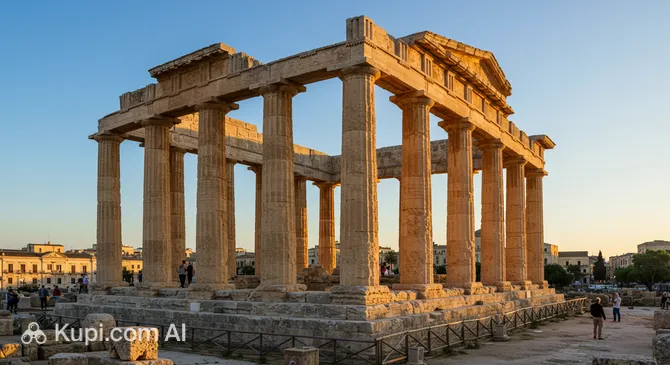
Built from local sandstone, the temple was dedicated to the god Apollo. Throughout its long history, it has undergone many transformations: it was a Byzantine church, an Arabic mosque, and even part of Spanish military barracks before its ancient origins were rediscovered in the 19th century. Originally, it was a majestic peripteros (a temple surrounded by columns) with a column ratio of 6 by 17.
Today, visitors can see what remains of its former glory: the almost entirely preserved stylobate (the temple's base), several powerful columns and their fragments, and part of the inner room's wall — the cella. Even though only ruins remain, they make an indelible impression and allow you to imagine the scale and power of this ancient structure, which served as a model for many other temples, not only in Sicily but in Greece itself.