Support

Museo Regionale A. Pepoli

About

In the heart of Trapani lies one of the most important cultural treasures of Sicily—the Agostino Pepoli Regional Museum. This museum complex, housed within the walls of a magnificent 14th-century Carmelite monastery, is a harmonious blend of medieval architecture and a rich artistic heritage. Italy is famous for its regional collections, but it is here that you will find a unique reflection of the local identity of Western Sicily.
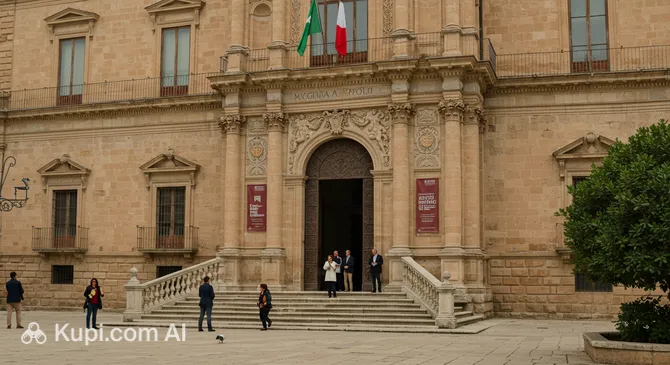
Regional Museum A. Pepoli
Regional Museum A. Pepoli. Иллюстрация. Источник: Kupi.com AI

The museum's main pride is its priceless collection of coral artifacts—the city's so-called "red gold." For centuries, Trapanese masters were renowned throughout Europe for their ability to create jewelry masterpieces and liturgical objects of incredible complexity from this fragile material. Additionally, visitors are often impressed by the monumental polychrome marble staircase and the cozy Mannerist cloister, which creates an atmosphere of peace.

The exposition covers everything from archaeological artifacts and medieval sculpture to Renaissance paintings and items from the Risorgimento era. This is not just a storehouse of antiquities, but the living history of the city told through the skill of craftsmen, the brilliance of silver, and the elegance of ancient majolica.

Contacts

For up-to-date information on exhibitions or to book group tours, you can use the official communication channels. The museum is open to inquiries, though please note that the schedule may change during public holidays.

How to contactContact
AddressL'ingresso del Museo è all'interno della Villa Pepoli Agli Uffici e alla Biblioteca si accede dalla, Via Conte Agostino Pepoli, 180, 91100 Trapani TP, Italy
Phone+39 0923 553269
Websitewww2.regione.sicilia.it

What to Do

Your journey through the museum should definitely begin in the decorative arts rooms, where the famous "red gold" of Trapani is on display. Examine the intricate coral Nativity scenes decorated with pearls and precious stones, and see for yourself the mastery of 17th-century jewelers. These pieces once adorned monarch's palaces and the altars of great cathedrals.

Art and sculpture enthusiasts should head to the upper floors. Here, you will find a masterpiece by the great Titian—the painting "St. Francis Receiving the Stigmata"—as well as graceful marble statues by masters of the Gagini school. Don't forget to look down at the floor tiled with ancient majolica, which depicts a historical map of the region—a true encyclopedia in ceramics.

For those seeking unusual experiences, the museum displays several rare exhibits, ranging from ancient church vestments and sacred textiles to an authentic Bourbon-era guillotine. Complete your visit with a leisurely stroll through the Mannerist cloister, where the silence and cool shade of the ancient colonnades allow you to reflect on what you've seen.

Getting There

Finding this cultural landmark is easy: it is located in the Borgo Annunziata district, right next to the famous Basilica of the Annunziata. If you prefer walking, the stroll from the historic center of Trapani takes about 15–20 minutes—a perfect opportunity to soak in the atmosphere of the Sicilian streets.

For those opting for public transport, city buses No. 23 and No. 25 are ideal. The stop is located almost right at the entrance to the museum complex. If you are arriving by car, there are parking spaces available nearby.

Travelers arriving from the airport or the railway station can take a taxi. The trip takes about 15–20 minutes, as the distance is approximately 10–15 kilometers. The main entrance to the exhibition halls is located on the side of the picturesque Villa Pepoli.

Ближайший город: Trapani

History & Facts

The history of this site is inextricably linked with the name of Count Agostino Sieri Pepoli—an aristocrat and passionate collector. It was his generous donation between 1906 and 1908 that formed the foundation of the museum's collection. The museum became a logical extension of the city's Fardelliana Picture Gallery, incorporating precious archives and art objects from local noble families.

The museum walls themselves breathe history: the collection is housed in a former 14th-century Carmelite monastery. For a long time, the monastery served as an important pilgrimage center. In the early 20th century, thanks to Pepoli's efforts, it was completely reconstructed for museum use. The official opening to the public took place in 1914.

Throughout the 20th century, the museum's collections expanded steadily through municipal acquisitions, ecclesiastical confiscations, and private gifts from Trapani's prominent families. A landmark restoration in 1965 transformed the ancient building into a modern exhibition space while preserving its unique medieval spirit and architectural identity.

Time Needed

To leisurely immerse yourself in the world of Sicilian art and study the details of the coral inlays, you should set aside 2 to 3 hours for your visit. This is enough time to stroll through the courtyard, explore the art gallery, and examine the archaeological finds.

If you plan to study every exhibit in the decorative arts department in detail or simply want to enjoy the tranquility of the Mannerist cloister, your visit could easily last half a day. Keep in mind that the museum is quite large, and its collections cover a vast timeline from antiquity to the 20th century.

Working Hours

When planning your visit to the museum, please note that the main hours of operation are on weekdays and Saturdays. The museum is traditionally closed on Mondays.

Current opening hours:

  • Tuesday – Saturday: 09:00 AM to 05:00 PM
  • Sunday: 09:00 AM to 12:00 PM
  • Monday: Closed
It is recommended to arrive at least one hour before closing to allow enough time for ticket control and to view the main halls.

DayWorking hours
ПонедельникЗакрыто
Вторник9:00 – 17:00
Среда9:00 – 17:00
Четверг9:00 – 17:00
Пятница9:00 – 17:00
Суббота9:00 – 17:00
Воскресенье9:00 – 12:00

Nearby

The museum's location allows travelers to explore more than just one site. A walk through the surrounding area will help you feel the local flavor more deeply and see how historical heritage sits alongside modern parks and recreation areas.

Nearby, you will find both the architectural monuments of the old town and scenic waterfronts, perfect for rounding off a day of culture.

NameDistance
Cathedral of the Annunciation (Trapani Cathedral)0 km
Erice Adventure Park1.8 km
San Giuliano Beach2 km
Pollero da Roberto2.1 km
Le Saline2.1 km
Lido San Giuliano2.2 km
Best Pet & House2.2 km

Reached the end of the page?

That means the route is fully explored