Support

Museum of Zoology of the University of Catania

About

The Zoology Museum of the University of Catania is a landmark scientific space located in the heart of Catania. As part of one of the oldest educational institutions in Italy, founded in the 15th century, the museum offers visitors a fascinating journey into the world of nature through the lens of science and history.
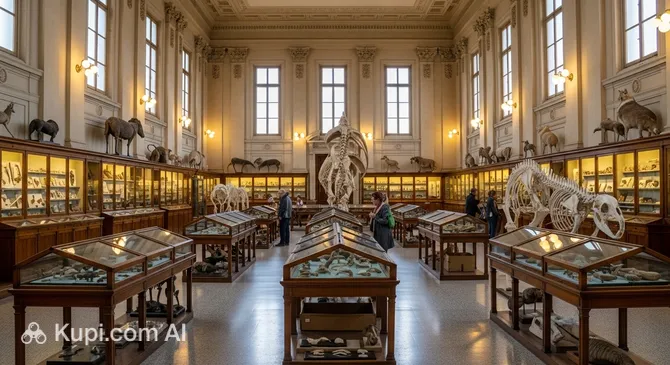
Museum of Zoology, University of Catania
Museum of Zoology, University of Catania. Иллюстрация. Источник: Kupi.com AI

The museum's collection includes thousands of unique specimens: from masterfully crafted taxidermy and skeletons to rare paleontological finds. The main focus is on the biodiversity of the Mediterranean and the specific fauna of Sicily, making this a must-visit for anyone interested in evolution and ecology.

Thanks to the academic atmosphere of the university campus and its high visitor ratings, the museum has become a popular destination not only for students but also for tourists. It is not just an exhibition of artifacts, but a vibrant educational center where the history of natural sciences meets modern research methods.

Contacts

To contact the museum representatives and check visit details, you can use the following contact information:

How to contactContact
AddressVia Lago di Nicito, 38b, 95124 Catania CT, Италия
Phone+39 095 478 3690
Websitemuzoo.unict.it

What to Do

Inside the museum's halls, a grand panorama of the animal kingdom unfolds before visitors. Here, you can see systematic collections of mammals, birds, and reptiles. Special attention should be paid to the biological groups—detailed reconstructions of wildlife scenes where animals are captured in their natural habitats. For those fascinated by antiquity, there is a paleontology section featuring fossil remains found in Sicily.

The museum offers many opportunities for interactive learning. Children and adults can use microscopes for a detailed study of specimens, making science more accessible and visual. If you want to learn more professional secrets, it is recommended to book a guided tour: university staff share fascinating facts about conservation methods and recent scientific discoveries.

Photography enthusiasts are welcome to take pictures in the halls, provided they do not use a flash to avoid damaging fragile historical specimens. The museum also regularly hosts temporary exhibitions and lectures dedicated to nature conservation and the protection of endangered species, so it is worth checking the event calendar on the official website before your visit.

Getting There

The museum is conveniently located in the university district of Catania, just a few minutes' drive from the historic center. To get here from the main square, Piazza Duomo, take the AMT bus lines 4-7 or 1-4R to the Ospedale Vittorio Emanuele stop. The rest of the way (about 10 minutes) is a walk along Via Palermo and Via Lago di Nicito.

For those who prefer to travel by train, the walk from Catania Centrale railway station takes about 25 minutes. You can walk straight along Via Vittorio Emanuele, gradually heading north. If you are coming from Fontanarossa Airport, it is easiest to take a taxi (the trip takes about 20 minutes) or catch the special Alibus, which will take you to the center, where you can transfer to local transport.

For drivers, there are parking spaces on the streets adjacent to the campus, but keep in mind that parking in this area is paid on weekdays. Renting a bike or a scooter is also a great way to quickly reach the museum along the city's flat roads.

Ближайший город: Catania

History & Facts

The history of this scientific institution in Catania is closely intertwined with the annals of the university itself, founded back in 1430. However, the formation of specialized zoological collections began much later, in the 19th century, based on the Department of Natural History. The first specimens were collected by professors during scientific expeditions across Italy and the island of Sicily.

At the turn of the 19th and 20th centuries, the museum's holdings expanded significantly thanks to the work of prominent scientists. Special attention was paid to the study of endemic species of the Etna volcanic region, which made the collection unique in its kind. In the 1930s, the museum moved to its current building on Via Lago di Nicito, where the exhibitions took on a systematized and modern appearance for that era.

Today, the museum not only preserves its historical heritage but also actively implements modern technologies. It conducts genetic research and creates virtual tours, maintaining its status as one of the leading scientific and educational centers in Southern Italy.

Time Needed

For a standard tour of the exhibition, 1.5–2.5 hours is usually sufficient for an average visitor. This time is enough to leisurely walk through the halls, examine the main biological groups, and read the information on the labels.

If you plan to join an organized tour led by university staff or if you are a deep zoology enthusiast wishing to study the taxonomic details, you should budget about 3 hours for your visit.

Working Hours

The museum primarily welcomes visitors during the first half of the day on weekdays. The schedule is as follows: Monday, Wednesday, and Friday — from 09:00 to 13:00. On Tuesday and Thursday, the museum is open longer — from 09:00 to 13:00 and, after a break, from 15:00 to 17:00. The museum is usually closed on Saturdays and Sundays.

Please keep in mind that the schedule may change depending on university semesters or public holidays, so it is highly recommended to check the latest information on the museum's official website before visiting.

DayWorking hours
понедельник09:00–13:00
вторник09:00–13:00, 15:00–17:00
среда09:00–13:00
четверг09:00–13:00, 15:00–17:00
пятница09:00–13:00
субботаЗакрыто
воскресеньеЗакрыто

Nearby

Exploring the surrounding area after your museum visit will allow you to experience the atmosphere of Catania more deeply. Within walking distance, you will find both grand architectural monuments and modern entertainment centers, making this area ideal for a busy sightseeing day.

NameDistance
Villa Bellini0.5 km
Roman Amphitheatre of Catania0.6 km
Piazza Stesicoro0.7 km
Botanical Garden of Catania0.7 km
Benedictine Monastery of San Nicolò l'Arena0.8 km
Mad in Italy0.9 km
Museum of Contemporary Art of Sicily0.9 km

Reached the end of the page?

That means the route is fully explored