Support

Museo e Giardini di Pitagora

About

Imagine a place where ancient wisdom meets modern art and science. The Pythagoras Museum and Gardens is a unique cultural and historical complex in the city of Crotone, dedicated to the life and legacy of the great ancient Greek thinker. Located in sunny Italy, this center has become a true symbol of generational continuity and the intellectual richness of the region.
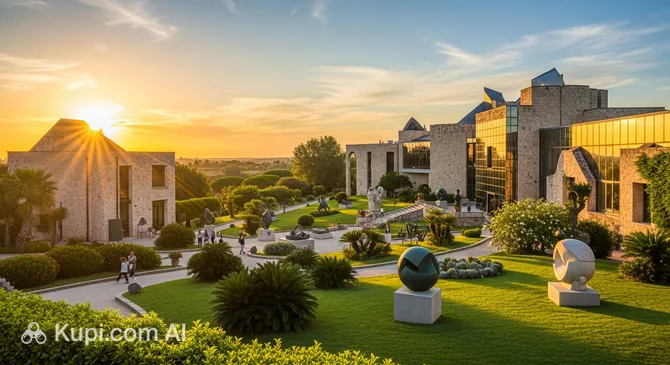
Pythagoras Museum and Gardens
Pythagoras Museum and Gardens. Иллюстрация. Источник: Kupi.com AI

The complex harmoniously combines modern museum halls with picturesque open spaces. Here, the history of Magna Graecia comes to life through interactive exhibits dedicated to mathematics, philosophy, and music—disciplines that Pythagoras considered the foundation of the universe. The museum and gardens serve not only educational purposes but also act as a place for quiet reflection amidst reconstructions of ancient elements and sculptures.

Founded on the site where the famous Pythagorean school operated in the 6th century BC, the complex allows visitors to immerse themselves in the atmosphere of an ancient polis. It is an ideal location for those who want to learn more about ancient Crotone's contribution to medicine and sports, and to feel the spirit of that era surrounded by a carefully crafted landscape.

Contacts

To check the latest information on events and visiting the complex, you can use the following contact details:

How to contactContact
AddressMuseo e Giardini di Pitagora, Via Giovanni Falcone, 9, 88900 Crotone KR, Италия
Phone+39 0962 27697
Websitemuseodipitagora.com

What to Do

In this complex, everyone will find something to their liking: from a deep dive into history to aesthetic relaxation. Inside the museum itself, it is worth spending time studying the exhibits dedicated to the Pythagorean school. Here, you can see reconstructions of Pythagorean symbols and interactive installations that clearly demonstrate the connection between geometry, numbers, and natural harmony.

A walk through the Pythagoras Gardens is a delight in itself. The open-air space features sculptures and landscape elements inspired by ancient traditions. This area is perfect for reflection, leisurely conversation, or a simple break from the city bustle. Photography enthusiasts will appreciate the architectural forms and green corners that provide a beautiful backdrop for shots.

For more inquisitive tourists, themed excursions and lectures are available, telling the story of ancient Crotone and its renowned physicians and athletes, such as Milo. The atmosphere of the place lends itself to educational tourism, making the visit interesting for both adults and children, who can learn the basics of mathematics in a playful way.

Getting There

The Pythagoras Museum and Gardens are located at Via Giovanni Falcone, 9, in the central part of the city. If you are already in the historical center, the entrance is easily reachable on foot from iconic sites such as the National Archaeological Museum or the majestic Castle of Charles V. The walk takes about 15–20 minutes, allowing you to enjoy the atmosphere of the old streets along the way.

For those arriving from other cities, the Crotone railway station is the main landmark. From there, you can reach the museum by taxi in a few minutes or walk (about 1.5 km). If you are using regional buses, they often stop near the port, which is only a 10–15 minute walk from the complex.

Travelers flying into Lamezia Terme Airport (SUF) will need to travel about 100 km. The most convenient way is to take a train or bus to the Crotone station (the journey takes 1–1.5 hours). For precise navigation within the city, using online maps is recommended, as the street layout can feel like a labyrinth in some places.

Ближайший город: Crotone

History & Facts

The history of this place is inextricably linked to the ancient polis founded by Achaean colonists in the 8th century BC. Crotone quickly became one of the most prosperous centers of Magna Graecia, famous for its fertile lands, medical achievements, and the minting of its own silver coins. However, the key turning point was the arrival of Pythagoras from the island of Samos around 530 BC.

The school he founded transformed the city into the intellectual capital of the ancient world. The great thinker's disciples studied mathematics, music, and astronomy, seeking to understand the harmony of the Universe through numbers. The Pythagorean community had a profound influence on the spiritual and political life of the city, shaping ethical ideals that have survived for centuries.

Beyond philosophers, Crotone was renowned for its athletes, the most famous of whom was the legendary Milo—a multi-time Olympic champion whose strength became the stuff of legends. The modern Museo e Giardini di Pitagora complex revives the traditions of the ancient "mouseions"—spaces for scientific discussion and philosophical reflection, reminding us of the time when the city was a cradle of European thought.

Time Needed

To fully appreciate both the museum exhibits and the landscaped grounds, most visitors require between 1.5 and 2.5 hours. About an hour should be dedicated to exploring the indoor halls with their interactive elements and historical displays, while the remaining time can be spent on a leisurely stroll through the open spaces.

If you are passionate about philosophy or mathematics and plan to study every exhibit in detail, or if you simply want to enjoy the peace in the shade of the trees for longer, we recommend setting aside half a day for your visit. The Pythagoras Gardens is a place that does not tolerate haste, inviting guests to thoughtful contemplation.

Working Hours

Currently, the official operating schedule of the complex may change depending on the season and scheduled cultural events. To make your visit as comfortable as possible, we recommend checking the current opening hours on the museum's official website or inquiring directly before your visit.

Generally, in the southern regions of Italy, such sites may close for a afternoon break (siesta), so planning your visit for the morning hours or late afternoon is the most sensible decision.

Nearby

Exploring the surroundings of the complex will allow you to get a more complete picture of the city's historical and architectural character. Near the gardens, remains of ancient walls and magnificent palaces that once belonged to the local aristocracy have been preserved.

NameDistance
Pizzeria Romana1.1 km
Da Ercole1.2 km
National Archaeological Museum of Crotone1.4 km
Lungomare Promenade1.4 km
The Bounty Pub1.5 km
Paranza Beach Club1.6 km

Reached the end of the page?

That means the route is fully explored