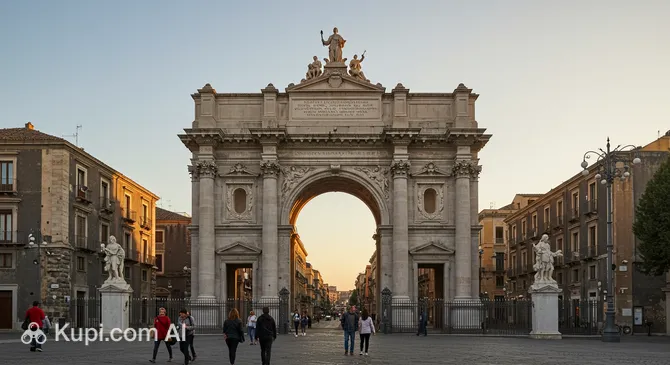
In the heart of the Fortino district stands Porta Garibaldi — a majestic triumphal arch that has become one of the most recognizable symbols Catania is proud of. Built in 1768, this architectural landmark in Italy impresses with its unusual appearance: it is created from alternating blocks of light stone and dark volcanic basalt, which creates a unique "striped" effect.
Porta Garibaldi. Illustration.
Source: Kupi.com AI
Traveler photos:
At the top of the arch, allegorical figures are featured, among which you can spot the black elephant — the city's official symbol — and a majestic phoenix. The inscription beneath the phoenix states that the city always "rises from the ashes," reflecting the resilience of local residents in the face of natural elements.
Today, this site serves not only as an important historical monument of Sicilian Baroque but also as a popular gathering point for tourists. The arch effectively closes the perspective of Via Garibaldi, connecting two ancient squares and inviting travelers to explore the authentic corners of Sicily.
Contacts
For those planning a visit to this monumental arch, below is useful contact information for navigation.
The main pleasure of visiting this site is the detailed study of its facade. Do not miss the chance to admire the contrasting stonework of white stone and black lava, which looks especially striking under the Sicilian sun. Be sure to look up at the top to find the sculpture of the elephant u Liotru and read the Latin mottos telling of glory and rebirth.
Photographers will find plenty of creative inspiration here: the arch serves as a magnificent "frame" for shots of the street receding into the distance. In the evening, the structure is beautifully illuminated, creating a solemn and somewhat mysterious atmosphere, perfect for romantic walks.
To immerse yourself in the daily life of Catania, stop by one of the nearby pastry shops. It is customary here to try traditional granita or hearty arancini while watching the bustle of Piazza Palestro. The arch is an excellent starting point for a walking route through the central shops and cafes leading straight to the city's main square.
Getting There
Getting to this architectural landmark is easy, as it is located in a lively area. If you are in the historic center, the best way is to take a pleasant 20-minute walk from Cathedral Square (Piazza del Duomo) straight down Via Giuseppe Garibaldi.
For those arriving from Catania International Airport (Fontanarossa), it is most convenient to take the Alibus shuttle to the train station and then transfer to local transport. AMT city buses (lines 534 and D) also run regularly toward Piazza Palestro.
For travelers by car, keep in mind that parking in the city center can be difficult. It is recommended to leave your car in paid parking lots near the station or use taxi services, which will quickly take you from any point in the city right to the foot of the triumphal arch.
Nearest city: Catania
History & Facts
The construction of this majestic structure in 1768 was timed to a significant political event — the wedding of King Ferdinand I and the Austrian Princess Maria Carolina. Architects Francesco Battaglia and Stefano Ittar created more than just a gate; they built a true symbol of royal triumph and prestige.
Initially, the site was named Porta Ferdinandea. It received its current name in 1862, after Giuseppe Garibaldi solemnly passed through it. The name change marked the city's transition into a new era of unified Italy while preserving the monumentality of the Baroque style.
The symbolism embedded in the decor deserves special attention. The image of the phoenix on the eastern side with the inscription Melior de cinere surgo ("I rise better from the ashes") serves as a reminder of the incredible resilience for which Catania is famous. The city has been reborn many times after the devastating eruptions of Mount Etna and earthquakes, and this arch stands as an architectural embodiment of its unwavering spirit.
Time Needed
For a quick look at the arch itself and to take some commemorative photos, you will need about 30–45 minutes. This is enough time to admire the unusual stonework and the allegorical sculptures at the top of the structure.
If you plan to combine your visit with a stroll through the colorful Fortino district, relaxing in the nearby squares, and enjoying a cup of coffee at a local cafe, you should budget between 1.5 to 2 hours. This will allow you to unhurriedly enjoy the atmosphere of the old city and feel its rhythm.
Working Hours
Since Porta Garibaldi is a city monument located in an open public space, access to it is open 24/7. You can visit the arch at any time convenient for you, whether it's early morning or late at night.
According to official information, the site is available 24 hours a day, including weekends and holidays. An evening visit is particularly interesting due to the artistic lighting that highlights the contrasting architecture of the structure.
Open 24 hours
Nearby
A walk around this historical location allows for a deeper immersion into the atmosphere of Sicilian Baroque. Catania is full of hidden treasures within walking distance of the triumphal arch, turning a simple monument visit into a complete sightseeing route.