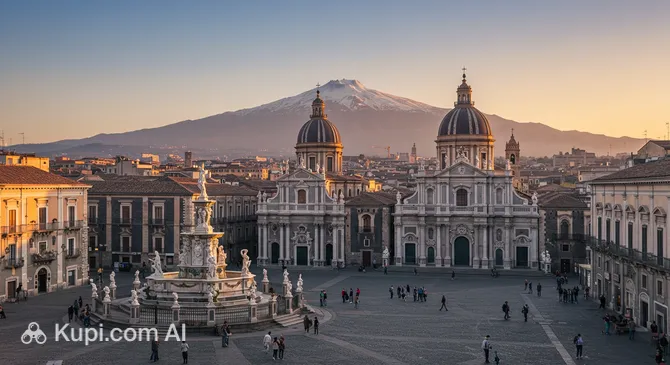
Catania is a vibrant and resilient port city located on the eastern coast of Sicily, resting at the foot of the magnificent Mount Etna. As the second-largest city on the island, it serves as a dynamic cultural and economic hub in Italy. Known for its grit and energy, the city offers a unique atmosphere where ancient traditions blend seamlessly with a youthful, modern spirit, all set against the dramatic backdrop of Europe's most active volcano.
Catania. Illustration.
Source: Kupi.com AI
Geographically, the city faces the sparkling Ionian Sea, enjoying a Mediterranean climate with hot summers and mild winters. With a population of over 311,000, it is the capital of the Metropolitan City of Catania and a bustling urban center. The fascinating history of Catania is deeply intertwined with the natural forces of the region; having been destroyed and rebuilt multiple times due to earthquakes and volcanic eruptions, the city now boasts a distinct "black and white" Baroque architecture that uses local lava stone, earning its center a place on the UNESCO World Heritage list.
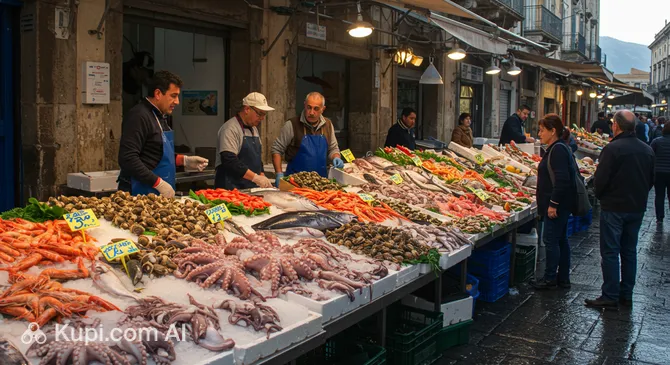
Visitors are often captivated by the iconic Piazza del Duomo, home to the famous Elephant Fountain (U Liotru), which stands as the symbol of the city. A walk through the lively fish market, La Pescheria, provides an authentic sensory experience of Sicilian daily life, while the nearby Mount Etna offers incredible opportunities for hiking and nature exploration. Whether you are exploring its grand piazzas or tasting delicious street food, Catania invites you to discover the intense and passionate soul of Sicily.
Weather Overview
Catania enjoys a classic Mediterranean climate, making it a year-round destination with distinct seasonal characters. For travelers looking to pack the right gear, checking the current weather in Catania is always a good idea. Generally, the city experiences hot, sun-drenched summers and mild, moderately wet winters.
The warmest period occurs in July and August, where average temperatures hover around 26°C, with daily highs frequently reaching 31.0°C. July is particularly dry, recording almost no precipitation and only about 2 wet days. In contrast, the cooler months bring a shift in the atmosphere; January is typically the coldest month, with lows dropping to 4.2°C and highs reaching nearly 12°C.
Rainfall patterns vary significantly throughout the year. While the summer is arid, the autumn and winter months see an increase in precipitation frequency. November is notably the wettest month in terms of frequency, with approximately 13 wet days. Overall, expect hot summers perfect for beach days and mild winters with occasional rain, suitable for exploring the city's historic architecture.
Average monthly temperature
Average monthly precipitation
Interesting Facts
Beyond the main piazzas and baroque facades, Catania holds many fascinating secrets and legends shaped by its proximity to Mount Etna. The city's history is a tapestry of resilience, where ancient myths and geological marvels blend into the everyday streets.
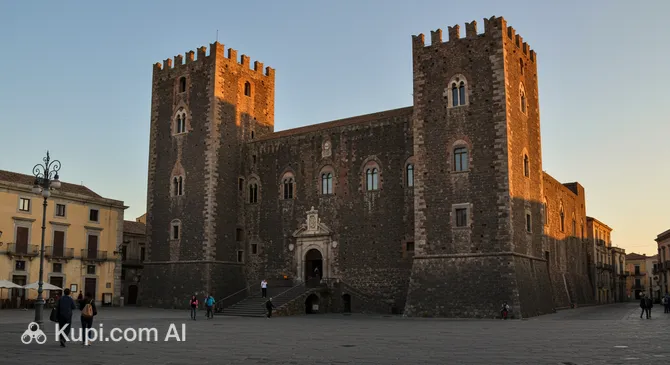
Ursino Castle. Illustration.
Source: Kupi.com AI
Traveler photos:
The majestic Ursino Castle was originally constructed on a cliff overlooking the sea to guard the harbor. However, the massive volcanic eruption of 1669 unleashed a lava flow that surrounded the fortress and pushed the coastline hundreds of meters away, leaving the castle standing landlocked in the heart of the modern city.
The city's beloved symbol is the Elephant Fountain, topped by an ancient lava stone elephant named U Liotru. According to local folklore, this statue was the magical mount of a sorcerer named Heliodorus, who used spells to bring the stone elephant to life and rode it all the way to Constantinople.
A "ghost" river flows silently beneath the city streets. The Amenano River was buried by lava during an eruption, but it still runs underground and powers the fountain at the entrance of the bustling Catania Fish Market, where the water is said to be surprisingly fresh and clear.
Hidden right in the city center is the Roman Amphitheatre of Catania, which was once one of the largest in the Roman Empire. Built from black lava stone and marble, much of this colossal structure remains buried beneath the buildings of Piazza Stesicoro, with only a portion excavated and visible today.
How to Get There
Reaching the vibrant city of Catania is straightforward, thanks to its status as a major transport hub for Sicily. Whether arriving by air or land, visitors have several efficient options. For a comprehensive guide on planning your journey, you can read more about how to get to Catania and the various transport connections available.
The primary entry point for most travelers is Catania-Fontanarossa Airport (IATA: CTA), conveniently located just 4.8 km from the city center. As the busiest airport on the island, it handles a large volume of international and domestic flights. The short distance means a transfer by taxi or bus takes only about 30 minutes. Alternatively, visitors might fly into Comiso Airport (IATA: CIY), situated in the city of Comiso, approximately 70.7 km away. While smaller, it serves as a useful regional gateway, with the journey to Catania taking around 2 hours by road.
For clarity, here is a summary of the main airports:
For those traveling by train from the Italian mainland, the journey often involves transit through key stations in the Calabria region before crossing the Strait of Messina. One significant hub is the Reggio di Calabria Centrale Station (IATA: RCC) in Reggio Calabria, located about 82.1 km from Catania. The transfer from there typically takes around 2.5 hours. Another option for long-distance travelers is the Lamezia Terme Centrale Railway Station (IATA: LTZ) in Cosenza, which is approximately 187.5 km away, with a travel time to Catania of roughly 5 hours.
Below is a list of the nearest major railway stations on the mainland route:
Catania is a city of layers, where ancient history and Baroque splendor coexist side by side. Exploring its streets reveals a fascinating mix of architectural styles, from Roman ruins to grand 18th-century palaces built from the very lava that once threatened the city. Here are some of the top sights that capture the essence of this Sicilian gem.
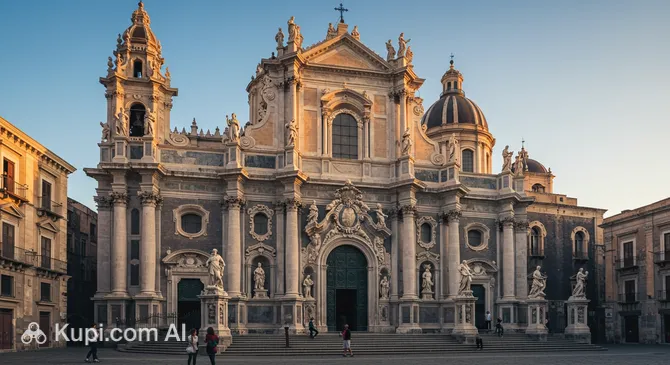
Dominating the main square is the stunning Cathedral of Saint Agatha. Dedicated to the city's patron saint, this masterpiece of Sicilian Baroque architecture features a magnificent façade designed by Giovanni Battista Vaccarini. Visitors are drawn to its solemn interior, which houses the relics of Saint Agatha as well as the tomb of the celebrated composer Vincenzo Bellini. It serves as the spiritual heart of the city and a testament to its resilience after the 1693 earthquake.
Cathedral of Saint Agatha. Illustration.
Source: Kupi.com AI
Traveler photos:
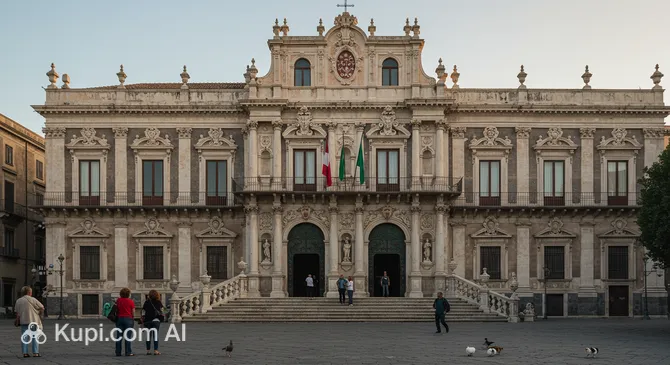
A short distance away stands the Benedictine Monastery of San Nicolò l'Arena, a UNESCO World Heritage site and one of the largest Benedictine monasteries in Europe. This architectural jewel blends various styles and offers a unique journey through time, from its Roman house foundations to its lavish 18th-century cloisters. Today, it hosts the University of Catania, creating a lively atmosphere where students study amidst grand marble staircases and suspended gardens.
Benedictine Monastery of San Nicolò l'Arena. Illustration.
Source: Kupi.com AI
Traveler photos:
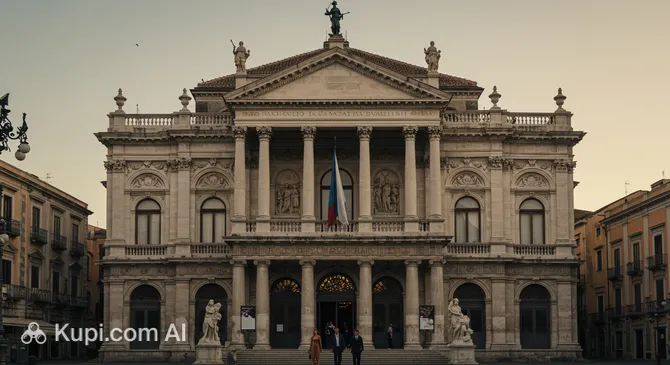
For lovers of music and the arts, the Teatro Massimo Bellini is an unmissable stop. Named after the city's most famous son, opera composer Vincenzo Bellini, the theatre is renowned for its exceptional acoustics and opulent decor. The interior is a vision of red velvet, gold stucco, and frescoed ceilings, making it one of the most beautiful opera houses in Italy. A guided tour allows you to admire the royal box and the rich history behind this cultural landmark.
Teatro Massimo Bellini. Illustration.
Source: Kupi.com AI
Traveler photos:
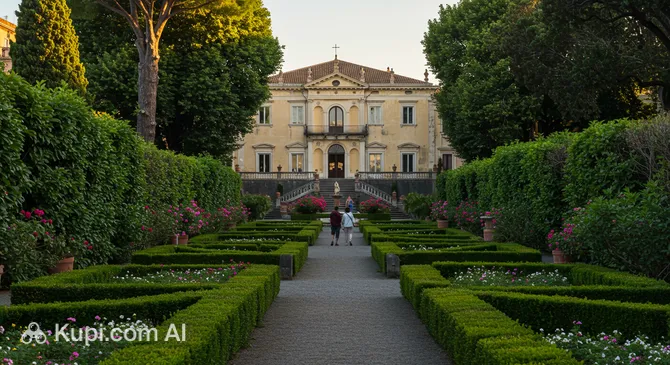
To escape the urban bustle, locals and tourists alike head to Villa Bellini, the city's oldest and most beautiful public park. This "green lung" of Catania offers shaded walkways, elegant fountains, and subtropical plants, providing a perfect spot for a relaxing stroll. From its hilltops, you can enjoy panoramic views of the city rooftops and the ever-present silhouette of Mount Etna, making it a delightful place to unwind.
Villa Bellini. Illustration.
Source: Kupi.com AI
Traveler photos:
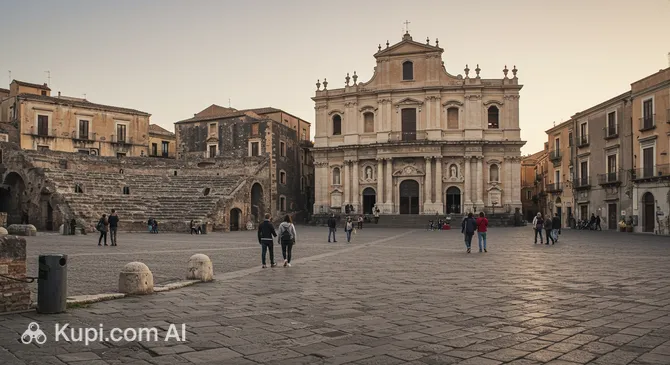
Finally, stepping into the Roman Theatre of Catania feels like entering a different world. Nestled tightly between modern buildings, this ancient structure was built from black lava stone and brick, with the capacity to hold thousands of spectators in its prime. It is a striking example of the city's deep roots, allowing visitors to walk through ancient corridors and sit on the steps where Romans once watched theatrical performances.
Local Cuisine
Catania is a paradise for food lovers, offering a cuisine that is as bold and intense as the volcano that shadows it. The city’s gastronomy is deeply rooted in the land and sea, featuring rich flavors like eggplants, tomatoes, ricotta, and the freshest catch from the Ionian. The undisputed queen of the table is Pasta alla Norma, a savory masterpiece made with macaroni, fried eggplant chunks, plenty of grated salted ricotta cheese, and fresh basil, created as a tribute to Vincenzo Bellini’s famous opera.
Street food is an essential part of the local culture, and the people of Catania take great pride in their Arancino. Unlike in other parts of Sicily, here the fried rice ball is often shaped like a cone to resemble Mount Etna and is strictly referred to using the masculine suffix. Another savory staple is the cipollina, a delicious puff pastry filled with tomato, mozzarella, ham, and onions, perfect for a quick snack while exploring the city streets.
Catania Fish Market. Illustration.
Source: Kupi.com AI
Traveler photos:
When it comes to drinks, the city has a unique tradition centered around its historic chioschi (kiosks). You must try the Selz, Limone e Sale, a sparkling drink made with seltzer water, fresh lemon juice, and a pinch of salt, which is incredibly refreshing on a hot day. For breakfast, locals shun savory options in favor of a granita served with a warm, fluffy brioche. While lemon and coffee are classics, the pistachio and almond flavors are local favorites not to be missed.
For a true taste of the sea, the area surrounding the historic market is the place to be. The atmosphere here is electric, filled with the calls of vendors and the scent of the ocean. A perfect stop to immerse yourself in this culinary vibrancy is Scirocco Sicilian Fish Lab, known for serving high-quality fried seafood in traditional paper cones, allowing you to savor the authentic flavors of the Mediterranean right in the heart of the action.
Travel Tips
Visiting Catania is an immersion into a city with a strong personality, where the energy of the volcano meets the calm of the sea. To help you navigate the bustling streets and local customs with ease, here are some practical tips to ensure your trip is as smooth as it is memorable.
Clothing and Gear: In summer, lightweight and breathable fabrics like linen are essential to handle the heat, while a windbreaker is recommended if you plan to hike up Mount Etna. Since the historic center is paved with uneven black lava stone, pack sturdy, comfortable walking shoes. Remember that to enter the Cathedral and other religious sites, you must dress modestly—shoulders and knees should be covered.
Transportation: The best way to explore the city center is on foot, as most major sights are close together. For longer distances, the Metropolitana di Catania is clean and efficient, though the network is small. Avoid renting a car for city driving, as traffic can be chaotic and parking is scarce; instead, rely on the Alibus for airport transfers or local taxis for specific trips.
Finances: The currency is the Euro (€). While credit cards are widely accepted in restaurants and shops, cash is still king at street food stalls and the famous fish market. It is wise to carry small bills for these transactions. Tipping is not mandatory, as a service charge (coperto) is usually added to the bill, but leaving small change for good service is appreciated.
Health and Safety: Catania is generally safe, but like any busy port city, it requires common sense. Keep a close eye on your belongings in crowded areas like La Pescheria market or on buses to avoid pickpockets. Pharmacies are marked by a green cross and are easy to find; for emergencies, dial 112 for assistance.
Communication: Italian is the main language, and while younger people and tourism workers often speak English, it is less common among older locals. Learning a few basic phrases like Buongiorno (Good morning) and Grazie (Thank you) goes a long way. Free Wi-Fi is available in some public squares, but buying a local SIM card at a tobacco shop (Tabacchi) or phone store is reliable and affordable.
Local Etiquette: When shopping at local markets, never touch the produce with your bare hands; always ask the vendor to serve you or look for plastic gloves. In terms of dining, locals eat late—lunch is typically around 1:30 PM, and dinner often doesn't start until 8:30 PM or later, so plan your meals accordingly.
What to Avoid: Do not make the mistake of calling the famous fried rice ball an "Arancina" (with an 'a'). In Catania, it is strictly masculine—Arancino. Using the Palermitan feminine form is a common faux pas that locals will quickly correct, as they are very proud of their specific culinary heritage.
Siesta Time: Be aware of the afternoon break, known as the riposo. Many smaller shops, churches, and businesses close roughly between 1:30 PM and 4:00 PM. Use this time to relax, enjoy a long lunch, or head to the beach, just as the locals do.
By keeping these simple guidelines in mind, you will be able to move through Catania not just as a tourist, but as a welcome guest. Embrace the city's unique rhythm, from its lively mornings at the market to its relaxed, late-night dinners, and enjoy every moment of your Sicilian adventure.
Entertainment & Nightlife
As the sun sets behind Mount Etna, Catania transforms into one of Sicily's most energetic nightlife capitals. Thanks to its large university population, the city buzzes with a youthful and vibrant atmosphere that lasts well into the early morning hours. The nightlife here is largely outdoors, with crowds spilling out of bars onto the historic lava-stone streets and piazzas, creating a massive open-air party, especially during the warmer months.
The epicenter of the action is undoubtedly the area around Piazza Teatro Massimo. While the opera house is a cultural gem by day, by night the surrounding square and narrow streets become a dense gathering point for locals and tourists holding cocktails and beers. Another key district is the charming Via Santa Filomena and Via Gemmellaro, where you can find a sophisticated mix of wine bars and gourmet street food venues. For a more intense clubbing scene, the port area and the coastline towards La Playa offer larger venues and summer beach clubs where DJs spin tracks until dawn.
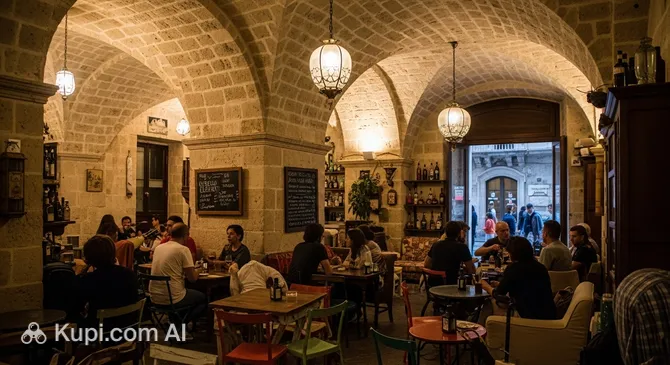
For a drink with an unforgettable view, head to the Ostello degli Elefanti Bar. Located on the top floor of a hostel right in Piazza del Duomo, this rooftop terrace offers spectacular panoramas of the Elephant Fountain and the city skyline, making it a perfect spot for a sunset aperitivo. If you prefer a lively street-level vibe, Mad in Italy is a popular choice in the bustling historic center, known for its creative cocktails and eclectic decor. Down by the harbor, the Vecchia Dogana is a beautifully renovated historical complex that often hosts events, music, and nightlife activities in a unique architectural setting.
Ostello degli Elefanti Bar. Illustration.
Source: Kupi.com AI
Traveler photos:
The rhythm of the night in Catania starts late. Dinner is rarely served before 8:30 PM, and the bars don't truly fill up until after 10:30 PM. Nightclubs typically open their doors around midnight but peak much later. The dress code is generally "smart casual"—Sicilians like to dress well, so leave the beachwear for the day. Prices are reasonable compared to northern Italy; a cocktail usually costs between €6 and €10, and entry to clubs is often affordable, sometimes including a drink.
Regarding safety, the main nightlife districts in the historic center are well-populated and generally safe to walk around. However, it is advisable to stick to the busy, well-lit main streets and avoid wandering into deserted alleys or the area around the central train station late at night. Public transport is limited in the evenings, so rely on official radio taxis to get home. You can call one or find them at designated stands in major squares, as hailing them on the street is not common practice.
While the night belongs to the party-goers, daytime entertainment offers a different pace. Beyond the historical sights, families and thrill-seekers can visit Nettuno Park, a classic amusement park located along the seafront promenade. It features rides and attractions suitable for all ages, providing a fun break from sightseeing. For those who love shopping and leisure, the modern Borghetto Europa offers a contemporary space to relax, shop, and enjoy casual dining in a multi-level underground structure.
Parks & Museums
Catania offers a fascinating array of green retreats and cultural institutions that provide a deeper look into its artistic soul and historical resilience. Beyond the bustling markets and baroque facades, visitors can find tranquility in lush gardens and immerse themselves in museums that chronicle everything from ancient nobility to pivotal moments in modern history.
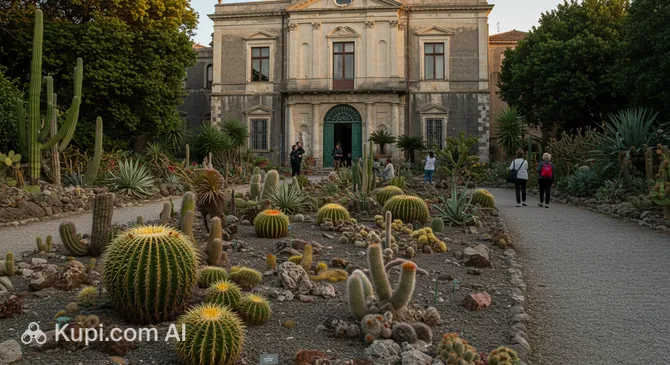
While the famous Villa Bellini serves as the city's central "green lung," nature lovers should not miss the Botanical Garden of Catania. Founded in the 19th century by the local university, this scientific garden is a serene haven showcasing a vast collection of succulents, palms, and exotic plants. It is particularly interesting for its "Sicilian Garden," which preserves native wild species, offering a quiet escape from the urban noise where you can appreciate the island's unique biodiversity.
Botanical Garden of Catania. Illustration.
Source: Kupi.com AI
Traveler photos:
Another charming, albeit smaller, green space is Villa Pacini, affectionately known by locals as "Villa Varagghi" (Garden of Yawns). Located near the fish market and the port, it is one of the city's oldest public gardens. It provides a shaded respite under the arches of the railway viaduct, where the Amenano river resurfaces, making it a perfect spot for a quick rest while exploring the historic center.
For those interested in history, the Sicily Landings Museum 1943 is an essential stop. This immersive museum is dedicated to the Allied landing in Sicily during World War II, known as Operation Husky. Through realistic reconstructions, artifacts, and interactive displays, it offers a moving and educational experience that vividly retells the events that marked the beginning of the liberation of Italy and Europe.
To glimpse the opulent lifestyle of the Sicilian aristocracy, a visit to Biscari Palace is highly recommended. As the most significant private palace in the city, it is a masterpiece of Rococo architecture. Visitors are often awestruck by the "Feasting Hall," featuring an intricate staircase and a ceiling dome that opens to the sky. Famous figures like Goethe have walked its halls, and today it stands as a testament to the grandeur of 18th-century Catania.
Biscari Palace. Illustration.
Source: Kupi.com AI
Traveler photos:
Art enthusiasts might also enjoy the Museum of Contemporary Art of Sicily. Located in a baroque building, it connects the city's historic roots with modern artistic expression, hosting exhibitions that highlight both local and international talent.
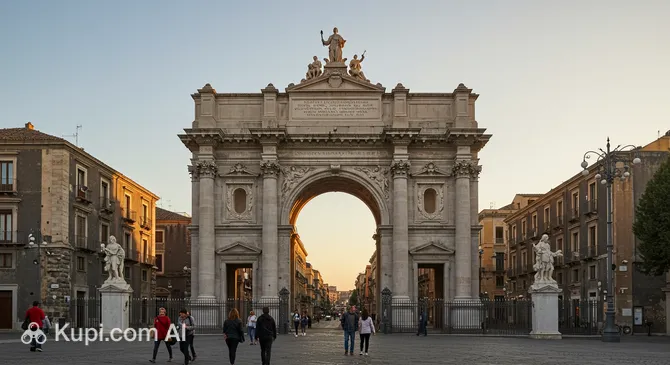
In terms of historical landmarks, the Porta Garibaldi is a striking monument to see. Originally built in 1768 to honor a royal wedding, this triumphal arch is instantly recognizable by its alternating layers of white limestone and black lava stone. It sits at the end of Via Garibaldi and is crowned by a clock and an eagle, symbolizing the city's phoenix-like ability to rise from the ashes.
Porta Garibaldi. Illustration.
Source: Kupi.com AI
Traveler photos:
Strolling through the city, you will likely cross Piazza Università. This elegant square is flanked by magnificent palaces designed by distinguished architects like Vaccarini. It is beautifully illuminated at night, with four artistic lamp posts located at the corners, each depicting a legend from Catania’s folklore, such as the Gammazita or the Paladin Uzeta.
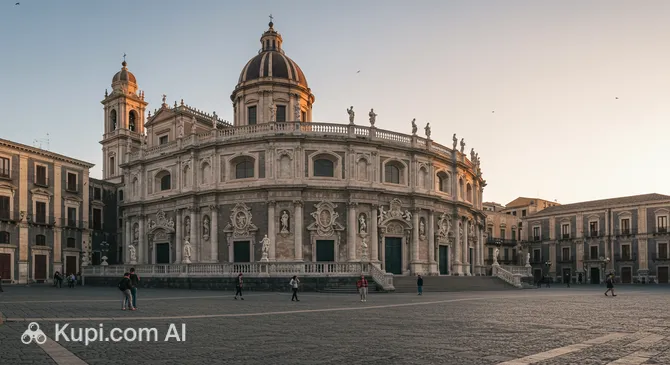
For a truly unforgettable perspective, seek out the Church of the Abbey of Saint Agatha. While the church itself is a baroque gem, the real secret is the climb to its dome. From the terrace, you can enjoy what is arguably the best panoramic view in the city, capturing the Cathedral, the smoking summit of Mount Etna, and the sparkling Ionian Sea all in one frame—a perfect photo opportunity, especially at sunset.
Getting Around
Navigating Catania is an adventure in itself, mirroring the city's chaotic yet charming character. The public transport system is primarily composed of urban buses operated by AMTS and a small but efficient subway line managed by Ferrovia Circumetnea (FCE). While the historic center is compact enough to be explored on foot, utilizing public transport is essential for reaching the airport, the beach, or attractions located on the outskirts. The subway, known as the "Metropolitana," is the most modern option, offering a quick and air-conditioned way to move between the central train station and the heart of the city at Stesicoro, though its network is currently limited to a single line.
For destinations not covered by the metro, the extensive bus network is the main alternative. The AMTS buses cover the entire metropolitan area, recognizable by their blue or orange livery. However, tourists should be prepared for variable schedules and traffic delays, which are common in the city center. A specific service of great interest to visitors is the Alibus, a fast and reliable shuttle that connects Catania-Fontanarossa Airport with the Central Station and the city center, running frequently throughout the day.
The ticketing system has become more user-friendly in recent years. Travelers can purchase tickets at authorized retailers such as tobacco shops (Tabacchi) and newsstands, or via automated machines at metro stations. For convenience, digital tickets can be bought using mobile apps like DropTicket or the official AMTS app. A standard single ticket is valid for 90 minutes, and there are also daily passes available which offer unlimited travel, providing excellent value for those planning a full day of sightseeing. It is crucial to remember to validate paper tickets immediately upon boarding buses or entering metro turnstiles to avoid fines.
A unique feature of local transport is the Ferrovia Circumetnea, a historic narrow-gauge railway that is as much a tourist attraction as it is a mode of transit. Departing from the Catania Borgo station, this vintage train slowly winds its way around the base of Mount Etna, passing through picturesque lava fields and small towns like Bronte and Randazzo. It offers a slower, nostalgic pace of travel and provides some of the most spectacular views of the volcano, making it a highly recommended experience for visitors.
For those who prefer private transport, taxis are available but can be expensive compared to other Italian cities; they are best found at designated ranks in major piazzas rather than hailed on the street. Ride-hailing apps are not widely used, so relying on official white taxis or pre-booked transfers is advisable. Driving a rental car in Catania is generally discouraged for tourists due to the aggressive driving style, heavy congestion, and limited parking, particularly in the ZTL (Limited Traffic Zones). Consequently, combining walking with the metro and occasional bus trips remains the most stress-free way to experience the city.
Accommodation
Where to Stay:
Finding the perfect place to stay in Catania is relatively easy, as the city offers a wide spectrum of accommodation options to suit every budget and travel style. Visitors can choose from elegant luxury hotels housed in restored 18th-century noble palaces, charming Bed & Breakfasts run by welcoming locals, and modern apartments tucked away in historic alleyways. For budget travelers, there is also a good selection of hostels and affordable guesthouses, particularly in the areas surrounding the university and the port.
The most popular area for tourists is undoubtedly the Centro Storico (Historic Center). Staying near Via Etnea or the Piazza del Duomo places you within walking distance of the main baroque attractions, restaurants, and the fish market. This area is vibrant and atmospheric, perfect for those who want to be in the heart of the action. For a slightly more upscale and quieter experience, the Corso Italia district offers high-end shopping and modern hotels. Alternatively, if your trip is focused on sun and sea, looking for accommodation along the Lungomare (seafront promenade) or near La Playa provides easy access to beach clubs while still being a short bus ride from the city center.
In terms of pricing, Catania is generally more affordable than many northern Italian destinations. Budget options and B&Bs are quite reasonably priced, while luxury stays offer excellent value for the quality provided. Booking is typically done through major online platforms, though many smaller family-run establishments also accept direct inquiries. A crucial tip for travelers: if you plan to visit during the Festival of Saint Agatha in early February—one of the largest religious festivals in the world—you must book your accommodation several months in advance, as the city fills up completely.
Nearby Cities
For those looking to explore the surroundings, Catania serves as an excellent base for day trips to several interesting nearby locations:
City
Population
Distance
San Gregorio di Catania
11 880
7 km
Misterbianco
49 992
7 km
San Giovanni la Punta
23 399
8 km
Mascalucia
32 167
8 km
Aci Castello
18 577
8 km
Among these, Acireale is a standout destination for art and history lovers. Known as the city of a hundred bells, it boasts stunning Baroque architecture, with the Basilica of San Sebastiano and the Cathedral being prime examples. It is also famous for hosting one of the most beautiful Carnivals in Sicily, where elaborate allegorical floats parade through the historic streets.
Another intriguing spot is Paterno, which offers a deep dive into the medieval history of the island. The town is dominated by its majestic Norman Castle, built on a basalt rock hill in 1072. Exploring the fortress allows visitors to step back in time, while the location provides spectacular panoramic views of the Simeto Valley and Mount Etna.
These nearby destinations offer a glimpse into the diverse culture and landscapes of the region.
Shopping & Souvenirs
Shopping in Catania is a vibrant experience that mirrors the city’s spirited character, offering a mix of polished high-street retail and chaotic, colorful markets. The city serves as a commercial hub for eastern Sicily, where visitors can find everything from luxury Italian fashion to unique artisan crafts. The atmosphere is always lively, with the act of buying and selling often accompanied by loud banter and friendly negotiation.
The primary destination for fashion lovers is Via Etnea, the city's elegant main street. Stretching from the cathedral square towards the volcano, this pedestrian-friendly boulevard is lined with major international brands, trendy boutiques, and historic cafés. A walk here offers more than just window shopping; it is a social ritual, especially in the late afternoon. Along this route, you will encounter the busy Piazza Stesicoro, a central hub that bridges the gap between the modern commercial district and the historic heart of the city.
Piazza Stesicoro. Illustration.
Source: Kupi.com AI
Traveler photos:
For a taste of authentic Sicilian life, the traditional street markets are unmissable. While the famous Catania Fish Market is renowned for its seafood, the surrounding stalls are a treasure trove for foodies, selling local spices, dried oregano, and vacuum-packed cheeses that are perfect for taking home. Just a short distance away, the sprawling daily market at Piazza Carlo Alberto, known locally as Fera 'o Luni, offers a chaotic but fascinating array of clothing, fresh produce, and household goods at bargain prices.
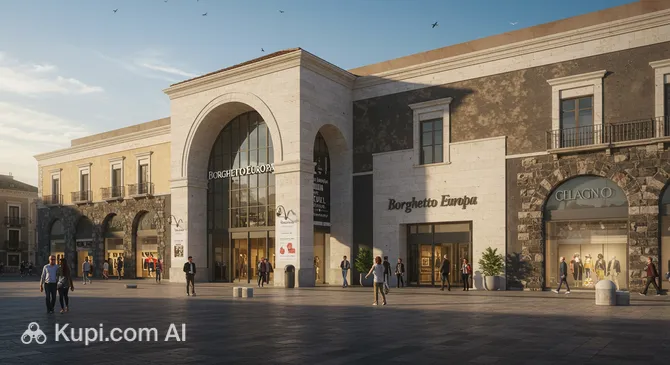
Travelers seeking a more contemporary and relaxed environment should visit Borghetto Europa. This modern, multi-level complex is built partly underground and features a selection of shops, wellness centers, and food venues. It provides a sophisticated open-air space where you can browse in peace or enjoy a quiet coffee away from the hustle of the crowded city center.
Borghetto Europa. Illustration.
Source: Kupi.com AI
Traveler photos:
When searching for souvenirs, focus on local craftsmanship. Artisans in Catania are famous for their work with lava stone, fashioning it into everything from durable kitchenware to intricate jewelry. Ceramics in the vibrant Caltagirone style are also popular, adding a splash of color to any home. Finally, no shopping trip is complete without purchasing pistachio products from nearby Bronte; look for sweet pistachio cream or pesto, which are widely available in local delicatessens.