Support

Palace of the Normans

About

The Norman Palace (Palazzo dei Normanni) is one of the most significant and ancient landmarks in Palermo, located in the very heart of Sicily. This majestic complex, also known as the Royal Palace, once served as the residence of Sicilian kings and viceroys and is now a UNESCO World Heritage site. The palace stands on a hill, offering picturesque views of the city's historic center. For any traveler exploring Italy, this place will be a true discovery.

The history of this site dates back to antiquity: Phoenician and Roman fortifications were here, and in the 9th century, the Arabs built an emir's fortress. However, the palace began to acquire its current appearance in the 11th century with the arrival of the Normans, who turned it into a luxurious royal residence. It is this blend of cultures that makes the Norman Palace a unique monument, where Arab, Byzantine, and Norman architectural styles merge into a single harmonious whole.
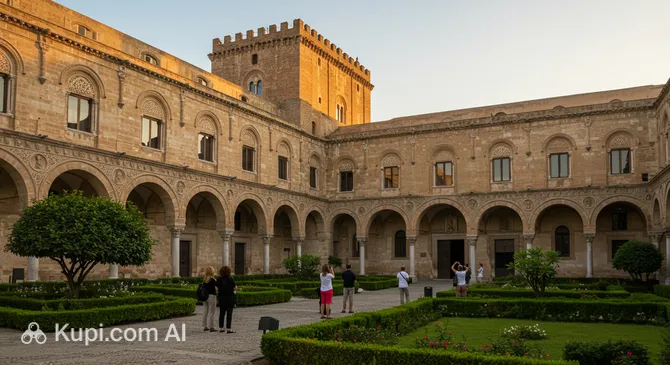
Palace of the Normans. Illustration.
Source: Kupi.com AI

Traveler photos:

The true jewel of the palace is the Palatine Chapel — the private chapel of the kings, built in the 12th century. Its interiors are breathtakingly beautiful with Byzantine mosaics that are considered some of the best in the world. Golden images of Christ Pantocrator, saints, and biblical scenes cover the walls and dome, creating an unforgettable atmosphere. A unique element of the chapel is also the carved Arab ceiling, which is extremely rare for Europe and decorated with intricate patterns and paintings.

In addition to the chapel, other historic rooms can be seen in the palace, such as the Hall of Roger, also decorated with secular mosaics depicting hunting scenes. Today, the Sicilian Parliament meets in the palace building, but its main treasures are open to visitors wishing to experience the centuries-old history and culture of Sicily.

Contacts

To plan your visit, check current opening hours, or find ticket prices, it is recommended to use the official contact details for the Norman Palace. All necessary visitor information is generally available on the official website or by phone.

How to contactContact
AddressPiazza del Parlamento, 1, 90129 Palermo PA, Italy
Phone number+39 091 705 5611
Websitewww.federicosecondo.org

What to Do

A visit to the Norman Palace is a true journey through time. Guests can freely stroll through the historic corridors and explore the lavishly decorated halls where important state decisions were once made. The main goal for many tourists, of course, is the famous Palatine Chapel. This is a place where you can spend hours admiring the incredible Byzantine mosaics, recognized as a masterpiece of world art, and the unique carved Arab ceiling.

Beyond the chapel, the palace features exhibits dedicated to the rich history of Sicily and its monarchs. This is an excellent opportunity to gain a deeper understanding of the island's culture. The architectural diversity of the complex itself is equally interesting. Pay attention to the surviving ancient towers and massive walls, and stroll through the courtyards, each of which holds its own special atmosphere. It is a clear example of how different eras and cultures have left their mark on one place.

The Norman Palace is not just a museum frozen in stone. Modern exhibitions and temporary displays are regularly held here, adding an element of novelty to the visit. Furthermore, life still buzzes in parts of the complex today: the Regional Parliament of Sicily meets here. This amazing contrast between antiquity and modernity gives the palace a special, living atmosphere and makes a visit even more memorable.

Getting There

The Norman Palace is conveniently located in the center of Palermo at Piazza Indipendenza, 1, making it easily accessible for tourists. It is simple to reach on foot, especially if you are already exploring the city's historic district. A walk from other central attractions, such as the Cathedral, takes very little time and allows you to better experience the atmosphere of the Sicilian capital.

For those who prefer public transport, stops for numerous city buses (e.g., Nos. 104, 109, 118, and others) are located near the palace, allowing you to reach it from almost anywhere in the city. Additionally, the Palazzo Reale-Orleans railway station is located nearby, and Palermo's main station is about a 15-20 minute walk away. This is particularly convenient for travelers arriving from other cities in Italy.

If you decide to travel by car, please note that traffic in central Palermo can be difficult, and some streets are part of a Limited Traffic Zone (ZTL). Nevertheless, there are paid parking lots near the Norman Palace. As a comfortable alternative, you can always use a taxi, which will take you directly to the palace entrance.

Nearest city: Palermo

History & Facts

The history of the Norman Palace is a true kaleidoscope of eras and cultures, reflecting Sicily's vibrant past. Its story begins long before the arrival of the Normans: in ancient times, on this strategically important hill, the Phoenicians built their first fortifications, which were later replaced by Roman structures. In the 9th century, following the Arab conquest of Palermo, a powerful fortress known as the Emir's Palace (Al-Kasar) rose on this site, serving as one of the island's centers of power.

The key turning point in the building's history occurred in 1072, when the Norman conquerors led by Robert Guiscard made the fortress their main residence. However, it became a truly luxurious palace under his nephew, King Roger II. He transformed the Arab citadel into a magnificent palace complex, decorating it with four towers. Only one of them survives today — the Pisan Tower — which remains a silent witness to the former grandeur of the Norman era.

The period of the palace's highest prosperity came during the reign of Emperor Frederick II, whose court in Palermo became one of Europe's primary cultural centers. Later, in the 16th century, with the arrival of the Spanish viceroys, the architectural appearance of the complex underwent significant changes again. Elegant courtyards were built during this time, such as the Maqueda Courtyard and the Fountain Courtyard, as well as the grand staircase. It was then that the palace's main facade was reoriented toward Piazza Vittoria, acquiring a look close to its modern appearance.

Time Needed

To fully enjoy a visit to the Norman Palace, it is worth setting aside enough time for your tour. Typically, a complete exploration of the palace and its main treasure, the Palatine Chapel, takes between 2 and 3 hours. This is enough time to view the famous Byzantine mosaics without rushing, walk through the royal halls, and feel the unique atmosphere of this historic site where Arab, Byzantine, and Norman cultures merge.

The duration of your visit can, of course, vary depending on your interests. If you are short on time, you can focus on viewing the Palatine Chapel, which takes about an hour. However, for a deeper immersion that includes visiting the Royal Apartments (when open), seeing the Hall of Roger II, and walking through the courtyards, it is better to plan for three hours. Art and history enthusiasts will likely want to stay even longer, studying every corner of this Palermo treasure in detail.

Working Hours

The Norman Palace is generally open to visitors daily; however, opening hours may vary depending on the day of the week and the season. Usually, from Monday to Saturday, the complex can be visited from 8:30 AM to 4:30 PM. On Sundays and public holidays, the hours are reduced, and the palace is most often open from 8:30 AM to 12:30 PM. It is important to note that meetings of the Sicilian Parliament take place in the building, which may result in limited access to the Royal Apartments, especially on weekdays.

Before planning your visit, it is highly recommended to check the current schedule and visiting conditions on the official website of the Norman Palace. This will help avoid unpleasant surprises related to schedule changes due to official events or religious services in the Palatine Chapel. Booking tickets online in advance is also a good idea, especially during the peak tourist season, to save time and guarantee entry without queuing.

DayOpening hours
Monday8:30 – 16:30
Tuesday8:30 – 16:30
Wednesday8:30 – 16:30
Thursday8:30 – 16:30
Friday8:30 – 16:30
Saturday8:30 – 16:30
Sunday8:30 – 12:30

Nearby

A visit to the Norman Palace is just the starting point for exploring the historic heart of Palermo. The surrounding area is packed with other iconic landmarks located within a few minutes' walk. Exploring these sites will allow you to dive deeper into Sicily's rich history and culture, seeing how different eras and architectural styles intertwine on the city streets.

A stroll through the nearby neighborhoods will enrich your experience and help you form a more complete picture of the Sicilian capital. From ancient churches to majestic gates and cozy palaces, all the most interesting sites are located very close by, creating a unified cultural ensemble. Below is a list of places worth visiting to make your trip even more fulfilling.

NameDistance
Palatine Chapel and Royal Palace0 km
The Ventimiglia Family House0.1 km
Church of San Giovanni degli Eremiti0.2 km
Porta Nuova0.2 km
Parco d'Orleans Zoological Garden0.2 km
Palermo Cathedral0.4 km
Palazzo Conte Federico0.5 km

Have you reached the end of the page?

So the route has been studied inside and out