Support

Falcone Tree

About

The Falcone Tree (Albero Falcone) is not just a majestic ficus tree growing in Palermo, Sicily, but a powerful symbol deeply rooted in the modern history of Italy. Located at Via Notarbartolo, 23, in front of the house where the famous judge Giovanni Falcone lived, this tree has become an iconic landmark embodying the fight against the mafia and the pursuit of justice.
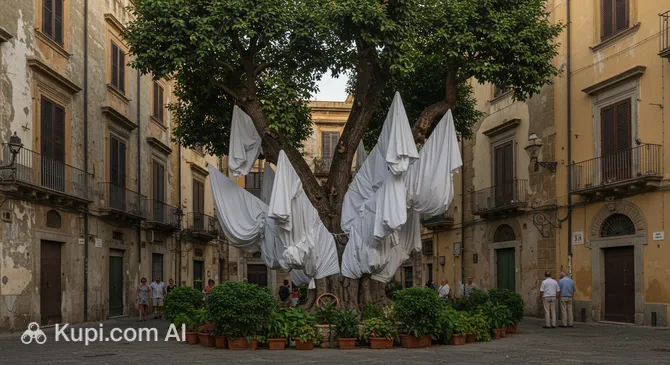
Falcone Tree. Illustration.
Source: Kupi.com AI

Traveler photos:

Following the tragic death of Judge Falcone in 1992, this ordinary city tree was transformed into a living memorial. People from all over the country and the world began to come here, leaving messages, drawings, poems, photographs, and flowers on its trunk and branches. These spontaneous tributes turned the Falcone Tree into a place of memory and reverence, a symbol of the unyielding spirit in the face of organized crime.

The significance of the Falcone Tree is officially recognized: it is included in the "Regional Map of Identity and Memory" (LIM), established by the Region of Sicily. The tree is classified under the category "Places of Historical and Cultural Figures," and more specifically, in the section "Places of Anti-Mafia Figures." For the residents of Palermo and all of Italy, it is not just a plant, but a sacred reminder of the price of justice and the importance of civic courage.

Contacts

The Falcone Tree is an iconic public landmark in Palermo, and as such, it does not have specific contact details. For more information about visiting this memorial site or for themed tours related to the history of the anti-mafia movement, it is recommended to contact the tourist information centers in Palermo or check the city's official tourism portals.

How to contactContact
AddressVia Emanuele Notarbartolo, 23, 90141 Palermo PA, Italy

What to Do

When visiting the Falcone Tree in Palermo, you will witness a living and moving grassroots memorial. The main thing to see and connect with here are the countless messages, photographs, flowers, and other mementos that people from all over the world leave at the base of this famous ficus. This place has become a kind of sanctuary where visitors can stop to honor the memory of Judge Giovanni Falcone, his wife Francesca Morvillo, and their bodyguards, as well as all victims of the mafia, and reflect on the importance of the struggle for justice.

While direct participation in major events may not be available to every tourist, it is important to know the deep symbolic meaning of this place. Every year, young people from all over Italy gather around the Falcone Tree, especially on the anniversary of the Capaci tragedy. They come to remember the victims of the mafia and reaffirm their commitment to the ideals of legality and civil society. These gatherings, according to Maria Falcone, the judge's sister, are not just days of remembrance but "a goal, a point of arrival, an embrace from a country that works all year round so as not to forget."

For a tourist, a visit to the Falcone Tree is an opportunity to touch an important chapter of Italy's modern history. Here, you can spend time in quiet reflection, studying the messages left behind and feeling the atmosphere of unity and remembrance. Many visitors also leave their own small notes or flowers as a mark of respect. This site does not offer active entertainment, but it provides a deep emotional experience and food for thought.

Furthermore, a visit to the Falcone Tree can be seamlessly integrated into a broader sightseeing program in Palermo dedicated to the history of the anti-mafia struggle. Visiting this symbolic site will help you gain a deeper understanding of the cultural and historical context of Sicily and the efforts of its people to establish justice. It is an opportunity to see how the memory of tragic events is transformed into a symbol of hope and civic responsibility.

Getting There

The Falcone Tree is located in Palermo, at Via Notarbartolo, 23. Since it is situated in a central district, reaching this iconic landmark is quite easy. There are several convenient ways to get there so you can visit this important site without difficulty.

One of the most accessible options is to use public transport. Palermo has a well-developed bus network, with routes passing through the main streets, including Via Notarbartolo. You can find the nearest stops directly on this street or those adjacent to it. This is an economical and convenient way to reach your destination while also experiencing the rhythm of local city life.

If you prefer individual comfort or want to save time, you can use a taxi. There are many taxi companies operating in Palermo, and a driver will easily take you to Via Notarbartolo, 23. Additionally, for those staying in the center of Palermo who enjoy walking, the Falcone Tree is within walking distance. Such a walk will not only allow you to enjoy the city views but perhaps also discover other interesting corners along the way.

Nearest city: Palermo

History & Facts

The Falcone Tree in Palermo is more than just an old ficus tree growing outside the house where Judge Giovanni Falcone once lived. It is a living monument that has become a powerful symbol of the fight against the mafia and of civic courage. It gained its deep symbolic significance after the tragic events of May 23, 1992. On that day, Judge Giovanni Falcone, his wife Francesca Morvillo, and three of their bodyguards died in a horrific explosion on the highway near Palermo. This terrorist attack was organized by the Sicilian Mafia, Cosa Nostra, as a brutal revenge for the judge's relentless struggle against organized crime.

Giovanni Falcone was an outstanding Italian magistrate who dedicated his life to eradicating mafia structures in Sicily. Together with his colleague and loyal friend Paolo Borsellino, who was also killed by the mafia just 57 days later, Falcone led an uncompromising war against Cosa Nostra. Their titanic efforts led to the famous "Maxi Trial" in 1986-1987—the largest criminal trial against the mafia in Italy's history, which resulted in the conviction of hundreds of mafiosi. This work dealt a serious blow to the power of the criminal organization and laid the foundation for the continued struggle.

The murder of Judge Falcone shocked Palermo and all of Italy, triggering an unprecedented surge of civic protest against mafia lawlessness. A movement emerged known as the "Committee of Sheets": city residents hung white sheets with anti-mafia slogans from their balconies. The tree growing near the house where Giovanni Falcone lived spontaneously turned into a place of public pilgrimage and a symbol of hope. People brought flowers, notes, and lit candles. More than thirty years later, the Falcone Tree remains a sacred site, a reminder of the price of justice, and a symbol of resilience and the ongoing fight for the rule of law.

Time Needed

To visit the Falcone Tree in Palermo and soak in its special atmosphere, it is generally enough to set aside 30 to 60 minutes. This time is sufficient to carefully examine the tree itself, which serves as a living monument, and perhaps read some of the many messages and notes left here by people as a sign of remembrance and respect.

The Falcone Tree is not just a plant, but a place of profound symbolic meaning dedicated to the memory of Judge Giovanni Falcone, his wife, and the bodyguards who died at the hands of the mafia. Therefore, a visit to this site often takes the form of quiet reflection and paying tribute. There is no need for long guided tours; the most important thing is the moment of personal reflection and memory.

If your exploration of Palermo includes visits to other sites related to the history of the anti-mafia struggle or those simply located nearby, you should factor in additional time for travel between locations. However, the Falcone Tree itself does not require a significant time investment, making it easy to include in your city itinerary.

Working Hours

The Falcone Tree in Palermo is a memorial site accessible for visiting at any time. Since it is located on a public street, there are no strict opening hours, and you can see it 24/7, completely free of charge. No prior booking or ticket purchase is required.

While access to the tree is open year-round and at all hours, it is recommended to plan your visit during daylight hours for a better appreciation of this significant site and for safety reasons. This will allow you to better see the tree itself and the surrounding memorial area, as well as take good photographs.

Open 24 hours

Nearby

A visit to the Falcone Tree is certainly an essential part of exploring Palermo. However, to make your journey truly unforgettable, we recommend exploring other attractions located in the immediate vicinity. This will allow you to gain a deeper understanding of the city's culture and history, as well as see it from different perspectives.

There are many interesting places around the Falcone Tree that can enrich your travel experience. Below is a list of some of them, including the distance, so you can easily plan your route.

NameDistance
Toy Park1.2 km
Zisa Palace1.8 km
Antonio Salinas Regional Archaeological Museum1.8 km
Funnaco PizzaLab2.2 km
Grado Alcolico2.2 km
Palermo Cathedral2.2 km
Quattro Canti2.3 km

Have you reached the end of the page?

So the route has been studied inside and out