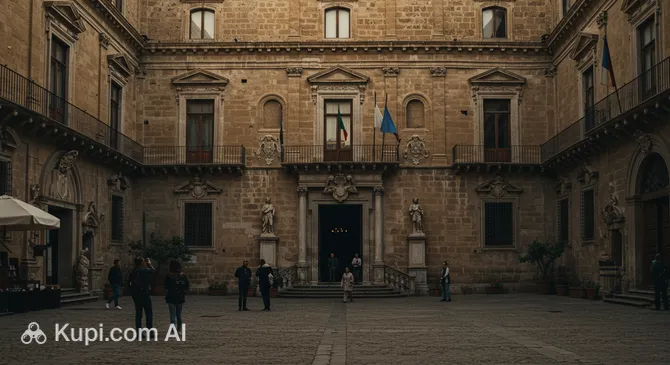
Palazzo Abatellis in Palermo is more than just a building; it is a witness to centuries of Sicilian history. Designed in the 15th century by the talented architect Matteo Carnelivari, the palace originally served as the luxurious residence of Francesco Abatellis, who held the important post of Port Master of the Kingdom of Sicily. This period reflects the grandeur and significance of Palermo as a major maritime hub at the time. After the death of the owner and his wife, a completely different fate awaited the palazzo—it was handed over to a convent, marking the beginning of a new chapter in its history.
The adaptation of the palace for monastic life brought significant changes to its architecture. In the 16th century, between 1535 and 1541, a chapel was added to the left side of the building, somewhat altering the original appearance of the facade. Later, in the 18th century, with the construction of the larger church of Santa Maria della Pietà, this chapel lost its original purpose. Its space was divided: the front part became a parlor, and the back, stripped of its altar, was turned into storage rooms. These transformations show how buildings can change their functional purpose to reflect the evolving needs of society.
A tragic page in the history of Palazzo Abatellis occurred during World War II. On the night of April 16-17, 1943, the palace was seriously damaged by Allied bombing. The loggia, the portico, part of the southwest wing, and the wall of the west tower were destroyed. However, despite the significant damage, the decision was made to restore this historical monument. Restoration work, led by architects Mario Guiotto and later Armando Dillon, was completed by 1953. It was then decided to house the Gallery of Medieval Collections in the renovated palace.
The design of the art gallery was entrusted to the outstanding architect Carlo Scarpa, whose solutions harmoniously integrated the museum space into the historical architecture. The gallery was officially opened to the public on June 23, 1954. Today, Palazzo Abatellis, also known as the Regional Gallery of Sicily, houses priceless works of art, including the famous "Triumph of Death" fresco and works by Antonello da Messina, making it one of the main cultural attractions in Italy.