Support

Archaeological Museum of Pithecusae

About

Housed in the elegant halls of the 18th-century Villa Arbusto, the Pithecusae Archaeological Museum invites travelers on an exciting journey through time. This site is considered one of the most significant archaeological centers in sunny Italy, as it holds evidence of the existence of the oldest Greek colony in the West. The museum is located on a hill in the picturesque commune of Lacco Ameno, offering a mesmerizing view of the bay and the acropolis of Monte di Vico.
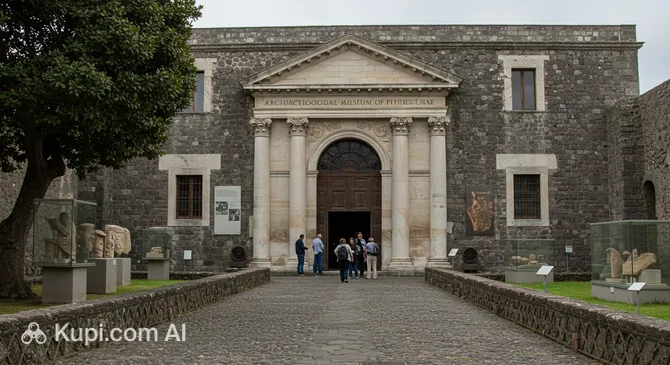
Archaeological Museum of Pithecusae
Archaeological Museum of Pithecusae. Иллюстрация. Источник: Kupi.com AI

The collection's main pride is the priceless finds discovered on the island of Ischia during excavations by the legendary archaeologist Giorgio Buchner. Visitors can see unique artifacts ranging from prehistoric tools to exquisite jewelry and Roman-era ceramics. Special attention should be paid to the famous Nestor's Cup, with its ancient Greek inscription, and the rare "shipwreck crater," which surprises with its detailed scenes of an ancient disaster.

In addition to the rich archaeological exhibition, the museum offers guests a look into the geological past of the region. A special section is dedicated to volcanic activity, which shaped the island's unique landscape over centuries. A walk through the museum is harmoniously complemented by a visit to the villa's well-tended garden, where Mediterranean flora and panoramic views create the perfect atmosphere for relaxation and contemplation.

Contacts

For more information about visits or special events, you can use the following contact details:

How to contactContact
AddressCorso Angelo Rizzoli, Via Circonvallazione, 210, 80076 Lacco Ameno NA, Италия
Phone+39 081 996103
Websitewww.pithecusae.it

What to Do

Begin your visit with a chronological walk through the halls, where treasures from the ancient San Montano necropolis are displayed. Here, you can see graceful terracotta horse figurines, ancient vases, and jewelry that impresses with its fine craftsmanship. Be sure to find the "shipwreck crater" — its unique painting is considered one of the most striking examples of early figurative art in the region.

Pay special attention to the geology section. The exhibition clearly demonstrates how volcanic processes have influenced the lives of local residents from ancient times to the present day. For a deeper understanding of the context of the finds, it is recommended to use the museum brochure, which will help you not miss important details in the collection of amphorae and cult objects from the sanctuary of the nymphs in Nitrodi.

After diving into history, be sure to set aside time for a walk through the gardens of Villa Arbusto. This is the perfect spot for photos, offering the best views of Lacco Ameno and the distant silhouette of Mount Vesuvius on the horizon. The combination of an educational experience and aesthetic pleasure makes the museum a great choice for both couples and solo travelers seeking inspiration in classical antiquity.

Getting There

The attraction is located in the commune of Lacco Ameno. The easiest way to get here from the port of Ischia is by using the EAV public bus lines (for example, routes CD or CS), which run across the island. You should get off at the stop in the center of Lacco Ameno, followed by a short but scenic uphill walk toward Villa Arbusto.

If you are arriving from Naples, you must first take a ferry or hydrofoil to one of the island's ports and then transfer to a bus or taxi. The bus ride from the main port takes about 20–30 minutes. For those who prefer comfort, local taxi services are always available to take you directly to the entrance of the museum complex.

The walking route from Piazza Santa Restituta to the museum takes very little time, but wearing comfortable shoes is recommended as the path goes uphill. Parking near the museum is very limited, so public transport remains the most preferred and convenient option for tourists.

Ближайший город: Ischia

History & Facts

The history of this site is inextricably linked to the ancient settlement of Pithecusae — the very first Greek colony in the Western Mediterranean. Founded by Euboean Greeks around 770–750 BC, it became a key trading hub connecting East and West. It was here that the paths of merchants from Africa, Greece, and the Middle East crossed.

The modern era of the museum began in the 1950s, thanks to the outstanding discoveries of the archaeologist Giorgio Buchner. His excavations in the San Montano necropolis completely changed scholars' understanding of the scale and early stages of Greek colonization in Southern Italy. The artifacts discovered proved that the island was a thriving center of crafts and international trade long before the rise of Rome.

One of the most valuable treasures in the collection is the famous Nestor's Cup. This small bowl bears one of the oldest inscriptions in the Greek language, containing a humorous reference to Homer's "Iliad." The text, scratched into the ceramic in the 7th century BC, is a unique testament to the early literacy and cultural ties of the ancient Greeks.

The Roman period also left its mark on the island's history, despite periodic volcanic eruptions. The museum's exhibits tell the story of nymph sanctuaries and ancient smelting furnaces in the Carta Romana area, where lead and tin from Spain were processed. Today, the museum covers an incredible span of history stretching over 2,700 years, carefully preserving the legacy of past civilizations.

Time Needed

To take your time exploring all the museum halls and enjoy a walk through the surrounding grounds, most visitors need between 1.5 and 2.5 hours. This is usually enough time to study the key archaeological finds and read the information plaques.

If you plan to spend time in the gardens of Villa Arbusto, admiring the panoramic views of the sea and Vesuvius, you should budget a little more time. The museum is compact, but the concentration of unique artifacts is so high that history buffs may find themselves lingering at the displays for much longer.

Working Hours

The museum doors are open to visitors daily, though the schedule has its specifics. On Monday, the museum operates on a reduced schedule — from 09:00 to 14:00. On other days, from Tuesday to Sunday, the exhibition is open from 09:00 to 19:00.

Please note that opening hours may change depending on the season or cultural events held at Villa Arbusto. It is highly recommended to check the official website for the most up-to-date information before your visit.

DayWorking hours
понедельник09:00–14:00
вторник09:00–19:00
среда09:00–19:00
четверг09:00–19:00
пятница09:00–19:00
суббота09:00–19:00
воскресенье09:00–19:00

Nearby

Exploring the surroundings of Lacco Ameno will allow you to immerse yourself even deeper in the island's atmosphere and complement your historical walk with new impressions. Both natural parks and interesting architectural sites are located right near the museum.

NameDistance
Il Fungo (The Mushroom Rock)0.6 km
Bar Gino1.8 km
Park Resort & Spa Castiglione3.7 km
Drink't n Drank't5.1 km
San Pietro Beach5.3 km
Cavascura Thermal Baths5.7 km
Taverna Pietro Paolo Detto Stalino5.8 km

Reached the end of the page?

That means the route is fully explored