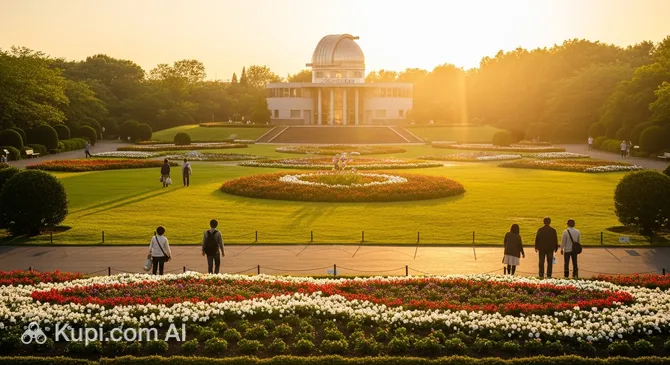
Ageo is a cozy and dynamically developing city in Japan, located in Saitama Prefecture. Situated just 40 kilometers from the pulse of Tokyo, it harmoniously combines the features of a modern industrial hub and a peaceful residential area. With a population of about 226,000, the city is an important part of the Kanto metropolitan region, offering its guests and residents a comfortable infrastructure and a truly Japanese atmosphere of everyday life.
Ageo. Illustration.
Source: Kupi.com AI
The city is spread across a plain, making it ideal for walking and cycling. Although Ageo is often perceived as a "bedroom community" for those working in the capital, it possesses its own unique character. You can explore the history of Ageo, which is rooted in the Edo period, when the city served as an important post station on the way to the northern provinces. Today, this heritage is reflected in carefully preserved traditions and the compact layout of the central streets.
Among the key features attracting visitors are picturesque parks and modern sports facilities, such as an ice arena. The absence of the metropolis's hustle and bustle allows you to experience authentic Japanese suburban life: from quiet streets with private houses to lively shopping areas near the train station. Ageo invites those who want to see Japan "for the locals," away from well-trodden tourist routes, while maintaining perfect transport accessibility.
Weather Overview
The weather in Ageo is characteristic of the central part of Honshu island and is largely determined by its position on the Kanto Plain. A temperate climate with distinct seasons prevails here. The hottest month is August, when the average maximum reaches 31.2°C, and humidity makes the air feel significantly heavy. During this time, the city turns into a real "heat island," so tourists should plan walks for the morning or evening.
Winters in the city are relatively mild but dry. In January, the temperature often fluctuates around 4.4°C, with light nighttime frosts down to -0.3°C possible. Precipitation in winter is rare, and the sky most often remains clear. Spring and autumn are the ideal times to visit, when a comfortable Ageo's climate is established. October is particularly picturesque, although it is one of the rainiest months along with July and September.
When planning your trip, expect warm, humid summers with occasional typhoons at the end of the season and cold, clear winters. It is important to consider that the absence of mountains around the city leaves it open to winds, which can heighten the sensation of cold in winter or bring long-awaited coolness in summer. Overall, weather conditions in Ageo are typical for Tokyo suburbs and require a standard set of clothing for each season.
Average monthly temperature
Average monthly precipitation
Interesting Facts
Historical Post Station: During the Edo period, Ageo played an important role as a post station on the Nakasendo trail, connecting Edo (modern-day Tokyo) with Kyoto, serving as a resting place for travelers and officials.
Railway Pioneer: Ageo Station was one of the first to be connected to the railway in 1883, which provided a powerful boost for the transformation of an agricultural settlement into a modern industrial center.
City of Rivers: The city's unique landscape is shaped by three rivers: the Kamo and Shiba flow directly through the city blocks, while the Ayase River outlines its eastern border.
Industrial Heart: After the 1950s, Ageo made an incredible leap, becoming the headquarters for major engineering and metallurgical enterprises, including rubber production known throughout Japan.
Compact Geography: Despite its status as a major city, Ageo is very compact—its extent from east to west is just over 10 kilometers, and from north to south, about 9 kilometers.
How to Get There
Transport accessibility is one of the main advantages of Ageo. The city is integrated into the powerful transport network of the capital region, making a trip here easy and predictable. If you are planning a visit, it is useful to study information about transportation routes in advance to use your travel time as efficiently as possible.
For air travelers, the closest gateways are Tokyo's international airports—Narita and Haneda. From there, Ageo can be reached by express trains or limousine buses, with a transfer at major hub stations in the capital. There are no direct flights to the city itself, as it is within the service area of the Tokyo aviation hub.
The main and most reliable way to get around remains the railway. The city's main station—Ageo—is located on the Takasaki line of JR East. Trains run regularly, and travel time from central Tokyo stations (for example, from Ueno or Shinjuku stations) ranges from 40 to 50 minutes. This makes the city an ideal place for those who prefer to live in a quiet environment while having quick access to the metropolis.
Station
Passenger traffic
Distance
Ōmiya Station
15
8 km
Akabane Station
16
25 km
Ōtsuka Station
15
30 km
Mejiro Station
16
30 km
Ogikubo Station
16
30 km
Main Attractions
While Ageo is primarily known as a residential and industrial center, there are several locations here that deserve travelers' attention. The main pride of the locals is Ageo Maruyama Park. This is a vast green area with ponds and walking trails, which becomes especially beautiful during the cherry blossom season or the autumn foliage transformation. The park is perfect for family vacations and leisurely nature contemplation in the heart of Saitama Prefecture.
For lovers of active recreation and sports, the city offers the modern Saitama Ice Arena. This is a destination for both professional figure skaters and those who enjoy skating at any time of the year. Additionally, the Hanasaki spa complex is popular in the city, where you can relax in traditional Japanese baths and recharge after walks around town or trips to neighboring regions.
The city's cultural and commercial life is concentrated around the Maruhiro Department Store. This is not just a shopping center, but an entire leisure space where local events and exhibitions are frequently held. Ageo is interesting precisely for its authenticity—you won't encounter crowds of tourists here, but you can enjoy high-quality service and the calm atmosphere of an authentic Japanese suburb.
Local Cuisine
The gastronomic scene in Ageo is a true paradise for lovers of authentic Japanese cuisine. Here you will find many establishments preparing classic dishes from the freshest products. Special attention should be paid to sushi restaurants such as Bando Taro Ageo or Kisoji Ageo, which are famous for their approach to tradition and high quality of service. For those looking for a quick and inexpensive option right by the station, Sushi-Ichiba Rikuzen is perfect.
In addition to sushi, the city offers an excellent selection of ramen bars and cozy izakayas. The food culture in Ageo is closely linked to the rhythm of life in a suburban center: during the day, teishoku set lunches are popular, and in the evenings, locals gather in small restaurants to discuss the news over a portion of yakitori. European influence is also present—the exquisite French restaurants Chez Macio Ageo and Schola offer an interesting take on Western classics with a Japanese accent.
Be sure to try local seasonal drinks. In supermarkets and cafes, you can often find Saitama Prefecture specialties, including local sake and varieties of green tea. Shopping at the Maruhiro department store can also turn into a gastronomic adventure—its food departments (depachika) offer a huge selection of ready-made meals and delicacies, which are convenient to take with you for a picnic in Maruyama Park.
Travel Tips
A trip to Ageo is a great chance to see the real Japan beyond the glossy guidebooks. To make your visit as comfortable and interesting as possible, we have prepared some practical tips.
Clothing and Seasonality: Dress for the weather, keeping in mind high humidity in summer and coolness in winter. Comfortable shoes are essential for walking through parks and shopping centers. Remember that in Japan, you often have to remove your shoes when entering certain establishments or temples, so choose practical styles.
Transport Hack: Be sure to purchase a Suica or Pasmo card. This will save time during transfers and allow you to pay for purchases in convenience stores. Avoid traveling to Tokyo during rush hours (from 7:30 to 9:00) if you don't want to feel the full tightness of Japanese commuter trains.
Finances: Although cards are accepted in large malls, always have cash yen with you for payment in small cafes or izakayas. ATMs in 7-Eleven chains usually accept international cards.
Connectivity: In Ageo, Wi-Fi is available in hotels and major shopping malls, but for navigation, it's better to buy a Travel SIM or rent a pocket router at the airport.
Language Barrier: In Ageo, English is less common than in Shinjuku. Download an offline translator—it will help immensely when communicating in local restaurants.
Etiquette: In Japan, tipping is not customary—it might even embarrass the staff. Be polite, use a slight bow when greeting, and try not to talk loudly on your mobile phone in public transport.
What to Avoid: Do not try to eat or smoke while walking on busy streets. Special zones are designated for smoking in the city, and eating on the go is considered a sign of poor manners.
Safety: Ageo is an exceptionally safe city. However, in the evening, try to stay on well-lit streets near the station, where there is always life and open establishments.
Enjoy every moment in this peaceful corner of Saitama, and may your journey be filled only with pleasant discoveries!
Entertainment & Nightlife
Nightlife in Ageo is characterized by tranquility and is primarily focused on locals, creating a special "private club" atmosphere for those who want to get acquainted with Japanese leisure culture. The main concentration of evening establishments is in the immediate vicinity of the railway station. Here you can find cozy izakayas—traditional Japanese pubs serving snacks and drinks in a relaxed setting.
Among the popular spots are Ageo Wine Bar Label, which offers an excellent selection of wines, and Tabedokoro Kizuna Ren, where you can enjoy socializing in a friendly environment. Small karaoke bars and entertainment centers, which are an integral part of Japanese leisure, also operate in the station area. Prices here are usually lower than in central Tokyo, and the crowd is polite and welcoming.
For those looking for large-scale nightclubs or noisy parties until dawn, the best solution is to head to central Tokyo, which can be reached by train in less than an hour. However, if your goal is to spend a quiet evening over a glass of wine or a mug of cold beer in the company of locals, Ageo will provide you with that opportunity. The city remains completely safe for walking at any time of day.
Parks & Museums
The main attraction for nature lovers in Ageo is Maruyama Park. This spacious green area is rightfully considered the city's lungs. Here you can find not only picturesque ponds with swans but also small groves that change their appearance depending on the season. For tourists, the park is interesting for the chance to see the everyday life of the Japanese: families on picnics, joggers, and artists trying to capture the beauty of the landscape.
While Ageo cannot boast an abundance of large art galleries, its cultural code is manifested in small local spaces and architecture. The city is designed with an emphasis on a comfortable urban environment, where parks and squares are integrated into residential areas. Locals are proud of their sports facilities, which often become venues for regional competitions and festivals.
For those who crave deep immersion into art history or science, a short trip to neighboring Omiya or Tokyo would be an ideal option. However, it is precisely in Ageo that you can feel that very harmony of a Japanese suburb, where nature and urban infrastructure coexist in balance. The city's parks are the best places to slow down and enjoy the moment of mono-no aware—the pathos of things or the sensitivity to ephemera.
Getting Around
The public transport system in Ageo is characterized by perfect punctuality and intuitive clarity, typical for all of Japan. The main link is the railway. Ageo Station on the JR Takasaki line is the heart of the city, through which thousands of people pass daily. From here, you can easily and quickly reach key Tokyo stations such as Ueno and Tokyo Station, making the city very accessible for travelers.
Within the city itself, there is a developed network of bus routes that connect the station with residential quarters and parks, including the popular Maruyama Park. Buses run on a strict schedule, which is usually posted at every stop. For fare payment, it is most convenient to use contactless cards like Suica or Pasmo—they are accepted on both trains and buses, eliminating the need to buy tickets at machines every time.
If you need to get to remote parts of the city or are traveling with heavy luggage, you can use taxis, which always have ranks at the station exits. It is worth noting that during morning and evening rush hours, trains toward Tokyo can be very crowded. For more flexible movement around Ageo itself, many locals use bicycles, and you can also find rental points near the station to explore the city like a true insider.
Accommodation
Accommodation options in Ageo are primarily oriented toward practicality and comfort. Most hotels belong to the mid-price segment and the "business hotel" category, which are ideal for both business trips and budget tourists who want to save on accommodation compared to central Tokyo. Rooms here are usually compact but equipped with everything necessary—from high-speed Wi-Fi to tea sets.
Most hotels are concentrated within walking distance of the Ageo railway station. One of the most popular and reliable options is the Ageo Tobu Hotel, which is very conveniently located for travelers using public transport. Proximity to the station guarantees easy access to shops, cafes, and 24-hour konbini convenience stores.
If you plan to visit during major holidays or cherry blossom season, it is recommended to book accommodation several weeks in advance. Although the city is not a tourist epicenter, the local hotel stock is small, and rooms in high-quality establishments near the station are snapped up quickly. It is also worth considering apartment rentals if you plan to stay in Saitama Prefecture for a longer period.
Nearby Cities
Thanks to its location on the Takasaki line, Ageo serves as an excellent starting point for exploring other interesting corners of Saitama Prefecture and neighboring regions. Good transport connectivity allows for planning exciting day trips, returning in the evening to the city's cozy atmosphere.
Just a few minutes away by train are the city of Okegawa, which has preserved the charm of old post stations, and Omiya—a major transport and cultural hub. In Omiya, you should definitely visit the famous Railway Museum and Bonsai Park. Also nearby is the city of Hasuda, offering a peaceful retreat surrounded by traditional Japanese landscapes.
Don't miss the opportunity to visit the legendary city of Kawagoe, which is called "Little Edo" for its perfectly preserved samurai-era warehouses, or head to majestic Tokyo for large-scale shopping and visiting world-famous attractions. The surroundings of Ageo are rich in both historical monuments and modern entertainment centers, making every mini-trip unique.
Shopping & Souvenirs
Shopping in Ageo is centered around convenience and practicality, offering visitors everything necessary for a comfortable life and pleasant purchases. The main shopping landmark of the city is the large Maruhiro department store, located in the immediate vicinity of the railway station. Here you can find clothing from famous brands, high-quality cosmetics, as well as huge departments with food products and souvenirs.
Around Ageo station, there are also many chain electronics stores, pharmacies, and accessory boutiques. A characteristic of the Japanese suburb is the presence of small specialized shops where you can purchase traditional Japanese sweets, wagashi, or high-quality green tea. Although the city does not specialize in unique tourist souvenirs, you can always buy authentic goods that Japanese people choose for themselves.
Shops in the city usually operate from 10:00 to 20:00, while grocery supermarkets and konbini convenience stores are often open 24/7. In large shopping centers like Maruhiro, payment with international bank cards is possible; however, in small private shops, cash may still be required. For foreign tourists, a Tax Free system is often available in large stores, making purchases even more profitable.