Support

Atsugi (NAF)

About the Airport

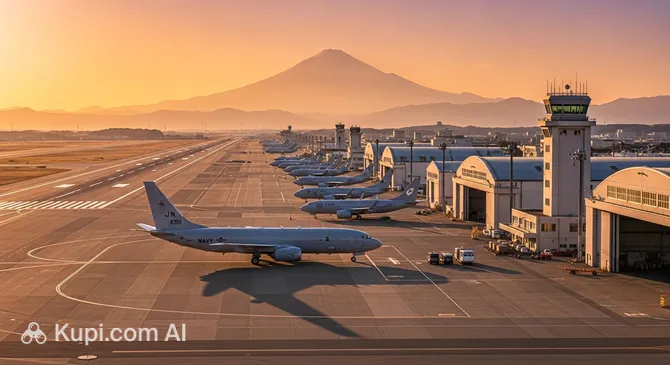
Atsugi NAF. Source: Kupi.com Binoculars

Atsugi Air Base (or Atsugi) is not the typical civilian airport for tourists with bustling terminals and shops, but an active naval facility with a unique atmosphere. Located in Kanagawa Prefecture, this airfield serves as a vital aviation hub and is known for its rich history dating back to the mid-20th century. Although you cannot arrive here on a regular passenger flight, Atsugi remains a significant landmark on the map of Japan, attracting the attention of aviation enthusiasts and spotters from around the world.

AirportAtsugi (NAF)
IATANJA
ICAORJTA
CityAtsugi
TimezoneAsia/Tokyo
ScheduleOnline board

Features and Airfield Status

As Atsugi is an active naval air base, it has specific characteristics that are important for travellers to know:

  • Restricted Territory: The airfield is used jointly by the Japan Maritime Self-Defence Force and the US Navy. Access to the territory for civilians is strictly limited and not possible on ordinary days.
  • Open House Days: Several times a year (usually in spring and summer), the base opens its gates to the public during friendship festivals or the Bon Odori holiday. This is the only opportunity for tourists to legally enter, see military equipment up close, try American and Japanese food, and enjoy air shows.
  • Spotter's Paradise: Despite its closed status, the surroundings of the base are popular among aviation enthusiasts. There are several parks and observation decks around the airfield from where you can watch the takeoff and landing of unique military aircraft and helicopters that are rarely seen at civilian airports.

Contact Information

  • Official Airport Website: cnrj.cnic.navy.mil/Installations/NAF-Atsugi
  • Base Operator Phone: 0467-63-1110 (within Japan), +81-467-63-1110 (from overseas)
  • Airport Address: Naval Air Facility Atsugi, Ayase-shi, Kanagawa-ken, 252-1101, Japan
  • Email: NAF-Atsugi-PAO@us.navy.mil (Public Affairs Office)
  • Airport Social Media: Official Facebook page (NAF Atsugi), Twitter (@NAFAtsugiJP) — main sources of news regarding open house days
  • Lost Luggage Information: There is no Lost & Found service for passengers. For lost items during festivals on the base grounds, please contact the Security Office: 0467-63-3200
  • Support Contacts: Host Nation Relations Office — 0467-78-2664; Public Affairs Office — 0467-63-4452

How to Get to the Airport

Since Atsugi is a military facility and not a civilian transport hub, you cannot fly here on a regular scheduled flight. However, if you plan to visit open house days, the friendship festival, or are heading to the base by official invitation, you will need to reach the main gate by land. The base is located at the junction of the cities of Ayase and Yamato, and the transport system here is excellently developed.

Public Transport: Trains and Metro

The most reliable and budget-friendly way to reach the facility is by using the railway network. The nearest station to the main gate of the base is Sagami-Otsuka (Sotetsu Main Line). The journey from central Tokyo (Shinjuku Station) will take about 50–60 minutes with a transfer or on a direct train (through-service).

  • Route: From Yokohama Station, take the Sotetsu line towards Ebina and get off at Sagami-Otsuka Station.
  • Walking: From the north exit of the station to the main gate of the base is approximately a 15–20 minute walk. On festival days, the flow of people will indicate the correct direction.
  • Cost: A trip from Yokohama will cost approximately 300–400 Yen.

Buses

If you prefer not to walk, Sotetsu Bus operates regular buses from Sagami-Otsuka Station and the neighbouring Sagamino Station. They will take you to stops located in the immediate vicinity of the base checkpoint. Please note that public transport does not operate inside the base (after passing security); movement is on foot or via special shuttles during events.

Taxi and Transfers

A taxi is a convenient option if you are travelling with luggage or want to save time. Cars are always available at railway station exits.

  • From Sagami-Otsuka Station: The trip will take only about 5 minutes and cost around 1,000 Yen.
  • From Tokyo or Yokohama: Ordering a taxi directly from the metropolis will be very expensive (from 15,000 Yen and up), so this option is recommended only in case of extreme necessity.

Car Rental and Parking

Travelling by rental car offers freedom of movement, but when visiting Atsugi Air Base, there is an important nuance: parking on the base territory for civilians is usually prohibited. Exceptions may be made for special guests with passes.

During public festivals, visitors are strongly advised to use public transport, as parking lots around the base become overcrowded, and roads may be closed. If you still decide to drive, look for paid parking lots (Coin Parking) near Sagami-Otsuka Station.

How to Get There from International Airports

Tourists wishing to visit the Kanto region and Kanagawa Prefecture usually arrive at major civilian hubs. From there, you can reach the Atsugi base gates by train or Airport Limousine Bus to the nearest major stations (for example, Yamato Station), and then transfer to a taxi.

  • Haneda (Tokyo) — the nearest major airport, located just 32 km away. The journey by train takes about one hour. This is the most convenient option for arrival.
  • Narita International Airport (Tokyo) — is located significantly further, 91 km away. The journey by express and local trains will take from 2 to 2.5 hours.

Other regional airports are also within reach, such as Ibaraki Airport (about 119 km) and Shizuoka Airport (137 km), but they are less convenient for transit to Atsugi. For travellers exploring mountainous areas, Matsumoto Airport might be relevant, although the distance to it is nearly 160 km.

Terminals and Map

Since Atsugi Air Base (NJA) is a military facility, its structure differs radically from civilian airports. Here you will not find huge glass halls with duty-free shops or dozens of boarding gates. The infrastructure of the airfield is subject to strict functionality and military objectives.

Number of Terminals and Their Purpose

Essentially, only one passenger hub operates on the base territory — the AMC (Air Mobility Command) Passenger Terminal. It serves military charter flights (the so-called "Patriot Express") and cargo transport.

  • AMC Terminal: This is a small, modest building designed to process military personnel, their family members, and civilian base staff travelling on duty or under the Space-A programme (travel subject to seat availability).
  • For Tourists: Ordinary tourists do not have access to this terminal. During open house days, the "terminal" for visitors becomes the open-air territory (Flight Line) and special security screening zones at the base gates.

Airfield Map and Zones

For a civilian visitor attending a festival, navigating the base is quite simple, as the accessible zone is strictly limited. The territory can generally be divided into several key sectors:

1. Main Gate — Screening Zone

This is the analogue of the "check-in and security" zone in a civilian airport. Checkpoints are located here.

  • Features: Strictest document control.
  • Processing Time: On festival days, queues can be huge. Waiting for screening often takes from 30 to 60 minutes, and sometimes longer. It is recommended to arrive by opening time.

2. Flight Line

This is the "heart" of the base and the main attraction area during events.

  • Purpose: A static display of aircraft and helicopters is exhibited here.
  • Navigation: A huge open space. It is easy to orient yourself visually — just walk towards the aircraft.
  • Features: Lack of shelter from sun and rain. The asphalt and concrete heat up significantly in summer.

3. Entertainment Zone and Food Court

Usually located in hangars or on the grounds in front of the flight line. Stages for performances and stalls with American and Japanese food are set up here.

Features of the AMC Terminal (For Authorised Passengers)

If considering the active military terminal used by service members, it is characterised by austerity:

  • Interior: A simple waiting hall with rows of seats, a few televisions, and vending machines with drinks/snacks.
  • Service: There are no business lounges or VIP lounges here. Registration procedures resemble a simplified version of a civilian airport but with an emphasis on checking military orders.
  • Luggage: Baggage claim follows a simple scheme, often manually or on one short belt.

Navigation Recommendations for Visitors

If you plan to visit the base during a festival, follow these tips to avoid getting lost and to save time:

  • Follow the Crowd: The route from the gates to the air show venue is usually fenced off with temporary barriers. Stepping aside into restricted territory (where military housing or administrative buildings are located) is immediately stopped by military police.
  • Maps at the Entrance: Volunteers often distribute paper maps of the event immediately after passing the checkpoint. Be sure to take one — toilets, medical points, and souvenir sales locations are marked there.
  • Toilets: Permanent toilets inside buildings may be closed to the public. Look for rows of blue portable toilets installed specifically for the event; they are usually marked on the map.

Airport History

The history of Atsugi Air Base spans over 80 years and is full of events that transformed it from a secret imperial facility into a symbol of international military cooperation. For a tourist interested in aviation and history, this place is notable because key events that defined the fate of post-war Japan took place here.

Foundation and Early Years

Construction of the airfield began in 1938 by the Imperial Japanese Navy. Initially, it was the main base for the 302nd Naval Air Corps, an elite unit tasked with defending the airspace over Tokyo. By the time the main works were completed, the base possessed powerful infrastructure and was considered one of the most modern in the region.

Historical Turning Point: 1945

Atsugi entered world history forever on 30 August 1945. It was on the runway of this airfield that the C-54 Skymaster aircraft landed, carrying General of the Army Douglas MacArthur. This event marked the beginning of the occupation and subsequent reconstruction of Japan. The photograph of MacArthur descending the aircraft steps with a corn cob pipe in his teeth against the backdrop of the Atsugi airfield became one of the most recognisable images of the 20th century.

Stages of Development and Modernisation

After the war, the base came under US control and underwent significant changes:

  • 1950s (Korean War Era): Atsugi became a crucial logistics hub and repair base. Aircraft damaged in combat were restored and serviced here, leading to a significant expansion of technical hangars.
  • 1970s (Return of Japan): Japanese forces returned to the base — the Japan Maritime Self-Defence Force (JMSDF). Since then, the facility has been operated jointly, which is a unique example of the integration of two navies on one territory.
  • 1980s–2000s: The airfield became home to Carrier Air Wing 5 (CVW-5), based on an aircraft carrier (first USS Midway, then Independence, Kitty Hawk, and Ronald Reagan). This was a period of "roaring skies," when jet fighters constantly trained over the city.

Modern History and Air Wing Relocation

One of the most significant milestones in recent history was the massive reorganisation completed in 2018. As part of efforts to reduce noise impact on densely populated areas, most of the US carrier-based jet aircraft (about 60 units, including F/A-18 Super Hornets) were relocated from Atsugi to Iwakuni base in western Japan. This event radically changed the city's soundscape and the base's atmosphere, making it quieter and reorienting it towards helicopter squadrons and maritime patrol aviation.

Interesting Facts

  • Underground City: Historically, an extensive network of tunnels and caves existed under the base, dug during World War II to hide aircraft and personnel. Some of these structures have survived to this day, although access to them is closed for security reasons.
  • MacArthur's Garden: There is a memorial site on the base grounds dedicated to General MacArthur's arrival. This is an important point for historical tours conducted for personnel and guests during open events.
  • Lee Harvey Oswald: Known as the alleged assassin of President Kennedy, Oswald served as a Marine at Atsugi base in the late 1950s, working as a radar operator. This fact is often mentioned in historical chronicles related to the base.

Today, Atsugi continues to develop as a strategically important facility, combining the functions of a military base and a venue for cultural exchange during friendship festivals, attracting thousands of people interested in living aviation history.

Services and Amenities

Since Atsugi Air Base (NJA) is an active military facility, the range of services and amenities here differs radically from what tourists are used to seeing in civilian international airports. There are no Duty Free shops, business lounges, or spa centres here. The availability of services for the ordinary visitor depends directly on the status of their visit: whether they are a guest at a festival (Open House Day) or have military clearance.

Below are the services available to civilian visitors entering the base during public events (such as the "Spring Festival" or "Bon Odori"), as well as general information about the facility's infrastructure.

Restaurants, Cafes and Dining

Food is one of the main reasons why Japanese locals and tourists strive to get onto the base during open house days. At this time, the territory turns into a huge gastronomic festival.

  • Food Court and American Brands: Classic American fast-food chains operate on the base grounds (e.g., Anthony’s Pizza, Taco Bell, Subway, McDonald’s), which are usually available only to personnel. During festivals, huge queues of people wishing to taste "real American flavour" form for them.
  • Street Food: Dozens of stalls are set up on the flight line and in hangars. Here you can buy huge American steaks, grilled hamburgers, hot dogs, as well as traditional Japanese festival food (yakisoba, takoyaki).
  • Beverages: American soft drinks (Dr. Pepper, Mountain Dew) and other beverages (both Japanese and American brands) are sold.

Shops and Souvenirs

Full-fledged shopping at the base mall (Navy Exchange — NEX) is usually prohibited for civilians without an ID card, even on festival days. However, the organisers offer an alternative:

  • Squadron Tents: The most valuable souvenirs are sold right on the flight line. Each squadron sets up its own tent where you can buy unique patches, t-shirts with unit insignia, caps, challenge coins, and stickers.
  • Souvenir Stalls: Sometimes temporary points of sale are organised for American sweets, crisps, and household trinkets that cannot be found in ordinary Japanese shops.

Finance: Banks and Currency Exchange

Branches of American banks (Community Bank, Navy Federal Credit Union) and ATMs operate on the base, but they are oriented towards serving personnel and dispense US dollars.

  • Currency for Tourists: During festivals, both Japanese Yen and US Dollars are accepted for payment almost everywhere. Change is often given in the currency convenient for the seller, so it is better to have small bills.
  • Cards: Food and souvenir stalls often accept cash only. It is strongly recommended to withdraw money in advance, before entering the base, as access to ATMs may be limited or they may not service civilian cards.

Wi-Fi, Communication and Charging Stations

  • Internet: There is no public free Wi-Fi for tourists on the flight line. Given the large gathering of people (tens of thousands), the mobile network may work intermittently or at low speeds.
  • Device Charging: Charging stations for phones are not provided on the flight line. Be sure to take a power bank with you, as you will spend a lot of time on your feet taking photos and videos.

Medical Services and Safety

Safety at events is ensured at the highest level by the joint efforts of the US Military Police and the Japan Self-Defence Forces.

  • First Aid: During mass events, First Aid Stations are set up on the territory. In case of serious health problems, a visitor may be evacuated to a hospital outside the base.
  • Toilets: Permanent toilets in buildings are often closed to the public. Instead, rows of temporary portable toilets (Porta-Potties) are installed on the street, including for people with disabilities.

Services for Passengers with Children

Visiting the base is popular family entertainment, but there are no special mother and child rooms (as in malls) here.

  • Entertainment: Inflatable slides and attractions for children are often set up.
  • Advice: The territory is huge and open to the sun. Parents are recommended to bring strollers, hats, and a supply of water for children, as there is practically no shade on the runway.

Accessibility for People with Reduced Mobility

The airfield territory is a flat concrete and paved surface, which is convenient for moving in wheelchairs. However, distances from the entrance to the aircraft display can be significant (more than 1–2 km). Special shuttles for guests with reduced mobility are usually not provided, so plan your strength accordingly.

Hotels and Accommodation

On the base itself, there is the Navy Gateway Inns & Suites hotel and Navy Lodge, but they are intended exclusively for military personnel, their families, and official guests of the Ministry of Defence. An ordinary tourist cannot stay there.

Tourists are recommended to look for accommodation near the railway stations of the Sotetsu line leading to the base:

  • Yamato Station Area: The nearest major hub with many business hotels. Convenient for reaching both the base and Tokyo.
  • Ebina Station Area: A large shopping and entertainment centre with modern hotels.
  • Sagami-Otsuka Station Area: There are several small hotels in the immediate vicinity of the base gates, but their room capacity is limited.
Where to Eat

The gastronomic landscape of Atsugi Air Base (NJA) is unique and has nothing in common with the usual dining zones in civilian airports. Here you will not find fine dining restaurants with panoramic views of the runway or 24-hour coffee shops for transit passengers. The food system on the base is divided into two worlds: limited options inside the small passenger terminal (AMC) and a rich selection of American fast food on the main base territory (Landside), available to personnel and visitors on festival days.

Dining Features: "Little America"

For Japanese tourists and rare civilian visitors, food at Atsugi is a gastronomic attraction. Since the base is sovereign US territory, chains and brands are represented here that are either absent in Japan or offer menus differing from Japanese counterparts in portion sizes and recipes.

1. Dining in the Passenger Terminal (AMC Terminal)

For passengers of military charters (Patriot Express) waiting for departure in the "sterile zone" (Airside) or going through check-in, the choice is extremely limited. The terminal performs a utilitarian function.

  • Format: Vending Machines and small kiosks.
  • Assortment: Here you can buy snacks, chocolate bars, bottled water, soft drinks, and canned cold coffee. There is generally no full hot meal service inside the holding area after security screening.
  • Recommendation: Passengers are strongly advised to eat a substantial meal before passing special control at the base food court.

2. Main Food Court and Restaurants (Landside)

The main establishments are located in the public zone of the base, next to the Navy Exchange (NEX) store. This is where guests strive to get during open house days. It is a self-service zone resembling food courts in American malls.

Popular Establishments:

  • Anthony’s Pizza: A cult place on any military base. Known for its huge New York-style pizza slices. This is the most popular dish for a quick snack.
  • Taco Bell: A Mexican cuisine restaurant. Although the chain is present in Japan, the menu on the base is considered more authentic and "American" (spicier sauces, different burrito sizes).
  • Subway: Classic sandwiches. An excellent option for those looking for something lighter than pizza or burgers.
  • McDonald’s: Offers an American menu, which may include items unavailable in ordinary Japanese outlets.

3. Trilogy Club and Officers’ Club

These are higher-class establishments with sit-down dining. They offer full lunches and dinners (steaks, burgers, pasta, salads).

  • Access: On ordinary days, entry is strictly by club cards or for officer staff. During festivals, access may be limited or open to everyone in a buffet format (Sunday Brunch), which is great luck for a tourist.

Local Cuisine and Signature Dishes

In ordinary times, "local cuisine" here is considered classic American food. However, during festivals (Bon Odori), the picture changes:

  • American Style BBQ: Military units set up their grills right on the street and cook giant steaks, ribs, and burger patties. The smell of barbecue is the calling card of any open event at Atsugi.
  • Japanese Festival Dishes: As a sign of friendship, yakisoba (fried noodles), takoyaki (octopus balls), and kakigori (shaved ice with syrup) are also sold on the territory.

Dietary Dining (Vegetarian, Halal, Gluten-Free)

The choice of specialised food on the military base is limited, as the emphasis is on hearty and high-calorie food.

  • For Vegetarians: Vegetable sandwiches at Subway, cheese pizza at Anthony’s Pizza, and bean burritos at Taco Bell are available.
  • For Vegans: Finding a full vegan dish is difficult. The best option is salads without dressing or French fries.
  • Halal and Kosher: Most fast-food outlets do not have specialised certificates. Passengers strictly observing these diets are recommended to bring food with them.
  • Gluten-Free: Special markings are rarely found on restaurant menus. There is a high risk of cross-contamination in fast-food kitchens.

Prices and Currency

One of the advantages of dining on the base is affordable prices oriented towards military personnel.

  • Average Check: A full lunch (combo set) will cost $6–12. A huge whole pizza can cost about $15–20.
  • Currency: The main currency is the US Dollar. Menu prices are listed in dollars. During festivals, vendors accept Japanese Yen at the base's fixed rate (which may not be the most favourable), but change is often given only in one currency.
  • Tip: It is better to carry small bills ($1, $5, $10, $20) to speed up the payment process.

Opening Hours

Establishments do not work around the clock.

  • Food Court: Usually open from 06:00–07:00 to 20:00–21:00.
  • Anthony’s Pizza: Often works longer than others, until 22:00 or 23:00, especially on weekends.
  • Festivals: Street stalls work until the end of the event (usually until 20:00). Closer to closing time, popular dishes (steaks) may run out.

Traveller Tips

Travelling through Atsugi Air Base (NJA) or visiting it on open house days is an experience that differs radically from a visit to any civilian airport. Military protocols operate here, and customary rules of tourist trips require serious adjustment. To ensure your visit goes smoothly, we have prepared a number of important tips considering the strict regulations of this facility.

Arrival Time Recommendations

The time factor is critical here, but the reasons depend on the purpose of your visit:

  • For Passengers (Space-A / Patriot Express): If you are flying on a military aircraft, you should arrive at the AMC terminal at least 3–4 hours before departure. The document processing procedure ("Roll Call") takes place strictly according to schedule, and being late even by a minute can lead to the loss of a seat, as passenger lists are approved in advance.
  • For Festival Visitors: Queues for entry on "Spring Festival" or "Bon Odori" days can stretch for kilometres. It is recommended to arrive at the main gates 1–1.5 hours before the official opening to pass screening among the first and occupy the best spots for watching the air show.

Check-in and Security Features

Security at the base is at the maximum level. Be prepared to be checked much more thoroughly than at a civilian airport.

  • Documents: This is the most important point. Japanese citizens need a driving licence or social insurance card. International tourists must carry their passport or residence card (Zairyu Card). Without the original document, entry to the base is impossible under any circumstances.
  • Personal Screening: Checks are conducted with metal detectors and manual bag searches. Any jokes about prohibited items or security are inappropriate and may lead to detention by military police.
  • Dress Code: Avoid clothing with provocative inscriptions or camouflage patterns resembling military uniforms so as not to mislead personnel.

Tips for Choosing a Seat on the Plane (For Passengers)

If you are one of the few lucky ones travelling via Atsugi on military transport, flight comfort will depend on the type of vessel:

  • Charters (Patriot Express): These are ordinary civilian aircraft. Standard advice applies — for more legroom, choose seats near emergency exits.
  • Military Transport Aircraft (C-130, C-40): Here, passengers often sit on side benches made of mesh. Life hack: dress in layers. It can be very cold and noisy in the cargo holds of military aircraft. Be sure to take earplugs or noise-cancelling headphones with you, as sound insulation there is minimal.

What Can and Cannot Be Carried in Hand Luggage

The list of prohibited items on a military base is wider than at an ordinary airport. Violation of these rules may lead to confiscation of items and denial of entry.

  • Strictly Prohibited: Drones and any unmanned aerial vehicles (even toys), glass bottles, alcohol, knives (including penknives), bulky bags, and hard-sided coolers.
  • Photo Equipment: Cameras are permitted, but the use of telephoto lenses may be restricted in certain zones. Strictly observe "No Photography" signs — filming checkpoints and security objects is prohibited.
  • Animals: Entry with pets to festivals is usually prohibited (except for service dogs).

Recommendations for Passengers with Transfers

It is important to understand: Atsugi is not a transit hub for civilian travel. There is no transfer zone here.

  • If your route involves a transfer to a civilian flight, you will have to leave the base and make your own way to Haneda (about 60–90 minutes) or Narita (2–3 hours) airports.
  • Allow at least 4–5 hours between arrival at the base and departure from the civilian airport, considering the unpredictability of traffic in the Greater Tokyo area and the time to pass the exit checkpoint.

Customs Control Features

Although you are on the territory of Japan, the base is legally subject to special agreements.

  • Bringing in Food: Do not attempt to take fresh fruit, meat, or plants off the base if you are flying to the USA or another country — phytosanitary control is very strict.
  • Souvenirs: When buying souvenirs on the base (clothing, patches), keep the receipts. Usually, problems with taking these attributes out do not arise.

Tips for Saving Time and Money

  • Cash: ATMs on the base often serve only American cards or charge a high commission. Bring a sufficient supply of US Dollars (for purchases on the base) and Japanese Yen (for transport outside). Small bills ($1, $5, $10) will significantly speed up service at food stalls.
  • Transport: Do not use a taxi from Tokyo — it will ruin your budget. Take the train to Sagami-Otsuka station, and from there walk or take a short taxi ride.
  • Water and Food: Food prices on the base are democratic, but queues are huge. Carry a bottle of water (plastic) with you so as not to stand in line for 30 minutes just for a drink on a hot day.

What to Do in Case of Flight Delay

In military aviation, it is "mission first." Space-A flights are often delayed or cancelled due to operational needs.

  • Have a Plan B: Always have reserve money for a hotel outside the base and a ticket for a commercial flight if the military aircraft does not fly. The military does not provide compensation for hotels or meals to civilian passengers in case of delay.
  • Communication: Ensure you have roaming or a Japanese SIM card to quickly adjust your route and book accommodation in the city of Ayase or Yamato, as Wi-Fi in the terminal may be unavailable.

Reached the end of the page?

That means the route is fully explored