Support

Niigata Airport

About the Airport

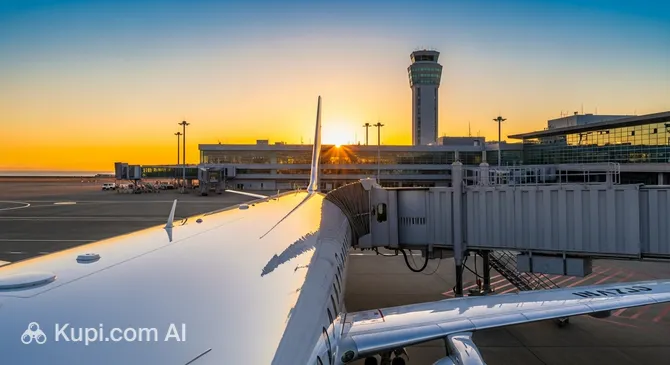
Niigata Airport. Source: Kupi.com Binoculars

Niigata Airport (KIJ) is not merely a point on a map, but a welcoming gateway to the famous "Snow Country" and the picturesque coast of the Sea of Japan. Even during descent, passengers are greeted by breathtaking views of Sado Island and the endless rice fields that have become the hallmark of this region. The compact and cosy terminal is designed so that travellers can feel the unique atmosphere of the prefecture and Japanese hospitality immediately upon landing.

IATA Code KIJ
ICAO Code RJSN
City Niigata
Distance to Centre ~8 km
Status International
Annual Passengers Approx. 1.1 million (2024)
Schedule Available on the official website

Airport Features and Advantages:

  • Convenient Location: The airport is located very close to the city limits. A trip on a comfortable limousine bus to Niigata Central Station takes only about 25 minutes, making the transfer quick and tireless.
  • Gastronomic Immersion: The terminal offers an excellent opportunity to experience local cuisine without going into the city. Here you can taste the famous "hegi-soba" buckwheat noodles at the Suzakaya restaurant or enjoy dishes made from premium Koshihikari rice at the Kagura establishment.
  • Panoramic Terrace: An open observation deck is located on the fourth floor (entrance fee is 100 yen). It offers a magnificent view of the runway, the Sea of Japan, and the mountains, which is especially appreciated by aviation photography enthusiasts.
  • Comfort and Cosiness: For those who value privacy, the "Airium" business lounge is available. Thanks to the airport's compactness, all pre-flight formalities proceed calmly and without unnecessary bustle.

Contact Information

Below are the contact details for Niigata Airport (KIJ), which will help you plan your trip and obtain necessary information.

  • Official Website: www.niigata-airport.gr.jp
  • Information Desk Phone: +81 25-275-2633
  • Address: 3710 Matsuhama-cho, Higashi-ku, Niigata-shi, Niigata 950-0001, Japan
  • Email: To contact the airport administration, it is recommended to use the feedback form on the official website, as a public email for general inquiries is not provided.
  • Social Media: You can follow the latest news and airport updates on its official social media pages, for example, on X (formerly Twitter).
  • Lost Luggage Information: If your luggage has been lost or damaged, immediately contact the Lost & Found service of your airline. If you have lost personal belongings within the terminal, please contact the airport information desk.
  • Passenger Support Contacts: For all general questions related to your stay at the airport, you may contact the main information service by phone.

How to Get to the Airport

Getting to Niigata Airport from the city centre is quite simple thanks to a well-organised transport system. Depending on your budget, time, and preferences, you can choose one of several convenient options.

Public Transport

The most popular and economical way to reach the airport is the special limousine bus (Airport Limousine Bus). It runs directly between Niigata Station and the airport. The journey takes approximately 25-30 minutes, excluding traffic. Buses run regularly throughout the day, making this option very convenient for most travellers. The fare for an adult is around 420 yen, making it an excellent choice for budget-conscious tourists. There is no direct rail connection to the airport, so the train can only be considered as a way to get to the central station, from where you will need to transfer to a bus or taxi.

Taxi and Private Transfer

For those who value comfort and are travelling with a large amount of luggage, a taxi is the ideal solution. A taxi ride from the centre of Niigata to the airport will take about 20-25 minutes. This is the fastest, but also the most expensive method — the cost of the trip is usually 3500-4500 yen depending on traffic. You can easily find a taxi at designated stands in the city or hail a car via an app. Alternatively, you can book a private transfer in advance — a driver will meet you at the specified location and take you directly to the terminal.

Car Rental and Parking

If you plan to travel extensively around the region, renting a car will provide you with maximum freedom. Major international and local rental companies operate in Japan, with offices located both at the airport and in the city. Please remember that you will likely need an International Driving Permit to rent a vehicle. For those arriving at the airport in their own or a rented car, convenient parking is provided. The cost is about 150 yen per hour, with a maximum fee for every 24 hours not exceeding 800 yen, making parking affordable even for long trips.

Terminals and Map

Niigata Airport (KIJ) is a compact and modern aviation hub distinguished by a structure that is convenient and easy to understand for passengers. The airport operates one passenger terminal, which serves both domestic and international flights. This significantly simplifies navigation and eliminates the need to move between different buildings.

The structure of the terminal is logically divided by floors, helping passengers orient themselves easily.

  • 1st Floor: This is the Arrivals area. Here you will find information desks, baggage claim, customs control for international flights, as well as exits to bus stops and the taxi stand.
  • 2nd Floor: The Departures floor. Here are the airline check-in counters (separated into domestic and international), security checkpoints, passport control, and departure gates.
  • 3rd Floor: Commercial zone. On this floor, you will find shops, including souvenir stalls and Duty Free, as well as restaurants and cafes where you can have a snack while waiting for your flight.
  • 4th Floor: Observation Deck. From here, there is an excellent view of the runway, which is particularly enjoyed by families with children and aviation enthusiasts.

Since there is only one terminal, transitions between zones take place within a single building. The zones for domestic and international flights are clearly demarcated but are within walking distance of each other. Navigation through the airport is intuitive thanks to numerous signs in Japanese, English, Korean, and Chinese.

Thanks to the compact size of the airport, completing all pre-flight formalities usually does not take much time. For domestic flights, it is recommended to arrive 1-1.5 hours before departure, and for international flights2-2.5 hours prior. This time is generally sufficient for calm check-in, baggage drop, and security screening. For navigation, simply follow the signs: they will logically guide you from the check-in counters to the security area and further to your boarding gate.

Airport History

The history of Niigata Airport (KIJ) is a vivid example of how a modest airfield transformed into an important transport hub on the coast of the Sea of Japan. Its story began in 1930 with the opening of a state airfield. During World War II, it was used for military purposes, and after the war ended, it came under the control of US forces until it was returned to Japan in 1958 and began its life as a civil airport.

A key moment in its development was the opening of the runway in 1964. By a tragic coincidence, a powerful earthquake struck Niigata in the same year, and the airport immediately became a vital base for delivering humanitarian aid and rescue operations, proving its strategic importance to the region.

A real breakthrough occurred in 1973, when the first regular international flight was launched from Niigata to Khabarovsk (USSR). This was the first air route between Japan and the Soviet Union on the Sea of Japan coast, making the airport a pioneer in developing international ties. In subsequent years, the flight geography expanded to include routes to Seoul, Shanghai, and other Asian cities.

To meet the growing passenger traffic, a new, modern passenger terminal was built in 1996, which is still in use today. The airport has also repeatedly proven its indispensability during natural disasters, for example, after the Chuetsu earthquake in 2004, once again becoming a centre for coordinating aid. Today, Niigata Airport represents a modern gateway that harmoniously combines rich history with readiness for future challenges.

Services and Amenities

Niigata Airport (KIJ) offers passengers all necessary amenities to make waiting for a flight as comfortable and productive as possible. The terminal infrastructure is designed for both relaxation and business matters.

For those wishing to have a snack or go shopping, the airport has several restaurants and cafes where you can try local and European cuisine. Establishments offering fresh seafood and the famous rice from Niigata Prefecture are particularly popular. In the shops, you can purchase souvenirs, regional delicacies, and goods in the Duty Free zone.

Free Wi-Fi is available throughout the terminal, and special areas with power outlets are equipped for charging gadgets. For a more comfortable wait, passengers can use the services of the paid lounge, where one can relax, enjoy refreshments, and work in a quiet atmosphere.

Financial services are represented by ATMs and currency exchange counters, which is convenient for international tourists. In case of necessity, passengers can contact the medical station for first aid.

The airport is well-equipped for travellers with special needs. Ramps, elevators, and specially equipped toilets are provided for passengers with reduced mobility. Families with children can use the mother and child rooms equipped with changing tables and nursing areas.

Although there are no hotels directly on the airport grounds, many accommodation options can be found in the city of Niigata itself, which is easily accessible by public transport. There are no specialised conference halls at the airport; however, basic conditions for work are created in the business lounge.

Where to Eat

Niigata Airport (KIJ), despite its compact size, offers travellers a decent selection of establishments where one can not only have a quick snack but also fully experience the gastronomic delights of the region. It is important to note that all cafes and restaurants are located in the public area of the main terminal, before security control (landside). This means it is better to enjoy local cuisine before checking in for your flight and dropping off luggage.

For those wishing to have a substantial lunch or dinner, the airport offers restaurants specialising in traditional dishes of Niigata Prefecture. Be sure to try famous local delicacies. Among them: tare-katsudon — a juicy pork cutlet on a bed of rice with a special soy sauce, and hegi soba — buckwheat noodles with added seaweed, served on special wooden trays. Many dishes are prepared using premium local Koshihikari rice, considered one of the best in Japan. Restaurants such as Suginoya offer a wide selection of these and other authentic dishes.

If you are short on time, you can visit one of the cafes. They serve coffee, pastries, sandwiches, and light snacks. This is an ideal option for a quick breakfast or a snack before departure. Additionally, in some establishments, you can find famous local specialties — Niigata Prefecture is renowned nationwide for its local production.

Regarding practical information, most establishments operate from morning until evening, aligning with the flight schedule, but exact hours should be checked in advance. Prices in restaurants can be described as average for Japanese airports: a full meal will cost approximately 1500–2500 yen. Unfortunately, the choice for passengers with strict dietary restrictions (vegan, gluten-free, or Halal dishes) may be very limited. It is recommended to check the ingredients with staff or bring suitable snacks with you.

Travel Tips

To ensure your journey through Niigata Airport goes as smoothly as possible, please consider our advice. Niigata Airport (KIJ) serves both domestic and international flights, and proper preparation will help save time and reduce stress.

Arrival Time and Check-in. For international flights, it is recommended to arrive at the airport 2.5–3 hours before departure, and for domestic flights — 1.5–2 hours prior. Although the airport is not as large as the capital hubs of Japan, queues are possible during peak seasons. To save time, complete online check-in for your flight if your airline provides this option. This will allow you to proceed immediately to the baggage drop counter or, if you are travelling light, to the security screening area.

Security Control and Carry-on Luggage. Security staff at Japanese airports work very efficiently and politely. Prepare your passport and boarding pass in advance. Remember the standard rules for carrying liquids in hand luggage: all containers must be no more than 100 ml and packed in a single transparent bag. Electronic devices, such as laptops and tablets, as well as portable batteries (power banks), will need to be removed from your bag for separate scanning. Carrying power banks in checked luggage is prohibited.

Seat Selection and Transfers. If possible, select your seat on the plane when booking your ticket. Window seats will offer you beautiful views during takeoff and landing, whilst aisle seats provide more legroom and freedom to move around the cabin. For passengers with transfers, it is important to clarify whether luggage needs to be collected and re-checked in Niigata. Generally, on through-flights with the same airline, luggage is transferred automatically.

Customs Control and Savings. Upon arriving from abroad, you will need to pass through passport and customs control. Fill out the declaration honestly. To save a little, bring an empty water bottle and fill it at a drinking fountain after passing security. Prices for food and drinks in the "sterile area" are traditionally higher, so you may wish to bring light non-liquid snacks (such as nuts or biscuits) with you.

In Case of Flight Delay. If your flight is delayed, first contact your airline representative for up-to-date information and explanations regarding possible options (rescheduling to another flight, provision of meals). Niigata Airport has several cafes, souvenir shops, and an observation deck on the 4th floor where you can watch the aircraft. Keep all receipts for forced expenses — they may be needed to claim compensation.

Reached the end of the page?

That means the route is fully explored