Support

Sendai Airport

About the Airport

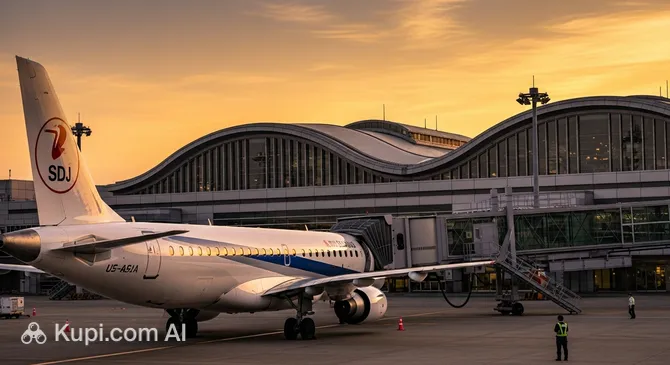
Sendai Airport. Source: Kupi.com Binoculars

Sendai Airport (SDJ) is not merely an air gateway to the Tohoku region, but a true symbol of resilience and revival. As the largest airport in this part of Japan, it plays a key role in the country's transport system, serving both domestic and international destinations. The airport's history, which began in 1940 as a flight school, took a dramatic turn in 2011 when it was almost completely destroyed by a tsunami. However, thanks to incredible efforts, it was rapidly restored, making it the modern and efficient transport hub that it is today.

IATA Code SDJ
ICAO Code RJSS
City Sendai
Distance to Centre 14 km
Status International
Annual Passengers approx. 3.6 million
Popular Airlines All Nippon Airways, Japan Airlines, Peach Aviation
Schedule Online Board "Sendai Airport"

One of the main features of the airport is its well-thought-out infrastructure. For the convenience of passengers, everything necessary is available here: from duty-free shops and restaurants to free Wi-Fi and currency exchange bureaus. The "Smile Terrace" observation deck, offering a beautiful view of the runways, deserves special mention. You can reach the city centre of Sendai in just 17-25 minutes via the dedicated Sendai Airport Access Line railway, making the journey quick and comfortable. The terminal, designed by architect Gyo Obata, features a memorable wavy roof symbolizing the wind and dreams of travel.

Contact Information

For your convenience, we have compiled the main contact information for Sendai Airport (SDJ). We recommend checking the official website for the most up-to-date data before your trip.

  • Official Website: All the latest information on flight schedules, services, passenger rules, and transport is available on the airport's official portal: www.sendai-airport.co.jp. The site has an English version.
  • Information Service Phone: For general enquiries, you can call the information centre at: +81-22-382-0080. Please note that calls are charged according to international communication rates.
  • Airport Address: The airport is located at: Minamihara, Shimomasuda, Natori, Miyagi 989-2401, Japan.
  • Email: For official enquiries, the airport suggests using the contact form on their website, which ensures faster processing of requests.
  • Social Media: You can follow news and special announcements on the airport's official pages on popular social networks such as Facebook and X (formerly Twitter).
  • Lost Luggage Information: In case of luggage loss during a flight, you must first contact your airline's baggage tracing service. If you have left personal belongings within the terminal, please contact the airport's Lost & Found service.
  • Passenger Support Service: Assistance for travellers is provided at information counters located in the terminal building. You can also contact the general information service by phone.

How to Get to the Airport

Getting to Sendai Airport (SDJ) from the city centre of Sendai and back is quite simple thanks to the excellently developed transport system of Japan. Travellers can choose the option most suitable for them based on budget, time, and personal preferences, whether it be a high-speed train, a comfortable bus, or a taxi.

Train — Sendai Airport Access Line
The fastest and most popular method is to use the dedicated railway line, the Sendai Airport Access Line. Trains connect the central Sendai Station with the airport terminal. The journey on the rapid express takes only about 17 minutes, and on the local train, about 25 minutes. The station at the airport is connected to the main terminal building by a covered walkway, making this option very convenient. It is the optimal choice in terms of speed and cost.

Bus
Comfortable limousine buses run between the airport and various points in the city, including the central station and major hotels. Travel time is usually between 40 and 50 minutes, depending on traffic conditions. The bus can be convenient if it stops near your hotel, allowing you to avoid transfers with luggage.

Taxi and Transfers
For maximum comfort, especially if you are travelling with family or a large number of suitcases, you can take a taxi. The taxi stand is located right outside the arrivals exit. The trip to the centre of Sendai will take approximately 30–40 minutes. This is the most expensive option, but it ensures "door-to-door" service. You can also book a private transfer in advance.

Car Rental and Parking
If you plan to explore Miyagi Prefecture and the Tohoku region on your own, renting a car is an excellent solution. Counters for several international and local rental companies are located in the airport building. For drivers arriving in their own vehicles, the airport provides zones for short-term and long-term parking with a clear tariff system. Please remember that an International Driving Permit is required to rent a car in Japan, and traffic moves on the left side of the road.

Terminals and Map

Sendai Airport (SDJ) is distinguished by a well-thought-out and passenger-friendly structure. All passenger traffic is handled in one modern terminal, which accommodates both domestic and international flights. Thanks to its compact size and logical layout, navigating the building is easy even for those visiting for the first time.

The terminal has a simple and clear layout. The First Floor is entirely dedicated to the Arrivals Zone. Here you will find baggage claim belts, customs control for international flights, information counters, and exits to bus stops and taxis. The Second Floor is the heart of the airport, where the main Departure Zone is located. Here, passengers check in for flights (counters for domestic and international lines are in different parts of the hall) and undergo pre-flight security screening. The walkway to the Sendai Airport Access Line railway station is also located on the second floor. The Third Floor offers passengers restaurants, shops, and an observation deck overlooking the runway.

Since all operations are concentrated under one roof, transfers between domestic and international zones do not require the use of shuttles or long transits. The zones are clearly separated and marked on signs in Japanese and English. After completing check-in on the second floor, passengers proceed to the relevant boarding gates, which are within walking distance.

Sendai Airport is known for its efficiency. Check-in and security procedures usually proceed quite quickly. For domestic flights, it is recommended to arrive 60-90 minutes before departure. For international destinations, it is worth allowing more time — about 2 hours — to calmly complete all formalities, including passport control. In general, the airport is rarely overcrowded, making travel through it comfortable.

Airport History

The history of Sendai Airport is a tale of resilience and constant development. Its journey began in 1940, when it was built as Kumagaya Airfield for the Imperial Army flight school of Japan. After World War II, the facility came under the control of the US armed forces, and only in 1957 was it returned to the Japanese government, after which its transformation into a civil airport began.

The most serious test in the airport's history was the devastating earthquake and tsunami on 11 March 2011. A giant wave completely flooded the runways and the first floor of the passenger terminal, causing colossal damage to the infrastructure. Images of submerged aircraft and buildings circulated around the world. However, what happened next was a true miracle and a symbol of an unbending spirit. Thanks to the incredible efforts of staff, volunteers, and self-defence forces, the airport was restored in record time. By 13 April 2011, just a month after the disaster, it was able to receive its first commercial flight, which became a powerful impetus for the revival of the entire Tohoku region.

In 2016, Sendai Airport made history as the first national airport in Japan to be transferred to private management. This step opened a new chapter in its development: active modernization of the terminal began, along with the expansion of the international and domestic flight network and the introduction of new services for passengers. Today, within the airport grounds, one can find a memorial dedicated to the events of 2011, reminding visitors of the tragedy and the incredible strength of the human spirit.

Services and Amenities

Sendai Airport (SDJ) provides passengers with all necessary services for a comfortable wait for their flight. In the terminal, you will find various restaurants and cafes where you can try both Japanese cuisine and familiar European snacks. Numerous shops offer a wide range of souvenirs, travel goods, and products from the duty-free zone.

For those who value enhanced comfort, the airport operates lounges, including business lounges, where you can relax in a quiet environment. Free Wi-Fi is available throughout the terminal, and numerous sockets and special stations are provided for charging electronic devices. This allows passengers to stay connected and handle work matters while waiting for departure.

Branches of banks and currency exchange bureaus are located in the airport building, where you can easily perform necessary financial transactions. In case of unforeseen situations or feeling unwell, a medical centre operates at the airport, ready to provide first aid.

Special attention is paid to travellers with children: convenient nursing rooms and baby care facilities are equipped for them. The airport is also fully adapted for passengers with reduced mobility — there are ramps, lifts, and specially equipped restrooms ensuring a barrier-free environment.

For business travellers, business centre services and conference room rentals may be available. If you require a full rest before or after a flight, a hotel offering comfortable accommodation is located in the immediate vicinity of the airport.

Where to Eat

At Sendai Airport (SDJ), passengers will find diverse dining options, from a quick snack to a leisurely lunch featuring local cuisine. Most establishments are located in the main terminal and offer both Japanese and European dishes.

If you wish to discover the gastronomy of the Tohoku region, be sure to try the local specialities. The main one is Gyutan, tender beef tongue grilled to perfection. This is the calling card of Sendai. It is also worth paying attention to desserts made with Zunda — a sweet paste made from young edamame soybeans. Zunda-mochi (rice cakes) or a Zunda shake make for an excellent and unusual snack.

The main restaurant zone is located on the 3rd floor of the terminal, in the public area (landside), before passing security control. Here you will find several restaurants specializing in Gyutan, as well as establishments offering sushi, ramen, and other classic Japanese dishes. This is the ideal place for a full lunch or dinner. Most of them are open from morning until evening, aligning with flight schedules.

For those short on time, there are cafes and small eateries where you can buy sandwiches, pastries, onigiri, and coffee. After passing security (airside), the choice becomes more limited, but several outlets with drinks and light snacks are available for passengers waiting for departure.

Regarding special dietary requirements, such as Halal, vegan, or gluten-free options, finding strict adherence may be challenging. However, Japanese restaurant menus often feature vegetarian options, for example, vegetable tempura or tofu dishes. It is recommended to study the menu carefully and consult with staff if necessary. The price range at the airport is moderate: a quick snack will cost 500-1000 yen, and a full meal in a restaurant averages 1500-2500 yen.

Tips for Travellers

To ensure your journey through Sendai Airport goes as smoothly and comfortably as possible, make use of these proven tips. A thoughtful approach will help save time, reduce stress, and even save money, leaving more pleasant impressions of your trip to Japan.

Arrival Time and Check-in. For international flights, it is recommended to arrive at the airport 2.5–3 hours before departure, and for domestic flights — 1.5–2 hours. The airport in Sendai is not as busy as the capital's airports, but extra time is never amiss. Many airlines offer online check-in, which significantly speeds up the process. Security works efficiently, but be prepared to present liquids (in containers up to 100 ml, packed in a transparent bag) and remove laptops from bags.

Seat Selection and Hand Luggage. When choosing a seat on the plane, consider your preferences: a window seat offers beautiful views during takeoff and landing, while an aisle seat offers the freedom to stand up and stretch your legs. Regarding hand luggage, besides standard restrictions on liquids and sharp objects, remember the strict rules of Japan on importing food products, especially meat, fruits, and vegetables. It is best not to bring such items to avoid issues at customs.

Connecting Passengers and Customs Control. If you have a connecting flight, verify in advance whether you need to collect and re-check your luggage. Navigation in the airport is simple; follow the "Connecting Flights" / "Transfers" signs. When passing customs control upon arrival, be prepared to fill out a declaration and answer the officer's questions. Control usually proceeds quickly and politely.

Economy and Unforeseen Situations. To save money, bring an empty water bottle and fill it after passing security control. Prices for food and drinks at the airport are typically higher. In case of a flight delay, do not panic. Contact your airline representative to find out the flight status and the possibility of receiving meal vouchers. The airport has free Wi-Fi, shops, cafes, and even an observation deck where you can pass the time.

Reached the end of the page?

That means the route is fully explored