Support

Ibaraki Airport

About the Airport

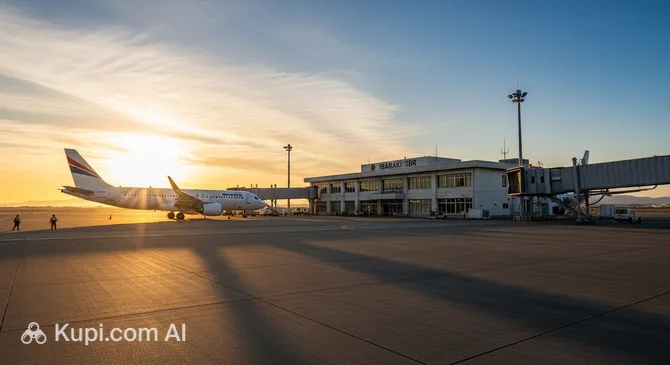
Ibaraki Airport. Source: Kupi.com Binoculars

Ibaraki Airport (IBR) is a compact and modern aviation hub located in the city of Omitama, approximately 80 km northeast of Tokyo. A unique feature of the airport is that it shares its runway with the active Hyakuri Air Base of the Japan Air Self-Defence Force, allowing passengers to frequently observe fighter jets taking off and landing right from the terminal windows. Ibaraki positions itself as a convenient low-cost alternative to the congested metropolitan hubs of Narita and Haneda, offering travellers simplified check-in procedures and a calm atmosphere. Due to the small size of the terminal, the journey from the entrance to the boarding gate takes just a few minutes, making the start of your trip as comfortable as possible.

IATA Code IBR
ICAO Code RJAH
City Omitama (Ibaraki Prefecture)
Distance to Centre ~85 km to Tokyo (~30 km to Mito)
Status International
Passengers per Year ~750,000 (2023)

Airport Features and Advantages:

  • Free Parking: One of the main benefits for those travelling by car is the massive free car park with over 3,000 spaces, which is a rarity for airports in Japan.
  • Saving Time and Money: The terminal is designed for maximum efficiency in budget air travel. There are no airbridges (boarding is done via standard stairs), which reduces airport fees, and the simple navigation allows you to complete all formalities very quickly.
  • An Air Show Every Day: Thanks to the proximity to the Hyakuri base, aviation enthusiasts can see military aircraft, including the famous "Phantoms" (although the fleet is being updated), without leaving the airport building. There is also a park nearby displaying decommissioned equipment.
  • Convenient Transfer: Despite its distance, the airport offers a cost-effective bus service to Tokyo Station, making it an attractive option for budget-conscious tourists heading to the capital.

Contact Information

For your convenience, we have compiled the main contact information for Ibaraki Airport (IBR). We recommend checking the official website for the most up-to-date data before your trip.

  • Official Website: www.ibaraki-airport.net — here you will find flight schedules, terminal maps, and the latest information.
  • Information Desk Phone: +81 299-37-2800. Please note that staff may speak primarily Japanese.
  • Address: 1601-55 Yozawa, Omitama, Ibaraki 311-3416, Japan.
  • Email: To contact the airport administration, it is recommended to use the special feedback form available on the official website in the contacts section.
  • Social Media: Follow airport news and updates on its official pages on popular social networks (e.g., Facebook, X/Twitter).
  • Lost & Found: If you have lost luggage or personal items, you should first contact your airline's representative office. For items left within the terminal, please contact the information desk or call the helpline.
  • Passenger Support Service: For all questions related to your stay at the airport, you can contact the information desk located in the main hall of the terminal.

How to Get to the Airport

Ibaraki Airport (IBR) is an important transport hub for travellers heading to Ibaraki Prefecture and the northern part of the Kanto region in Japan. There are several ways to reach it, depending on your budget, time, and point of departure. The airport is located approximately 80 km northeast of Tokyo, so it is worth planning your route in advance.

Public Transport

The most popular and economical way to get to the airport is by bus. Direct bus routes connect Ibaraki Airport with major transport hubs:

  • From Tokyo: Buses run regularly from Tokyo Station. The travel time is approximately 1.5–2 hours depending on traffic conditions. The fare may vary, but special rates often apply for passengers of certain airlines flying from Ibaraki, making the trip very affordable.
  • From Mito Station: If you are in the prefectural capital, Mito City, you can take a direct bus to the airport. The journey will take about 40 minutes.
  • From Ishioka Station: The nearest major railway station to the airport on the JR Joban Line. From here, you can reach the airport by bus in about 30 minutes.

There is no direct rail link to the airport, so the "train + bus" combination is the standard option for those travelling by rail.

Taxi and Transfer

Taking a taxi is the most comfortable but also the most expensive option. This may be justified if you are travelling in a group or with a large amount of luggage. A trip from Mito Station will cost a significant amount, and from Tokyo, it will be very expensive. It is recommended to check the approximate cost with the driver in advance. A more predictable alternative in terms of price is booking a private transfer, which can be arranged online before your trip.

Car Rental and Parking

If you plan to actively explore Ibaraki Prefecture and the surrounding areas, renting a car is an excellent solution. Several rental companies have counters at the airport. To rent a car in Japan, you will need an International Driving Permit. A huge advantage of Ibaraki Airport is the free parking with a large number of spaces, making it very convenient for those arriving in their own or rented vehicles.

Nearby Airports

Although Ibaraki Airport is convenient for its region, it is worth knowing about other nearby air hubs, especially if you are planning complex routes:

Terminals and Map

Ibaraki Airport (IBR) is distinguished by its compactness and efficiency, making it particularly convenient for travellers. The airport has only one passenger terminal, which serves both domestic and international flights. This structure completely eliminates the need for transfers between terminals and makes navigation intuitively simple.

The terminal building has a simple and logical two-storey layout. On the first floor, you will find check-in counters, the arrival area with baggage claim belts, customs control, as well as information desks and car rental points. Escalators and lifts lead to the second floor, where the security checkpoint is located. After passing through security, passengers enter the secure area — the departure lounge with boarding gates, Duty Free shops, souvenir stalls, and small cafes. A special feature is the observation deck, which offers a view of the runway.

Departure and arrival zones are clearly separated by floors, minimizing confusion. The arrival process is very quick: after leaving the aircraft, you immediately enter the baggage claim area on the first floor. For departing passengers, the route is also simple: check-in on the first floor and proceed to the second floor for security screening and waiting for the flight.

Thanks to the small size of the terminal and the coordinated work of the staff, the time taken to complete all formalities, including check-in and security, is significantly less than at major airports. typically, even during peak hours, all procedures take no more than 30-40 minutes. Nevertheless, it is recommended to arrive at the airport 1.5-2 hours before departure to check in luggage and visit the shops without rushing. Navigating the terminal will not cause difficulties: clear signs in Japanese and English are installed everywhere.

Airport History

The history of Ibaraki Airport (IBR) is quite unusual, as it represents a unique example of a dual-use facility. Its roots go back to the past when the Hyakuri Air Base of the Air Self-Defence Force of Japan was founded on this site. For decades, it was exclusively a military airfield, and to this day, it continues to perform defence functions, sharing the runway with civilian aircraft.

A new, civilian chapter in the airport's history began on 11 March 2010, when it officially opened for commercial flights. The project was conceived as a modern hub for budget airlines, intended to become a convenient and inexpensive alternative to Tokyo's major airports — Narita and Haneda. From the very beginning, Ibaraki Airport was positioned as the "first full-scale low-cost airport" in the metropolitan region.

Fate had a severe test in store for the new airport, which simultaneously proved its strategic importance. Exactly one year after opening, on 11 March 2011, the Great East Japan Earthquake occurred. While many airports, including Narita, were temporarily closed and Sendai Airport was seriously damaged by the tsunami, Ibaraki remained operational. It quickly took on the role of a key centre for receiving domestic and international humanitarian and rescue flights, making an invaluable contribution to the disaster relief efforts.

Since then, the airport has continued to develop. Although it cannot boast gigantic passenger traffic, it has firmly occupied its niche, serving popular domestic and Asian destinations. One of the most interesting facts for travellers flying into or out of Ibaraki is the opportunity to see Japan Air Self-Defence Force fighter jets. For many tourists, especially aviation enthusiasts, this becomes an unexpected and exciting bonus to their journey.

Services and Amenities

Ibaraki Airport (IBR), despite its compact size, offers passengers all the necessary services for a comfortable wait before their flight. Here you will find several restaurants and cafes where you can grab a quick snack or have a full meal, trying local cuisine. The shops offer a good selection of souvenirs from Ibaraki Prefecture, including famous delicacies and travel goods.

For a comfortable wait, the airport has a SKY LIGHT shared lounge, where you can relax in a quiet atmosphere. Free Wi-Fi is available throughout the terminal, and charging stations for electronic devices are provided in the waiting areas so you can stay connected. This allows you to conveniently plan your onward route or work before departure.

ATMs for cash withdrawal are installed in the terminal. If you require medical assistance, there is a medical station at the airport ready to provide first aid in emergencies. For currency exchange, it is better to check information in advance, as such services may be limited at smaller airports.

Ibaraki Airport is well-equipped for passengers with children — there are special nursing rooms where you can feed and change your baby in privacy. Conditions have also been created for travellers with reduced mobility: a barrier-free environment, accessible toilets, and the option to request staff assistance for moving through the terminal and boarding.

Although there are no hotels within the airport grounds, travellers can find many accommodation options in nearby cities such as Mito and Omitama, which are easily accessible by bus or taxi. For business travellers, the airport offers a multi-purpose hall for rent to hold meetings or events, making it a convenient point for business trips.

Where to Eat

At Ibaraki Airport (IBR), the choice of dining establishments is concentrated mainly on the second floor of the terminal, in the public area (before security control). This allows both departing passengers and those seeing them off to dine comfortably. The options are suitable for those looking for a full meal as well as those needing a quick snack.

For a thorough introduction to Japanese cuisine, head to the Suginoya Honjin restaurant. This is the airport's main establishment, serving traditional dishes: soba and udon noodles, teishoku sets (set meals with rice, soup, and a main dish), and other popular treats. Here you can have a leisurely lunch before your flight, enjoying authentic flavours. It is the ideal place to try something from the local cuisine of Ibaraki Prefecture, such as dishes with natto (fermented soybeans) or lotus root.

If time is limited, there are several options for a quick bite at your service. At the Sky Light Cafe, you can have coffee with fresh pastries or a sandwich. Another excellent option is the Kasumi (Food Gallery) shop, which sells ready-made bento boxes, onigiri (rice balls with filling), and various snacks. Bento can be taken on board the aircraft (if permitted by your airline's rules) or eaten in the waiting area.

Most establishments operate according to the flight schedule, opening in the morning and closing after the departure of the last plane. Prices are average for Japanese airports: slightly higher than in the city, but quite acceptable. Regarding special dietary needs, finding certified Halal or gluten-free dishes may be difficult. Vegetarians should pay attention to vegetable and rice dishes, but it is always better to check the ingredients of the sauce or broth, as fish extracts are often added to them.

Travel Tips

To ensure your journey through Ibaraki Airport is as comfortable and stress-free as possible, make use of our tips. These recommendations will help you save time, money, and nerves, making the start or end of your trip to Ibaraki and Japan pleasant.

Arrival Time Recommendations. Ibaraki Airport is not the largest, but it is better not to take risks. We advise arriving at the airport at least 2 hours before domestic flights and 2.5–3 hours before international flights. This will give you enough time to calmly complete all formalities, even during peak hours.

Check-in and Security Control. To avoid queues, use online check-in for your flight if your airline provides this option. Prepare for screening in advance: pack all liquids (up to 100 ml each) in a transparent bag, and keep laptops and other large electronics where they can be easily removed from your bag.

Seat Selection on the Plane. Want to admire the clouds and views during takeoff and landing? Choose a window seat. If comfort, the ability to stretch your legs, or quick access to the exit after landing is important to you — choose an aisle seat.

Hand Luggage Rules. Standard international rules apply here too: sharp objects, flammable substances, and liquids in containers larger than 100 ml are prohibited. All your bottles and tubes must fit into one transparent bag with a volume of no more than 1 litre. Always check the exact weight and size limits for hand luggage on your airline's website.

For Passengers with Transfers. If you have a connecting flight in Ibaraki, check in advance if you need to collect and re-check your luggage. Ensure you have enough time between flights to complete all necessary procedures, including potential passport control.

Customs Control. When entering the country, have your passport and completed customs declaration ready. If you are carrying anything subject to declaration, it is better to declare it honestly. Customs officers may ask a few standard questions about the purpose of your trip and the duration of your stay.

Saving Time and Money. Book your airport transfer online in advance — this is often cheaper. Bring an empty reusable water bottle to fill after passing security. Light snacks brought from home will also help you save on expensive airport cafes.

In Case of Flight Delay. First, contact your airline representative for information on the flight status and your rights (rebooking options, provision of meals or hotel). Keep all receipts if you incur additional expenses — they may be needed to claim compensation from the airline or through travel insurance.

Reached the end of the page?

That means the route is fully explored