Support

Narita International Airport

Airports in the city

About the Airport

Narita International Airport (NRT) is not just a point on your travel map, but a true gateway to the amazing world of Japan. Located in Chiba Prefecture, it welcomes and sends off millions of travelers annually, serving as the main international hub for Tokyo. Although Narita is located at some distance from the capital, it offers guests their first introduction to Japanese culture, order, and hospitality, making the beginning and end of the trip as comfortable as possible. The airport is a modern and bustling complex where every detail is designed for passenger convenience.
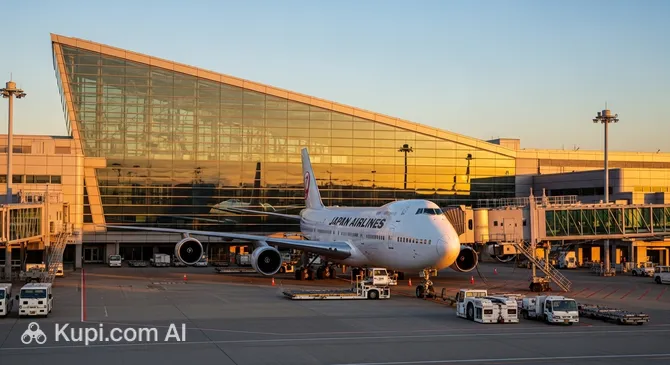
Narita International Airport. Source: Kupi.com Binoculars

For the convenience of travelers, essential information about the airport is presented below in an easy-to-read format.

IATA Code NRT
ICAO Code RJAA
City Tokyo
Distance to Center approx. 60–75 km
Status International
Annual Passengers ~35.2 million (based on FY 2023 data)
Popular Airlines Japan Airlines, All Nippon Airways, Delta Air Lines
Schedule "Narita International Airport" online flight board

Narita Airport is renowned for its efficiency and wide range of services. It consists of three terminals, each serving specific airline alliances and flight types, including low-cost carriers in Terminal 3. Transfer between terminals is provided by free shuttle buses. Everything necessary for passenger convenience is provided: from numerous Duty Free shops, restaurants, and the largest food court in Japan to a capsule hotel for those with early departures or late arrivals. Additionally, the airport offers unique cultural events and even observation decks where you can watch planes take off and land. You can reach Tokyo via high-speed trains such as the Narita Express (N'EX) and Keisei Skyliner, or by comfortable Limousine Buses that will take you to key city districts and major hotels.

Contact Information

Below is the essential contact information for Narita International Airport (NRT), which will help you navigate and resolve potential issues during your journey.

  • Official Website: You will find all the latest information on flights, services, and regulations on the airport's official portal: www.narita-airport.jp. The site is available in several languages, including English.
  • Information Service Phone: For immediate information, you can call: +81-476-34-8000. Operators are ready to answer your questions.
  • Airport Address: 1-1 Furugome, Narita, Chiba 282-0004, Japan.
  • Email: To contact various airport services, it is recommended to use the specialized contact forms available on the official website under the "Contact Us" or "FAQ" sections.
  • Social Media: Follow airport news and updates on official pages on Facebook, X (formerly Twitter), Instagram, and YouTube by searching for "Narita International Airport".
  • Lost Luggage Information: If you have lost items within the airport terminal, contact the Lost & Found service. Detailed instructions and a contact form are available on the website. In case of lost luggage or items on board the aircraft, you must contact your airline representatives directly.
  • Passenger Support Service: Assistance to passengers is provided by staff at information counters located in all airport terminals, as well as by operators via the information service phone.

Getting to the Airport

Getting from Narita International Airport (NRT) to central Tokyo, despite the distance of 60-70 km, is easy and comfortable thanks to an excellent transport system. Express trains are the most popular and time-predictable method.

JR Narita Express (N'EX) is a premium express train that directly connects the airport with the city's main transport hubs: Tokyo Station, Shinjuku, Shibuya, and Ikebukuro. The trip in a comfortable carriage with luggage space, power outlets, and Wi-Fi takes about 60-80 minutes. A one-way ticket costs about ¥3,000. A key advantage for tourists: N'EX is fully covered by the Japan Rail Pass, making it free for holders of this pass.

Keisei Skyliner is the fastest train to the city center. It will whisk you from Narita to Nippori and Ueno stations in just 40-50 minutes. From there, you can easily transfer to the JR Yamanote loop line to reach other areas of Tokyo. The trip costs about ¥2,500. The Skyliner is not included in the JR Pass but often offers value packages including Tokyo subway tickets.

For those looking for the most budget-friendly option, there are regular commuter trains. A trip on the Keisei Main Line will cost approximately ¥1,100, and on the JR Sobu/Narita Line — about ¥1,340. However, be prepared for a longer journey (90-100 minutes), potential transfers, and a lack of luggage space during peak hours.

Shuttle Buses (Limousine Bus) are a wonderful alternative to trains, especially if you are traveling with a lot of luggage or children. These buses run between the airport and dozens of major hotels and stations throughout Tokyo, offering "door-to-door" service. Travel time depends heavily on traffic and can vary from 90 to 120 minutes. The cost is comparable to express trains and is about ¥3,100.

Another option is low-cost buses (e.g., TYO-NRT), which will take you to Tokyo Station or the Ginza district for just ¥1,300. This is an excellent choice for budget-conscious travelers whose hotel is located in these areas.

Taxi, Transfer, and Car Rental. Taking a taxi from Narita to central Tokyo is an extremely expensive luxury; the cost can exceed ¥25,000. A pre-booked private transfer will be more predictable in price. Renting a car at the airport only makes sense if you plan to immediately embark on a trip around the country. For moving around Tokyo, a car is impractical due to traffic jams, expensive parking, and a complex road network. Parking services are available at the airport for those arriving in their own vehicles.

When planning your trip, also note that Tokyo is served by another airport — Haneda (HND). It is located much closer to the city center, and the journey from there is usually faster and cheaper. If you have the option to choose, arriving at Haneda may be a more convenient variant.

Terminals and Map

Narita International Airport (NRT), Tokyo's main international hub, consists of three main passenger terminals. Each has its own specialization and features, making navigation through the airport simple and clear if you study its structure in advance.

Terminal 1 is the largest and oldest terminal of the airport. It is divided into the North Wing and South Wing, which are connected by a central building. Airlines of major alliances are based here, such as Star Alliance (e.g., ANA, Asiana Airlines, Singapore Airlines) and SkyTeam (e.g., Delta Air Lines, Korean Air). The terminal offers a huge selection of shops, restaurants, and business lounges, reflecting the status of flagship carriers.

Terminal 2 primarily serves the Oneworld alliance, including the national carrier Japan Airlines (JAL). Its structure consists of a main building and a satellite, connected by an automated shuttle. This terminal is famous for its vast duty-free shopping area, Narita 5th Avenue — one of the largest duty-free malls in Japan. A wide range of services for comfortable flight waiting is also presented here.

Terminal 3 is the newest and most modern; it was specially built to serve low-cost carriers (LCC). Its design is minimalist and functional, helping to reduce costs. The main feature of this terminal, which made it famous worldwide, is the navigation using colored running tracks painted directly on the floor. Blue tracks lead to departure zones, and red tracks lead to arrival zones and exits. This makes spatial orientation intuitive and even engaging. The largest food court among all airports in Japan is also located here.

Movement between terminals is organized very conveniently. A free shuttle bus runs between all three terminals with an interval of 7–15 minutes. Terminals 1 and 2 are also connected by an underground passage, which you can walk through or traverse by train (JR and Keisei stations are present in both terminals). From Terminal 2 to Terminal 3, you can walk along a specially equipped covered walkway about 500 meters long (approximately 15 minutes) or use the same shuttle bus.

For check-in and security screening, it is recommended to arrive at the airport at least 2-3 hours before an international flight. Despite the high efficiency of Japanese services, queues are possible during peak hours. Navigation inside the terminals causes no difficulties thanks to numerous signs in Japanese, English, Korean, and Chinese. Simply follow the signs for your flight, and in Terminal 3 — trust the colored tracks.

Airport History

The history of Narita International Airport (NRT) is a story of overcoming challenges and constant development. The decision to build a new airport for Tokyo was made back in 1966 to relieve the overcrowded Haneda Airport. However, the choice of location in the Narita area faced serious resistance from local farmers and activists, which led to significant delays in construction. This complex period left a deep mark on the history of the airport and the entire country.

The official opening of the airport, originally named New Tokyo International Airport, took place on May 20, 1978. At that time, it consisted of just one terminal and one runway. Despite a modest beginning, Narita immediately took on the role of the main air gateway to Japan, serving the majority of international flights and becoming a key hub for passenger and cargo transport.

A significant stage of expansion was the opening of Terminal 2 in 1992, which allowed for a substantial increase in the airport's capacity. Further development included the construction of a second runway, which was put into operation in 2002, just in time for the FIFA World Cup. In 2004, the airport was privatized and received its current name — Narita International Airport, marking a new stage in its management and modernization.

Among recent achievements is the opening of Terminal 3 in 2015, specially designed to serve low-cost airlines. This step made air travel more accessible and strengthened Narita's position as one of the leading Asian hubs. An interesting fact: due to its history and location at a significant distance from central Tokyo, the airport constantly improves transport connections, offering high-speed trains like the Narita Express and Keisei Skyliner, which have become an integral part of the journey to the capital of Japan.

Services and Amenities

Narita International Airport (NRT) offers passengers a wide range of services and amenities, making their stay comfortable and pleasant. Being one of the main air hubs of Japan, it is excellently equipped to meet the needs of diverse travelers.

For those wishing to have a snack or go shopping, the airport terminals host a multitude of restaurants, cafes, and lounges to suit any taste and budget. Here you can enjoy both authentic Japanese cuisine and dishes from international chains. Shopping zones offer a huge selection of goods: from Duty Free shops with perfumes and luxury goods to boutiques of world brands, souvenir stalls, and electronics stores.

Throughout Narita Airport, free Wi-Fi is available, and numerous charging stations for mobile devices allow you to always stay connected. for a more comfortable wait for your flight, you can use the services of paid lounges, which offer a private atmosphere, snacks, beverages, showers, and work zones. VIP lounges are available for business class passengers of many airlines, as well as for a fee for anyone interested.

Financial matters are easily resolved at the airport: bank branches, ATMs, and currency exchange points are at passengers' disposal. To ensure the safety and health of travelers, medical clinics and pharmacies operate around the clock, where qualified assistance can be obtained.

Special attention is paid to passengers with specific needs. For families with children, there are play areas, nursing rooms, and a stroller rental service. Travelers with limited mobility can count on full support: the airport is equipped with ramps, special restrooms, and elevators, and also provides escort services upon prior request.

If you have a long layover or an early departure, you can stay at one of the hotels located directly on the airport grounds or in the immediate vicinity, served by free shuttles. For business travelers, business centers and conference rooms are available, where you can hold a meeting, use office equipment, or work in silence.

Where to Eat

Narita International Airport (NRT) is a true paradise for gourmets, offering travelers a final chance to enjoy authentic Japanese cuisine before departure. Here you will find a huge selection of establishments for every taste and budget, from quick snacks in 24-hour convenience stores to exquisite dinners in restaurants with panoramic views of the runways.

Terminal 1 boasts an impressive variety of restaurants, most of which are concentrated on the 4th and 5th floors of the Central Building (in the public area, before security check). Here you can enjoy a final portion of fresh sushi and sashimi, eat a bowl of aromatic ramen, or try tender tonkatsu pork. After passing security (in the departure zone), the selection becomes smaller but still includes several excellent cafes, lounges, and restaurants where you can comfortably spend time waiting for your flight.

Terminal 2 also offers a wide assortment of establishments, located primarily on the 4th floor in the public area. Restaurants of Japanese, Chinese, and European cuisine are presented here. Special attention should be paid to the food court in the departure zone, which offers a beautiful view of the airfield. This is a great place for those who want to eat quickly and deliciously, choosing from several concepts simultaneously. You can find everything here: from udon noodles to Italian pasta.

Terminal 3, serving mainly low-cost carriers, is known for its huge food court — the largest in Japan's airports. It is located before the security checkpoint and is the main dining spot in this terminal. Popular Japanese fast-food chains are gathered here, offering quality and affordable dishes such as gyudon (beef bowl), takoyaki, and fresh pastries. In the departure zone, the selection is significantly more modest, so it is best to eat before passing control.

For travelers with special dietary preferences, suitable options can be found at Narita Airport. Many Japanese restaurants offer vegetarian dishes based on vegetables, tofu, and rice. Information about halal or gluten-free options is best clarified directly at the establishments — staff are usually ready to help with the choice. In 24-hour convenience stores (konbini), such as 7-Eleven and Lawson, you can always find ready-made salads, onigiri, and other snacks.

The price range is quite wide. A quick snack, for example, a bowl of ramen or curry rice, will cost approximately 1000–1500 yen. A full lunch or dinner in a full-service restaurant will cost from 2000 to 4000 yen and up. Most establishments are open from early morning (around 7:00–8:00) until late evening (21:00–22:00), but hours may vary. For a quick snack, food courts or noodle shops are ideal, and for a full meal in a quiet atmosphere — restaurants on the upper floors of Terminals 1 and 2.

Travel Tips

To ensure your journey through Narita International Airport goes smoothly, it is worth considering a few tips. This major transport hub serving Tokyo has its own peculiarities, but good preparation will help avoid stress and unnecessary expenses on the way to or from Japan.

Arrival Time and Check-in. For international flights, it is recommended to arrive at the airport at least 3 hours before departure. Narita is a large and busy airport, so extra time will be needed for navigation between terminals, check-in, and security checks. To save time, use online check-in for your flight and save the boarding pass on your mobile device. The airport also has self-service kiosks for check-in and baggage drop.

Seat Selection and Carry-on Luggage. When choosing a seat on the plane, think about your preferences: a window seat offers beautiful views during takeoff and landing, while an aisle seat allows you to stand up freely without disturbing neighbors. As for carry-on luggage, the rules are standard: liquids can be carried in containers up to 100 ml, packed in a transparent bag with a volume of no more than 1 liter. Sharp objects, weapons, and flammable substances are prohibited. Be sure to check your airline's rules, as there may be additional restrictions on weight and size.

For Transit Passengers. If you have a connecting flight at Narita, carefully study the information on your boarding passes. The airport consists of three terminals, and moving between them may take time. Follow the "Transit" or "Transfer passengers" signs. Ensure you have enough time between flights — for international transfers, it is recommended to allow at least 2-3 hours.

Customs Control. When entering or leaving the country, you will need to pass through customs control. Typically, you will be given a declaration form on the plane to fill out. Declare all goods subject to declaration honestly. Japan has strict rules on the import of plant and animal products, so it is better to familiarize yourself with the list of prohibited items in advance.

Saving Time and Money. To save money, bring an empty reusable water bottle with you — after security screening, it can be filled at drinking fountains. Food prices at the airport are high, so you can have a snack beforehand or find food courts with more affordable prices. For the trip to or from the city, compare the costs of different types of transport: Narita Express, Limousine Bus, or more budget-friendly trains offer different levels of comfort and pricing.

In Case of Flight Delay. If your flight is delayed, first contact your airline representative for information on the flight status and possible compensation (meals, hotel). Narita Airport has many ways to pass the time: shops, restaurants, rest zones, paid lounges, and even capsule hotels. Free Wi-Fi will help you stay connected and monitor updates.

Reached the end of the page?

That means the route is fully explored