Support

Akita Airport

About the Airport

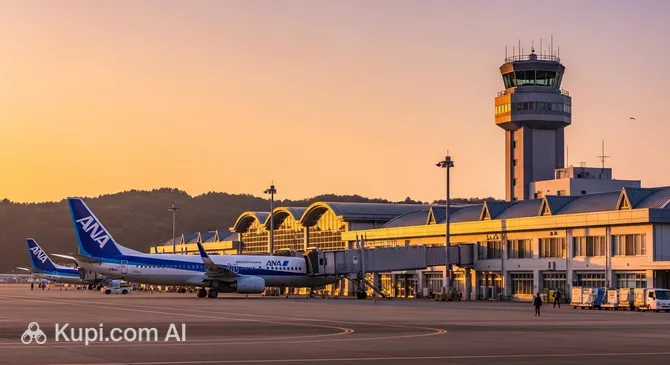
Akita Airport. Source: Kupi.com Binoculars

Akita Airport is not merely a transport hub, but a cosy and welcoming gateway to one of Japan's most authentic regions. Nestled amidst picturesque hills, it immediately immerses travellers in the tranquil atmosphere of the Tohoku region, where modern technology harmoniously coexists with natural motifs in the interior design. Despite its compact size, the terminal surprises with its thoughtful layout: there is no hustle and bustle typical of giant hubs, and navigation is intuitive for every guest. It is the ideal starting point for those planning to explore the prefecture's famous hot springs or snowy mountain resorts.

IATA Code AXT
ICAO Code RJSK
City Akita
Distance to Centre ~20 km (about 35–40 minutes by bus)
Status Domestic (with international charters)
Annual Passengers ~1.2 million (based on 2023 data)
Schedule Available on the airport's online board

Features and Advantages of the Airport

Akita Airport is renowned for its convenience and attention to detail, making the wait for a flight a pleasant part of the journey. One of the main highlights is the use of the famous Akita cedar in the interior finishing, giving the halls a warm and dignified appearance. Passengers can enjoy the comfortable Royal Sky lounge, where they can relax before departure while enjoying a panoramic view of the runway.

The gastronomic zone deserves special attention: here you can taste local delicacies, such as Inaniwa Udon noodles, without leaving the terminal building. Souvenir shops offer a wide selection of regional products, including traditional beverages and items shaped like Akita-inu dogs. Furthermore, the airport offers excellent transport accessibility: in addition to limousine buses to Akita Railway Station, the Airport Liner shared taxi service is popular, delivering tourists directly to famous hot springs such as Nyuto Onsen.

Contact Information

Below is the essential contact information for passengers departing from or arriving at Akita Airport.

  • Official Website: Up-to-date information on flights, services, and airport rules can be found on the official website: www.akita-airport.com.
  • Information Desk Phone: For enquiries and answers to questions, you can call: +81 18-886-3366.
  • Airport Address: Yuwa Tsubakigawa, Akita City, Akita Prefecture 010-1211, Japan.
  • Email: The airport does not provide a public email address for general enquiries. It is recommended to use the contact forms on the official website or the telephone number for communication.
  • Social Media: Currently, Akita Airport does not have official pages on popular social networks. The website remains the primary source of information.
  • Lost Luggage Information: If your items were lost on board the aircraft, you should contact your airline's representative directly. For items left within the terminal building, please contact the airport information desk.
  • Passenger Support Contacts: The main support channel is the airport information desk telephone line listed above.

How to Get to the Airport

You can get to Akita Airport (AXT) from the centre of Akita city in several ways, but the most popular and balanced option in terms of price and convenience is the limousine bus. These comfortable buses run according to a schedule coordinated with flight arrivals and departures. The route connects the airport with the main railway station, Akita Station. The journey takes approximately 35–50 minutes depending on traffic conditions, and the fare is around 980 yen. This is the ideal choice for most travellers.

For those who value comfort and are travelling with large luggage, a taxi is a good option. Taxi stands are located right outside the terminal exit. The trip to the city centre will take about 30–40 minutes, however, the cost will be significantly higher than the bus — estimated at 6,000–8,000 yen. It is recommended to check the approximate price with the driver in advance. You can also book a private transfer, which is particularly convenient for groups or families.

If you plan to actively explore Akita Prefecture, renting a car would be the best solution. Offices of several major rental companies are present at the airport. Having a car will give you complete freedom of movement around the picturesque surroundings of Japan. For those arriving at the airport in their own or rented vehicle, paid parking is available. There are zones for both short-term and long-term parking, with rates depending on the duration of the stay.

It is important to note that there is no direct rail or metro connection to Akita Airport, so buses and cars remain the main modes of transport. When planning your trip, allow sufficient time for travel, especially during peak hours. Limousine buses are a reliable and budget-friendly method, while taxis offer maximum convenience at a higher price.

Terminals and Map

Akita Airport (AXT) is a modern and compact aviation hub, making navigation simple and convenient for passengers. All airport activity is concentrated in one passenger terminal, which serves both domestic and international flights. Thanks to this, travellers do not need to worry about transferring between different buildings — all services and zones are under one roof.

The structure of the terminal is intuitive and logical. The building has three main floors:

  • 1st Floor: This is the arrivals and check-in area. Here you will find check-in counters for domestic and international flights, the baggage claim area, and the information desk.
  • 2nd Floor: The departures area. After check-in, passengers proceed here to go through pre-flight security screening. Boarding gates, duty-free shops, souvenir stalls, and several cafes are also located here.
  • 3rd Floor: This floor houses restaurants where you can taste local cuisine, as well as the terminal's main attraction — a free observation deck offering a beautiful view of the runway.

Departure and arrival zones are clearly separated by floors, eliminating confusion. The procedure is standard: check-in on the first floor, then proceed to the second floor for security control and waiting for boarding. Since this is a regional airport, the time required for all formalities is usually significantly less than in major hubs in Japan. Check-in and screening generally proceed quickly and without long queues.

For comfortable navigation, it is recommended to arrive at the airport approximately 1 hour before departure for a domestic flight and 1.5–2 hours before an international one. All information on signs is duplicated in English. The compact size of the terminal allows for easy orientation, and if questions arise, you can always ask for help from the staff at the information desk on the first floor.

Airport History

The history of Akita Airport (AXT) is a story of growth and modernisation, reflecting the development of the entire region. Originally, the airport was opened in 1961 on the Omonogawa coast. However, its coastal location created difficulties: strong crosswinds and fog often interfered with flights, and the short runway limited the types of aircraft it could accommodate.

Realising the need for a more modern and reliable aviation hub, the authorities decided to relocate the airport. The new, modern Akita Airport was grandly opened at its current location on June 26, 1981. This became a key event in the prefecture's transport history. The new complex received a significantly longer runway (2,500 metres), which allowed it to receive large airliners and substantially expand the geography of flights.

The next important stage was the transformation of the airport into an international one. In 1993, the first regular international flight was launched, connecting Akita with Seoul. This event opened the northern part of Japan to tourists and business travellers from Asia and other countries around the world. To handle the growing passenger flow, the international terminal was modernised and expanded.

Since then, Akita Airport has been repeatedly updated to meet modern standards of safety and comfort. Today, it serves as an important aerial gateway to the Tohoku region, known for its picturesque nature, hot springs, and unique festivals. The airport continues to play a key role in the economic and cultural development of the prefecture, serving as a reliable bridge between Akita and the rest of the world.

Services and Amenities

Akita Airport (AXT) offers passengers all necessary services for a comfortable wait for their flight. Although it is a small regional airport, the infrastructure here is well-thought-out to meet the needs of modern travellers.

Within the terminal, you will find several restaurants and cafes where you can experience local cuisine or simply have a cup of coffee. Establishments offering traditional dishes of Akita Prefecture are particularly popular. In the shops, you can purchase not only daily necessities but also unique souvenirs, including items from local craftsmen and famous regional products.

Free Wi-Fi is available to all passengers, and gadgets can be charged in designated areas. For those who value enhanced comfort, a paid lounge is available where one can relax in a quiet environment. The airport also has ATMs and a currency exchange office, which is convenient for international tourists.

The airport cares for all categories of passengers. Families with small children can use the nursing room. For travellers with reduced mobility, a barrier-free environment has been created: there are ramps, elevators, and specially equipped restrooms. If necessary, you can request assistance from airport staff. There is also a medical station on the premises for first aid.

Although hotels are not located directly within the terminal building, several accommodation options are situated in the immediate vicinity. For business travellers, there is an option to rent conference rooms for meetings or negotiations, making the airport a convenient venue for business.

Where to Eat

At Akita Airport (AXT), travellers can find several cosy establishments to have a snack or a full meal before departure. Although the selection is not as vast as in megacities, here you can get acquainted with the authentic local cuisine for which this region of Japan is famous.

For a full meal, the restaurants located in the public area of the terminal (landside) on the 2nd and 3rd floors are best. Here you will have an excellent opportunity to try famous dishes of Akita Prefecture in establishments such as Suginoya or Mugen. Look out for the menu featuring fine Inaniwa Udon noodles, dishes made with local Hinai Jidori chicken, or traditional Kiritanpo soup with rice sticks. This is a great way to enjoy the local flavour. The average bill for lunch will be around 1,500-2,500 yen.

If you are short on time and need a quick snack, then after passing security (airside) in the departure zone, you will find small cafes and shops, such as ANA FESTA. Here you can buy coffee, sandwiches, onigiri (rice balls with filling), pastries, and other light snacks that are convenient to take on board the plane. This is an ideal option for those in a hurry.

Most dining establishments at Akita Airport operate according to the flight schedule, opening in the morning and closing after the departure of the last evening flight. We recommend checking the opening hours if your departure is scheduled for a late time.

Passengers with strict dietary requirements (e.g., vegan, gluten-free, or Halal) may find it difficult to find specialized dishes. Vegetarian options may be limited, so it is best to clarify the ingredients with the staff or, just in case, carry suitable snacks with you.

Travel Tips

When planning a departure from the airport in the city of Akita, there are several points to consider to ensure your journey through Japan begins and ends as comfortably as possible. We recommend arriving at Akita Airport (AXT) in advance: 2-3 hours before international flights and 1.5-2 hours before domestic ones. Although the airport is not the largest, having extra time will allow you to complete all pre-flight formalities without rushing.

Check-in and security procedures here are standard. To save time, use online check-in if your airline provides this option. Keep your passport, boarding pass, and other necessary documents ready. Staff at Japanese airports are known for their politeness and efficiency, which makes the control process quite fast.

When choosing a seat on the plane, be guided by your preferences: a window seat will offer you beautiful views of Japanese landscapes during takeoff and landing, while an aisle seat provides more legroom and the ability to stand up freely during the flight.

Pay close attention to hand luggage regulations. Standard restrictions apply to liquids (no more than 100 ml in a single container, packed in a transparent bag), sharp objects, and flammable substances. Be sure to check the weight and size limits for hand luggage on your airline's website to avoid extra charges at the airport.

If you have a transfer planned, especially from an international flight to a domestic one, check whether you need to collect your luggage and check it in again. When passing through customs control upon arrival in Japan, be prepared to fill out a customs declaration. Honestly declare all goods subject to declaration to avoid misunderstandings.

To save money, bring an empty reusable water bottle with you — after passing security, you can fill it at drinking fountains. Prices for food and souvenirs at the airport may be higher than in the city, so it is better to make major purchases in advance. Also, pre-booking a taxi or studying the bus schedule will help save both time and money.

In case of a flight delay or cancellation, first contact your airline representative for information and instructions. At Akita Airport, there are cafes and shops where you can spend time waiting. Having travel insurance that covers such cases can significantly simplify resolving issues and compensate for expenses.

Reached the end of the page?

That means the route is fully explored