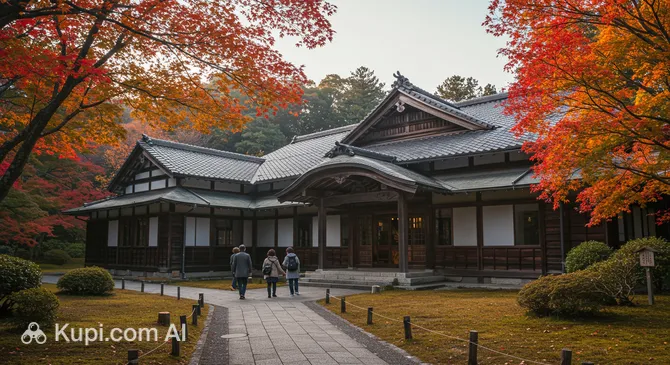
When planning a trip to Sendai, be sure to include the Sendai City Tomizawa Site Museum (Chiteinomori Museum) in your itinerary. This fascinating site offers a true journey through time, transporting visitors back 20,000 years to the last Ice Age. The main feature of the complex is that it preserves the remains of the ancient world in situ—exactly where they were uncovered by archaeologists.
Sendai City Tomizawa Site Museum. Illustration.
Source: Kupi.com AI
Traveler photos:
Opened in Japan in 1996, this museum showcases a unique "underground forest." Protected by modern technology, fossilized spruce trunks and traces of prehistoric human activity rest here. Unlike typical exhibitions with artifacts behind glass, at Tomizawa you literally descend underground to see the soil and vegetation of the Ice Age in their original state.
The site covers an impressive 2,700 square meters, with most of it dedicated to preserving this unique landscape. It is the only place in the world where a Paleolithic forest and traces of human campsites from the same era are presented together, making it an invaluable monument to human history.
Contacts
To check for information about special exhibitions or educational programs, you can contact the museum administration directly. Current contact details are provided below:
The highlight of the museum experience awaits you in the underground excavation zone. Descending the spiral staircase, you enter a vast, climate-controlled hall where the roots of giant spruce trees and layers of volcanic ash have been preserved in their original state. Walking along the bridges over the excavation site, you can spot the remains of ancient hearths and stone tools left here by hunter-gatherers tens of thousands of years ago.
On the museum's first floor, there is an interactive exhibition featuring large-scale models of Paleolithic flora and fauna. Here, you can examine detailed human skull models to compare the anatomy of ancient humans with modern people. To gain a deeper understanding of the context, guests are invited to watch video materials that reconstruct life in the Ice Age and the process of preserving this unique site.
If you want to feel like a real archaeologist, the museum offers special workshops. You can learn the basics of stone knapping to create tools and get acquainted with the conservation methods Japanese scientists use to protect such fragile historical objects.
Getting There
Reaching the museum from the city center is quick and comfortable. The most popular method for tourists is to use the Sendai Subway. Take the Namboku Line to Nagamachi-Minami Station. From there, it is no more than a 5–7 minute walk following the signs to the museum entrance.
If you prefer traveling by car, a taxi from Sendai Station will take you to the site in about 15–20 minutes, depending on traffic. The museum building is designed with modern accessibility standards in mind, featuring a gentle ramp at the entrance, making it convenient for visitors with disabilities and parents with strollers.
Nearest city: Sendai
History & Facts
The remarkable story of this site began in 1987 during a routine archaeological survey prior to the construction of an elementary school. Researchers discovered something extraordinary five meters underground: not just isolated artifacts, but an entire relic forest that had been naturally preserved about 20,000 years ago. This discovery was of such immense scientific value that the school construction plans were immediately canceled in favor of creating a unique museum complex.
During the excavations, known as the "30th survey of the Tomizawa ruins," scientists uncovered over a hundred stone tools and the remains of hearths used by Paleolithic people. The preservation of organic materials was phenomenal: archaeologists even found fragile evidence such as the wings of ancient insects and forest deer droppings, allowing them to accurately reconstruct the climate of the Ice Age.
Interestingly, the museum site represents a multi-layered historical "layer cake." Above the Paleolithic forest, traces of the Jomon period and remains of rice fields from the Yayoi period were found. Thus, visitors can see a continuous chronology of human life in the region over many millennia, captured forever in the layers of soil.
Time Needed
To comfortably explore all levels of the exhibition, a typical visitor will need about 1.5 to 2 hours. This is plenty of time to descend into the underground hall to see the ancient trees, study the interactive displays on the first floor, and watch the informational videos.
If you plan to participate in educational workshops, such as making primitive stone tools, you should set aside an additional hour for your visit. The museum has a calm and thoughtful atmosphere, so many guests prefer to stay longer to examine the amazing details of a landscape frozen in time.
Working Hours
When planning your visit to the Tomizawa Museum, keep in mind that it welcomes guests from Tuesday to Sunday. Monday is a closed day, so you won't be able to view the exhibition at the start of the week. If a public holiday falls on a Monday, the museum is usually open, and the closure is moved to the following day.
The museum doors are open to visitors from 9:00 AM to 4:45 PM. Please note that entry to the building may be restricted half an hour before closing, so it is best to arrive early to explore both the underground level and the main exhibition on the first floor at your leisure.
Day
Working hours
Monday
Closed
Tuesday
9:00 – 16:45
Wednesday
9:00 – 16:45
Thursday
9:00 – 16:45
Friday
9:00 – 16:45
Saturday
9:00 – 16:45
Sunday
9:00 – 16:45
Nearby
After diving into the prehistoric era at the Tomizawa Site Museum, it is worth exploring other attractions in Sendai. The Taihaku Ward and its neighboring areas are rich in sites related to the samurai era and modern entertainment, helping you form a complete impression of the city's culture.