Support

Dotonbori

About

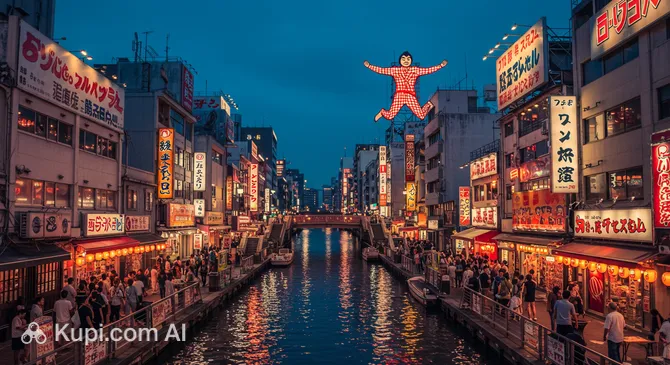
Imagine a place where the city's energy never fades and the air is filled with the mouth-watering aromas of grilled delicacies. Dotonbori is a legendary district located in the city of Ibaraki, which is rightfully considered the gastronomic and entertainment heart of Japan. Stretching along the canal of the same name, this neighborhood is a kaleidoscope of giant neon signs, futuristic billboards, and endless rows of restaurants.
Dotonbori
Dotonbori. Иллюстрация. Источник: Kupi.com AI

The main symbol of this place is the famous Glico Man—a neon figure of a running athlete that has adorned the canal bank since 1935. Dotonbori is not just a street, but a true open-air museum dedicated to modern Japanese pop culture and the cult of food. Here, the traditions of the old city harmoniously coexist with the vibrant madness of nightlife, creating a unique atmosphere that cannot be confused with anything else.

Tourists from all over the world flock here to see the famous mechanical crab above the entrance to the Kani Doraku restaurant and enjoy the reflection of thousands of lights in the canal waters. This place is perfect for those who want to feel the true pulse of a Japanese metropolis, take incredible photos, and immerse themselves in an atmosphere of endless celebration.

Contacts

To clarify information about events or the operation of specific establishments in the area, you can use the official contact details of the Dotonbori Association. Although it is an open city district, the administration oversees order and tourist information.

How to contactContact
Address1 Chome-9 Dotonbori, Chuo Ward, Osaka, 542-0071, Japan
Phone+81 6-6211-4542
Websitewww.dotonbori.or.jp

What to Do

The main reason to visit Dotonbori is, of course, a gastronomic journey. You must try the local classics: takoyaki (tender dough balls with octopus pieces), okonomiyaki (savory Japanese pancakes), and fresh ramen. Don't miss the chance to take a photo next to the giant moving crab at the Kani Doraku restaurant—it's just as essential as tasting the seafood itself.

Take a walk across the pedestrian Ebisubashi Bridge, which is the best vantage point for viewing the glowing signs. In the evening, when the lights come on, the area transforms into a set from a sci-fi movie. To see all this splendor from a new perspective, you can take a small canal cruise on a river boat—this will allow you to see the architectural details and advertisements without the rush and the crowds.

For those seeking a bit of tranquility amidst the bustle, turn into the narrow Hozenji Yokocho alley. Here you will find an ancient 17th-century temple covered in green moss and cozy traditional shops that transport visitors back to the era of the samurai. Meanwhile, shopping enthusiasts can continue their journey toward the Shinsaibashi covered shopping arcade, home to hundreds of stores for every taste.

Getting There

Getting to this vibrant neighborhood is easy thanks to the well-developed transport network. The main hub is Namba (Nanba) Station, which serves several subway lines: Midosuji, Sennichimae, and Yotsubashi. Nearby is also JR Namba station for those using Japan Railways. From any of these exits, the walk to the canal takes only 2 to 5 minutes.

If you are coming from Kansai Airport, it is most convenient to take the Nankai Airport Express, which will take you straight to Namba Station in about 40 minutes. Another option is the JR Haruka train to Tennoji Station, where you can transfer to the Midosuji subway line. The area is also easily accessible on foot from the popular Shinsaibashi shopping station.

For those who prefer the comfort of a taxi, a trip from the city center will take about 10–15 minutes. However, keep in mind that the Dotonbori area itself is primarily pedestrian, and parking spots in the vicinity are limited. Therefore, public transport remains the fastest and most reliable way to find yourself at the heart of the action at: 1 Chome-9 Dotonbori, Chuo Ward, Osaka.

Ближайший город: Ibaraki

History & Facts

The history of this famous place dates back to the early 17th century. In 1612, a local entrepreneur named Yasui Doton invested all his savings into an ambitious project—the construction of a canal to connect the Umezu and Kizugawa rivers for trade. Unfortunately, Doton himself died during the Siege of Osaka in 1615, but his relatives completed the work. In honor of his labor, the new canal was named Dotonbori ("Doton's Canal").

In 1621, the government (Tokugawa shogunate) officially designated the south bank of the canal as an entertainment district. This decision transformed an ordinary trading street into a cultural phenomenon: by the mid-17th century, there were six kabuki theaters and five bunraku puppet theaters operating here. It was during this period that the foundation was laid for Dotonbori's modern atmosphere as a place where the celebration never stops.

Over time, the theatrical stages were supplemented by countless eateries, turning the district into the gastronomic capital of the region. In 1935, another iconic event occurred—the installation of the first Glico Man neon sign, depicting a running athlete. Today, despite the abundance of modern technology, Dotonbori maintains its connection to the past through places like the Hozenji Temple, reminding visitors of old Japan in the midst of a glowing metropolis.

Time Needed

A first look at this district usually takes 2 to 4 hours. This is plenty of time to take a leisurely stroll along the canal, snap iconic photos against the neon signs, and try several types of famous street food. If you plan to visit in the evening, allow extra time for queues at popular restaurants, which can be quite long.

If you want a deeper experience—for example, if you plan to take a canal cruise, browse the shopping centers of the neighboring Shinsaibashi district, or enjoy a full dinner at a specialty restaurant—it is better to set aside half a day or an entire evening. Dotonbori's nocturnal atmosphere is so captivating that many tourists spend 5-6 hours here just soaking in the lights and the energy of the crowd.

Working Hours

The Dotonbori district itself is a public space accessible 24/7. You can visit any time of day or night to admire the canal or architecture. However, keep the establishments' schedules in mind: most restaurants and shops open around 10:00 or 11:00 AM and operate until 11:00 PM, while some bars and snack stalls stay open late into the night or even until morning.

District Opening Hours (Street Access):

  • Monday: 24 hours
  • Tuesday: 24 hours
  • Wednesday: 24 hours
  • Thursday: 24 hours
  • Friday: 24 hours
  • Saturday: 24 hours
  • Sunday: 24 hours
The peak of activity and the most beautiful illumination occur in the evening, starting from dusk.

Круглосуточно

Nearby

After visiting the bright Dotonbori, it's worth checking out other interesting places in the area. Exploring neighboring districts will allow you to see different facets of Japanese culture—from modern theme parks to traditional hot springs.

NameDistance
Pure0.1 km
Shinsaibashi PARCO0.6 km
Apollo 1 Building1.1 km
Cordia Osaka Hommachi Hotel1.8 km
Canvas Lounge Kitahama2.5 km
Bali Tower Osaka Tennoji2.7 km
Nakanoshima Museum of Art, Osaka2.8 km

Reached the end of the page?

That means the route is fully explored