Support

Kaminari mon

About

Kaminarimon is not just an entrance to the ancient Senso-ji temple complex, but a true cultural symbol of Tokyo and one of the most recognizable landmarks in all of Japan. Officially called the "Thunder Gate," it stands majestically in the Asakusa district, welcoming visitors with a massive, vibrant scarlet wooden structure that symbolizes the transition from the bustling modern metropolis into a realm of ancient traditions.

The main visual magnet of the gate is the giant red chochin lantern hanging right in the center. Its dimensions are truly impressive: nearly four meters tall and weighing approximately 670 kilograms. On either side of the passage, the formidable guardians—statues of the wind god Fujin and the thunder god Raijin—stand in special alcoves. The Japanese believe these figures protect the sacred land from disasters and evil forces, creating an aura of peace and safety.
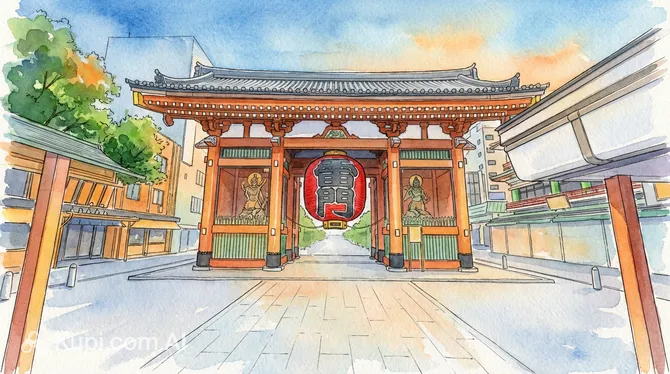
Kaminarimon. Illustration.
Source: Kupi.com AI

Traveler photos:

Stepping through Kaminarimon, you enter a fascinating world where history comes alive in every detail. Right behind the gate begins the famous Nakamise street, filled with the aromas of fresh pastries and lined with stalls selling traditional crafts. It is the perfect place for those who want to feel the spirit of old Edo and see the harmonious coexistence of age-old rituals and the dynamic rhythm of modern life.

Contacts

When planning a walk to the legendary Kaminarimon gate in Tokyo, it is worth noting that this site is part of an active temple complex. Before your visit, we recommend checking the official Senso-ji temple website for the latest information to ensure you don't miss any special rituals or seasonal festivals.

As the Asakusa district is extremely popular with travelers from all over the world, checking details in advance will help you choose the most comfortable time for your visit and avoid the largest crowds.

How to contactContact
Address2-chōme-3-1 Asakusa, Taito City, Tokyo 111-0032, Japan
Phone+81 3-3842-0181
Websitewww.senso-ji.jp

What to Do

The first thing to do at the Kaminarimon gate is to stop and take in the details of the giant red lantern. Don't forget to look underneath it: on the bottom of the lantern is an intricate wood carving depicting a dragon. After taking the obligatory photos against the backdrop of the gate and the statues of the gods of thunder and wind, allow yourself to just stand in the flow of people, feeling the energy of this place, which has remained a center of attraction for pilgrims for a thousand years.

Just past the gate, a gastronomic adventure awaits you on Nakamise street. Be sure to try ningyoyaki—small sponge cakes shaped like Asakusa landmarks filled with sweet bean paste—or freshly roasted senbei rice crackers. Here you can also pick out authentic gifts: from elegant folding fans and tenugui cotton towels to traditional dolls and good luck charms.

If your visit coincides with one of the major festivals, such as Sanja Matsuri, you will witness a spectacular sight—parades with mikoshi portable shrines accompanied by live music and dancing. On ordinary days, you can go up to the observation deck of the tourist center opposite to see the perfect geometry of the complex, or take part in traditional omikuji fortune-telling on the temple grounds to see what fate has in store for you.

Getting There

The legendary Kaminarimon gate is located in the heart of the historic Asakusa district at: 2-chōme-3-1 Asakusa, Taito City. The fastest and most reliable way to get here is by using the city's subway. You will need Asakusa station, which is served by the Ginza, Asakusa, and Tsukuba Express lines. Use Exit 1, and the famous red lantern will appear before you after just a couple of minutes' walk.

If you are traveling from Tokyo Station, the trip on the Ginza line will take about 15–20 minutes. For travelers who prefer surface transport, the TO-EI system buses stop near the Asakusa View Hotel. For those arriving from international airports, a taxi ride will take from 40 minutes (from Haneda) to an hour and a half (from Narita), depending on traffic conditions.

One of the most scenic options is the walking route from the Tokyo Skytree. A walk across the bridge over the Sumida River takes about 20 minutes and allows you to enjoy the contrast between the city's ultra-modern architecture and the atmosphere of old Japan. To avoid the rush, try to plan your arrival for early morning or evening when the flow of tourists thins out a bit.

Nearest city: Tokyo

History & Facts

The history of Kaminarimon, or the "Thunder Gate," dates back to the distant past—it was erected in 942 at the behest of the military leader Taira no Kiyomasa. Originally, the gate was located elsewhere, near Komagata, and it was only in 1635 that it found its current home at the entrance to Senso-ji Temple. It was then that the majestic statues of the gods Fujin and Raijin appeared here, designed to protect the sanctuary from fires and floods.

The gate's fate was a difficult one: over the centuries, it repeatedly fell victim to fire. The fires of 1757 and 1865 were particularly devastating, after which the gate was not rebuilt for a long time. Kaminarimon acquired its modern appearance in 1960, thanks to a generous donation from Konosuke Matsushita, the founder of the Panasonic corporation. As a token of gratitude, his name is immortalized on the famous red lantern, which, following tradition, is completely replaced every ten years.

The Senso-ji complex itself is shrouded in beautiful legends. It is said that in 628, two fisherman brothers caught a golden statue of the goddess of mercy, Kannon, in the Sumida River. No matter how many times they returned it to the water, the statue invariably ended up back in their nets. This miracle led to the founding of the temple, which for centuries has remained a symbol of the resilience and spiritual strength of Tokyo residents.

Time Needed

To see the Kaminarimon gate itself, take classic photos against the backdrop of the giant lantern, and examine the statues of the deities, you will need about 30–40 minutes. However, this site is rarely visited separately from the adjacent shopping street and temple complex, so it is worth planning your time with a margin.

If you want to take a leisurely stroll through the Nakamise shopping stalls, pick out souvenirs, and visit the main building of Senso-ji Temple, allow at least 2–3 hours for your visit. On weekends and holidays, when the area fills with thousands of pilgrims and tourists, your visiting time may increase due to queues at street food stalls and popular photo spots.

Working Hours

The Kaminarimon gate is open to visitors around the clock, making it an ideal place for a stroll at any time. Late in the evening, when the bulk of tourists disappears, the gate and surrounding structures are beautifully illuminated, creating a mystical and solemn atmosphere that is completely different from the daytime hustle and bustle.

Although the gate itself is accessible 24/7, keep in mind the operating hours of Senso-ji Temple and the shopping stalls. The main temple pavilions are usually open from 6:00 to 17:00 (hours may be shorter in winter), and the souvenir shops on Nakamise Street begin to close after 18:00–19:00. If you want to enjoy the silence, the best time to visit is early morning or the hours after sunset.

Open 24 hours

Nearby

A visit to the Kaminarimon gate is just the beginning of your immersion into the unique atmosphere of the Asakusa district. Right nearby is the Asakusa Culture Tourist Information Center, whose futuristic architecture is an attraction in itself; the center's observation deck offers a magnificent view of the entire temple complex from above.

Continuing your walk, you will inevitably find yourself on the bustling Nakamise Shopping Street, where you can find the best Japanese souvenirs and traditional treats. Exploring the surroundings will also lead you to the majestic Hozomon Gate and the famous five-story pagoda, which together create the unique architectural ensemble of Tokyo's historic center.

NameDistance
National Museum of Nature and Science1.9 km
The National Museum of Western Art1.9 km
Tokyo National Museum2 km
Tokyo Imperial Palace4.9 km
Nijubashi Bridge5.2 km
Kidzania Tokyo6.1 km
teamLab Planets TOKYO6.9 km

Reached the end of the page?

That means the route is fully explored