Support

National Museum of Nature and Science

About

The National Museum of Nature and Science is one of the most significant and extensive scientific centers in Tokyo, located in the historic Ueno Park. This museum in Japan opens up a fascinating world of evolution for guests, ranging from the planet's most ancient inhabitants to the most complex modern technologies. Here, academic rigor is wonderfully combined with interactivity, making it a popular destination for both serious researchers and curious families.
\n\n
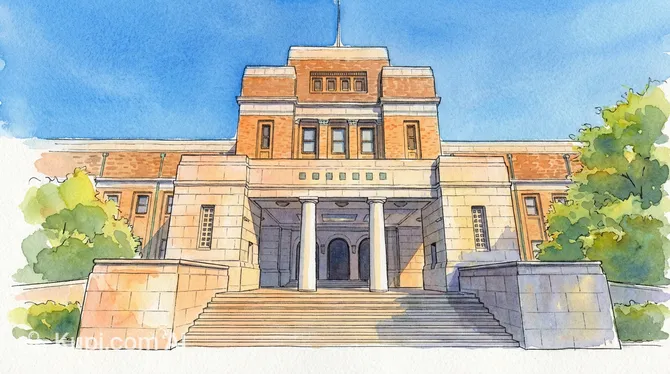
National Museum of Nature and Science. Illustration.
Source: Kupi.com AI

Traveler photos:

\n\n

The exhibition is divided into two monumental wings. The Japanese Gallery, housed in a historic 1930s building, focuses on the unique nature of the Japanese archipelago and the history of its ecosystems. In contrast, the modern Global Gallery is dedicated to the Earth as a whole: here, you can see grand dinosaur skeletons, including a Tyrannosaurus rex, and learn how scientific discoveries have changed human life.

\n\n

Among the museum's unique features are its Neo-Renaissance building, recognized as a cultural heritage site, and the unusual spherical Theater-360. Furthermore, it is here that you can see the taxidermy of the legendary dog Hachiko, who became a global symbol of loyalty. The museum offers more than just viewing exhibits; it provides a full immersion into science through experiments and observations of wildlife in the rooftop garden.

Contacts

To ensure your visit to the National Museum of Nature and Science is as smooth as possible, we recommend checking the official website or calling ahead for the latest information. Opening hours and access conditions may vary depending on the season or special exhibitions.

How to contactContact
Address7-20 Uenokōen, Taito City, Tokyo 110-8718, Japan
Phone+81 50-5541-8600
Websitewww.kahaku.go.jp

What to Do

Within the walls of the National Museum of Nature and Science, an exciting journey through the ages awaits you. In the Japanese Gallery, visitors can explore the rich world of the Japanese islands, from ancient artifacts to taxidermy of local animals and specimens of unique flora. Special attention should be paid to the architecture of the building itself and its historic halls, which transport you back to the atmosphere of the early 20th century.

\n\n

The Global Gallery invites you on a planetary-scale exploration. Here, you can literally come face-to-face with giant dinosaurs, study the mechanics of spacecraft, and take part in interactive science experiments. Children and adults alike will enjoy the zone where they can conduct their own experiments, learning the laws of physics and biology in practice.

\n\n

A must-see item on the agenda is Theater-360—a panoramic cinema where viewers stand on a bridge inside a massive sphere, with images projected all around them to create a total sense of immersion. After a busy tour of the exhibits, it's pleasant to head up to the roof of the Global Gallery, where a medicinal herb garden featuring about 160 plant species is laid out, offering a great view of Ueno Park.

Getting There

The National Museum of Nature and Science is located at 7-20 Uenokōen, Taito City, in the northeastern part of the famous Ueno Park. The fastest and most convenient way to get here is by using the Tokyo subway. The nearest stations are Ueno Park (Chiyoda Line) or Uguisudani (Yamanote Line), from which a walk through the picturesque park takes no more than 5–10 minutes. The major Ueno station (JR Yamanote and Keisei Main Line) is also a 15-minute walk away.

\n\n

If you are traveling from central Tokyo, such as from Tokyo Station, the trip on the JR Yamanote Line to Ueno Station takes only about 5–7 minutes. While you can reach the museum by taxi or bus, keep in mind that Ueno Park is an extremely popular destination and parking is very limited, making public transport the preferred choice.

\n\n

Once in Ueno Park, head toward the northeast sector. The museum is located near the zoo and the National Museum of Art; its monumental Neo-Renaissance building is visible from a distance, making navigation easy even without a map.

Nearest city: Tokyo

History & Facts

The history of this scientific center dates back to 1871, when it opened as one of the first permanent exhibitions in Japan under the auspices of the Ministry of Education. The museum displayed its first exhibits, which included rare specimens of flora, fauna, and cultural artifacts, in the Taiseiden Hall of the Yushima Seido Buddhist temple. It wasn't until 1882 that the collection found its permanent home in Ueno Park, where it has continued to grow and evolve for over a century.

\n\n

A landmark stage was the completion of the Main Building in 1930. Designed in an elegant Neo-Renaissance style, the building itself is a work of art. Interestingly, when viewed from above, the building resembles the silhouette of an airplane—a powerful symbol of the cutting-edge technology of that era. In 2008, this architectural marvel was officially recognized as a National Cultural Heritage site.

\n\n

At the turn of the 21st century, the museum underwent a massive modernization, transforming into a high-tech scientific hub. The modern Global Gallery opened in 1999, and the unique spherical Theater-360 began operation in 2006. Throughout its long history, the institution changed its name several times until the final name—National Museum of Nature and Science—was established in 2007.

\n\n

Today, the museum houses millions of exhibits detailing the development of life on the planet and the achievements of human thought. Managed by an independent administrative institution, it remains the country's primary scientific archive, blending the deep traditions of Imperial Japan with a bold vision for a technological future.

Time Needed

To explore both main galleries without rushing, catch a show at Theater-360, and walk through the roof garden, we recommend setting aside 3 to 5 hours. The museum is vast, and the abundance of interactive exhibits often leads visitors to spend more time at the displays than initially planned.

\n\n

If you are planning a visit with children or are a dedicated science enthusiast wanting to study every diorama in detail, it is worth allocating nearly a full day—about 6–7 hours. Also, consider the site's high popularity: small queues can form at the entrance and the most popular exhibits on weekends and public holidays.

Working Hours

The National Museum of Nature and Science in Tokyo is open to visitors from Tuesday to Sunday. The museum doors open at 9:00 AM and close at 5:00 PM. Please note that Monday is a holiday (except when national holidays fall on that day).

\n\n

To make your visit productive, remember that last entry to the building is allowed no later than 30 minutes before closing, and ticket offices stop selling tickets at 4:30 PM. We recommend arriving in the morning to have enough time to explore all the galleries without rushing.

DayWorking hours
MondayClosed
Tuesday9:00 – 17:00
Wednesday9:00 – 17:00
Thursday9:00 – 17:00
Friday9:00 – 17:00
Saturday9:00 – 17:00
Sunday9:00 – 17:00

Nearby

The museum's location in the heart of Ueno Park offers travelers plenty of additional opportunities. This area is the cultural epicenter of Tokyo, where the city's best galleries and historical monuments are concentrated just steps away from each other.

\n\n

After immersing yourself in the world of natural sciences, you can easily change the pace by visiting the National Museum of Western Art or the magnificent Tokyo National Museum. A stroll through Ueno Park will also reveal ancient temples, picturesque paths, and interactive zones that make this location a must-visit on any tourist itinerary.

NameDistance
The National Museum of Western Art0.1 km
Tokyo National Museum0.3 km
Kaminarimon1.9 km
Tokyo Imperial Palace4.1 km
Nijubashi Bridge4.5 km
Suga Shrine5.9 km
teamLab Borderless6.7 km

Reached the end of the page?

That means the route is fully explored