Support

Imperial Palace

About

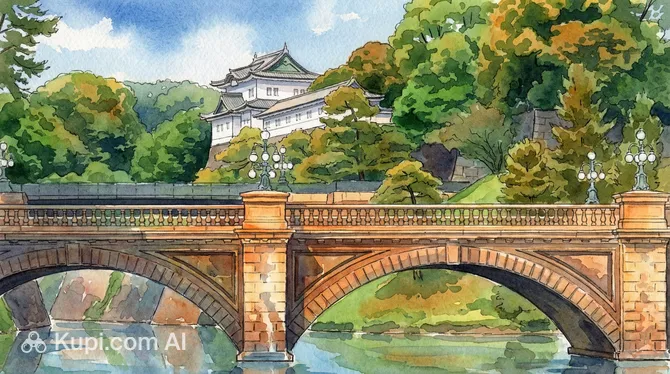
The Imperial Palace in Tokyo is more than just the monarch's primary residence; it is the true heart of Japan. Located in the very center of the capital on the site of the former Edo Castle, this palace and park complex is the official home of Emperor Naruhito. The complex is a unique oasis of peace and greenery, surrounded by majestic stone walls and deep water-filled moats.

Tokyo Imperial Palace. Illustration.
Source: Kupi.com AI

Traveler photos:

The palace's architectural style harmoniously blends centuries-old Japanese traditions with understated modern design. In the sprawling Chiyoda district, ceremonial halls for state receptions stand alongside elegant pagodas and the famous stone bridges. This site serves as a primary symbol of Japanese statehood and the unbreakable link between eras, where the history of ancient shoguns meets the modern life of the Imperial family.

Visitors are drawn here by the atmosphere of nobility and tranquility. The ensemble includes the State Palace, throne rooms, and picturesque park areas that create a unique landscape. Despite its status as an active residence, parts of the complex are open to guests, offering a chance to touch the living history of one of the world's oldest monarchies.

Contacts

When planning a visit to the Imperial Palace, which graces the center of Tokyo, be sure to check the latest information regarding access to the grounds. As the site is a working residence, operating hours and visitation conditions may change depending on state events held in Japan.

For your convenience, we recommend checking tour booking details in advance to ensure your visit to the Japanese capital's main landmark is as comfortable as possible.

How to contactContact
Address1-1 Chiyoda, Chiyoda City, Tokyo 100-8111, Japan
Phone+81 3-3213-1111
Websitesankan.kunaicho.go.jp

What to Do

Visiting the heart of the Japanese capital offers a unique experience that requires some preparation: access to the inner grounds of the residence is only possible as part of an organized group with prior registration. During the tour, you can see architectural masterpieces such as the Pine, Bamboo, and Plum Throne Chambers, where ceremonial state events are still held today.

For those who prefer exploring on their own, the magnificent Imperial Palace East Gardens are open to the public. Here, you can study traditional Japanese landscape design, admire koi ponds, and see the ruins of the old castle's main tower. It is the perfect place to feel the contrast between the peaceful garden and the modern skyscrapers rising beyond its borders.

A visit to the outer fortifications is a must. Don't miss the chance to photograph the famous Nijubashi Bridge, whose double reflection in the water creates one of the country's most recognizable views. Remember that it is customary to maintain silence and a respectful demeanor on the palace grounds, preserving the solemn atmosphere of this sacred place for the Japanese people.

Getting There

The Japanese monarch's residence is located at 1-1 Chiyoda, in the heart of the capital. The most convenient way to reach it is by subway: the nearest station, Otemachi (Chiyoda, Marunouchi, Hibiya, and Tozai lines), is just a 5–10 minute walk from the main gates. Other convenient exit points include Sakuradamon station (Hanzomon line) or Nijubashi-mae (Chiyoda line).

If your journey begins from the city's central railway hub (Tokyo Station), the walk to the palace ensemble will take about 10–15 minutes. You can also use a taxi, but the subway is usually faster due to heavy city traffic. Using a private car is not recommended, as finding available and affordable parking in the Chiyoda district is extremely difficult.

Nearest city: Tokyo

History & Facts

The history of this iconic site began in 1457 with the laying of the Edo Castle foundation. From 1603 to 1867, the fortress served as the stronghold of the Tokugawa shogunate, acting as the country's actual center of power. At that time, the castle was adorned with a majestic five-story tower standing 51 meters high—the tallest structure in the country—surrounded by massive walls and a complex system of defensive moats.

In 1868, with the start of the Meiji era and the relocation of the capital to Tokyo, the castle became the official imperial residence. Most of the original wooden structures did not survive to the present day due to fires and destruction during the mid-20th century. The palace complex's modern appearance took shape in the 1960s, when the main buildings were carefully reconstructed using modern materials while preserving the aesthetics of traditional Japanese architecture.

Today, the complex includes not only the Imperial family's private living quarters, completed in 1961, but also the grand State Palace. This architectural ensemble, built by the Takenaka Corporation, remains a living testament to the continuity of Japanese history and the permanence of state traditions.

Time Needed

To fully experience the Imperial Palace complex, travelers are recommended to set aside 2 to 3 hours. If you plan to join an official tour of the inner grounds, the tour itself takes about an hour and a half; however, you should allow extra time for mandatory security checks and group registration.

For those who prefer strolling freely through the gardens, the visit may take longer. Viewing the landscape compositions, historical gates, and massive walls requires a leisurely pace, especially during the cherry blossom season or the autumn foliage transformation, when the views become particularly picturesque.

Working Hours

Access to the Imperial Palace grounds for guided tours is available from Tuesday to Saturday. Tours are usually held twice a day: in the morning (from 9:00 to 11:15) and in the afternoon (from 13:30 to 14:45). Mondays and Sundays are official holidays when the inner courtyards are closed to the public.

Since group sizes are strictly limited, we highly recommend booking your spot through the official Imperial Household Agency website in advance. Also, keep in mind that due to state ceremonies or official visits, the schedule may change without prior notice.

DayWorking hours
MondayClosed
Tuesday9:00 – 11:15, 1:30 – 14:45
Wednesday9:00 – 11:15, 1:30 – 14:45
Thursday9:00 – 11:15, 1:30 – 14:45
Friday9:00 – 11:15, 1:30 – 14:45
Saturday9:00 – 11:15, 1:30 – 14:45
SundayClosed

Nearby

A stroll around the Imperial residence allows you to dive deeper into the atmosphere of the Japanese capital and see unique historical monuments. One of the most recognizable landmarks is the elegant Nijubashi Bridge, often called the palace's calling card. Nearby, you can also see the monumental Ote-mon Gate and the legendary Sakurada-mon Gate, which have preserved the grandeur of the old Edo Castle.

If you are interested in art and culture, be sure to stop by the National Museum of Modern Art, Tokyo, located just a few minutes' walk away. The juxtaposition of ancient fortress walls and avant-garde exhibition spaces creates the unique contrast that makes exploring this area truly fascinating.

NameDistance
Nijubashi Bridge0.6 km
Suga Shrine2.7 km
teamLab Borderless2.7 km
Rokusan Angel (Burlesque Tokyo)2.9 km
The National Museum of Western Art3.9 km
National Museum of Nature and Science4.1 km
Nezu Museum4.1 km

Reached the end of the page?

That means the route is fully explored