Support

Nara Park

About

Imagine endless green meadows and ancient groves where hundreds of graceful inhabitants roam freely among ancient shrines. Nara Park is one of the most iconic and picturesque locations that Japan is proud of. Situated in close proximity to the city of Ibaraki, this park serves as both the region's lungs and its spiritual heart.
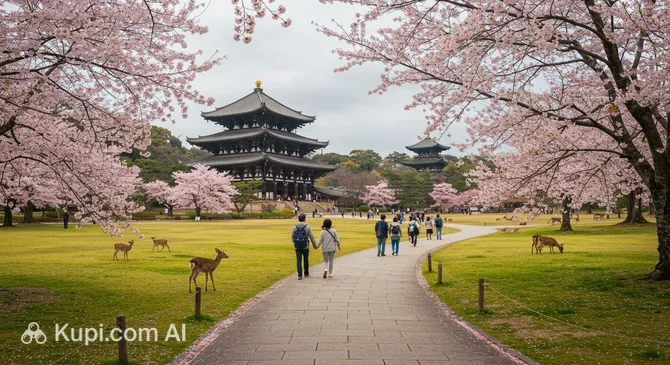
Nara Park
Nara Park. Иллюстрация. Источник: Kupi.com AI

The park occupies a huge area at the foot of Mount Wakakusa and combines natural wonders with great historical monuments. Here you will find such masterpieces of world architecture as the Todai-ji temple and the Kasuga-taisha shrine. It is a place where history, religion, and nature intertwine into a single harmonious ensemble.

The main symbol and top attraction of the park are the tame sika deer. They are recognized as a national treasure and are considered sacred animals. Interacting with these friendly creatures gives tourists unique emotions, turning an ordinary walk into a true adventure.

Contacts

For the latest information regarding events and visiting rules, you can refer to the official data. The park administration maintains transparency for all categories of tourists.

How to contactContact
AddressNara, Japan
Phone+81 742-22-0375
Websitewww3.pref.nara.jp

What to Do

The main activity that travelers flock here for is feeding the local deer. Special shika-senbei crackers are sold throughout the park. The deer are so used to the attention that they often politely bow in hopes of receiving a treat, creating wonderfully touching moments for photos.

In addition to interacting with the animals, it is definitely worth visiting the architectural monuments included in the UNESCO World Heritage list. The grand Todai-ji temple will amaze you with the majesty of its giant bronze Buddha statue, while a walk to the Kasuga-taisha shrine will be remembered for the thousands of ancient stone lanterns decorating the forest paths.

For art lovers, the Nara National Museum opens its doors, housing rare collections of Buddhist sculpture and artifacts. After a busy program, you can simply relax by Sarusawa Pond, admiring the reflection of the five-story pagoda of the Kofuku-ji temple, or enjoy the silence in the shady alleys of the park.

Getting There

Reaching the park is easy thanks to the well-developed transport infrastructure. The most popular way is to take a train to the Kintetsu Nara railway station, which is just a 5–10 minute walk from the main avenues. If you arrive at JR Nara station, the walk to the entrance will take about 20 minutes through scenic city streets.

For travelers from Kyoto or Osaka, the train journey takes between 30 and 45 minutes, making the location perfect for a day trip. Upon arrival, simply follow the signs or use a taxi, which are readily available at the stations. City buses also run regularly from the city center, taking visitors directly to the main attractions within the park area.

Ближайший город: Ibaraki

History & Facts

Nara Park was officially established in 1880, but its history is inextricably linked to the 8th century, when this area was the center of the country's political and spiritual life. It was then that Nara served as the capital, and many of the temple complexes within the park were founded over a thousand years ago.

The famous deer hold a special place in local culture. According to ancient legend, the god Takemikazuchi-no-Mikoto arrived in these lands riding a white deer to protect the city. Since then, the animals have been granted the status of sacred messengers of the gods. Until the mid-17th century, killing a deer in these areas could be punishable by death, highlighting their unique historical status.

In the modern era, the deer are recognized as a national treasure of Japan. Although their religious status was officially changed to a natural one after the mid-20th century, residents and guests continue to treat them with deep respect. Today, this place is a rare example of the harmonious coexistence of ancient history and wildlife.

Time Needed

A typical visitor will need about 3–4 hours to take a leisurely stroll through the main avenues and interact with the deer. This is the optimal time for a brief introduction to the atmosphere and a visit to one of the main temples.

However, if you plan to study all the UNESCO sites in detail, visit the National Museum, and enjoy the remote corners of the park, we recommend dedicating a full day. The park's territory is vast, and rushing might prevent you from feeling the peace and majesty for which this legendary place is famous.

Working Hours

Visiting the park grounds is possible 24/7, which allows guests to enjoy a walk at any convenient time, whether it's early dawn or a quiet evening. Entrance to the park itself is completely free for everyone.

However, it is important to remember that individual attractions, such as the Todai-ji and Kofuku-ji temples and the National Museum, operate on their own schedules. Most often, they are open from 8:00 AM to 5:00 PM, so it is better to plan visits to cultural sites for the first half of the day.

Круглосуточно

Nearby

Exploring the areas around the park can significantly enrich your trip experience. Nearby, you will find many sites offering both cultural leisure and modern entertainment for the whole family.

NameDistance
Shōsō-in Treasure House0.9 km
Nara Hotel1 km
Heijō Palace Site Historical Park4.5 km
Mahoroba Health Park Family Pool10.8 km
Ikoma Sanjo Amusement Park15 km
Akagi Ramen28.8 km
Osaka Castle28.9 km

Reached the end of the page?

That means the route is fully explored