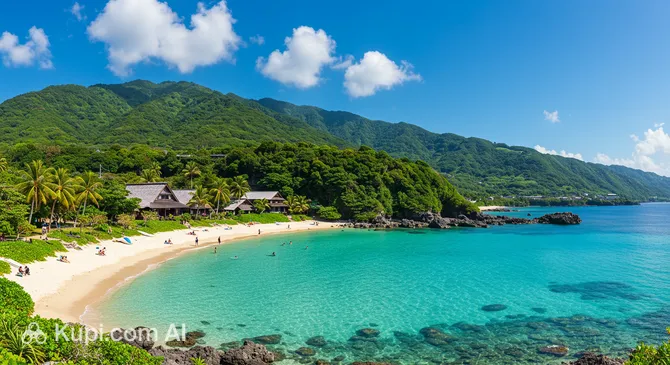
While Tokunoshima is primarily celebrated for its raw natural beauty, the island also features well-maintained parks and cultural institutions that offer deeper insights into its heritage and subtropical environment. Visitors can enjoy a mix of scenic recreational areas perfect for relaxation and small but informative museums that preserve the island's unique history and traditions.
Aze Prince Beach Seaside Park is one of the island's most popular recreational spots, located along the northeast coast. This extensive park combines the natural beauty of a coral reef coastline with convenient facilities, including campsites, picnic areas, and walking paths. It is an ideal location for families and outdoor enthusiasts who wish to swim in the crystal-clear waters of Prince Beach and then relax on the grassy lawns. During the summer, the park comes alive with locals enjoying barbecues and the vibrant colors of the coral sea.
For those seeking panoramic views, Amagi Comprehensive Sports Park (often referred to as Sunset Hill) in Amagi Town is a must-visit. Situated on elevated ground, the park offers sweeping vistas of the East China Sea and is renowned as one of the best spots on the island to watch the sunset. The grounds feature expansive playgrounds for children, sports facilities, and walking trails lined with hibiscus and palm trees, making it a perfect place for a leisurely afternoon stroll or a morning jog.
To understand the island's rich cultural tapestry, a visit to the Isen Town History and Folklore Museum is highly recommended. Located in the southern town of Isen, this museum focuses on the daily lives of the islanders throughout history. Exhibits include traditional farming tools used for sugar cane cultivation, artifacts related to the island's famous bull sumo (Togyu), and displays honoring Shigechiyo Izumi, the long-lived resident who brought global attention to Tokunoshima. It provides a fascinating look at the resilience and community spirit of the local people.
Another key cultural venue is the Amagi Town History and Folklore Museum (Yunoon). This facility offers a broader perspective on the natural history and archaeological findings of the northern region. Visitors can explore displays featuring ancient pottery, fossils, and information about the indigenous wildlife, including the rare Amami Rabbit. The museum serves as an educational hub where travelers can learn about the delicate ecosystem that defines this part of Japan.
In terms of architectural and cultural landmarks, the Tokunoshima Bullfighting Domes stand out as significant structures. While bullfighting often takes place outdoors, the covered domes, such as the one in Tokunoshima Town, are impressive venues designed to host thousands of spectators. These arenas are the heart of the island's social life during tournaments, reflecting the deep passion the community holds for this centuries-old tradition.
For a quieter, authentic experience, seek out the small village shrines tucked away in the residential districts or near the coast. These simple, often open-air sacred spaces are surrounded by banyan trees and offer a peaceful atmosphere where you can observe the local practice of nature worship and ancestor veneration, far removed from the main tourist trail.