Support

Zhairem

About

Welcome to Zhairem, a distinctive settlement located in the heart of the Ulytau Region. Situated amidst the vast and open landscapes of Kazakhstan, this town offers a unique glimpse into the industrial pulse and the quiet beauty of the Central Asian steppe. While it is primarily known for its rich mineral deposits, Zhairem possesses a calm atmosphere that contrasts with the bustling energy of the country's major metropolises.

Geographically, the town is positioned in the central part of the country, surrounded by endless horizons that characterize this part of the world. With a modest population of approximately 7,000 residents, it maintains a close-knit community feel. The local climate is sharply continental, featuring warm summers and crisp, cold winters, which shapes the resilient character of the region.
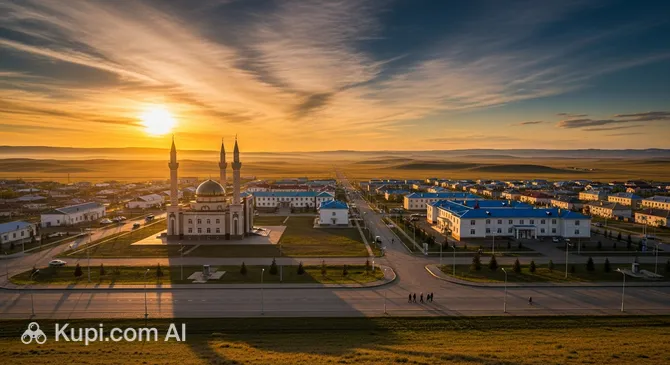
Zhairem. Source: Kupi.Binoculars

The development of the town is closely tied to its natural resources. To understand how this settlement evolved from a geological prospect into a key industrial center, you can explore the history of Zhairem. Its foundation and growth are a testament to the significant mining efforts that have played a crucial role in the regional economy.

For travelers venturing off the beaten path, Zhairem offers a few unique features. The town is a fascinating destination for those interested in industrial tourism, providing a perspective on the extraction of polymetallic ores and manganese. Additionally, the surrounding steppe scenery offers a serene backdrop for photography and reflection, especially during the blooming spring season or the golden autumns.

Whether you are passing through the Ulytau Region or have a specific interest in the industrial heritage of Central Asia, Zhairem welcomes you to experience its authentic local lifestyle and the rugged beauty of its environment.

Weather Overview

The climate in this part of the Ulytau Region is distinctly continental, featuring sharp contrasts between the seasons. To help you plan your trip and pack appropriately, it is advisable to check the current weather in Zhairem before your departure. Generally, the town experiences significant temperature shifts, moving from freezing lows in the winter to substantial heat during the peak of summer.

Summer is the warmest time of year, particularly from June to August, when average temperatures range between 21.2°C and 23.9°C. July is typically the hottest month, with daily maximums reaching up to 30.6°C. This season is also quite dry, with very low precipitation levels, making it suitable for exploring the outdoors.

Winters, spanning from December through February, are cold and require warm clothing. Average temperatures often drop to around -12.4°C in January, with minimums sinking as low as -16.8°C. Expect warm, dry summers and cold winters with minimal precipitation throughout the year.

Interesting Facts

Beyond its main industrial attractions, Zhairem holds many fascinating secrets that reveal the unique character of this remote settlement. From its geological treasures to its proximity to ancient migration routes, the town offers more than meets the eye.

  • Global Geological Significance: Zhairem is situated atop one of the largest deposits of manganese and barite in the world. These vast mineral reserves are vital not only to the local industry but also position Kazakhstan as a key player in the global market for steel production components.

  • Gateway to the "Hungry Steppe": The town serves as a northern outpost near the Betpak-Dala, a massive semi-desert region known as the "Hungry Steppe." This area is famous for being a habitat for the Saiga antelope, an ancient species that has roamed these plains since the Ice Age.

  • A Purpose-Built Settlement: Unlike cities that evolved over centuries along trade routes, Zhairem is a relatively young town established in the 1970s. It was designed and built specifically to support the mining expeditions, making it a distinct example of Soviet-era industrial planning where function dictated form.

How to Get There

Reaching this remote industrial settlement typically involves a journey through the vast steppes of the Ulytau Region. While the town is well-connected to the country's logistical networks due to its mining activities, passenger options are limited. For a comprehensive plan, you can read more about how to get to Zhairem, including detailed routes and tips.

The city of Zhairem does not have a commercial airport with regular flights, so air travel requires landing in a neighboring city and completing the journey by road. The closest facility is Zhezkazgan Airport (DZN) in the city of Zhezkazgan, located approximately 193 km from Zhairem. The transfer by taxi or bus typically involves a drive of a few hours across the steppe. Alternatively, travelers can use Karaganda Airport (KGF) in Karagandy. Although it is a larger regional hub, it is situated about 276 km away, meaning the subsequent drive will be significantly longer.

For clarity, here is a summary of the main airports:

Airport Name City Passenger Traffic Km from City
Karaganda AirportKaragandyMedium276.3
Zhezkazgan AirportZhezkazganSmall193.1

Traveling by train is another viable option, offering a scenic view of the Central Asian landscape. The most convenient arrival point is Zhomart Station, located in Zhairem itself, just 15.9 km from the center. Another local option is Kyzylzhar Railway Station, which is about 38.1 km away. For those connecting from major lines, you might pass through Zhezkazgan Railway Station in Zhezkazgan, roughly 193 km away, before arranging local transport to your final destination.

Below is a list of railway stations serving the area:

Station City Passenger Traffic Km to Center
Zhezkazgan Railway StationZhezkazganMedium193.6
Zhanaarka Railway StationAtasuMedium117.6
Karazhal Railway StationKarazhalSmall61.5
Kyzylzhar Railway StationZhairemSmall38.1
Zhomart StationZhairemSmall15.9

Main Attractions

While Zhairem is not a traditional tourist hub filled with museums or entertainment centers, it offers a unique perspective for travelers interested in the industrial backbone of Kazakhstan. The town's attractions are deeply rooted in its primary function as a mining center, as well as its location amidst the starkly beautiful Central Asian steppe.

The most prominent feature of the area is the Zhairem Mining and Concentrating Complex. As the economic heart of the settlement, this massive industrial facility defines the local landscape. Visitors traveling near the town can observe the scale of the operations, including the large open-pit mines and the processing infrastructure that extracts lead, zinc, and manganese. It serves as a powerful example of the Soviet-era industrial planning that established many towns in this region.

In the town center, daily life revolves around a few key social landmarks. The House of Culture stands as a focal point for the community, hosting local events and gatherings. Its architecture is typical of the functional style seen in mining towns across the Commonwealth of Independent States. Nearby, you will find the Central Square and small parks where residents spend their leisure time. These areas often feature monuments dedicated to the labor of miners and the history of the settlement.

For those interested in local culture and architecture, the Zhairem Mosque is a notable site. With its modest yet dignified design, it serves the spiritual needs of the local population and offers a quiet space for reflection. The contrast between the religious architecture and the industrial backdrop creates a distinct atmosphere characteristic of the region.

Nature enthusiasts will appreciate the town's proximity to the Betpak-Dala, also known as the "Hungry Steppe." This vast semi-desert territory begins just to the south and offers an endless horizon that is breathtaking in its emptiness. It is a rugged environment that changes colors with the seasons—from the green hues of spring to the golden browns of late summer. The area is also known for its unique flora and fauna, including the rare Saiga antelope which migrates through these plains.

Local Cuisine

The local cuisine in Zhairem is deeply rooted in the culinary traditions of the Kazakh steppe, offering hearty and substantial meals designed to sustain people through the harsh continental climate. Given the town's industrial nature and remote location, the food scene here is unpretentious and authentic, focusing on high-quality locally sourced meat and dairy products rather than elaborate presentation.

The most iconic dish you must try is Beshbarmak, the national dish of Kazakhstan. It consists of boiled meat (usually horse meat, lamb, or beef) served over thin sheets of homemade pasta and topped with an onion sauce called tuzdyk. Another staple is Kuurdak, a rich roast made from freshly slaughtered meat, liver, and other organs, often cooked with potatoes. For a quick but filling meal, locals often enjoy Manty, large steamed dumplings filled with spiced minced meat and onions.

Tea culture is central to social life in Zhairem. Meals are almost always accompanied by hot black tea mixed with milk, served in small bowls. For those looking to taste traditional steppe beverages, Kumys (fermented mare's milk) and Shubat (fermented camel milk) are popular choices. These drinks are slightly sour, fizzy, and are prized for their health benefits, particularly in the hot summer months.

Dining out in Zhairem is a modest affair. You will not find high-end restaurants or international fast-food chains here. Instead, the town is dotted with small, family-run cafes and canteens (stolovaya) that serve home-style cooking at affordable prices. These establishments are where both local miners and visitors gather for lunch. The atmosphere is casual and welcoming, often reflecting the famous hospitality of the region, where a guest is always treated with great respect.

Travel Tips

Visiting a specialized industrial settlement like Zhairem requires a bit more preparation than a typical tourist destination. To ensure your journey to this remote part of the Ulytau Region is comfortable and hassle-free, here are some essential practical tips to keep in mind.

  1. Clothing and Gear: Since the climate is sharply continental, your wardrobe should depend entirely on the season. In summer, the sun in the open steppe is intense, so bring a wide-brimmed hat, sunglasses, and lightweight, breathable fabrics. In winter, thermal underwear, a heavy down jacket, and slip-resistant boots are non-negotiable due to the biting cold and snow. Regardless of the season, sturdy, closed-toe shoes are recommended as pavements can be uneven.

  2. Transportation: Zhairem is a compact town, and you can easily cover most central areas on foot. Public transport options like buses are limited and infrequent. International ride-hailing apps usually do not operate here; instead, locals rely on private taxis or informal lift-sharing. It is best to ask your accommodation or a local contact for the phone number of a reliable local taxi driver.

  3. Finances: The local currency is the Kazakhstani Tenge (KZT). While larger grocery stores may accept cards, cash is king in Zhairem, especially in small convenience stores, canteens, and bazaars. ATMs are available but can be scarce or occasionally out of service, so it is highly advisable to withdraw sufficient cash in a larger city like Zhezkazgan or Karagandy before you arrive.

  4. Health and Safety: Basic pharmacies are available, but they may not operate 24/7. If you require specific prescription medications, bring a full supply with you. The town is generally safe, but keep in mind that tap water may be harsh due to the mineral-rich soil; sticking to bottled water for drinking is the safest choice. In case of a serious medical emergency, you may need to be transported to a larger regional hospital.

  5. Communication: English is rarely spoken in Zhairem. The primary languages are Kazakh and Russian. Downloading an offline translation app and a Russian/Kazakh offline map is crucial. Mobile internet coverage (4G) is generally good within the town limits (providers like Beeline, Kcell, and Tele2), but you should purchase your SIM card in a major city upon arrival in Kazakhstan to ensure it is registered and active before you reach this remote area.

  6. Local Etiquette: The local culture is deeply rooted in Central Asian hospitality. If you are invited into a home, it is customary to remove your shoes at the door. Greetings are important; men typically greet each other with a handshake. Showing respect to elders is paramount—always offer your seat or let them pass first. Refusing a cup of tea can sometimes be seen as impolite, so accept it graciously if offered.

  7. What to Avoid: Do not attempt to enter or photograph the industrial mining zones without explicit permission. These are active work sites with strict security protocols, and unauthorized presence can lead to legal issues. Also, avoid public displays of intoxication, as this is frowned upon in the conservative local community.

  8. Steppe Awareness: If you plan to explore the surrounding steppe, never do so without informing someone of your route and return time. The mobile signal can vanish quickly outside the town, and the vast, featureless landscape can be disorienting for those unused to it.

By keeping these practicalities in mind, you will be well-equipped to navigate the unique environment of Zhairem. Embracing the local pace of life and respecting the town's industrial nature will ensure a rewarding and authentic experience in the Kazakh steppe.

Entertainment & Nightlife

Nightlife in Zhairem is a reflection of its identity as a remote industrial settlement. You will not find bustling nightclub districts, neon-lit boulevards, or high-end cocktail bars here. Instead, the evening atmosphere is quiet, community-focused, and deeply authentic to the lifestyle of the Kazakh steppe. For tourists, this offers a rare chance to experience a pace of life that is dictated not by entertainment trends, but by the rhythms of a working mining town.

The center of social activity in the evenings is undoubtedly the Central Square. As the sun sets, this open space becomes the main gathering point for locals. Families, youth, and off-duty miners come here to stroll, chat, and enjoy the cooler night air. It is the best place to observe local life and immerse yourself in the town's calm vibe. The area is generally well-lit and safe, making it a pleasant spot for a relaxed evening walk under the vast, starry sky of the Ulytau Region.

For cultural entertainment, the House of Culture serves as the town's primary venue. While it is not a nightclub, it frequently hosts evening concerts, community dances, and holiday celebrations that run late into the evening. If you are lucky enough to visit during a local festival or a national holiday, this is where the action will be. The music is often a mix of traditional Kazakh melodies and modern pop, and the atmosphere is welcoming to visitors who show respect for local customs.

Dining and drinking options are limited to a few small local establishments rather than dedicated bars. Residents typically gather at small, family-run cafes that transform into social hubs after dark. Here, you can enjoy a hearty meal and tea, or perhaps a stronger drink, in a casual setting. These venues usually close relatively early, often by 10:00 PM or 11:00 PM, so it is best to start your evening early. Prices are very affordable compared to larger cities, and the dress code is strictly casual and practical.

When it comes to safety, Zhairem is a close-knit community where violent crime is rare. However, the streets on the outskirts can be poorly lit. It is advisable to stick to the central areas near the House of Culture and the main administrative buildings. Taxis are not typically hailed on the street; you will need to ask your host or a shopkeeper for the number of a local driver. Walking is the most common way to get around the compact center.

While the nightlife is subdued, daytime entertainment in Zhairem offers its own unique interests. Visitors can admire the architecture of the Zhairem Mosque, which stands out against the industrial backdrop, or explore the surrounding steppe for photography. For those interested in the region's history, local exhibitions at the House of Culture sometimes display artifacts related to the mining heritage and the geological richness of the area.

Parks & Museums

While Zhairem is primarily an industrial settlement rather than a cultural capital, it offers a distinct set of green spaces and cultural venues that reflect the lives of its residents. The town's parks serve as vital oases amidst the arid steppe, while its cultural institutions focus on preserving the local history and the community's deep connection to the mining industry.

For a town located in such a harsh climatic zone, the Central Park is a cherished green sanctuary. Situated near the main square, this area is carefully maintained to provide shade and relief from the summer heat. It features walking paths lined with hardy trees that have been cultivated to withstand the continental weather. It is the primary spot for families to gather, offering a glimpse into the relaxed, community-oriented lifestyle of the town.

Beyond the town limits lies a natural area of immense scale: the edge of the Betpak-Dala. Although not a park in the traditional sense, this vast semi-desert region serves as a natural playground for those who appreciate wild, untouched landscapes. In the spring, this "Hungry Steppe" transforms briefly into a carpet of wild tulips and poppies, offering a spectacular natural show that rivals any botanical garden. It is a perfect location for landscape photography and observing the unique flora of Central Kazakhstan.

In terms of cultural heritage, the House of Culture stands as the most significant venue in Zhairem. As is typical in post-Soviet mining towns, this building is the heart of artistic and social life. It often houses small exhibitions dedicated to the history of the settlement and the region's geological wealth. Visitors can sometimes find displays of local minerals, photographs of the town's construction in the 1970s, and artifacts related to the mining profession that defines the local economy.

Another point of interest is the Monument to the Miners. Located centrally, this architectural landmark honors the labor and resilience of the workers who built the town and operate the mines. It serves as an open-air museum piece, symbolizing the industrial spirit of the region. The monument is often the site of local commemorations and offers a somber yet inspiring insight into the town's identity.

For an authentic experience, take a walk through the town's pedestrian alleys during the evening. These smaller green corridors connect the residential areas with the center and offer a quiet atmosphere. If you visit in May, the contrast between the blooming greenery within the town and the endless, dusty horizon of the steppe creates a memorable visual experience unique to this part of the world.

Getting Around

Navigating Zhairem is a straightforward experience, reflecting the town's compact size and industrial focus. Unlike major metropolitan centers, there is no complex network of metros, trams, or trolleybuses here. The public transport system is modest, designed primarily to serve the local population commuting between residential areas and the nearby industrial zones.

The main mode of public transportation consists of small buses and minibuses (marshrutkas). These vehicles typically operate on a few fixed routes that connect the central residential districts with the railway station and major workplaces. Service frequency is often aligned with the shift schedules of the local mining enterprises, meaning buses may be less frequent during the middle of the day compared to the morning and evening rush hours.

Payment for transport is exclusively cash-based. There are no electronic travel cards, mobile apps, or validation machines in use. Passengers simply pay the driver directly upon entering or exiting the vehicle. The fare is very affordable, usually a small fixed amount in the local currency. It is highly recommended to carry small change, as drivers may not always have enough cash to break large banknotes.

For tourists, the most practical advice is to check the operating hours locally. Buses generally run from early morning until the evening, but late-night services are virtually non-existent. Since there are no digital timetables or bus stop displays, asking a local resident or your accommodation host for the current schedule and nearest stop is the most reliable way to plan your journey.

Given the limited nature of the bus service, taxis are a popular alternative. However, you will not find international ride-hailing apps operating here. Taxis are typically private cars, and they are usually booked by calling a local dispatcher or arranging a ride through a known driver. Most locals have a few trusted taxi numbers saved in their phones, so do not hesitate to ask for a recommendation. Prices are generally negotiable or fixed for trips within the town limits.

Ultimately, due to Zhairem's small population and concentrated layout, walking is often the most efficient way to get around. Most key facilities, shops, and the central square are within a comfortable walking distance of each other. This allows you to explore the settlement at your own pace without relying on the schedule of public transit.

Accommodation

Accommodation in Zhairem is reflective of its status as a working industrial town rather than a mainstream tourist destination. Visitors should not expect a wide array of options or international hotel chains. The available lodging is primarily functional, designed to cater to business travelers, mining specialists, and the occasional explorer of the steppe.

The selection generally consists of small, locally run hotels and guesthouses. These establishments offer basic amenities suitable for a short stay, focusing on cleanliness and practicality rather than luxury. For those planning a longer visit or seeking more independence, renting a private apartment or a room in a local home is often a viable alternative, providing a more domestic atmosphere.

Most accommodation options are located in the central part of the town, within walking distance of the administrative buildings and the main square. Staying in this area is convenient as it places you close to the few shops, cafes, and transport stops available in the settlement. Since the town is compact, location is rarely an issue, but being central ensures easier access to daily necessities.

Booking Tip: It is highly recommended to secure your accommodation in advance. Due to the limited number of beds, local hotels can often be fully booked by visiting engineers or shift workers. Do not rely on finding a room upon arrival.

Regarding costs, prices are generally budget-friendly to mid-range. However, the booking process can be old-fashioned; major international online booking platforms may have limited or no listings for Zhairem. Finding contacts and booking directly via phone or through a local contact is often necessary. Be prepared to pay in cash (Kazakhstani Tenge), as credit card facilities at small lodgings may be unavailable.

Nearby Cities

For those looking to explore the surroundings, Zhairem serves as a starting point for trips to several interesting nearby locations. While the distances in the vast Kazakh steppe can be significant, the unique character of the neighboring cities makes the journey worthwhile.

The closest major city is Zhezkazgan, located approximately 192 km away. Known as the copper capital of the country, it offers a fascinating mix of industrial heritage and history. Visitors can explore the connection to the Baikonur Cosmodrome through local monuments and museums, or visit the ancient mausoleums situated in the surrounding region, which date back to the era of the Golden Horde.

Another notable destination is Karagandy, the regional administrative center situated about 271 km from Zhairem. As one of the most important industrial and cultural hubs in Kazakhstan, it features wide Soviet-era avenues, the unique Ecological Museum, and significant memorials dedicated to the history of the Karlag labor camps. It provides a deeper understanding of the region's complex past and resilient spirit.

For those interested in a more urban experience, Temirtau offers insight into the steel industry, while the capital city of Astana represents the modern face of the nation, though it requires a longer journey.

City Population Distance (km)
Astana 1,078,362 328
Karagandy 497,777 271
Temirtau 185,082 280
Zhezkazgan 90,661 192
Balkhash 78,002 399

These nearby destinations offer a glimpse into the diverse culture and landscapes of the region, ranging from ancient historical sites to modern industrial powerhouses.

Shopping & Souvenirs

Shopping in Zhairem is primarily a practical activity designed to meet the daily needs of its residents rather than a recreational pursuit for tourists. As a small industrial settlement, the town does not feature high-end boutiques, sprawling shopping complexes, or international brand outlets. Instead, the retail landscape is characterized by small convenience stores, local grocery shops, and modest trading houses that offer essential goods, food, and basic household items.

There is no designated "shopping mile" or pedestrian commercial street in the traditional sense. Most retail activity is concentrated in the central part of the town, particularly around the main residential blocks and near the Central Square. Here, you will find a cluster of small shops located on the ground floors of apartment buildings or in standalone structures. These stores are convenient for picking up snacks, beverages, and personal care products while exploring the town center.

While you will not find large malls, Zhairem does have small "Trading Houses" (known locally as Savda Uyi). These are typically two-story buildings that house a variety of independent vendors under one roof. Inside, you can find counters selling everything from clothing and shoes to electronics and stationery. The selection is functional, catering to the specific climate and lifestyle of the region, so you might find sturdy winter boots or practical workwear rather than the latest fashion trends.

For a more authentic experience, the local bazaar or market area is the best place to visit. Although smaller than the grand markets of major cities, it is the commercial heart of the community. Here, local traders sell fresh produce, including seasonal fruits and vegetables brought in from other regions. It is also a good spot to find dried fruits, nuts, and local dairy products. The atmosphere is casual, and it offers a glimpse into the everyday life of the town's inhabitants.

Finding specific souvenirs branded with "Zhairem" can be difficult due to the lack of a tourism industry. However, visitors can look for general items that represent Kazakhstan. The most popular and accessible gift is high-quality Kazakhstani chocolate, produced by the Rakhat factory, which is sold in almost every grocery store. You might also find felt slippers or traditional textiles in the trading houses, which make for warm and practical keepsakes from the steppe.

Opening hours for most shops are standard, typically running from 9:00 AM to 7:00 PM or 8:00 PM. The market usually operates from early morning until the afternoon. While some larger grocery stores may stay open later, 24-hour services are rare. In terms of payment, cash is the absolute standard in Zhairem. While a few larger shops might accept bank cards, small vendors, market stalls, and kiosks deal exclusively in the Kazakhstani Tenge (KZT). It is essential to carry sufficient cash with you.

Please note that Tax-Free shopping services (VAT refunds) are not available in Zhairem. The system is generally limited to select luxury retailers in the country's largest international airports and major cities, and does not apply to the small-scale retail environment of this industrial town.

Nearby cities

Reached the end of the page?

That means the route is fully explored