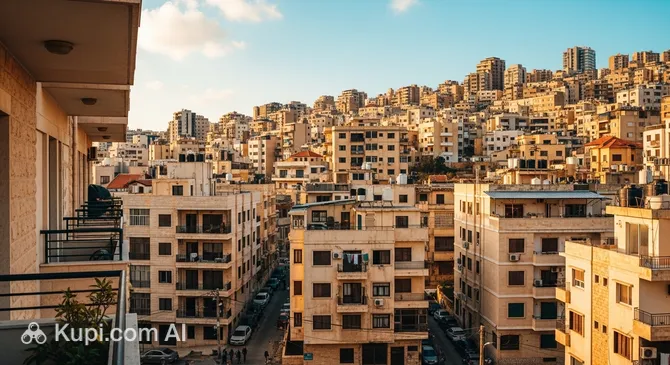
Bourj Hammoud is a unique and dynamic district located northeast of central Beirut. Known worldwide as “Little Armenia,” this city in Lebanon is a vibrant cultural enclave with an incredibly high population density and a one-of-a-kind urban atmosphere. Walking through its narrow, bustling streets, you will immediately feel the spirit of a hardworking community that has transformed this corner into one of the region's most important commercial hubs.
Bourj Hammoud. Illustration.
Source: Kupi.com AI
Founded by Armenian refugees in the early 20th century on what was once marshland, the city has evolved over time into a densely built metropolis. The history of Bourj Hammoud's formation is a story of resilience and rebirth, where every building and every shop holds the memory of generations of families. Today, it is home to approximately 150,000 people, and the municipality officially gained its independence in 1952.
For a tourist, Bourj Hammoud is attractive not for its pompous monuments, but for its authenticity. This is the place to find the best jewelry workshops, traditional bakeries, and craft shops. The city invites those who want to see the real, non-touristy Lebanon, immerse themselves in the culture of the Armenian diaspora, and enjoy an atmosphere of endless movement and creation.
Weather Overview
The weather in Bourj Hammoud fully corresponds to the classic Mediterranean climate of Lebanon. Summers here are hot and very dry, with temperatures often reaching 25–35°C. Due to the extremely dense construction and limited ventilation, humidity in the summer months can feel more intense than in more open coastal areas, so it is better to choose morning or evening hours for walks.
Winter in the city is mild but quite rainy. Average temperatures in January and February range between 10–15°C, though you should be prepared for heavy rainfall, which can cause temporary difficulties on the narrow streets. Spring and autumn are considered the most favorable seasons for a visit: during these times, a comfortable warmth sets in, ideal for long walking explorations of the shopping quarters.
When planning your visit, keep in mind that the weather in Bourj Hammoud largely dictates the rhythm of life in the local markets. During the hottest hours of the day, many shops may close, while on rainy winter days, life moves into cozy coffee shops and indoor workshops.
Average monthly temperature
Average monthly precipitation
Interesting Facts
Etymology: The city's name translates from Arabic as “Hammoud's Tower,” referring to historical structures in the area.
Information Center: This is home to the editorial office of “Aztag,” one of the most influential and largest daily newspapers of the Armenian diaspora in the world.
Radio Broadcast: The city hosts the 24-hour radio station “Voice of Van,” which broadcasts in Armenian and serves as an important cultural link for the community.
Population Density: Bourj Hammoud is considered one of the most densely populated cities in the Middle East—approximately 150,000 people live in an area of just 2.5 square kilometers.
City of Craftsmen: The district is famous for its hereditary jewelers and leather workers, whose products are valued far beyond Lebanon's borders.
How to Get There
Bourj Hammoud is fully integrated into the Greater Beirut transport network, making it easily accessible for travelers. The most popular and convenient way to get here from the capital's center is by taxi or traditional Lebanese minibuses (service-taxis). A trip from the Hamra or Downtown districts usually takes 15 to 30 minutes, though you should allow double that time during peak hours due to heavy traffic.
While the city does not have its own airport, Beirut-Rafic Hariri International Airport is located just 10–15 kilometers away. A taxi ride from the terminal to Bourj Hammoud takes about 20–40 minutes depending on road conditions. This is the main air gateway through which tourists enter the region.
Railway services in Lebanon are currently not operational, so you should rely exclusively on road transport when planning your trip. If you prefer walking, you can reach the city from neighboring Beirut districts, but be mindful of the hilly terrain and heavy traffic on main roads. More detailed information on routes can be found in the how to get to Bourj Hammoud section.
Station
Passenger traffic
Distance
Beirut Railway Station
5
1 km
Beirut Railway Station
5
1 km
Qadam railway station
2
84 km
Nahariya Railway Station
10
107 km
Karmiel railway station
7
110 km
Ahihud railway station
6
114 km
Main Attractions
Bourj Hammoud is a district where the main attraction is the life on its streets itself. There are no classic palaces or world-class museums here, but the architecture and lifestyle of “Little Armenia” create a unique flavor. A walk should begin in the commercial quarters, often called the “shopping city”: these are labyrinths of narrow alleys filled with shops selling clothes, spices, and the famous handmade Armenian jewelry.
The spiritual and cultural center of the community is its local churches. A special place is held by the Armenian Catholic Parish of the Holy Savior, which serves as an important landmark for residents and reflects the city's deep religious traditions. The architecture of the churches here is harmoniously integrated into the dense urban fabric, creating islands of tranquility amidst the noisy markets.
For those looking for beauty in the details, the building facades with Armenian signs and small squares where locals gather will be of interest. The city also hosts modern establishments such as Liza or Tavolina, offering high-quality cuisine in stylish interiors, making them excellent spots for a break after a long walk through the ethnic quarters.
Local Cuisine
A gastronomic journey to Bourj Hammoud is, first and foremost, an introduction to rich Armenian culinary traditions. The star of the local street food scene is lahmacun—a thin, crispy flatbread topped with minced meat seasoned with lemon and parsley. Be sure to stop by one of the old family bakeries to try tahinov hats—a sweet pastry with sesame paste that pairs perfectly with strong Armenian coffee.
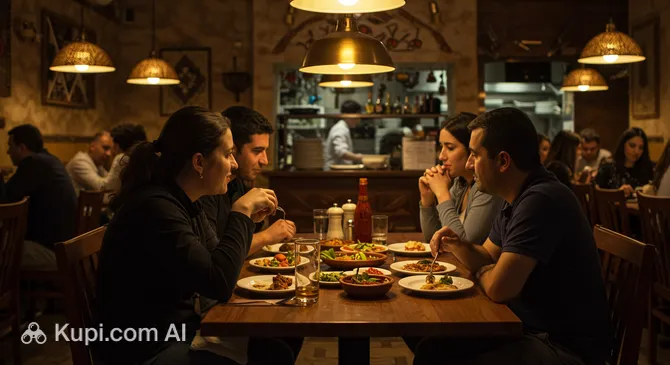
The city's restaurant scene offers everything from simple eateries to refined establishments. For example, the restaurant Liza is famous for its sophisticated approach to Middle Eastern cuisine in a magnificent interior. If you prefer Italian notes combined with local hospitality, it's worth visiting Tavolina, which offers an excellent selection of dishes in a cozy atmosphere.
Tavolina. Illustration.
Source: Kupi.com AI
Traveler photos:
The food culture here is inextricably linked to the markets and open stalls. In addition to meat delicacies like basturma and sujuk, fresh juices and traditional Lebanese snacks—mezze—are popular in the city. A gastronomic walk through the streets of Bourj Hammoud will allow you to experience the true taste of Lebanon, where Armenian recipes are harmoniously interwoven with local ingredients.
Travel Tips
Preparing for a visit to Bourj Hammoud will help make your walk through this colorful district as comfortable and interesting as possible. These practical tips are based on the nuances of local life and will help you feel at home in “Little Armenia.”
Clothing and Footwear: Choose the most comfortable shoes for walking—the streets are narrow and the sidewalks can be uneven. Clothing should be modest, especially if you plan to enter churches.
Transport: The best way to get here is by taxi. Once inside the district, move on foot; using a private car will create problems with traffic and finding parking.
Finances: Be sure to carry cash in Lebanese pounds in small denominations. Cards are rarely accepted in local shops and markets, and ATMs may be far from the shopping areas.
Safety: The district is safe for daytime walks. In the evening, it is better to stick to busy main streets and avoid poorly lit dead-end alleys.
Communication: The main languages are Armenian and Arabic. English and French are understood in larger shops and restaurants, but knowing a few greetings in Armenian will earn you special favor with the locals.
Local Etiquette: The city's residents are very hospitable but value respect for their traditions. Always ask for permission before taking a photo of a shop owner or their workshop.
What to Avoid: Do not try to plan a visit on a Sunday if your goal is shopping; many family workshops and shops are closed on this day.
Extra Tip: Be sure to try the street food—Bourj Hammoud is considered one of the safest and most delicious places in Lebanon for gastronomic experiments.
By following these simple recommendations, you can discover Bourj Hammoud as a friendly and incredibly interesting place, full of life and history.
Entertainment & Nightlife
The nightlife in Bourj Hammoud itself is more of a quiet, family-oriented nature. You won't find massive nightclubs or loud discos here, as the district is geared towards work and the peaceful relaxation of its residents. Evening activity is concentrated in cozy cafes and restaurants serving Armenian coffee and traditional sweets to the sounds of national music.
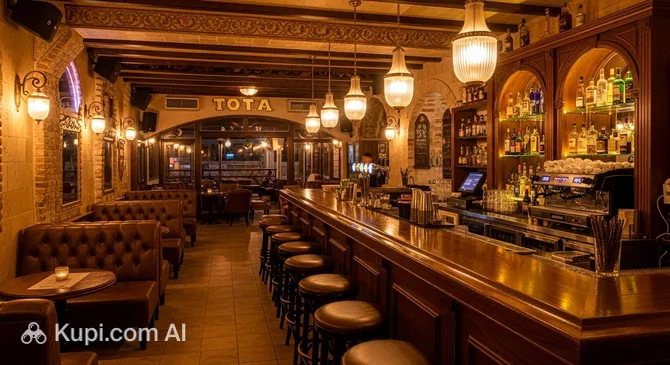
If you are looking for a more active evening, check out venues like the bar Tota or the elegant Amelia. These locations offer a modern atmosphere and quality drinks, serving as popular meeting points for those who want to spend time in pleasant company without leaving the Greater Beirut area.
Tota. Illustration.
Source: Kupi.com AI
Traveler photos:
For lovers of large-scale parties and dancing until dawn, residents usually head to neighboring Beirut districts like Mar Mikhael or Gemmayzeh, which are no more than 15–20 minutes away by taxi. Nevertheless, Bourj Hammoud remains an ideal place for authentic evening strolls along illuminated shopping streets, where life doesn't quiet down until late.
Parks & Museums
Due to its extremely high building density, Bourj Hammoud does not boast an abundance of green zones or public parks. It is a typical urban landscape where every meter of land is used for housing or commerce. Nevertheless, small squares and the inner courtyards of churches serve as relaxation spots where residents gather to socialize.
Museum infrastructure in the district is limited, as the city's focus is on preserving living heritage. However, history buffs should visit the local Armenian churches, such as the Parish of the Holy Savior. These often feature small displays of church artifacts and everyday items that tell the story of the community and the events that led to the district's founding.
For walks in full-sized parks or visits to major galleries, residents and visitors usually head to neighboring Beirut districts. There you will find the famous National Museum and Sanayeh Park. Nonetheless, Bourj Hammoud itself can be viewed as an "open-air museum," where the exhibits are the authentic workshops and street scenes of everyday life.
Getting Around
The transport system in Bourj Hammoud is mainly represented by the private sector, which is typical for all of Lebanon. The primary way to travel between this district and the rest of Beirut is via minibuses and service-taxis. They run along the city's main streets, stopping on demand. This is an inexpensive, though often crowded, form of transport that allows you to quickly reach key points in the capital.
Inside the district itself, due to the incredibly narrow streets and chaotic traffic, it is most convenient to get around on foot. Most shopping rows and workshops are within walking distance of each other. For longer trips within the district, residents often use motor rickshaws or call taxis through popular mobile apps, which operate reliably and offer fixed prices.
Tourists should keep in mind that during peak hours—morning and evening—exits from the city are heavily congested. Parking in Bourj Hammoud is a serious problem due to the dense construction, so renting a personal car to visit this district is not recommended. It is better to leave your car in a more spacious area and use a taxi to enter “Little Armenia.”
Accommodation
Accommodation options directly in Bourj Hammoud are specific: there are virtually no large hotel chains here. The primary lodging options consist of private apartments, guesthouses, and rooms geared toward long-term stays. This is an excellent choice for those who want to fully immerse themselves in local life and are looking for budget accommodation in an authentic Armenian neighborhood.
For tourists who prefer classic hotel service, the most convenient solution is to stay in neighboring districts of Beirut or in the Matn coastal area. Thanks to its proximity to the capital's center, you can easily visit Bourj Hammoud during the day and return to more spacious and quiet hotels with a full range of services in the evening.
When searching for accommodation, it is recommended to check reviews regarding infrastructure: due to the dense construction, some buildings can be noisy. It is best to book in advance, especially if your visit coincides with major cultural or religious holidays of the Armenian community, when many guests visit the city.
Nearby Cities
Thanks to its location in the heart of the capital region, Bourj Hammoud serves as an excellent starting point for exploring central Lebanon. Just a few kilometers away are key cities and districts, each deserving of individual attention.
First and foremost, it is worth visiting Beirut, the country's political and cultural center, located just 4 kilometers away. Here you will find the Corniche promenade, world-class museums, and famous shopping districts. Another interesting destination is El Fanar, offering a quieter atmosphere, or Baabda, known for its government buildings and picturesque views of the surroundings.
For those who want to swap the city bustle for natural beauty, the city is a convenient base for short trips into the mountains of Lebanon. Exploring nearby areas will allow you to see the country's contrasts: from dense ethnic neighborhoods to spacious mountain resorts and historic coastal towns.
Shopping & Souvenirs
Bourj Hammoud is rightfully considered a true paradise for shopping enthusiasts, but a special kind of shopping—there are no giant malls with standard brands here, but there is an abundance of colorful markets and family shops. The city is famous as a “shopping city” where people from all over Lebanon come for high-quality gold, silver, and clothing at very affordable prices.
The city's main commercial arteries are filled with shops where you can find everything from exotic spices and Armenian sweets to handmade leather goods. Jewelry workshops are the pride of the district; here you can order a unique piece or purchase traditional Armenian jewelry. As souvenirs, be sure to bring back local pastries, spices, or ethnic textile goods.
Shops are generally open from morning until late evening, though many may close for a break in the middle of the day. Most market outlets prefer cash in the local currency, so it is worth having small bills on hand. A walk through the shopping rows of Bourj Hammoud is not just about buying things, but an opportunity to bargain and feel the true spirit of a Middle Eastern market.