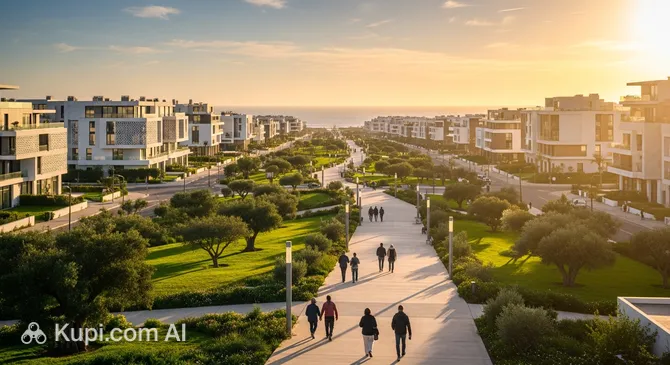
Ain Harrouda is a dynamically developing city in Morocco, located in the Casablanca-Settat region. Situated just 17 kilometers northeast of the country's largest metropolis, the city serves as an important industrial and residential hub for Greater Casablanca. It is a place where major transport routes intersect, linking the economic capital with the port city of Mohammedia.
Geographically, Ain Harrouda occupies a flat area of about 24 km² on the Atlantic coast. The city's population is just over 60,000, making it a compact yet bustling suburb. It has an atmosphere of business activity characteristic of industrial centers striving for modern urbanism.
Ain Harrouda. Illustration.
Source: Kupi.com AI
Although the city does not hold the status of a glamorous resort, its history of development as a strategic crossroads makes it interesting for those who want to see the authentic life of modern industrial Morocco. The city's uniqueness lies in its utility and proximity to the ocean—for instance, the promising Zenata district with its beaches is nearby.
Visiting Ain Harrouda is an excellent choice for travelers who value convenient logistics and want to explore the surroundings of Casablanca while staying away from the hustle and bustle of the metropolis's central quarters. It is an invitation to see the country through its economic growth and the daily rhythm of its residents.
Weather Overview
The climate in Ain Harrouda is classified as Mediterranean, which means hot, dry summers and mild, moderately humid winters. During the summer months, especially in July and August, the average high temperature reaches 28°C, but the proximity to the Atlantic Ocean brings a pleasant, refreshing breeze. In winter, the weather remains comfortable: in January, the average temperature is around 14°C, rarely falling below 10°C.
Precipitation in the region falls mainly between November and March, with March often being the wettest month. During the summer period, there is almost no rain, ensuring sunny weather for walks. The current weather in Ain Harrouda favors good air circulation, despite the city's industrial status, thanks to the open flat terrain of the coast.
The best time to visit the city is considered to be spring and autumn, when an ideal temperature balance is established—warm but not hot during the day, while evenings offer a pleasant coolness. If you are planning a trip in winter, it's worth bringing a light jacket in case of rainy days, while in summer, sunscreen and a hat are essential accessories.
Average monthly temperature
Average monthly precipitation
Interesting Facts
The name of the city Ain Harrouda has a beautiful meaning: translated from Arabic, it means "the weaver's spring" (Aïn — source/spring, Harrouda — weaver), a reminder of ancient times when local water sources were vital for caravans and artisans.
The city has demonstrated impressive rates of urbanization: in just twenty years, from 1994 to 2014, its population more than doubled, transforming a small settlement into an important regional center.
Ain Harrouda is considered a model of planned urban development in North Africa, having evolved from a simple industrial suburb into a modern residential area with high growth potential.
Thanks to its location on the path between Casablanca and Mohammedia, the city is a unique "convergence point" for two of Morocco's most important economic zones.
How to Get There
The transport accessibility of Ain Harrouda is due to its strategic position between the region's two largest cities. Most tourists arrive via the country's main air gateway. The primary hub is Mohammed V International Airport in Casablanca (IATA: CMN), located about 40 kilometers away. You can reach the city from the airport by rental car or taxi in 30–50 minutes, depending on the traffic density in the metropolitan region.
Railway communication also plays an important role in logistics. Although the city itself does not have a major station, the nearest significant station is in neighboring Mohammedia. This is a convenient transit point for those who prefer traveling on ONCF trains. For more detailed route planning, you can explore the section on how to get to the city using more economical methods.
Station
Passenger traffic
Distance
Casablanca Voyageurs
12
14 km
Casa-Port railway station
8
16 km
Oasis railway station
6
19 km
Rabat-Agdal
8
68 km
Rabat-City train station
6
71 km
Within the region, road travel remains the most popular way to get around. The city is located near major highways, allowing for a quick drive to central Casablanca (about 17 km). Tourists often use "grand taxis"—large intercity taxis that are an affordable and authentic way to travel between Ain Harrouda and neighboring settlements.
Main Attractions
The city of Ain Harrouda is not a traditional tourist destination with an abundance of historical monuments, but it offers travelers a unique glimpse into modern Moroccan life. One of the main attractions nearby is Zenata Beach. This spot is ideal for those seeking a peaceful escape by the Atlantic Ocean, away from the crowded beaches of major resort areas.
In the city itself, it is worth paying attention to the central squares and commercial quarters. Here, you can feel the rhythm of an industrial suburb while observing the daily hustle of local markets and working-class neighborhoods. Although Ain Harrouda lacks world-class museums, its architecture reflects a functional approach to North African urban planning and the region's rapid growth in recent decades.
For tourists, the city most often serves as a transit point, but a walk through its residential areas allows you to see the "real" Morocco without tourist filters. If you are planning a trip to this region, Ain Harrouda is an excellent place for a leisurely introduction to local life before heading into the bustling city of Casablanca.
Local Cuisine
The culinary landscape of Ain Harrouda is infused with the aromas of traditional Moroccan cuisine, typical of the coastal Casablanca-Settat region. Here, you must try the classic tagine—slow-cooked meat with vegetables and spices—as well as couscous, which is traditionally served on Fridays. Thanks to its proximity to the Atlantic, local eateries always offer the freshest seafood and grilled fish.
The food culture in the city revolves around small family cafes and street markets. Locals prefer simple and hearty dishes in local "lokantas," where aromatic harira soup and freshly baked flatbreads are served. Dining in Ain Harrouda is always about hospitality and affordable prices, which is especially appreciated by tourists seeking an authentic gastronomic experience without the frills.
Among drinks, the absolute leader is sweet mint tea, often called "Moroccan whisky." It is drunk at any time of day as a symbol of welcome. Freshly squeezed juices, especially orange juice, are also popular. If you are looking for a more refined restaurant menu, many locals recommend heading to the coast toward Mohammedia, where the selection of establishments with ocean views is significantly broader.
Travel Tips
A trip to Ain Harrouda will allow you to see Morocco without the tourist filters, and these practical tips will help make your visit as comfortable and safe as possible.
Clothing and Essentials: Choose light clothing made from natural fabrics for the warm climate, but don't forget to bring a windbreaker or a light sweater for cool evenings by the ocean. Comfortable closed-toe shoes are ideal for walking along the dusty streets of an industrial suburb. Remember to dress modestly when visiting residential areas.
Transport: The best way to travel to neighboring cities is by grand taxi. If you plan to travel a lot around the region, renting a car will be the most convenient option, but be prepared for rush-hour traffic on the roads to Casablanca.
Finances: The official currency is the Moroccan Dirham (MAD). Cards are rarely accepted in Ain Harrouda, so always carry cash. It is best to exchange currency in advance at the airport or at major banks in Casablanca.
Health and Safety: Drink only bottled water. The city is generally safe during the day, but try to avoid remote industrial outskirts at night, as they may be poorly lit.
Communication: The main languages are Arabic and French. English is less common than in Marrakech, so learn a few phrases in French or Arabic for communicating in markets. You can buy a SIM card at any small mobile shop.
Local Etiquette: Moroccans are very hospitable. Greet people with the phrase "Salam Alaikum." Remember that during Ramadan, the operating hours of establishments may change significantly, and eating in public during the day is discouraged.
What to Avoid: Do not take photos of people without their explicit permission and avoid discussing political topics. It is also not recommended to drink tap water.
Extra Tip: Be sure to visit the coast in the Zenata area at sunset—it is one of the most atmospheric and peaceful places in the city's surroundings.
Following these simple rules will help you blend harmoniously into the local rhythm of life and ensure you have only positive impressions from visiting this dynamic Moroccan city!
Entertainment & Nightlife
The entertainment infrastructure in Ain Harrouda is primarily geared toward local residents and everyday leisure. There are no noisy nightclubs or major concert venues here, as the city lives in the working rhythm of an industrial center. Most evening activity is centered in small cafes and tea houses, where locals gather to socialize over a glass of traditional mint tea.
For those seeking a more vibrant nightlife, a trip to neighboring Casablanca or Mohammedia is the perfect option. These cities feature modern cinemas, restaurants with live music, and bars that stay open late into the night. A taxi ride takes very little time, allowing tourists to combine quiet evenings in the suburbs with lively entertainment in the metropolis.
Daytime entertainment in Ain Harrouda includes visiting local markets and walking along the coast. Families often choose a relaxing time by the ocean in the Zenata area, where they can enjoy the sea breeze. Overall, the city offers the atmosphere of a peaceful suburb, where safety and tranquility are top priorities for evening strolls along the well-lit central streets.
Parks & Museums
Since Ain Harrouda is primarily an industrial and residential center, there are no traditional museums or galleries within the city itself. Cultural life here is focused on daily interactions and local traditions. To visit major exhibitions or historical displays, travelers usually head to neighboring Casablanca, which is home to famous museums dedicated to Moroccan art and Judaism.
Regarding green zones, Ain Harrouda is surrounded by extensive agricultural fields that create a natural green belt around the built-up quarters. One of the most pleasant areas for outdoor recreation is the Zenata coastal strip. This district is being actively developed as an eco-city, and there are plans to create large-scale park spaces here that will serve as the "lungs" for the entire Greater Casablanca region.
Local residents also use small squares within residential blocks to relax in the shade of trees. If you are looking for proper park complexes with fountains and alleys, we recommend visiting the famous Arab League Park in Casablanca or the city gardens of Mohammedia. Nevertheless, the tranquil Atlantic coast near Ain Harrouda remains the best place to enjoy nature in this industrial area.
Getting Around
The public transport system in Ain Harrouda is typical for the suburbs of major Moroccan metropolises. The main means of travel between districts and neighboring cities are buses. The route network connects the city with key points in Casablanca and Mohammedia, making travel affordable. Tickets are usually purchased from the driver, and the fare is fixed.
Taxis are particularly popular in Ain Harrouda. There are two types: "petit taxis" (small cars for trips within the city) and "grand taxis" (large vehicles for intercity routes). Grand taxis are the fastest and most convenient way to reach central Casablanca; they depart as they fill up with passengers and are very inexpensive.
For those who prefer independence, car rentals are available, which is especially convenient for exploring the Atlantic coast. It is worth noting that during peak hours, traffic jams can occur on the exits toward the capital due to heavy commuter traffic. Within the city itself, many residents prefer to get around on foot or by bicycle, as the main residential and commercial areas are located quite compactly.
Accommodation
In Ain Harrouda itself, the selection of traditional hotels for tourists is limited, as the city is primarily focused on the residential and industrial sectors. Most of the available accommodation here consists of private apartments and guesthouses, which are often rented long-term by professionals and expats. For a short-term visit, you can find budget options suitable for transit travelers.
If you are looking for a wide selection of hotels with a high level of service, it is recommended to consider staying in the neighboring cities of Casablanca or Mohammedia. These cities offer everything from luxury global chains to cozy boutique hotels on the coast. Thanks to Ain Harrouda's proximity to major highways, you can easily reach the city within 20–30 minutes.
When booking accommodation in this area, it is best to use popular international apartment rental services. During Morocco's peak tourist seasons (spring and autumn), it is wise to arrange accommodation in advance. Price ranges in the suburbs are usually lower than in the city center, making Ain Harrouda a cost-effective base for budget-conscious travelers with a car at their disposal.
Nearby Cities
The city of Ain Harrouda serves as a convenient starting point for exploring Morocco's central coast, thanks to its location at the intersection of key roads. Just a 15-minute drive away is Casablanca—the country's legendary economic hub. Here, you must see the majestic Hassan II Mosque and stroll along the Corniche, immersing yourself in the rhythm of the Maghreb's largest city.
Just 8 kilometers in the other direction is Mohammedia, known for its beaches and more relaxed atmosphere. This "city of flowers and gardens" offers great opportunities for leisurely walks in parks and dinners at the port's fish restaurants. It is also worth visiting the small town of Tit Mellil, located only 10 kilometers away, which is interesting for its agricultural character.
The region around Ain Harrouda is rich in contrasts: from the futuristic quarters of new districts to traditional agricultural lands. Exploring nearby cities allows you to switch from the atmosphere of an industrial center to the buzz of a metropolis or the peace of a coastal resort in a single day, making your journey as fulfilling as possible.
Shopping & Souvenirs
Shopping in Ain Harrouda is primarily practical and focused on local markets, known as "souks." Here, tourists can find the freshest produce, traditional spices, and daily essentials. The atmosphere of these markets allows you to immerse yourself in Moroccan life: bargaining is expected, and the stalls delight the eye with the bright colors of seasonal fruits and vegetables.
While the city itself does not have massive world-class shopping malls, the residential quarters are home to many specialized shops and stalls. For large-scale shopping and brand-name items, residents and guests of Ain Harrouda usually head to Casablanca, home to some of Africa's largest malls. However, if your goal is authentic souvenirs, such as traditional ceramics, leather babouche slippers, or Moroccan argan oil, they can easily be found in local markets at more attractive prices.
Shops in the city typically operate from morning until late evening with a lunch break, while the markets are most active in the first half of the day. Payment is most often made in cash using the local currency (Moroccan Dirham), although larger retail outlets are beginning to accept cards. Don't forget to stop by local shops for traditional sweets—they make an excellent gift from your trip to this region.