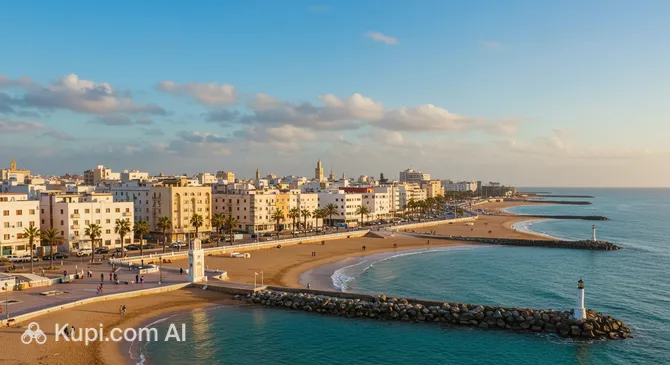
Mohammedia is a fascinating city of contrasts, nestled along the Atlantic coast of Morocco. Known as the "City of Flowers," it harmoniously blends its status as the country's major industrial center with the charm of a seaside resort. Located just 25 kilometers north of Casablanca, the city serves as a tranquil haven for those wishing to escape the bustle of the metropolis without losing access to its amenities.
The city's geographical position between the two capitals—economic Casablanca and administrative Rabat—makes it an important transport and economic hub. Home to over 200,000 people, the city's history preserves memories of the French protectorate and strategic historical events. Modern Mohammedia attracts guests with its well-kept beaches, prestigious golf courses, and the relaxed atmosphere of a port town.
Mohammedia. Illustration.
Source: Kupi.com AI
For tourists, the city is primarily interesting for its promenade, colorful Kasbah, and the annual Flower Festival, which transforms the streets into a vibrant carpet of petals. Although the industrial sector plays a massive role in the region's life, the tourist zone is clearly separated from the industrial side, allowing visitors to enjoy the ocean breeze and fresh seafood. We invite you to discover this "working suburb" from its unexpectedly elegant and hospitable side.
Weather Overview
Mohammedia is dominated by a mild Mediterranean climate with a strong Atlantic influence, making the weather pleasant almost year-round. The proximity to the ocean tempers the summer heat and makes winters warm and humid. To always stay updated on current conditions, it's worth checking the weather in the city regularly.
A typical summer in the city is warm and very dry: average temperatures in August range from +20°C to +28°C, sometimes rising to +30°C, but the sea breeze always brings a welcome coolness. Winter is mild, with average temperatures around +14°C in January, and the thermometer rarely drops below +10°C. Most precipitation falls between November and March, but even during these months, there are many sunny days.
The period from May to October is considered ideal for beach holidays and water sports. During this time, humidity is moderate and the probability of rain is minimal. It's worth noting that sea fogs often occur on the coast in the mornings, which usually dissipate by noon, giving way to the bright Moroccan sun.
Average monthly temperature
Average monthly precipitation
Interesting Facts
Until 1960, the city was named Fedala. It received its current name in honor of King Mohammed V on the day the foundation was laid for the country's largest oil refinery.
In 1942, during World War II, Fedala became one of the key landing points for Allied forces as part of Operation Torch.
The city is called the "City of Flowers" thanks to the annual spring festival Fête des Fleurs, during which the streets are decorated with giant floral installations and floats.
The Royal Golf Club de Mohammedia is one of the oldest courses in Morocco; it was designed in the 1920s and covers an area of over 18 hectares.
Despite its industrial status, Mohammedia is home to one of the region's most popular surfing beaches—Sablette Beach.
How to Get There
Mohammedia boasts excellent transport accessibility, serving as an important link between Casablanca and Rabat. Most tourists arrive via international air gateways and then continue by land transport, which is highly developed in this region. You can always learn more about how to get to this seaside city in the most convenient way.
The closest and largest air hub is Casablanca Mohammed V International Airport (CMN). It is located approximately 40–50 kilometers from Mohammedia. From the airport, the easiest way to reach the city is by taxi (travel time is about 45–60 minutes) or by train with a transfer at the Casa Voyageurs station. You can also consider Rabat-Salé Airport (RBA), located about an hour's drive to the north.
Rail travel is the most popular and efficient way to visit. Mohammedia Station serves ONCF national carrier trains, which run every 30 minutes from Casablanca and Rabat. The journey from central Casablanca takes only 20–30 minutes. This is an ideal option for those who value comfort and punctuality.
Station
Passenger traffic
Distance
Casablanca Voyageurs
12
22 km
Casa-Port railway station
8
23 km
Oasis railway station
6
27 km
Rabat-Agdal
8
60 km
Rabat-City train station
6
63 km
Main Attractions
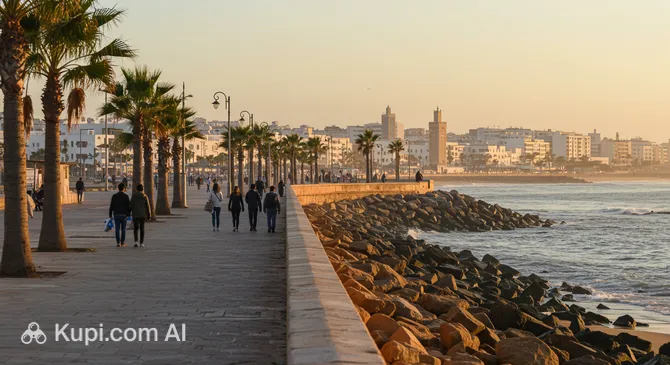
The main center of attraction for all visitors is the Mohammedia Corniche. This picturesque promenade stretches along the Atlantic Ocean, offering ideal conditions for evening walks, sports, and relaxing in numerous cafes. In summer, the city's beaches, such as Manica and Sablette, fill with vacationers who appreciate the soft sand and surfing opportunities.
Mohammedia Corniche. Illustration.
Source: Kupi.com AI
Traveler photos:
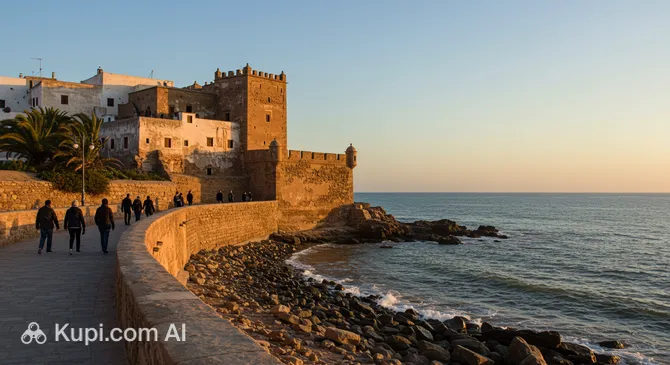
For those seeking a historical atmosphere, the Mohammedia Kasbah is a must-visit. This old part of the city has preserved elements of traditional Moroccan architecture and colonial style. Walking through its narrow streets, you can feel the spirit of the past, which contrasts with the modern industrial landscapes on the horizon.
Kasbah of Mohammedia. Illustration.
Source: Kupi.com AI
Traveler photos:
Active leisure enthusiasts should check out the Royal Golf Club de Mohammedia. It is one of the oldest and most prestigious golf courses in the country, known for its challenging terrain and magnificent ocean views. The city is also famous for its Flower Festival, which takes place in the spring and turns public spaces into true works of floral art.
Local Cuisine
The gastronomic scene in Mohammedia is inextricably linked to its Atlantic port. The main treasures of the local cuisine are the freshest seafood: from sea bream and sardines to squid and shrimp. In city restaurants such as Marius Mohammedia, fish is often grilled with minimal spices to preserve its natural flavor, or served as part of exquisite fish tagines.
Marius Mohammedia. Illustration.
Source: Kupi.com AI
Traveler photos:
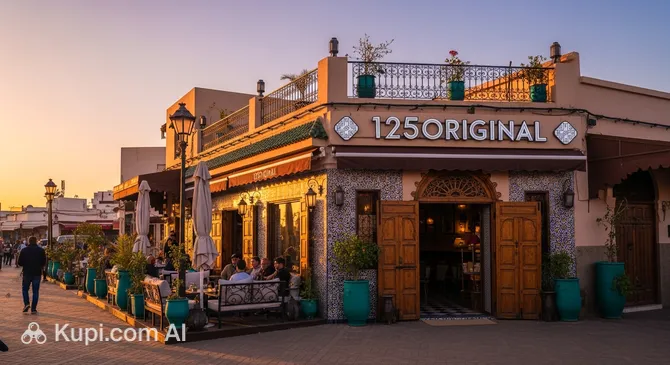
In addition to seafood delicacies, you should definitely try classic Moroccan dishes. On Fridays, locals traditionally eat couscous, and at any other time of day, a hearty harira soup. For a quick snack, stop by 125 Original or street stalls where they prepare "kringos"—Moroccan donuts—and serve freshly squeezed juices.
125 Original. Illustration.
Source: Kupi.com AI
Traveler photos:
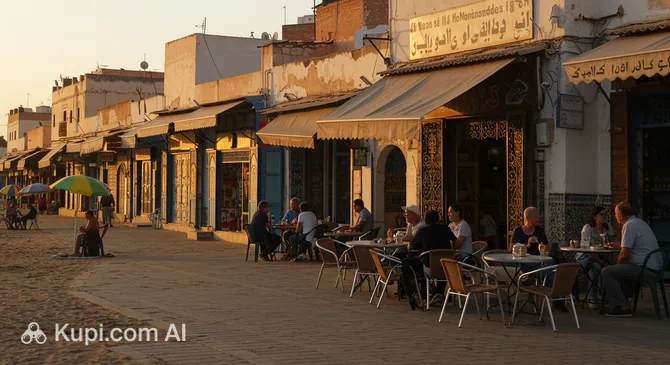
The tea culture here is legendary. Moroccan mint tea, which locals affectionately call "Berber whiskey," is served everywhere—from seaside cafes to market stalls. In the evening, we recommend heading to the promenade to dine at one of the establishments overlooking the port and enjoy the atmosphere of a peaceful seaside city where traditions meet modernity.
Travel Tips
Preparing for your trip to Mohammedia will help you feel confident and enjoy your holiday in this seaside corner. Here are some practical tips to make your visit comfortable and safe.
Clothing and Gear: Choose light clothing made from natural fabrics, but be sure to bring a windbreaker or a light sweater—a cool breeze blows from the ocean in the evenings. For walks through the Kasbah and markets, comfortable closed-toe shoes are useful. When visiting mosques or residential neighborhoods, observe a modest dress code.
Transport: For intercity travel, it is best to use comfortable trains. Within the city, use "petits taxis"—always ask to turn on the meter or agree on a price in advance.
Finances: The main currency is the Moroccan dirham. While hotels and large restaurants accept cards, you will need cash for markets and taxis. ATMs are easy to find in the city center and along the promenade.
Health: Drink only bottled water. There are plenty of pharmacies in the city, but it is better to have basic medications with you. Remember sun protection even on cloudy days.
Communication: The main languages are Arabic and French. English is understood in tourist spots, but knowing a few phrases in French (Bonjour, Merci) will significantly win over the locals.
Local Etiquette: It is customary to remove your shoes when entering a private home. Do not photograph people without their permission, especially in traditional neighborhoods.
What to Avoid: Do not walk alone in the industrial zone and remote port areas at night. Beware of overly persistent "helpers" at the train station.
Environmental Tip: If you are sensitive to air quality, on hot and windless days, choose accommodation further away from the oil refinery and closer to the beaches.
Mohammedia is a hospitable city that will reveal its best side if you show a little curiosity and respect for local traditions. Have a great trip!
Entertainment & Nightlife
Entertainment in Mohammedia is more relaxed and laid-back compared to neighboring Casablanca. Most activity is concentrated along the promenade, where popular spots like Marius Mohammedia are located. Here, you can enjoy dinner with an ocean view, listen to music, and watch the sunset in pleasant company. In the evening, the cafes and restaurants on the Mohammedia Corniche become meeting points for both locals and tourists.
Marius Mohammedia. Illustration.
Source: Kupi.com AI
Traveler photos:
For those who prefer a more modern vibe, places like 125 Original open their doors, where you can appreciate the skill of local bartenders and chefs. The city's nightlife is represented by a small number of bars and a seaside casino; however, for high-energy clubs and large-scale parties, travelers usually head to Casablanca, which is just half an hour away.
125 Original. Illustration.
Source: Kupi.com AI
Traveler photos:
Daytime leisure in the city is traditionally associated with beach holidays and sports. The city's beaches are excellent for surfing and bodyboarding, while the local golf club attracts professionals from around the world. Families will enjoy walks in the city squares, especially during the blooming season when the city lives up to its unofficial name, the "City of Flowers."
Parks & Museums
Despite its industrial status, the city strives to preserve green zones, the main one being the coastal strip. The role of a "central park" is fulfilled by the Mohammedia Corniche. This is not just a promenade, but an extensive recreational area with flower beds and alleys, which becomes especially beautiful in spring when the city prepares for its famous Flower Festival. During this time, small squares and road dividers transform into real botanical gardens.
Museum life in the classic sense is not very developed in the city; however, the historical sites themselves serve as exhibition halls. The main open-air monument is the Mohammedia Kasbah. Passing through the monumental Kasbah Gate (Bab el Kasba), visitors enter a historical labyrinth where the architecture tells the city's past better than any exhibits behind glass.
Kasbah of Mohammedia. Illustration.
Source: Kupi.com AI
Traveler photos:
For those interested in industrial history, the architecture of the local port and the oil refinery complex can serve as a kind of "museum of industrialization." However, for traditional visits to art galleries or archaeological museums, guests usually head to neighboring Casablanca or Rabat, using Mohammedia as a peaceful place to rest between cultural excursions.
Getting Around
The public transport system in Mohammedia is simple and functional, primarily oriented toward connecting with neighboring metropolises. The "backbone" of the transport network is the ONCF trains. The railway station is located in the center, and trains from here run very frequently, allowing you to reach Casablanca or Rabat quickly and inexpensively. Tickets can be purchased at ticket offices or through terminals at the station, and prices remain quite affordable for tourists.
For getting around within the city and traveling to nearby suburbs, locals actively use "grands taxis" (collective taxis, usually white). They run on fixed routes and depart as they fill up. This is a fast, though not always the most comfortable, way to travel. There are also "petits taxis"—small city taxis that operate on a meter within the city limits.
The bus network in the city is represented by several routes connecting residential neighborhoods with the industrial zone and the beaches. However, schedules may not always be accurate, and buses can be overcrowded during peak hours. For tourists, the most convenient way to move around Mohammedia remains walking along the promenade and using taxis. Renting a car is only justified if you plan to explore remote beaches or small inland towns.
Accommodation
The accommodation options in Mohammedia are mainly geared towards Moroccan tourists and industrial sector employees, but there are also worthy options for international travelers. The most popular choices are hotels and apartments located in close proximity to the ocean. Staying by the water allows you to enjoy views of the Mohammedia Corniche and breathe the fresh sea air, away from the industrial zones.
Mohammedia Corniche. Illustration.
Source: Kupi.com AI
Traveler photos:
For those who appreciate historical context, you can look for small guest houses near the Mohammedia Kasbah district. Here, you will find yourself in the heart of the old town. In general, price ranges in the city are lower than in Casablanca, making it an attractive option for budget stays while maintaining the ability to quickly reach the region's major cities by train.
During the summer season and the Flower Festival, demand for accommodation spikes, so it is recommended to book rooms in advance. The main types of accommodation are 3–4 star hotels and numerous short-term rental apartments. When choosing a place to stay, pay attention to the availability of air conditioning and distance from the port to avoid excess noise and smog on hot days.
Nearby Cities
Mohammedia occupies a strategically advantageous position on the map, making it an excellent base camp for exploring the central coast. Proximity to the railway and modern highways allows tourists to easily make exciting day trips to the most interesting corners of the region.
Undoubtedly, the number one destination for a trip is the legendary Casablanca, located just 25 kilometers away. Here, the majestic Hassan II Mosque, endless shopping opportunities in massive malls, and a vibrant nightlife await you. To the north, about an hour's drive away, lies the country's capital, Rabat, impressive with its imperial architecture, the ancient ruins of Chellah, and the blue-and-white streets of the Kasbah of the Udayas.
For a more peaceful getaway, you can head to cozy El Mansouria, famous for its clean beaches and tranquility, or visit Ain Harrouda, a dynamically developing suburb. These places are perfect for seeing the daily life of Moroccans away from the main tourist trails.
Exploring the surroundings will give you a complete picture of life in this part of the Atlantic: from ultra-modern skyscrapers to quiet fishing villages. Convenient connections make every such trip easy and untiring.
Shopping & Souvenirs
Shopping in Mohammedia is primarily an introduction to the local way of life through its markets. The city's Central Market is the heart of trade, where you can find everything from the fresh morning catch of fish to aromatic spices and seasonal fruits. A traditional oriental bazaar atmosphere reigns here, where it is customary to bargain and sample the goods before buying.
If you are looking for something more authentic, head to the Mohammedia Kasbah area. In its surroundings, you can find small artisan shops selling traditional Moroccan ceramics, leather goods, and textiles. A special souvenir from this city could be handmade items decorated with floral motifs—a tribute to its status as the "City of Flowers."
Kasbah of Mohammedia. Illustration.
Source: Kupi.com AI
Traveler photos:
Modern shopping centers in the city itself are modest, as most residents prefer to travel to Casablanca (for example, to Morocco Mall) for major brands and large-scale sales. Nevertheless, along the Mohammedia Corniche, there are many boutiques and shops with beachwear and accessories that stay open until late evening.
Shops in the city usually open around 9–10 AM and close by 8–9 PM, with many small shops potentially closing for a break in the middle of the day. Most small shops and markets only accept cash (Moroccan dirhams), so it is always worth carrying some change. Large supermarkets and modern establishments accept international bank cards.