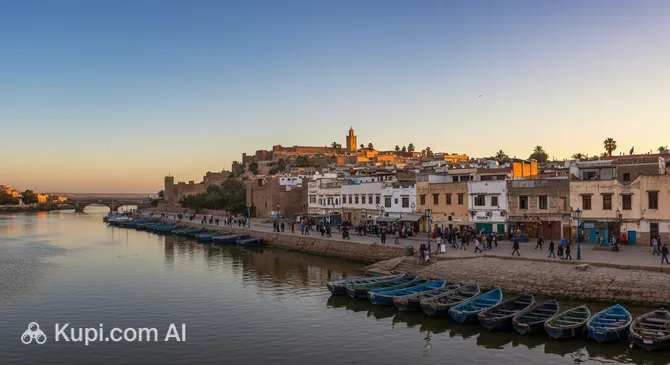
Located on the Atlantic coast at the mouth of the Bou Regreg River, Salé is a fascinating blend of ancient traditions and a relaxed pace of life. As the fifth-largest city in Morocco, it forms a single metropolitan area with neighboring Rabat, yet retains its unique atmosphere. With a population of about 850,000, Salé today serves as an important residential and administrative hub while remaining a deeply authentic destination.
The city has an impressively rich past, with roots stretching back to the Phoenician era. In the Middle Ages, it served as a major port and an important religious center, and in the 17th century, it even became the capital of an independent pirate republic of corsairs. This heritage is felt in the labyrinthine streets of the old medina, surrounded by mighty walls, and in the grandeur of ancient mosques.
Sale. Illustration.
Source: Kupi.com AI
For tourists, Salé is primarily attractive for its sincerity: here you can see Moroccan life without embellishment, stroll through whitewashed streets, visit the famous Abu al-Hassan Madrasa, or enjoy the ocean view. We invite you to discover this "twin city" of the capital, where history comes alive in every stone and the sea breeze fills your walks with special charm.
Weather Overview
Salé delights its guests with a classic Mediterranean climate heavily influenced by the Atlantic Ocean. The ocean breeze acts as a natural air conditioner, softening the summer heat and making winters remarkably mild. Expect warm, dry summers and cool, moderately humid winters, making a stay here pleasant at any time of year.
In the summer months, from June to September, the average daytime air temperature ranges between +24°C and +28°C, sometimes reaching the +30°C mark. In winter, during January and February, the thermometer rarely drops below +10°C at night, while staying around a comfortable +17°C to +19°C during the day. Most precipitation falls between November and March, but even then, rainy days are replaced by bright sunshine.
When planning your trip, it is worth noting that climatic conditions in Salé are most favorable in spring (March–May) and autumn (September–November). During these periods, the weather is perfect for long walking tours of the medina and sightseeing, as the heat has not yet set in and the coastal wind remains refreshing and mild.
Average monthly temperature
Average monthly precipitation
Interesting Facts
In the 17th century, Salé was the center of the independent Republic of Salé—a unique city-state ruled by Barbary pirates (corsairs) who maintained diplomatic relations with leading European nations.
The Great Mosque of Salé, built in 1029, is Morocco's second most important religious center after the mosques of Fez, maintaining its status for nearly a thousand years.
The city was founded by the Phoenicians as early as the 7th–3rd centuries BCE as the colony of Sala, and later transformed into the Roman settlement of Sala Colonia, the ruins of which are known today as Chellah.
The Abu al-Hassan Madrasa, built in 1341, is considered one of the smallest yet most detailed and elegantly decorated educational institutions of the Marinid era in the country.
The modern airport of the metropolitan area is actually located in Salé, not Rabat, making the city the main air gateway to the region.
How to Get There
The transport accessibility of Salé makes it one of the most convenient cities to visit in Morocco. Thanks to its location within the capital region, the city is integrated into a modern network of air and rail connections. For tourists planning their route, there are several convenient ways to get to this historic center.
The main air hub is Rabat-Salé International Airport (RBA), located directly within the city, just 10–15 kilometers from the center. It handles flights from major cities in Europe and Africa. A taxi ride from the terminal to the medina takes no more than 20–30 minutes, making arrival here extremely comfortable.
Rail connections are another strength of the region. Trains from the national operator ONCF pass through Salé. Of particular note is the Al Boraq high-speed line, connecting the city with Casablanca (just 1 hour away) and Tangier. The main railway stations provide quick transfers to city transport or taxis.
Station
Passenger traffic
Distance
Salé-City train station
6
2 km
Rabat-City train station
6
4 km
Rabat-Agdal
8
7 km
Kénitra railway station
5
31 km
Casablanca Voyageurs
12
88 km
Casa-Port railway station
8
89 km
If you are traveling by car, Salé is easy to reach via modern highways: the drive from Marrakech takes about 3 hours, and from Fez, about 2.5 hours. Additionally, the city is connected to Rabat by convenient bridges and a modern tram line, allowing you to cross the Bou Regreg River in just a few minutes.
Main Attractions
The main treasures of Salé are concentrated behind the massive walls of its historic medina. One of the most magnificent structures is the Great Mosque, founded back in 1029. It is one of Morocco's oldest and most significant religious monuments, its minaret rising proudly above the city's white rooftops as a reminder of its spiritual status.
Borj El Kebir (Fort Rottembourg). Illustration.
Source: Kupi.com AI
Traveler photos:
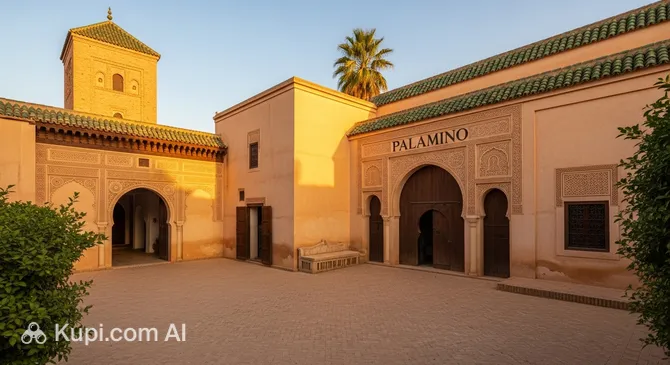
Not far from the mosque lies a masterpiece of Marinid architecture—the Palamino Workshops (referring to the Abu al-Hassan Madrasa in the context of its architectural heritage). The building, erected in 1341, captures the imagination with its intricate wood carvings, exquisite zellij mosaics, and the peaceful atmosphere of its inner courtyard. Today, it houses a museum that allows visitors to touch the history of education and art in the medieval East.
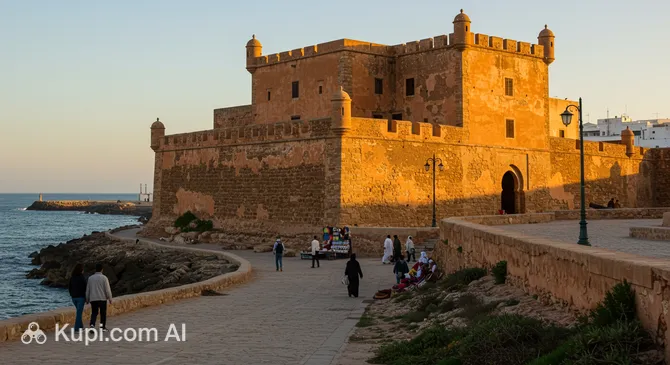
The city's defensive grandeur is embodied in the monumental Bab Lamrissa. This fortified sea gate with massive towers once protected the entrance to the city harbor. It is also worth visiting the historical fort Borj el-Kebir, also known as Fort Rottembourg, which guards the coast and offers travelers stunning views of the Atlantic.
Al Horreya Park. Illustration.
Source: Kupi.com AI
Traveler photos:
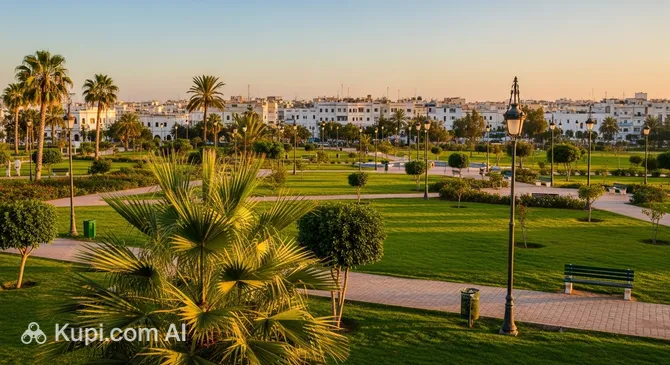
For those seeking inspiration in crafts, the Artisanal Oulja complex is a must-see. It is a center for applied arts where you can not only watch pottery and carpet-weaving masters at work but also purchase unique handmade items. You can conclude your walk in Al-Hurriya Park, which offers a long-awaited cool respite amidst the city's hustle and bustle.
Local Cuisine
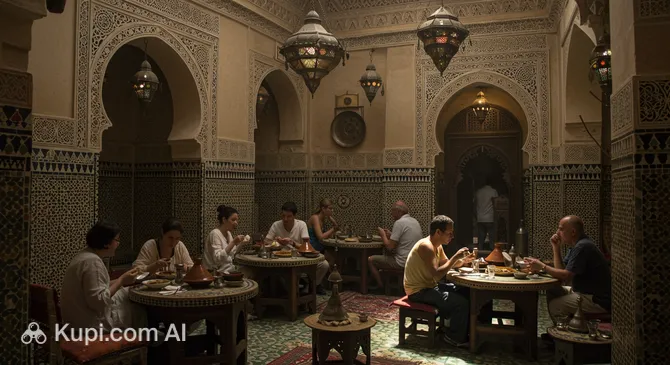
A culinary journey through Salé is an introduction to the best traditions of Moroccan cuisine, where the aromas of spices blend with the freshness of the Atlantic breeze. Be sure to try the classic tagine—slow-cooked meat with vegetables and dried fruits, as well as the traditional couscous, which local families typically prepare on Fridays. Due to its proximity to the ocean, the city is famous for fresh seafood: grilled sardines, calamari, and sea bream are served in almost every establishment by the shore.
The city's gastronomic scene is diverse: from authentic stalls in the medina serving hearty harira soup and sweet almond pastilla to modern establishments. For quality service and traditional flavors, head to Soufra Restaurant or visit Maria Restaurant, which serves exquisite fish and meat dishes.
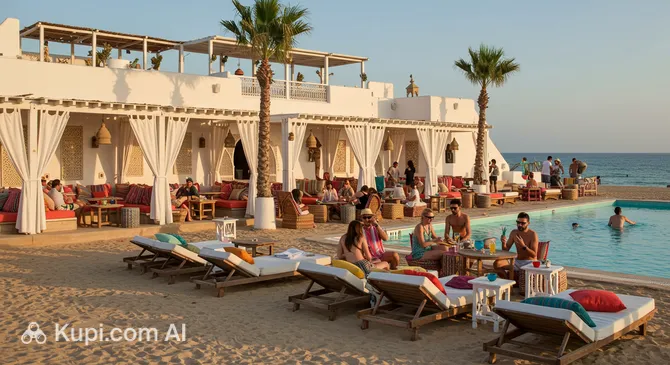
Sufra Restaurant. Illustration.
Source: Kupi.com AI
Traveler photos:
The food culture in Salé is unthinkable without the famous mint tea, locally referred to as "Moroccan whiskey." It is drunk everywhere—between shopping at the markets or while relaxing in shady courtyards. For sweets, we recommend trying "gazelle horns"—cookies with almond paste. The best place to immerse yourself in local flavor is the small cafes in the old town, where life flows slowly to the clinking of tea glasses.
Marea Restaurant. Illustration.
Source: Kupi.com AI
Traveler photos:
Travel Tips
Planning a trip to Salé? These practical tips will help you feel confident and enjoy every minute of your stay in this colorful Moroccan city.
Clothing and Dress Code: Choose light clothing made from natural fabrics, but keep local etiquette in mind. When visiting religious sites and the medina, it is recommended to cover your shoulders and knees. Comfortable closed-toe shoes are essential for long walks on cobblestones.
Getting Around: The most convenient way to get to Rabat is the modern tram. For traveling around the city, use the blue petit taxis; be sure to ask the driver to turn on the meter (compteur).
Money and Payment: The currency is the Moroccan Dirham (MAD). Cards are accepted in large hotels and restaurants, but always keep small denomination cash for markets and taxis. ATMs are easy to find in the city center and near the medina gates.
Safety and Health: Salé is a safe city, but take standard precautions. Drink only bottled water and use insect repellent during the summer.
Connectivity: A SIM card from local operators (Maroc Telecom or Orange) can be purchased right at the airport or at any kiosk in the city. Wi-Fi is available in most cafes and hotels.
Local Etiquette: Moroccans are very hospitable. Greet people with the phrase "Salam Alaikum." Before taking a photo of a local resident, be sure to ask for permission.
What to Avoid: Do not accept services from "free guides" at the medina gates and avoid discussing political or religious topics to prevent misunderstandings.
Bargaining: In the markets (souks), bargaining is a must! It is not just a way to lower the price, but an important part of social interaction. Be polite and smile.
Following these simple rules will make your visit to Salé comfortable and leave you with only the most pleasant memories of Moroccan hospitality.
Entertainment & Nightlife
Entertainment in Salé is primarily cultural and low-key, making it ideal for those who prefer a relaxed pace or for couples. During the day, most activity is concentrated in the Artisanal Oulja craft complex, which hosts festivals and exhibitions of folk crafts. In the evening, the Bou Regreg riverfront becomes the center of attraction—a great place for a stroll with views of neighboring Rabat's lights and the ocean waves.
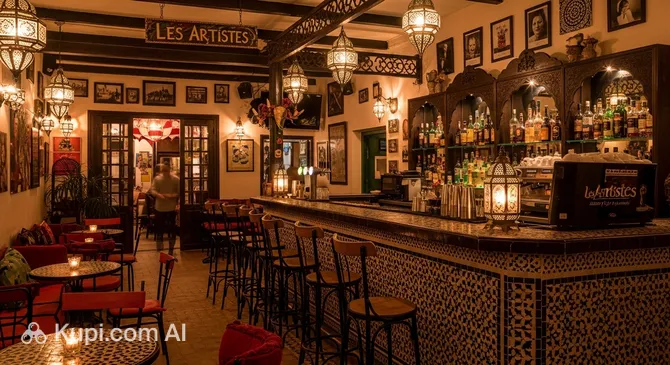
The city's nightlife is quite quiet and lacks the noise of discos. Locals and tourists prefer to spend their evenings in cozy tea houses and cafes in the medina, where live traditional music is often played. One notable place to enjoy a pleasant atmosphere is Le Artiste, which is popular among the creative crowd.
Les Artistes. Illustration.
Source: Kupi.com AI
Traveler photos:
For active leisure enthusiasts, Salé offers excellent surfing opportunities on the Atlantic beaches located within the city limits. Safety in tourist areas is high; however, for nighttime travel between parts of the metropolitan area, it is recommended to use official taxis, which are easily called through hotel receptions or found at stands near the main medina gates.
Parks & Museums
The cultural heritage of Salé is vividly reflected in its architectural monuments, which today serve as open-air museums. The most important site is the Abu al-Hassan Madrasa—a masterpiece of 14th-century Islamic architecture. Visitors can explore the prayer halls and student rooms decorated with fine carvings and mosaics that tell the story of the golden age of Moroccan science and religion.
For those interested in the history of fortification, Borj el-Kebir (Fort Rottembourg) is a must-visit. This massive bastion on the ocean shore not only demonstrates the military power of past centuries but also serves as an excellent platform for viewing the coastline. Other unique spots include the Palamino Workshops and the Artisanal Oulja complex, which represent a living museum of crafts where leatherworking and pottery traditions are passed down from generation to generation.
Borj El Kebir (Fort Rottembourg). Illustration.
Source: Kupi.com AI
Traveler photos:
There are not many green zones in the city itself, but they are particularly cozy. A pleasant place to relax is Al-Hurriya Park, where locals like to spend time in the shade of the trees. It is also worth noting the Chellah archaeological park, located on the border with Rabat. This amazing site combines Roman ruins and Islamic burials, nestled among lush gardens where storks nest.
Palamino Workshops. Illustration.
Source: Kupi.com AI
Traveler photos:
Getting Around
The transport system of Salé is closely integrated with neighboring Rabat, making travel between the two cities easy and affordable. The crown jewel of the region's transport is the modern tram network, launched in 2011. Lines T1 and T2 connect key points in Salé, including the airport and residential areas, with the capital's center and railway stations. The fare is only about 6 dirhams, and the cars are air-conditioned.
For quick trips within the city, petit taxis—small cars (usually blue)—operating on a meter are ideal. They are very cheap and convenient for short distances. For longer distances or trips to neighboring settlements, there are grand taxis (white Mercedes), which depart as they fill up with passengers and follow fixed routes.
Bus service is represented by city routes and comfortable intercity buses from the CTM company, which connect Salé with the country's largest cities. Within the medina itself, the only way to get around is on foot, as its narrow and winding streets are inaccessible to vehicles. The Salé-Tabriquet railway station provides easy access to ONCF trains, which can quickly take you to Casablanca or Fez.
Accommodation
The choice of accommodation in Salé allows every traveler to find an option to their liking, whether it's a dive into an Oriental fairy tale or modern comfort. The most authentic experience is offered by traditional riads in the medina—old mansions with inner courtyards converted into guest houses. Staying here allows you to feel the rhythm of the old city and enjoy Moroccan hospitality.
For those who value proximity to transport hubs, modern chain hotels like Ibis Sale are located near the airport and main highways, as well as apart-hotels offering amenities for longer stays. Areas along the Bou Regreg riverfront are popular for their picturesque ocean views and convenient access to the tram line connecting Salé to Rabat.
Marea Restaurant. Illustration.
Source: Kupi.com AI
Traveler photos:
The price range in the city is quite wide: from budget options for 500 dirhams to luxury suites for 2,000 dirhams and up. During the peak tourist seasons (spring and autumn), it is recommended to book accommodation in advance through popular online platforms to ensure the best choice of places with views of historical landmarks, such as the Maria Restaurant, located in a scenic area.
Nearby Cities
Thanks to its location in the heart of the coastal region, Salé serves as an ideal starting point for exploring central Morocco. Just minutes away are cities, each with its own unique character and set of attractions.
The closest and most obvious destination for a trip is Rabat, the country's capital. It can be reached by tram in a matter of minutes. Here, you should see the Hassan Tower, the Mausoleum of Mohammed V, and the picturesque Kasbah of the Udayas. Also of interest is the city of Bouknadel, known for its exotic gardens and beaches, and the quiet town of Ouled Hssine, which offers a look at the region's rural way of life.
For those ready for slightly longer trips, Temara with its resort areas or Sidi Taibi are excellent choices. The developed railway network also allows you to reach glittering Casablanca in an hour or the cultural capital, Fez, in two and a half hours. We recommend not limiting yourself to one city but exploring the surroundings to fully experience the diversity of Moroccan culture.
Shopping & Souvenirs
Shopping in Salé is, first and foremost, a journey into the world of traditional Moroccan crafts. Unlike in large metropolises, trade here maintains its ancient ways. The main place for shopping is the medina, where narrow streets are lined with stalls selling spices, handmade carpets, and the famous Moroccan leather. The city has long been famous for its weavers and metalworkers, so you can find truly unique items here.
For those who prefer a more organized format with fixed prices, the Complexe Artisanal Oulja is an ideal choice. This craft center brings together the city's best workshops. Here, you should pay attention to pottery, wicker furniture, and thuya wood products. It is an excellent place to choose souvenirs: from painted plates to natural argan cosmetics, without the risk of tiring bargaining.
Palamino Workshops. Illustration.
Source: Kupi.com AI
Traveler photos:
Modern shopping areas are located closer to the center of the metropolitan area and along the main avenues, where you can find clothing and cosmetics stores. Salé's markets usually operate from morning until late evening, though small shops in the medina may close during Friday afternoon prayers. Remember that in traditional markets, it is customary to bargain—it is part of the local culture that turns a purchase into an engaging ritual.