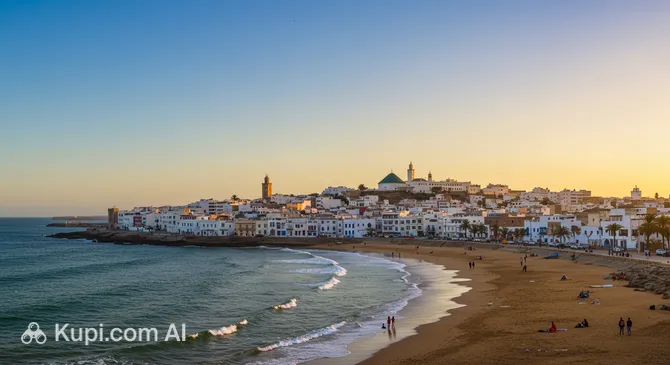
Temara is a lively coastal city in Morocco, nestled on the shores of the Atlantic Ocean just a few kilometers south of the capital. Although often perceived as a cozy suburb of Rabat, it possesses its own unique character, blending the dynamics of modern Moroccan life with the tranquility of the ocean coast. With a population of approximately 313,510 people, the city is an important administrative and residential hub for the Rabat-Salé-Kénitra region.
The city's geographical location makes it strategically convenient for travelers: on one side, there are endless Atlantic beaches, and on the other, a protective "green belt" of forests that separates the city from the hustle and bustle of the capital. The rich history of these lands stretches back centuries, though the active development of the modern city began relatively recently, transforming it from a small settlement into a key point on the coastal map.
Temara. Illustration.
Source: Kupi.com AI
For tourists, Temara is primarily attractive for its spacious beaches, authentic markets, and famous zoo, which is considered one of the best in the country. Here, you can experience the true rhythm of Moroccan life without excessive tourist polish. We invite you to get to know this city better, enjoy the fresh sea breeze, and experience the hospitality of the local residents.
Weather Overview
The climate in Temara is shaped by its proximity to the Atlantic Ocean, making it mild and pleasant throughout the year. The city is in a Mediterranean-influenced zone, so exhausting heat is rare here. You can check the current weather in Temara before your trip to better plan your wardrobe.
In summer, during July and August, the average daytime temperature fluctuates between 25–30°C. Thanks to the sea breeze and mists that often roll in from the ocean in the mornings, it is much cooler here than in Morocco's inland regions. Rainfall is virtually non-existent in the summer, and the ocean warms up to comfortable temperatures for swimming.
Winter in Temara is mild but quite damp. In January and February, the temperature usually stays around 12–18°C. Rain is frequent during this time, which is typical for the Atlantic coast, and nights can be cool (around 10°C). Nevertheless, even in winter, the city enjoys many sunny days, which are perfect for walks along the ocean or visiting forest areas.
Average monthly temperature
Average monthly precipitation
Interesting Facts
Temara is a city full of hidden surprises that reveal themselves to the attentive traveler. Here are a few interesting facts about this place:
Archaeological Treasure: The El Mnasra and El Harhoura caves are located within the city limits, where scientists discovered traces of human activity dating back about 120,000 years.
Twin Cities: Temara has an official "twin" in France—the picturesque city of Saint-Germain-en-Laye.
Young Spirit: The city has a very high proportion of young people—children and teenagers under 14 make up more than 25% of the population.
Green Shield: Temara is separated from the capital by a special forest zone known as the "green belt," which helps maintain air quality in residential areas.
Founding: It is believed that the first settlement on this site was established as far back as the 12th century, though Temara only gained the status of a modern urban center much later.
How to Get There
Thanks to its location in close proximity to the capital, Temara is one of the most accessible cities in the region. The main flow of travelers arrives from neighboring Rabat, a trip that takes only 15–20 minutes via the coastal highway. You can find detailed information on routes in the section on how to get to Temara.
The nearest major air hub is Rabat–Salé Airport (RBA), located approximately 40–50 minutes away. Many tourists also fly into Casablanca's Mohammed V International Airport, from where you can take a high-speed train to Rabat and then transfer to a taxi or bus to Temara.
Rail connections link Temara with Morocco's largest cities. Trains traveling from Casablanca to Rabat and Fes pass through the city. The local station is conveniently located, allowing for quick access to the main residential and beach areas.
Station
Passenger traffic
Distance
Rabat-Agdal
8
10 km
Rabat-City train station
6
12 km
Salé-City train station
6
15 km
Kénitra railway station
5
47 km
Casablanca Voyageurs
12
74 km
For trips from nearby cities, "grand taxis"—large white Mercedes cars that run on fixed routes—are frequently used. This is a fast and colorful way to travel, popular with both locals and savvy tourists. During peak hours, it's worth allowing extra time for the journey due to traffic congestion at the entrance to Rabat.
Main Attractions
Even though the city is considered a residential suburb, Temara has several places that deserve travelers' attention. The main natural asset is Temara Forest—part of the famous "green belt." This is an ideal spot for those who want to swap the sound of the ocean for the quiet of shaded alleys. The park is popular among picnic enthusiasts and morning joggers, offering fresh air and seclusion away from the urban blocks.
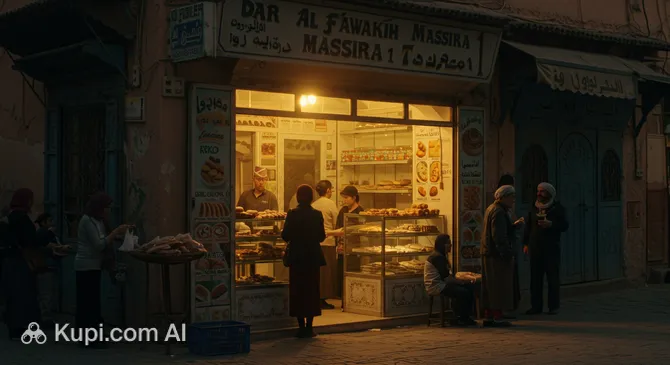
For those seeking culinary experiences, it is worth stopping by Dar Al-Fawakih Massira 1. This place is known for its selection of traditional treats and allows you to experience the local culture of sweets and fruits. Small harbor areas and beaches are also located along the coast, where you can watch local fishermen at work or simply enjoy the sunset over the Atlantic.
Dar Al Fawakih Massira 1. Illustration.
Source: Kupi.com AI
Traveler photos:
History and archaeology buffs will be interested in the El Harhoura and El Mnasra caves, located in the vicinity. These are unique archaeological sites where traces of human presence dating back more than 100,000 years were found. While they are not always open for mass visits, their very presence highlights the ancient heritage of this region. One also cannot forget the local zoo, which is a major attraction for families from all over Morocco.
Local Cuisine
Temara's cuisine is a classic Moroccan mix of the freshest seafood, aromatic spices, and traditional recipes. Given its proximity to the ocean, it is essential to try the fish tagine or grilled seafood. Local markets, especially Souk Massira II, offer a daily fresh catch that can be prepared right in front of you at small street eateries.
For those who prefer meat dishes, the Grill House is an excellent choice, serving traditional Moroccan skewers (brochettes) and grilled lamb. Don't forget to try harira—a thick and nutritious tomato soup with legumes, which is especially popular in the evenings. If you're in the mood for something light and sweet, stop by Dar Al-Fawakih Massira 1 for fresh fruit and local desserts.
Dar Al Fawakih Massira 1. Illustration.
Source: Kupi.com AI
Traveler photos:
The food culture in the city is closely tied to mint tea, which is locally nicknamed "Moroccan whisky." It is drunk everywhere—in small cafes on the waterfront or while bargaining at the market. Coffee is also very popular, especially the strong "café noir." Temara's gastronomic scene is unpretentious and oriented toward locals, which guarantees fair prices and truly homemade flavors.
Travel Tips
A trip to Temara is a great chance to see Morocco from the inside, away from the crowds of tourists. To ensure your trip goes smoothly and leaves only pleasant impressions, we have prepared a few practical tips.
Clothing and Dress Code: Temara is a conservative city. When visiting markets and residential areas, try to choose modest clothing that covers your shoulders and knees. For the beach, standard swimsuits are appropriate, but outside of it, it's better to throw on a sarong or a T-shirt.
Transport Nuances: If you need to go to Rabat, use a "grand taxi." This is the cheapest and fastest way. Agree on the price in a taxi within the city in advance or ensure the driver turns on the meter.
Finances: Always have cash Moroccan Dirhams (MAD) with you. Cards are rarely accepted—mostly in large pharmacies or supermarkets. It's best to exchange currency at the airport or bank branches in Rabat.
Safety: The city is generally safe, but keep a close eye on your bags and phones in markets like Massira II. It's best to avoid walking in sparsely populated outskirts after dark.
Communication: The main languages are Arabic and French. English is not understood everywhere, so it's useful to learn a few phrases in French or have an offline translator handy.
Etiquette and Bargaining: Be sure to haggle at the markets—it's part of the local culture. Do it with a smile; politeness is valued above all else here.
What to Avoid: Do not photograph local residents without their explicit consent, especially women and people working at the market—this can be seen as disrespectful.
Sun and Wind: Even if it seems cool due to the ocean breeze, use sunscreen. The Atlantic wind is deceptive, and you can get sunburned without noticing.
Temara will welcome you with warmth and sincere hospitality if you are open to the local traditions and the rhythm of life in this coastal city.
Entertainment & Nightlife
Entertainment in Temara is primarily quiet and family-oriented. During the day, most activity is concentrated near the coast, where cafes and restaurants operate, and at the Temara Zoo—a popular spot for strolls with children. If you are looking for natural tranquility, Temara Forest offers excellent opportunities for a daytime outdoor break.
In the evening, the city comes alive around the waterfront and local markets. During Ramadan, Temara's nightlife is transformed: streets and shops stay open until late at night, and the air is filled with the aromas of traditional dishes. For dinner in a pleasant setting, the Grill House is an excellent choice, where you can try charcoal-grilled dishes in a typically Moroccan style.
Dar Al Fawakih Massira 1. Illustration.
Source: Kupi.com AI
Traveler photos:
As Temara is a residential area, there are practically no noisy nightclubs or bars serving alcohol here. For vibrant nightlife, locals and tourists usually head to neighboring Rabat, which is only about 15–20 minutes away. This allows you to enjoy the peace and safety of Temara at night while still having access to all the capital's infrastructure.
Parks & Museums
Temara is primarily a city of parks and beaches rather than classic museums. The city's main green oasis is Temara Forest. This is a vast area with centuries-old trees that serves as the natural "lungs" for the entire region. Tourists and locals come here to escape the city heat, have a picnic, or walk along the shaded trails.
A special place on the list of attractions is the National Zoo (often called the Temara Zoo). This is a modern park where animals are kept in conditions as close as possible to their natural habitat. It is not just a place to view animals, but a full-fledged recreational zone with ponds and rest areas, which serves residents as a substitute for large urban parks.
Dar Al Fawakih Massira 1. Illustration.
Source: Kupi.com AI
Traveler photos:
The role of open-air museums is played here by the beaches and the coastal strip. Temara's ocean coast is a place where nature meets everyday culture. Although there are no large art galleries in the city itself, art lovers can easily reach the capital's museums in Rabat in less than half an hour and return in the evening to the calm atmosphere of coastal Temara.
Getting Around
The transport system in Temara is simple and efficient, although it lacks amenities like a metro or trams. The main means of transportation for tourists are "petit taxis"—small cars that circulate within the city. They operate on a meter, and a trip is usually quite inexpensive. For traveling between Temara and Rabat, "grand taxis" are best, which depart as they fill up and cost a fixed amount.
The bus service in the city is fairly well-developed and connects residential areas with the beaches and the center. Tickets are bought from the driver, and the fare is minimal. However, keep in mind that during peak hours, buses can be very crowded, and schedules are not always followed to the minute. For more comfortable rides, many people use ride-hailing apps like Careem.
The railway is the fastest way to get to Casablanca or other major cities in the country. Temara station serves suburban trains and some long-distance trains. If you plan to get around on foot, keep in mind that the city is quite spread out along the coast, so you will almost certainly need transport to get to the beach from the central districts. Car rental is also popular, but be prepared for active and sometimes chaotic Moroccan traffic.
Accommodation
Choosing accommodation in Temara has its own specifics: the city is more geared toward long-term rentals and guest houses rather than large hotel chains. Most tourists prefer to book apartments or villas closer to the coast, allowing them to enjoy the sea air and proximity to the beaches. This is an excellent option for those looking for a more budget-friendly alternative to expensive housing in central Rabat.
If you prefer classic hotels, look at areas bordering the capital or those located directly on the coastline. Small private guest houses (riads) are popular in Temara, offering an authentic atmosphere and homey comfort. It is recommended to study photos of the properties before booking, as the level of comfort can vary significantly.
Dar Al Fawakih Massira 1. Illustration.
Source: Kupi.com AI
Traveler photos:
During the peak summer season (July–August), the demand for seaside accommodation increases significantly, so it is wise to book apartments in advance. Major booking services offer a wide selection of flats, which are often chosen by families with children due to their proximity to the local zoo and parks like Temara Forest. Prices here are usually lower than in the capital, making the city attractive for long stays.
Nearby Cities
Thanks to its central coastal position, Temara serves as an ideal base for exploring the surrounding area. Just 11 kilometers away lies majestic Rabat, the kingdom's capital. The journey takes no more than 20 minutes, where you can see the famous Hassan Tower, the Kasbah of the Udayas, and stroll through the ancient medina.
For those seeking a more tranquil getaway by the water, neighboring Skhirat is an excellent destination. This city is famous for its clean beaches and royal palace, creating the atmosphere of a respectable resort. Also worth noting is Sidi Yahya Zaer, which offers a calmer, more rural flavor of the region.
If you're willing to drive a bit further, you can reach Casablanca in an hour to see the grand Hassan II Mosque and enjoy shopping in the country's largest malls. Exploring the surroundings of Temara will allow you to see the full diversity of the Moroccan coast—from bustling metropolises to quiet fishing villages.
Shopping & Souvenirs
Shopping in Temara is primarily an introduction to a real Moroccan market. The city's main commercial heart is Souk Massira II. This is a huge daily market where you can find literally everything: from fresh vegetables and exotic spices to textiles and tableware. There are no fixed prices for most goods here, so the ability to bargain politely is welcomed and even expected by vendors.
For those looking for local specialties, it is worth paying attention to leather goods and ceramics brought from neighboring craft centers. Small shops like Dar Al-Fawakih Massira 1 are also popular in the city, where you can purchase high-quality local products and sweets. There aren't many large shopping malls in Temara, so most shopping takes place on busy boulevards, such as Boulevard Moulay Ali Cherif.
Dar Al Fawakih Massira 1. Illustration.
Source: Kupi.com AI
Traveler photos:
Typical souvenirs to bring from this region include argan oil, sets of Moroccan spices, and traditional clothing, such as djellabas. Shops usually operate from 9–10 AM until late in the evening, with a break for lunch. Most stalls in the markets only accept cash Dirhams, so it is wise to take care of exchanging money in advance, as cards are only accepted in rare large stores or supermarket chains.