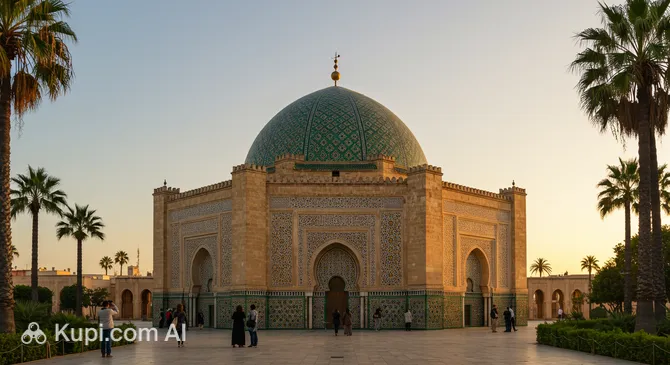
Among the modern landmarks that Casablanca is proud of, the Zevaco Dome (Coupole Zevaco) holds a special place. It is not just an architectural object but a futuristic underground pedestrian crossing that has become a true symbol of modernism in Morocco. Designed in the 1970s by the outstanding architect Jean-François Zevaco, the dome captures the imagination with its bold geometry and dynamic concrete composition.
Zevaco Dome. Illustration.
Source: Kupi.com AI
Traveler photos:
The structure represents an innovative solution for its time, standing out against the city's traditional buildings. Zevaco, whom contemporaries often compared to the legendary Oscar Niemeyer, filled this space with a sense of movement and lightness despite the use of massive materials. The Zevaco Dome is considered a benchmark of the "concrete jungle," where the functionality of a pedestrian zone merges with the high aesthetics of avant-garde art.
Today, this place attracts not only random passers-by but also architecture enthusiasts from all over the world. Its original design and unusual spatial effects make it one of the most photographed locations in the heart of the metropolis. The dome serves as a living reminder of the era of bold architectural experiments that shaped the modern look of the country's largest city.
Contacts
To help you navigate Casablanca, it's worth saving the exact coordinates of this architectural landmark. The dome is located in a busy area and is easy to find using online maps.
The main reason to visit the Zevaco Dome is for the unique visual experience. Visitors can examine the futuristic concrete forms in detail, which create a stunning play of light and shadow. It is an ideal location for architectural photography enthusiasts: the unusual angles and geometry of the structure allow for truly striking shots that capture the spirit of 70s modernism.
Since the site functions as an underground pedestrian crossing, you can simply stroll through it, feeling like you're inside a dynamic urban space. It’s a great place to observe the daily rhythm of life for locals and feel the contrast between the silence inside the dome and the noise of Casablanca's busy streets.
A visit to the dome can easily be combined with exploring other works by Zevaco in the city center or simply included in a general sightseeing route. The 1970s design creates a special "retro-futuristic" atmosphere here, allowing you to step back into a past where architects weren't afraid to dream of cities of the future.
Getting There
The site is located in the heart of Casablanca, making it easily accessible for tourists. If you prefer public transport, it is most convenient to use tram line T1, which passes in the immediate vicinity of the landmark. Numerous buses also run through the city, stopping near the square.
For those who value comfort, the famous Moroccan Petit Taxis—small red cars that can be hailed anywhere in the city center—are an optimal choice. The ride from the main tourist districts takes only a few minutes. If you are arriving from Mohammed V Airport, the most convenient way is to take a train to Casa Voyageurs station, and from there transfer to a taxi or tram.
A walking tour can also be an excellent solution if you are already in the central part of Casablanca. Use the address H9WM+F4J as your landmark. Despite the availability of parking spaces nearby, we recommend opting for taxis or walking due to the heavy traffic in the center.
Nearest city: Casablanca
History & Facts
The design of this unique structure belongs to Jean-François Zevaco, one of the most influential architects in the history of modern Morocco. Zevaco, often referred to as the "Moroccan Niemeyer," was famous for his ability to work with concrete and create dynamic, almost living forms. Built in the 1970s, the Zevaco Dome became the embodiment of his ideas about functional yet aesthetically bold urban space.
During that period, the architect was actively developing theoretical foundations for construction in Morocco, striving to create economical yet artistically expressive objects. His works—ranging from schools and hospitals to exhibition pavilions—were always distinguished by unexpected layout solutions and picturesque placement in the urban environment. The dome became a striking example of this approach, turning an ordinary pedestrian underpass into an architectural focal point.
The historical significance of this place lies not only in its form but also in how it reflects the era of modernism in North Africa. Zevaco succeeded in harmoniously combining 20th-century Western architectural trends with the local landscape, using modern materials to create objects that remain relevant and recognizable symbols of Casablanca decades later.
Time Needed
To appreciate the boldness of the architectural vision and take some impressive shots, an average tourist will need about 30 to 45 minutes. This is quite enough time to leisurely inspect the concrete structures, walk through the passage, and watch the sunlight play on the dome's forms.
Since the site is located in the city center and functions as a pedestrian zone, its visit is easy to fit into a more extensive itinerary around Casablanca. You don't need to set aside a separate day or several hours for this—a short stop during a walk between other attractions is sufficient.
Working Hours
One of the pleasant features of this landmark is its accessibility. The Zevaco Dome is open to visitors 24/7, every day of the week. As the site is part of the city's pedestrian infrastructure, you can view it in both bright daylight and the evening.
The schedule is as follows:
Monday — Sunday: around the clock (24 hours).
The site status is active, allowing tourists to plan their visit at any convenient time without worrying about weekends or breaks.
Open 24 hours
Nearby
Exploring the surroundings of the Zevaco Dome will allow you to dive deeper into the atmosphere of a modern metropolis and find interesting places for the whole family to relax. Many amusement parks and green zones are concentrated near this architectural site, perfectly complementing your sightseeing route.