Support

Meknes

About

Meknes is one of Morocco's four imperial cities, often undeservedly overshadowed by its more bustling neighbors, Fes and Marrakesh. However, this place possesses a special charm and grandeur, which is why it is often called the "city of a hundred minarets" or the "Moroccan Versailles." Here, a calmer and more measured atmosphere prevails, allowing travelers to enjoy the Oriental flavor, majestic architecture, and hospitality of the locals without any rush.

The city is well-situated in the northern part of the country, on a fertile plain at the foot of the Middle Atlas Mountains, and serves as the center of the Fes-Meknes region. With a population of about 520,000 people, it represents a harmonious blend of ancient traditions and modern life. When planning a trip to Morocco, be sure to include this city in your itinerary to see a different, more peaceful side of the kingdom.

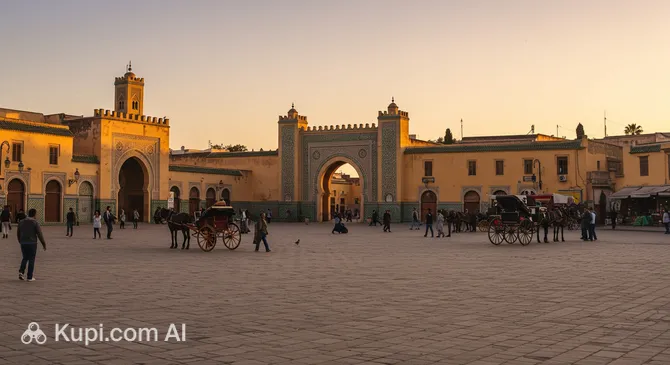
The city's past is inextricably linked with the name of Sultan Moulay Ismail, who turned it into his capital in the 17th century, dreaming of eclipsing the grandeur of the French court of Louis XIV. The fascinating history of Meknes can be read in its monumental buildings: enormous granaries, stables, and endless fortress walls that still capture the imagination with their scale today.
Meknes. Illustration.
Source: Kupi.com AI

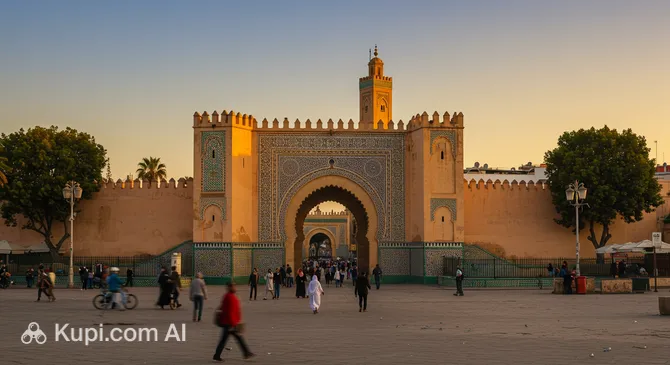
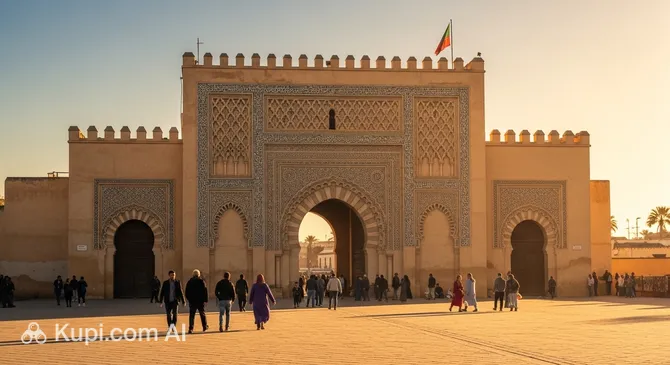
The historical city center is listed as a UNESCO World Heritage site. The main pride of Meknes is the Bab al-Mansour gate, considered one of the most beautiful in North Africa due to its preserved mosaics and delicate carvings. A walk through the medina here doesn't turn into a survival quest through crowds: the streets are more spacious, and the merchants are less persistent, making the introduction to local culture particularly pleasant.

It's worth coming to Meknes to slow down and feel the authentic rhythm of Moroccan life. It is a city where you can spend hours wandering through ancient ruins, drinking mint tea in a square overlooking fortress walls, and discovering treasures hidden from mass tourism.
Weather Overview

The climate of Meknes can be characterized as moderately warm, with a noticeable influence from the Mediterranean and continental air masses. The weather here is favorable for travel most of the year; however, the seasons have their own distinct features that should be considered when planning your trip.

Summer in the city is truly hot and dry. The highest temperatures are recorded in July and August, when average figures are around 27°C, and daily maximums often reach 34.5°C — 34.7°C. During this period, rain is a great rarity, and the number of days with precipitation tends toward zero (just 0-1 day per month). This is a time for those who love the sun, but be prepared for the heat.

Winter brings coolness and increased humidity. January is the coldest month with an average temperature of 11.0°C and nighttime drops to 5.2°C. The number of rainy days in winter months varies from 6 to 7. Spring arrives gradually: March can be the rainiest month of the year (up to 11 days with precipitation), but by May, the air warms up to a comfortable 20°C.

To choose the ideal time for your visit and pack your suitcase correctly, we recommend finding out in advance what weather in Meknes is expected for your travel dates. Overall, expect a hot dry summer and a cool winter with occasional rain.

Average monthly temperature

Average monthly precipitation

Interesting Facts

Beyond the main attractions, Meknes holds many fascinating secrets that allow you to view the history of this imperial city from a new perspective. Here are some surprising facts that often escape tourists' attention:

  • Sultan Moulay Ismail's desire to turn his capital into a "Moroccan Versailles" was so great that materials from antiquity were used for construction. Legends and archaeological data confirm that marble columns and stones for the palaces were brought from the nearby ancient Roman ruins of Volubilis, essentially "reassembling" history within new walls.

  • The scale of the Sultan's cavalry was legendary, and a unique infrastructure was created for it. The grand Royal Stables of Meknes were designed to house 12,000 horses. 17th-century architects designed the building with incredibly thick walls and a ventilation system that kept the steeds comfortably cool even in the most intense summer heat.

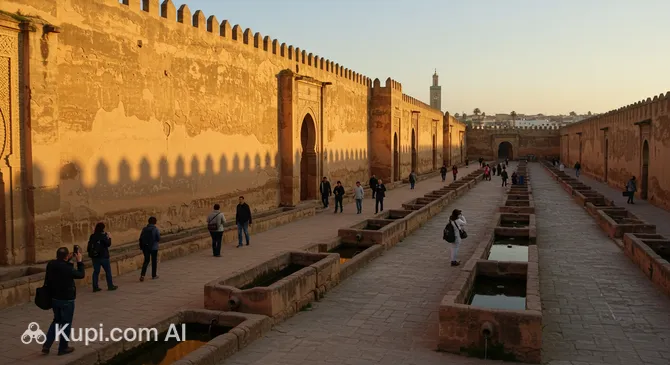
  • The city possessed a water supply system that was advanced for its time. The massive Agdal Basin (Sahrij Swani) and the adjacent "House of Water" (Dar al-Ma) were a complex engineering facility with giant cisterns. They not only fed fountains and gardens but also served as a strategic water reserve for the entire city in case of a siege.

  • Meknes is one of the few places in North Africa where the unique art of "damascening" is preserved. This is a complex technique of inlaying metal (usually steel) with the finest silver or gold wire. Local artisans still create these elegant items by hand, using techniques that haven't changed for centuries.

Royal Stables of Meknes. Illustration.
Source: Kupi.com AI

Traveler photos:

How to Get There

Getting to Meknes is quite simple, as it occupies a strategically important position in the north of the country. Although the city doesn't have its own airport, a well-developed transport network makes it easy to arrive here from nearby major centers. You can find out all ways to get to the city on our dedicated page, and below we look at the most popular routes.

The nearest air gateway is Fes-Saïss Airport (FEZ), located in the neighboring city of Fes. The distance to the center of Meknes is only about 52 km. This is the most convenient option for tourists: the journey by taxi or transfer will take approximately 45–60 minutes. The airport receives many international flights, especially from Europe.

For long-haul flights, people often choose the country's largest aviation hub—Mohammed V International Airport (CMN), located in Casablanca, about 198 km from Meknes. The car journey from there takes about 2.5–3 hours, though many travelers prefer to catch a train directly from the airport station. You can also consider flying into the capital: Rabat-Salé Airport (RBA) in Rabat is 114 km away, which is about 1.5–2 hours by car.

For convenience, here is a summary of the main airports used to reach the region:

AirportPassenger trafficDistance
Fes-Saiss Airport2.5 mln52 km
Sale Airport1.2 mln114 km
Sania Ramel187 777193 km
Mohammed V9.8 mln198 km
Tangier Ibn Battouta Airport2.4 mln209 km

The rail network is another excellent way to reach Meknes. The city is located on the country's main railway line connecting Marrakesh, Casablanca, Rabat, Fes, and Tangier. There are two stations in Meknes: the main "Meknès-Ville" in the new part of town and "Meknès-Amir Abdelkader." The trains are comfortable, run frequently, and are inexpensive. For example, the trip from Fes takes less than an hour, and from Rabat, about two hours.

In addition, Meknes is connected to all major Moroccan cities by a network of bus routes (popular companies include CTM and Supratours) and "grand taxi" (collective taxi) stands. The A2 motorway provides fast and convenient road access to Fes and Rabat.

Main Attractions

Meknes is often called the "city of beautiful gates," a title it rightfully holds. The massive fortress walls, stretching for tens of kilometers, are punctuated by majestic entrances, each a masterpiece of Islamic architecture. Familiarizing yourself with these monumental structures allows you to better understand the scale of Sultan Moulay Ismail's vision and feel the power of the imperial past.

One of the most significant historical structures is the Bab el-Khemis gate. Built in the 17th century, it served as the main entrance to the Jewish quarter (Mellah) and led to the now-vanished "City of the Amber Garden" (Madinat Riad El Anbar). The name translates as "Thursday Gate," referring to the traditional weekly market held nearby. The facade is decorated with complex geometric patterns and calligraphic inscriptions that refer to the gate as "happy," while the text praises the Sultan's greatness.

Bab el-Khemis. Illustration.
Source: Kupi.com AI

Traveler photos:

Fans of fortification architecture should take note of Borj Belkari. This massive bastion, erected during the same era, was part of the city's defensive system. Today, the tower houses an interesting pottery museum where you can see collections of Rif and pre-Rif clay dishes. This site is interesting not only for its history but also for the opportunity to learn about the region's craft traditions.

Another beautiful example of Moroccan architecture is the Bab Bou Ameir Gate. Located between the old medina and new districts, it symbolizes the connection between eras. Although less famous than the renowned Bab al-Mansour, its elegant proportions and decor deserve the attention of travelers seeking to see all facets of Meknes's architectural heritage.

Local Cuisine

The culinary traditions of Meknes are a harmonious intertwining of Arabic, Berber, and Andalusian motifs, backed by the city's status as the agricultural center of Morocco. Thanks to the region's fertile lands, local dishes are prepared with the freshest vegetables, fruits, and meat. A gastronomic journey here should start with the classics: tagine—stewed meat with vegetables, and couscous, which is traditionally served on Fridays. Be sure to try the local olives grown in nearby groves; they are considered among the best in the country and are often served as an appetizer before the main meal.

A true delicacy prepared in Meknes according to ancient recipes is pastilla (or bastilla). This is a complex layered pie that surprisingly combines sweet and savory: thin phyllo dough is filled with pigeon or chicken meat, sprinkled with almonds, cinnamon, and powdered sugar. Also worth noting are the thick and hearty soups: harira made from lentils and chickpeas, often eaten during Ramadan, and bissara—a broad bean puree generously seasoned with olive oil and cumin.

As for drinks, Moroccan mint tea remains the king of the table. It is brewed strong, lots of sugar is added, and it is poured from a height to form foam. On the streets, you can refresh yourself with freshly squeezed orange juice or sugar cane juice. Although Morocco is a Muslim country, Meknes is known as a center for winemaking. In specialty shops and licensed hotel restaurants, you can taste local wines, for example, from the Guerrouane region, which are highly valued by connoisseurs.

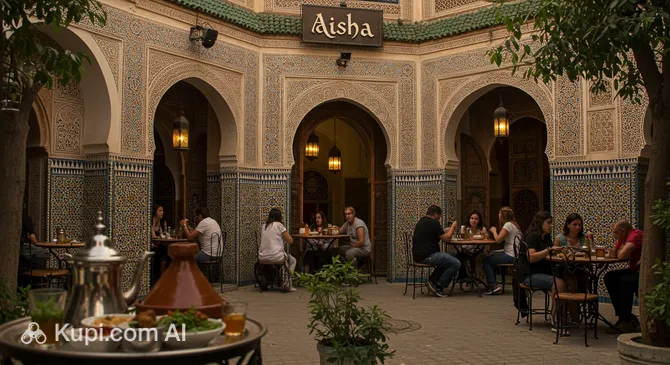
Aisha. Illustration.
Source: Kupi.com AI

Traveler photos:

The food culture in the city is diverse: from bustling street food to cozy family establishments. At markets and squares, you can have a quick snack of kebab skewers, roasted chickpeas, or flatbreads with various fillings. If you are looking for a place for a leisurely lunch or dinner in an authentic atmosphere, it's worth visiting Aisha restaurant, where guests are offered home-cooked meals and a warm welcome. For those who want to enjoy a refined interior and traditional cuisine in a historical setting, Restaurant Dar Baraka is an excellent choice.

Travel Tips

A trip to Meknes promises to be rich and comfortable if you prepare for the local characteristics of this imperial city in advance. We have compiled a list of practical recommendations to help you avoid common mistakes and feel confident in any situation.

  1. Clothing and Dress Code: Meknes is a city with a traditional lifestyle, so modesty is welcomed here. Women and men should avoid overly short shorts and open tank tops, especially when visiting the Medina. For walking on the cobblestones of the old town, comfortable and sturdy shoes are essential. In summer, don't forget a hat for the sun, and in winter or spring, bring a warm jacket—evenings can be unexpectedly cold.
  2. Transport Nuances: The historical center is best explored on foot. For trips to the New Town (Ville Nouvelle), use "petit taxis"—in Meknes, they are light blue. This is the cheapest way to get around, but always insist on the meter being turned on when boarding. If the driver refuses, feel free to find another car.
  3. Finances and Cash: The local currency is the dirham. Although large hotels and supermarkets accept cards, in Meknes—especially in markets and small cafes—cash rules. ATMs are easy to find in the modern part of the city, but there are few in the Medina. Try to always have small coins and bills for paying for taxis and souvenirs, as change is often "not available."
  4. Health and Water: It is categorically not recommended to drink tap water. Buy only bottled water and use it even for brushing your teeth if you have a sensitive stomach. Pharmacies (marked by a green cross) are well-stocked, and pharmacists often speak French, which facilitates communication.
  5. Communication and Navigation: English is understood less in Meknes than in Marrakesh, so knowing a few phrases in French will be a huge plus. We recommend buying a local SIM card (e.g., Maroc Telecom or Orange) immediately upon arrival for internet access. Download offline maps in advance: in the labyrinths of old streets, the GPS signal can be unstable.
  6. Etiquette Rules: Moroccans are very hospitable. If you are offered tea, refusal may be perceived as disrespect. When eating (if eating with your hands) and handing over money, use your right hand. Take photos of locals only with their explicit permission—many react negatively to cameras.
  7. What to Avoid: Do not use the services of unofficial "guides" who may persistently offer to show the way or lead you to the "best shop" right on the street. This often ends with a demand for money or being taken to a shop with inflated prices. Polite but firm refusal is the best way to handle this.
  8. Important Advice: Remember Friday. This is a holy day in Islam, similar to a weekend. Many shops in the Medina and the market may be closed until lunch or not open at all, and city life pauses during the main prayer. Plan your shopping and sightseeing with this factor in mind.

Meknes opens up to those who know how to observe and respect its traditions. By following these simple tips, you can safely immerse yourself in the atmosphere of the "Moroccan Versailles," enjoy its tranquility, and take home only the warmest memories.

Entertainment & Nightlife

Nightlife in Meknes differs significantly from the rowdy parties of Marrakesh or the cosmopolitan vibe of Casablanca. This is a city with a more conservative lifestyle, where evening entertainment is calm and relaxed. Most activity after sunset shifts from the old Medina to the Ville Nouvelle (New Town)—a modern district built during the French protectorate. This is where the main venues for a pleasant evening are concentrated.

For most tourists, an evening in Meknes begins with dinner at a local restaurant, which often transitions into a cultural program. Many establishments offer not only delicious food but also live music, most often traditional Andalusian or Berber. For instance, Aisha restaurant is famous for its hospitable atmosphere and authentic dishes, making it a great place to experience local color in the evening. If you are looking for a place with a beautiful interior and a chance to relax with a group, consider Restaurant Dar Baraka, where dinner becomes a true ceremony.

Regarding bars and clubs, the choice is limited, and alcohol is not served everywhere. Licensed bars, pubs, and discos are mainly located in large hotels (such as Zaki Hotel or Hotel Transatlantique) or in the center of the New Town. The crowd in such places is mixed: tourists and affluent locals. The dress code is usually "smart casual"—beachwear or shorts may not be permitted in evening venues. Drink prices are comparable to European ones, with a glass of beer or wine costing around 50–80 dirhams.

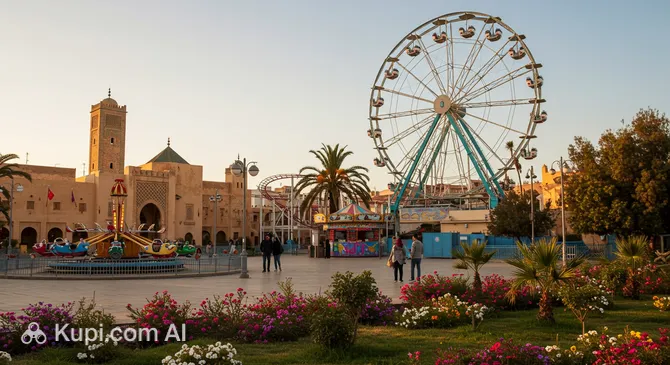
Coco Park. Illustration.
Source: Kupi.com AI

Traveler photos:

Daytime entertainment in Meknes is oriented toward family vacations and cultural enrichment. Besides the museums mentioned earlier, there are places for active leisure. Families with children and outdoor enthusiasts will enjoy Coco Park. This is a popular amusement park with rides and green zones where you can have fun before the evening cool sets in.

Practical tips for evening strolls:

  • Safety: The Ville Nouvelle district is considered safe for night walks, with wide, lit streets and plenty of police. In the Medina, most shops close after 9:00 PM, and the streets empty out—walking alone there at night is not recommended as it is easy to get lost.
  • Transport: At night, it is best to get around by "petit taxi." Note that after 8:00 PM, a 50% surcharge is officially added to the meter reading. You can catch a car on main streets or ask a restaurant employee to call one.
  • Opening hours: Restaurants are usually open until 11:00 PM or midnight; hotel bars may stay open until 1:00 or 2:00 AM.

Parks & Museums

Although Meknes is often perceived as a city of stone and fortress walls, there are wonderful places here where you can rest in the shade of trees or immerse yourself in studying the region's rich cultural heritage. The city's parks and museums offer travelers the opportunity to change the pace of sightseeing to something more contemplative and educational.

One of the city's main green zones is the area around the historical reservoir. The massive Sahrij Swani (also known as the Agdal Basin) was created during the reign of Sultan Moulay Ismail to irrigate the royal gardens. Today, it is a popular place for walks among both tourists and locals. It's pleasant to walk along the water's edge, enjoying the space and the view of the ancient granary walls, especially at sunset when the stone is colored in warm ocher tones.

Another interesting corner of nature is the historical Lahboul Gardens, located on the edge of the medina. This is the oldest public park in the city, where you can see landscape design elements typical of the colonial era and a small zoo. The park terraces down the slope of the valley, offering picturesque panoramas of the surroundings.

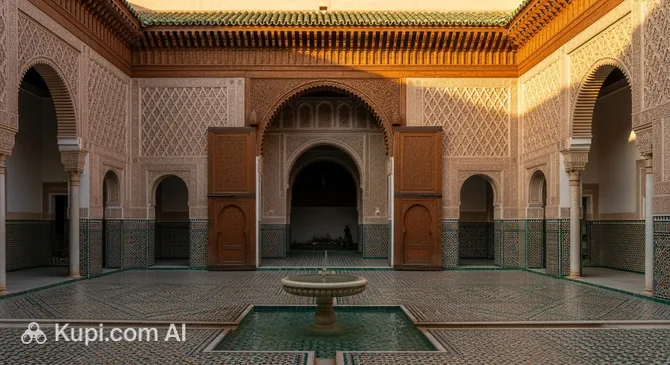
Dar Jamai Museum. Illustration.
Source: Kupi.com AI

Traveler photos:

The main treasury of art in Meknes is rightfully considered the Dar Jamai Museum. It is located in a luxurious 19th-century palace built by the powerful Jamai family. The museum's exhibition is dedicated to traditional Moroccan crafts: it features magnificent examples of wood carving (cedar), painted furniture, ancient carpets, jewelry, and costumes. A special charm is added to the museum by the inner Andalusian garden with a fountain and fruit trees—a true oasis of silence in the middle of a noisy city.

Lovers of ethnography and history should visit Borj Belkari. A Pottery Museum is housed within the walls of this mighty 17th-century bastion. The collection covers the history of the region's ceramic art from prehistoric times to the present day. The exhibition clearly demonstrates the difference between the rustic rural ceramics of the Rif and the elegant urban products, allowing for a deeper understanding of the life and traditions of the local peoples.

Insider Tip: If you find yourself at the Dar Jamai Museum, don't rush to leave after viewing the exhibits. Linger in the palace garden—it is one of the most peaceful and atmospheric places in the city, where you can listen to birdsong and imagine yourself as a nobleman of past centuries, hidden from the bustle of the outside world.

Getting Around

The transport system in Meknes is logical and convenient for travelers. Since the main historical monuments are concentrated in the Medina, it is best to move around this part of the city on foot, enjoying the atmosphere of the ancient streets. However, for trips to the modern district (Ville Nouvelle) or to attractions on the outskirts, you will need transport, which here, as in all of Morocco, has its own unique features.

The most popular and comfortable way to get around is by Petit Taxi ("small taxis"). In Meknes, they are easily recognized by their distinctive light blue color. These compact cars operate only within the city limits. Trips are metered, so always ask the driver to turn it on when you get in. If the driver refuses, it's better to find another car or firmly agree on the price beforehand. A feature of local "petit taxis" is that the driver can legally pick up other passengers if they are going your way.

For trips outside the city, such as to the ruins of Volubilis or neighboring settlements, Grand Taxis ("large taxis") are used. Usually, these are spacious sedans or minivans in white or grey, based at special stands. They work on the principle of a shared taxi, departing as soon as all seats are filled. You can also hire the entire car for an individual trip, which provides greater comfort and saves time, although it will cost more.

The city bus network covers the main districts and is the most budget-friendly option. Tickets are purchased from the driver or conductor upon entry. However, for a short visit, buses may not be very convenient due to difficulties with schedules and routes, which are often not duplicated in foreign languages. Additionally, during peak hours, the buses can be very crowded.

Near the fortress walls and Place El Hedim, you can find horse-drawn calèches (pleasure carriages). This is more of a colorful diversion than a full-fledged transport mode, allowing you to leisurely inspect the perimeter of the imperial city. The cost of such a ride is not fixed: you must agree on the price strictly before boarding, and bargaining here is not just appropriate but mandatory.

It is important to remember that in Meknes's public transport, mostly cash is accepted for payment. Cashless payments in taxis or buses are very rare. Tourists are recommended to always carry small coins and low-denomination bills, as drivers often do not have change. Mobile apps for calling taxis work inconsistently in the city, so it is more reliable and faster to simply hail a car on the street.

Accommodation

Meknes delights travelers with more democratic accommodation prices compared to neighboring Fes or popular Marrakesh. The city offers a wide range of accommodation options: from budget hostels for backpackers to luxury guesthouses. You won't find huge "all-inclusive" resort complexes here, but you will be able to immerse yourself in the atmosphere of genuine Moroccan hospitality.

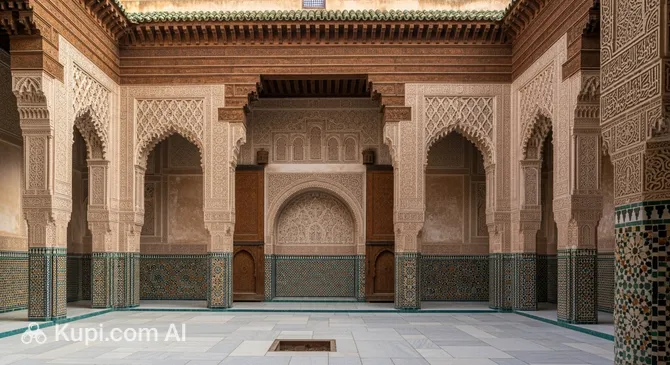
The choice of district depends on the purpose of your trip. If you want to feel the spirit of antiquity, it is worth staying in the Medina. This is where traditional riads are located—old houses with inner courtyards, gardens, and fountains converted into cozy boutique hotels. Staying in a riad allows you to be within walking distance of major attractions, such as Place El Hedim and historical markets.

Bou Inania Madrasa. Illustration.
Source: Kupi.com AI

Traveler photos:

For those who value modern comfort, parking availability, and spacious rooms, the Ville Nouvelle (New Town) district is better suited. Classical mid-range hotels and modern apartments are concentrated here. This area is convenient for transport accessibility: the train station is easy to reach from here, and the streets are wider and easier to navigate than the labyrinths of the old town.

Booking tips:

  • Plan ahead: The best riads often have only 5–10 rooms, so they fill up very quickly during high season (spring and autumn). It is recommended to book your accommodation several weeks before your trip.
  • Price range: Meknes offers options for every budget. Budget accommodation can be found for 15–25 euros per night. The mid-segment (comfortable riads and 3-4 star hotels) varies from 40 to 80 euros. Luxury options are rarer but offer exceptional service and "Arabian Nights" style interiors.
  • Booking methods: Most properties are listed on popular international online platforms. However, many small family guesthouses also accept direct bookings through their websites or social networks, which sometimes allows for a small discount or free breakfast.

Nearby Cities

For those who want to explore the surrounding area, Meknes serves as an excellent starting point for day trips to several interesting nearby locations:

The most popular destination is the neighboring imperial city of Fes. The journey takes less than an hour but will transport you to a completely different atmosphere. Fes is known for its massive old town (medina), which is a UNESCO World Heritage site, and the famous Chouara Tanneries. It is the perfect place for a deep dive into Morocco's history and crafts.

If you are attracted to natural beauty and a slower pace, take a look at El Hajeb. This town, located at the foot of the Middle Atlas, is called the "gateway to the mountains." It is famous for its picturesque cliffs, caves, and springs. Here, you can relax away from the city bustle and enjoy the fresh mountain air.

Although they are not listed in the city table, the proximity of the ancient Roman ruins of Volubilis and the holy city of Moulay Idriss (about 30 km from Meknes) cannot be ignored. This is a classic day trip route, allowing you to see magnificent Roman mosaics and panoramic views of the holy city spread over the hills.

CityPopulationDistance
Ait Yaazem16 09113 km
Boufekrane12 94113 km
Sabaa Aiyoun26 27716 km
Oued Jdida14 93517 km
Ain Karma9 73817 km

These nearby destinations provide an insight into the diverse culture and landscapes of the region.

Shopping & Souvenirs

General Overview: Shopping in Meknes is significantly different from the hectic experience in Marrakesh or Fes. Here, the shopping process takes place at a calmer and more relaxed pace. Merchants in the medina are less persistent, prices are often lower, and the atmosphere encourages a leisurely choice. The city is famous for its craft traditions, especially the unique technique of metal inlay, and is also an agricultural center for the region, making it an excellent place to buy gastronomic souvenirs.

Main Shopping Districts and Streets: The main attraction for lovers of authentic goods remains the Medina (old town). Narrow streets branching off from the central square are filled with artisans' shops. If you are interested in modern clothing, European footwear brands, or electronics, you should head to the Ville Nouvelle (New Town) district. Central avenues, such as Avenue Mohammed V, offer familiar city shopping with window displays and fixed prices.

Shopping Centers: Meknes is not a capital of giant malls, and shopping here is concentrated more in markets and individual boutiques. Nevertheless, for groceries, cosmetics, and essentials, tourists often visit hypermarket chains such as Marjane (located on the outskirts) or Label'Vie supermarkets in the center of the New Town. In these places, you can find alcohol departments and buy local wines at state prices.

Markets: The heart of trade in the city is the famous Place El Hedim. It is not just a landmark, but a huge open-air market where you can find everything from ceramics to spices. Specialized souks (markets) are located around the square and deep within the medina. For example, it's worth looking for the babouche (traditional shoes) market or the carpenters' lane, which smells of cedar shavings.

El Hedim Square. Illustration.
Source: Kupi.com AI

Traveler photos:

Souvenirs: You should definitely bring back items made with the "damascening" (damasquinerie) technique from Meknes—this is the art of inlaying steel with silver or gold wire, a signature of local masters. You will find beautiful plates, vases, and jewelry made in this style. Given that the city is surrounded by olive groves, local olives and high-quality olive oil make excellent gifts. The region is also famous for winemaking, so a bottle of wine from the Guerrouane appellation would be a good gastronomic souvenir.

Opening Hours and Payment: Shops in the New Town usually operate from 9:00 AM to 7:00 or 8:00 PM, sometimes with a lunch break. Shops in the medina open later, around 10:00 AM, and stay open until late evening. It's important to remember that on Friday (the holy day), many merchants close for prayer in the middle of the day or don't work at all. Large stores and hotels accept cards, but in the medina and taxis, you will need cash dirhams. Bargaining in the markets is mandatory and part of the culture.

Tax Free: A tax refund system (Tax Free) exists in Morocco, but finding shops in Meknes that issue the corresponding checks can be difficult. Usually, these are large chains or expensive souvenir boutiques with a special sticker on the window. If you manage to make a purchase with a VAT refund, the reimbursement procedure takes place at the departure airport upon presentation of the goods and documents.

Nearby cities

Reached the end of the page?

That means the route is fully explored