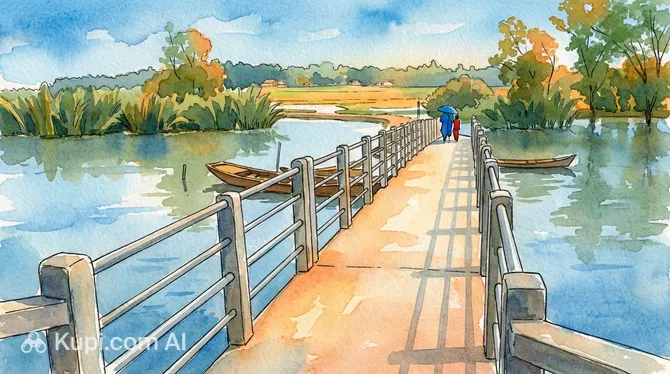
Maungdaw is an authentic port city located in the far west of Myanmar, in Rakhine State. It occupies a strategic position on the banks of the Naf River, which serves as a natural border with Bangladesh. The city is an important administrative and trade center where the paths of two nations meet, creating the atmosphere of a bustling border hub.
Maungdaw. Illustration.
Source: Kupi.com AI
Geographically, the city is influenced by the Bay of Bengal, which defines its humid tropical climate. The district's population reaches 400,000, making it one of the most densely populated in the region. Looking at the historical heritage of the city, one can see how closely it is linked to cross-border exchange and Maungdaw's role as a gateway to neighboring South Asia.
For the traveler, Maungdaw is primarily interesting as a meeting point of different cultures. Here, you can observe life at the Maundo Port—a key trading post—and enjoy views of the river delta. Although the city is not a mass tourist destination, it attracts those seeking authenticity and wanting to see Myanmar from its less explored, borderland side.
Weather Overview
The weather in Maungdaw is typical for Myanmar's tropical coast. Two distinct seasons are observed here: dry and wet. The average annual temperature stays within 25-28°C, but due to its proximity to the water, the humidity level almost always remains high. Be sure to check the detailed climate forecast for the city before planning your trip.
From May to October, the region is hit by monsoon rains. The peak of precipitation occurs in July, when more than 1000 mm of rain can fall, often leading to local flooding. Expect a very hot April with temperatures up to 35°C and a more comfortable, dry winter from November to February, when the average temperature is around 22°C.
The best time to visit is considered to be the winter period, when the rains practically stop and the air becomes fresher. At this time, the sky is usually clear, which is ideal for moving around the area and walking along the banks of the Naf River. Don't forget to use sunscreen even on cloudy days, as the tropical sun remains active year-round.
Average monthly temperature
Average monthly precipitation
Interesting Facts
Maungdaw is one of the few cities in Myanmar where the Muslim population predominates, making up about 91% of the district's residents.
The city is a key point for cross-border trade between Myanmar and Bangladesh, holding the status of an official border post.
The population density in the city area is about 295 people per square kilometer, which is high for the country's rural regions.
The distance from Maungdaw to the nearest significant town, Buthidaung, is only 26 kilometers by land.
How to Get There
The transport accessibility of Maungdaw largely depends on the condition of the roads in Rakhine State. The main way to reach the city is by land transport from other regions of Myanmar. There is no direct air service to the city, so travelers usually use complex routes combining domestic flights and travel by bus or car.
Detailed information on routes and schedules can be found on the page describing how to get to the city. It is important to remember that due to its border status, access to the city for foreign nationals may require special permits or document checks at checkpoints.
Railway communication in this region is poorly developed, and there are no main stations directly in Maungdaw. The nearest transport hubs are located in the state capital, Sittwe, or neighboring districts. For traders and locals, water transport via the Naf River plays an important role, connecting the city with coastal areas.
Station
Passenger traffic
Distance
Cox's Bazar Railway Station
3
76 km
Chattogram University railway station
4
192 km
Main Attractions
Maungdaw is not a city of classic tourist attractions like grand pagodas or modern museums. The main point of interest here is Maundo Port. This is an official border post through which a continuous stream of goods passes. Observing the loading of vessels and the bustle on the docks allows you to feel the true rhythm of life in this commercial city.
Another important feature is the Naf River Delta. Walks along the shore or boat trips on the river offer views of mangrove thickets and traditional fishing boats. This natural attraction highlights the geographic uniqueness of the region and its proximity to the border of the neighboring state.
For those interested in culture and ethnography, Maungdaw is fascinating as a concentration of unique ethnic groups. Walking through the local streets and visiting the markets provides an opportunity to see the way of life of the Rohingya people and other Rakhine residents. This is living history, reflected in everyday traditions, clothing, and the architecture of simple city houses.
Local Cuisine
The gastronomy of Maungdaw is a fascinating mix of Burmese, Bangladeshi, and Islamic culinary traditions. Thanks to its coastal location, fresh seafood forms the basis of the menu. Be sure to try grilled fish with local spices or thick curries served with aromatic rice.
One of the key features of the cuisine is its adherence to Halal standards, reflecting the culture of the majority of the local population. In the numerous street stalls and small eateries, you can find samosas and various flatbreads resembling South Asian roti. Locals often spend time in tea houses, where strong tea with condensed milk and traditional pastries are served.
For those who want to experience the true taste of the city, it is worth heading to the street markets near the port. Here, food is prepared right in front of you, and the aroma of spices fills the air. Maungdaw's gastro scene does not offer fine dining restaurants, but it wins you over with its honesty, bold flavors, and affordable prices for every guest.
Travel Tips
Visiting Maungdaw requires careful preparation and attention to detail from the traveler. These tips will help make your trip more comfortable and safe.
Clothing and Dress Code: Choose light clothing made of natural fabrics, as the city has high humidity. Remember conservative norms: when visiting religious sites or administrative buildings, shoulders and knees should be covered. Comfortable closed shoes will come in handy for walking on dusty roads.
Finances: There are very few ATMs in the city, and they do not always accept international cards. Be sure to carry a sufficient supply of cash in local currency. It is better to exchange currency in advance in Yangon or Sittwe.
Safety and Documents: Maungdaw is located in a border zone. Always carry your passport and be prepared for checks at checkpoints. Avoid taking photos of strategic facilities or the border.
Communication: English is not widely spoken. It is recommended to learn a few basic phrases in Burmese or have an offline translator. It is better to buy a SIM card in advance at the airport upon arrival in Myanmar.
Health: There are pharmacies in the city with a basic set of medicines, but bring specific medications with you. Drink only bottled water and use insect repellents.
Local Etiquette: Be polite and show respect for local traditions. Greet people with a slight bow of the head. Avoid touching the heads of locals or pointing at objects with your feet.
What to Avoid: Do not approach border fences without an escort and do not attempt to cross the border at unauthorized points. This can lead to serious legal problems.
Electricity: Bring a powerful power bank and a universal adapter, as power outages in Maungdaw occur regularly.
Following these simple rules will allow you to focus on exploring this unusual corner of the country and have only positive impressions from your trip.
Entertainment & Nightlife
Entertainment in Maungdaw is predominantly quiet and local in nature. The city is focused on business activity and trade, so there are no large nightclubs or noisy bars. The evening life of locals and visitors is centered in tea houses and small cafes located in the central part of the city and near the port area.
In these establishments, people gather for leisurely conversations, exchanging news, and tasting local sweets. The atmosphere is friendly, and prices are more than affordable. There are no night markets in the classic sense, but as dusk falls, the trading stalls near the port continue to operate, creating a lively backdrop for walks.
For daytime leisure, you can visit local markets or explore the surroundings. If you are looking for more modern forms of recreation, keep in mind that Maungdaw maintains a conservative lifestyle. Safety in the city is maintained at a good level, but tourists are advised to return to their hotels by late evening, as public life settles down quite early.
Parks & Museums
In Maungdaw itself, there are practically no specialized parks or art galleries. The urban environment is functional and densely built. However, the banks of the Naf River serve as a "natural park." Walking zones along the water allow you to enjoy the tranquility and observe the life of the river, which is the main geographical feature of the city.
The region's cultural heritage can be studied directly on the city streets rather than in museum halls. The architecture of residential quarters, old administrative buildings, and mosques are themselves open-air exhibits reflecting the history of interaction between Burmese and Islamic cultures. For nature lovers, the surrounding mangrove forests and agricultural lands encircling the city are of interest.
Those looking for classic museum exhibitions are recommended to plan trips to larger cities in the state, such as Mrauk-U or Sittwe. Maungdaw, on the other hand, offers a unique opportunity to see living history and everyday life without museum display cases, which makes visiting this place valuable in its own way for the thoughtful tourist.
Getting Around
Public transport in Maungdaw is provided at a basic level and perfectly suits the size of the city. Due to the compactness of the central part, many residents prefer to get around on foot or by bicycle. For longer trips within the city, motorcycles and rickshaws are actively used, being the most accessible and fastest way to move around.
City buses run infrequently and without a clear schedule, so tourists more often choose taxis. It is always worth agreeing on the price of the trip in advance, as meters are usually absent in the cars. Payment is made only in cash. During the rainy season, the condition of the roads can deteriorate, which should be taken into account when planning trips to the surrounding areas.
An alternative to land transport is the boats that ply the Naf River. This is an important part of the transport system for those who live in coastal villages or are involved in trade. Car rental is not developed in the city, so for travel outside of Maungdaw, it is better to hire a car with a local driver who knows the specifics of the roads in Rakhine State.
Accommodation
The hotel infrastructure in Maungdaw is primarily oriented toward those coming for business or trade. You won't find luxury resorts here, but the city offers a selection of simple guesthouses and small mid-range hotels. Most accommodation options are concentrated in the city center and within walking distance of the port.
When choosing accommodation, expect a basic level of comfort: most rooms will provide minimal amenities, air conditioning, and Wi-Fi (which may be intermittent). Due to the limited number of quality places to stay, it is recommended to book a room in advance, especially if your trip coincides with important trade events or national holidays.
For those planning a long stay, rentals in low-rise private houses are possible. The overall price range in Maungdaw remains low, making the city accessible for budget travelers. It is always useful to check for a generator at the hotel, as electricity outages occur regularly in the region.
Nearby Cities
Maungdaw can be an interesting starting point for those who want to see life on the western outskirts of Myanmar. The city's surroundings are rich in natural landscapes and small settlements, each with its own unique character.
Only 25 kilometers to the east is the town of Buthidaung. The road there is picturesque, and the town itself is known for its hilly landscapes and role as an important transport hub for Rakhine State. Also worth noting is Kyauktaw—a city with an ancient history located a bit further to the east. If you have all the necessary documents for crossing the border, you can consider a trip to the Bangladeshi city of Cox's Bazar, famous for its endless sandy beaches.
Exploring nearby territories allows for a better understanding of the complex cultural tapestry of this region. Each trip to neighboring towns will reveal new facets of life in the Naf River Delta and on the slopes of the Rakhine Mountains.
Shopping & Souvenirs
Shopping in Maungdaw primarily involves visiting local markets and trade stalls in the port area. You won't find designer boutiques here, but you can make many interesting discoveries. The main place for shopping is the central city market, where traders offer goods brought from Bangladesh and other regions of Myanmar.
Tourists should pay attention to the products of local artisans, including traditional textiles and woven goods. As a border city, you can find good deals here on spices, dried fish, and various exotic food products that are hard to find in the central part of the country. Prices in most stalls are not fixed, so moderate bargaining is quite appropriate.
Shops usually operate from early morning until sunset. Only cash in the local currency (Kyat) is accepted, and using bank cards is practically impossible. Shopping in Maungdaw is not just a buying process, but a way to immerse yourself in local life and interact with residents who are always ready to tell you about their goods.