Support

Mawlamyine

About

Mawlamyine, the capital of Mon State and one of the most atmospheric corners of Southeast Asia, is nestled along the banks of the Thanlwin River. This city, occupying a strategic position in the south of the country, allows travelers to see how authentic Myanmar lives, far from the hustle and bustle of overcrowded tourist routes. Thanks to its proximity to the Andaman Sea, a humid tropical climate prevails here, and the streets are literally lush with greenery, creating a picturesque backdrop for leisurely strolls.
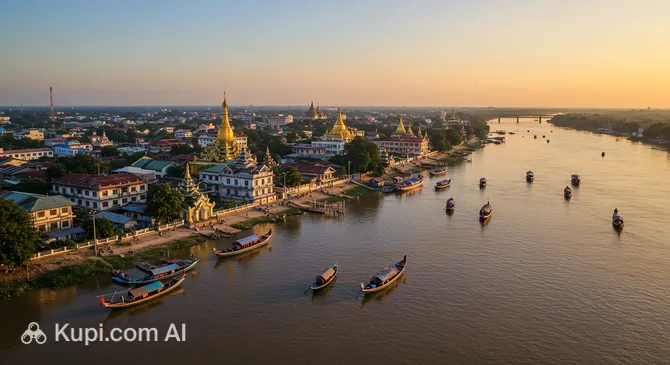
Mawlamyine. Illustration.
Source: Kupi.com AI

As the country's third-largest settlement with a population of over 250,000, Mawlamyine harmoniously combines the features of an important economic center with the cozy charm of provincial life. The city's architectural appearance is unique: majestic Buddhist temples and bustling Asian markets sit side-by-side with the heritage of past eras. The rich history of Mawlamyine is particularly evident in the preserved colonial mansions and old administrative buildings that give the streets a special charm.

The city's main feature is its measured pace and the genuine friendliness of its local residents. Mawlamyine remained off the mass tourism radar for a long time, so it has preserved its authenticity and almost home-like allure. Travelers come here to admire stunning sunsets from the promenade, explore ancient pagodas shimmering with gold on the hills, and get acquainted with the original culture of the Mon people. It is an ideal place for those seeking peace of mind, new gastronomic discoveries, and a desire to feel the soul of Asia.

Weather Overview

The climate of Mawlamyine is typical for the tropical zone: it is always warm, and the year is clearly divided into dry and wet seasons. The average air temperature consistently stays above +26°C, reaching peak values in the spring months, so you are unlikely to need warm clothing. Expect a sweltering spring with minimal rainfall and a humid summer when rain can fall almost daily.

The most favorable weather in Mawlamyine for tourism is established from December to March. During this period, the sky remains clear: only 1–2 rainy days are recorded in January and February, with practically no precipitation. This is the driest time of year, but by April, the heat intensifies, and daytime temperatures often reach +34°C.

With the arrival of May, the picture changes: the monsoon season begins, lasting until October. The wettest months are June, July, and August, when statistics show up to 30–31 rainy days per month. Despite the high humidity, the air temperature drops only slightly, staying at around +26...+27°C. By November, the intensity of rain drops sharply, and the city returns to a sunny rhythm of life.

Average monthly temperature

Average monthly precipitation

Interesting Facts

Beyond its main attractions, Mawlamyine holds many fascinating secrets and historical references that make walking through the city feel like a real journey back in time. Here are a few facts to help you better understand the unique character of this place:

  • During the colonial era, the city bore the unofficial title of "Little London." As an important port and administrative center of British Burma, it was actively developed in the European style. To this day, old mansions, Anglican churches, and cemeteries remain, giving the Asian streets a special, slightly nostalgic charm.

  • There is a popular legend that Rudyard Kipling's famous poem "Mandalay" was actually inspired by the landscapes of Mawlamyine. Researchers believe that the writer never actually reached Mandalay itself, and his impressions for the lines about the pagoda "looking out to sea" were gained right here, while admiring the views from the local hills.

  • The city is one of the key spiritual centers in Myanmar. The main shrine — the Kyaikthanlan Pagoda — is not only revered by believers but also serves as the best observation deck. Its terraces offer a breathtaking panorama of the city, the river, and endless rice fields.

  • Here you can observe monastic culture in its pristine form. The morning alms collection in Mawlamyine is not a tourist show but a sincere ritual. At dawn, processions of monks in maroon and pink robes fill the streets, while locals come out with deep respect to offer them food.

How to Get There

When planning a trip to this colorful corner of the country, it's worth thinking through your route in advance, as there may be no direct flights to the city itself. Logistics in this region have their own peculiarities, but the journey itself often becomes part of the adventure. You can find all the ways to reach the city on a separate page, while below we will look at the main transport hubs through which tourists arrive in Mawlamyine.

Mawlamyine itself does not have an active civilian airport that accepts regular tourist flights. The main "entry ticket" to the region is Yangon International Airport (RGN). It is located in the city of Yangon, approximately 169 km from Mawlamyine. This is the country's largest air hub, where most international flights arrive. The journey from the airport to Mawlamyine by taxi or bus takes about 4–5 hours, passing through picturesque landscapes and over the famous bridge across the Salween River.

Another option is suitable for those traveling overland from Thailand. The nearest airport to the city is across the border — Mae Sot Airport (MAQ) in the Thai city of Mae Sot. It is located just 100 km from Mawlamyine. However, keep in mind that this route involves crossing an international border, and travel time by car is about 3 hours, excluding border formalities.

For convenience, here is summary information on the main airports located relatively close to the city:

AirportPassenger trafficDistance
Mae Sot Airport102 989100 km
Yangon International Airport3.3 mln169 km
Sukhothai Airport41 544247 km
Dawe Airport85 000267 km
Lampang Airport128 193283 km

Regarding rail travel, a train journey in Myanmar is a special kind of tourist experience, allowing you to immerse yourself in the local atmosphere. Although our database doesn't have detailed info on specific stations for this request, it is known that Mawlamyine is connected by a rail line to Yangon. Trains depart from Yangon Central Station and head south. The trip can be quite long compared to the bus, but it offers unforgettable views of the countryside and pagodas. We recommend checking current schedules and carriage classes on-site or at station ticket offices.

Main Attractions

Mawlamyine is a city where history comes alive in every stone, whether it be an ancient legend or echoes of the colonial era. The main points of interest here are inextricably linked with Buddhist culture and natural splendor: most shrines and interesting sites are located on picturesque hills or on islands in the Salween River delta, creating a unique landscape.

Kyaik Than Lan Pagoda is the undisputed landmark and signature of the city. Built in 875 AD, this stupa crowns the mountain ridge, offering perhaps the most breathtaking panoramic view of the surroundings, especially at sunset. It is believed that this very panorama inspired Rudyard Kipling's famous lines in his poem "Mandalay." Travelers climb up here not only for the shrine, which tradition says houses a hair relic of the Buddha, but also for the wonderful atmosphere of tranquility.

Equally impressive is the Win Sein Taw Ya Reclining Buddha, located about 20 km south of the city. It is one of the largest reclining Buddha statues in the world, reaching a length of 180 meters. The scale of the structure is staggering: inside the giant lies a multi-story complex with dioramas depicting the life of the Enlightened One. This is a must-visit for those who want to appreciate the monumental scope of religious architecture in Myanmar.

For lovers of silence and mystery, Shampoo Island (Gaungse Kyun), also known as "Head-Washing Island," is worth a visit. This tiny piece of land at the confluence of rivers earned its name from an old tradition: water from a local spring was used by Burmese kings for ceremonial hair washing. A monastery and several small pagodas are located here, and the boat trip provides a chance to enjoy the serene river landscapes.

To immerse yourself in the world of local crafts, head to Bilu Island, or Ogre Island. Despite the bridge connecting it to the mainland, life here has maintained a traditional way. The island is famous for craftsmen who hand-make smoking pipes, bamboo hats, and other products. A visit here is a wonderful chance to see the region's authentic lifestyle and purchase unique souvenirs firsthand.

Local Cuisine

Mawlamyine's gastronomic scene is a vibrant kaleidoscope of flavors where Burmese, Mon, and Indian culinary traditions harmoniously intertwine. Thanks to such a cultural symbiosis, the food here has become a true feast for foodies. The city's proximity to the sea provides local cuisine with the freshest gifts of the water: fish and giant prawn dishes are always found in markets and on menus, often becoming the stars of local food festivals.

The unofficial symbol of the city and a dish that every traveler must try is the Mon-style fish soup Mohinga. It is prepared according to special recipes, served with rice noodles, plenty of fresh herbs, and crispy toppings. This hearty and fragrant dish can be found almost everywhere — from humble street stalls to cozy cafes — and it is consistently loved by both locals and tourists.

The street food culture holds a special place in the city's life. Strolling through the markets, it's impossible to resist the aromas of fried bananas, pastries with delicate coconut filling, spicy skewers, and freshly baked flatbreads. Those with a sweet tooth should look out for traditional Mon desserts: rice cakes and tapioca sweets prepared according to ancient recipes will be a great discovery.

As for drinks and atmosphere, the heart of Mawlamyine's social life beats in its numerous tea houses. It is customary to spend time leisurely over a cup of strong, sweet tea with milk, accompanied by sweet buns. These are the perfect places to feel the true spirit of the city, observe the steady lives of the locals, and immerse yourself in the authentic atmosphere of Asia.

Travel Tips

A trip to Mawlamyine is an immersion into the atmosphere of a colonial past and Buddhist tranquility, but traveling to this region requires some preparation. To ensure your holiday goes smoothly and leaves only pleasant memories, we have compiled a list of the most important practical recommendations to help you feel confident in any situation.

  1. Clothing and Dress Code. Given the hot tropical climate, choose loose clothing made from natural fabrics (cotton, linen). The most convenient footwear here is flip-flops or sandals without fasteners, as they must be frequently removed before entering temples. Remember the strict religious dress code: when visiting pagodas, shoulders and knees must be covered for both women and men. It's a good idea to buy a longyi locally — a traditional Burmese skirt that isn't hot and is appropriate for any shrine.

  2. Transport. Public transport in the traditional sense (buses with schedules) is practically non-existent in the city. The most popular way to get around is by moto-taxis and three-wheeled tuk-tuks. Always agree on the fare in advance before getting into the vehicle. For independent exploration of the area, you can rent a scooter, but be prepared for chaotic traffic.

  3. Finances and Cash. Myanmar is a cash-driven country. The local currency is the Kyat (MMK). Cards are only accepted in expensive hotels, so always have a supply of cash. If you bring US dollars for exchange, they must be in pristine condition: bills with even the slightest wear, folds, or stains will not be accepted at exchange offices or will be offered at a very unfavorable rate.

  4. Health and Safety. Mawlamyine is a safe city, but basic precautions should be observed. Drink only bottled water and avoid ice in street drinks. Be sure to bring repellents: there are many mosquitoes by the river and on the hills in the evening. There are pharmacies in the city, but the selection may differ from what you are used to, so pack a basic first-aid kit at home.

  5. Communication. English is not understood everywhere, mostly by guesthouse staff and taxi drivers. Learn a couple of words in Burmese ("Mingalabar" — hello, "Kyay-zu-tin-bar-te" — thank you) — this will bring a genuine smile to the locals. We recommend buying a local SIM card upon arrival (mobile internet is quite good here) and downloading offline maps of the region in advance.

  6. Local Etiquette. When entering the territory of any temple or monastery (and sometimes private homes), you must remove not only shoes but also socks. This rule is strictly followed. It is customary to hand over money or items with your right hand (or the right hand supported by the left at the elbow), as the left hand is considered "unclean."

  7. What to Avoid. Never point your feet at people, Buddha statues, or altars — in Buddhist culture, feet are considered the dirtiest part of the body, and such a gesture will be taken as a grave insult. Also, do not touch the heads of local residents (even children), as the head is considered the most sacred part of the body.

  8. Useful Life Hack. Power outages can happen in the city, so be sure to bring a high-capacity power bank and a small pocket flashlight. This will be especially useful if you linger at a pagoda observation deck after sunset, when the streets leading down the hill may be poorly lit.

Following these simple rules will help you easily find common ground with the friendly residents of Mawlamyine and focus on the main thing — contemplating the golden stupas and magnificent sunsets over the Salween River. May your journey be filled with discovery and spiritual warmth!

Entertainment & Nightlife

Nightlife in Mawlamyine is strikingly different from the noisy parties of Bangkok or Yangon. You won't find neon signs for strip bars or discos thumping until morning here. Evening leisure in the capital of Mon State is primarily about a relaxed atmosphere, a cool river breeze, and leisurely conversations under the starry sky. The city goes to sleep early, so "nightlife" here starts at sunset and winds down by 10:00–11:00 PM.

The epicenter of evening activity is the promenade — Strand Road. This is where locals and tourists flock as dusk falls. A colorful Night Market unfolds along the river, serving as the city's main entertainment hub. Here, you can not only have a delicious and inexpensive dinner of fresh grilled seafood but also immerse yourself in the authentic atmosphere: plastic chairs, the scent of spices, the laughter of young people, and views of the dark surface of the Salween River create a unique ambiance.

For those looking for a place to have a drink in a more comfortable setting, choices are limited but available. The main format is traditional "beer stations". These are simple but soulful open-air establishments serving local draught beer and snacks. If you want something more refined, look into the bars at major hotels. For example, Sky Lounge offers cocktails and a stunning panorama of the city from above, making it an ideal spot for a romantic evening. The Mawlamyine Brew House is also popular — a place where you can try craft varieties and relax in the company of expats and travelers.

The crowd in Mawlamyine's establishments is mixed but always friendly. There is no dress code: shorts and a T-shirt are appropriate everywhere. However, it’s worth remembering safety and logistics. Streets outside the center are poorly lit, so a flashlight won't go amiss. Public transport stops running early, and catching a tuk-tuk after 9:00 PM can be problematic — it's better to arrange a return trip with a driver in advance or ask bar staff to call a taxi for you.

While Mawlamyine isn't famous for wild night adventures, the city offers a rich cultural program during the day. Be sure to visit the Mon Cultural Museum to see unique collections of musical instruments and royal artifacts, or go exploring the old colonial churches scattered around the historic center.

Parks & Museums

While Mawlamyine is primarily famous for its golden pagodas, the city and its surroundings offer travelers picturesque green zones and interesting museum collections that reveal the rich heritage of the Mon people. A walk through local parks and cultural centers will allow you to escape the tropical heat and gain a deeper understanding of this ancient region's history.

The central spot for peaceful outdoor relaxation within the city is Kanthaya Lake. This is a picturesque artificial reservoir surrounded by shaded alleys, which serves as a favorite meeting place for locals. In the morning, you can see joggers here, and in the evening — families enjoying the cool air. Tourists will love this place for its tranquil atmosphere and the chance to take beautiful photos of the sky's reflection in the water, especially at sunset. Several cozy cafes are located around the lake, perfect for a refreshing drink.

For those who want to combine a walk with panoramic views, the ideal route is the Taungyo Dan Ridge. While technically a string of religious shrines, the road connecting the pagodas is a beautiful promenade surrounded by tropical greenery. From the heights, breathtaking views of the city and river unfold, and the fresh sea breeze makes the walk comfortable even on a hot day. This is a great alternative to traditional parks for those seeking peace and beautiful scenery.

The city's main cultural treasure is the Mon Cultural Museum. The exhibition here is small but rich: it is dedicated to the history and daily life of the Mon civilization, one of the oldest in Southeast Asia. Visitors can see traditional musical instruments (including the famous crocodile-shaped harp), ancient palm-leaf manuscripts, royal furniture, and silverware. This is a must-visit if you want to learn more about the people inhabiting this part of Myanmar.

Another site that effectively functions as an art museum is the Seindon Mibaya Kyaung (Queen Seindon Monastery). This historic complex is famous for its incredible teak wood carvings and gilded interiors. It was built by Queen Seindon, who fled from Mandalay, and today represents an outstanding example of 19th-century Burmese architecture. Tourists are drawn here not only by the architecture but also by the chance to examine the intricate craftsmanship of carvers that cannot be seen in modern buildings.

History enthusiasts willing to take a short trip out of town should look at the "Death Railway" Memorial Museum in the town of Thanbyuzayat (about 60 km south). This site commemorates the events of World War II and the railway's construction. The complex includes a preserved steam locomotive from that time, a section of the original track, and statues, serving as a reminder of an important historical period in the region.

Getting Around

Getting around Mawlamyine is an attraction in its own right, devoid of the strict schedules and routes familiar to Western tourists. Here you won't find subways, trams, or comfortable air-conditioned city buses. The city's main transport artery pulses thanks to small, maneuverable, and sometimes quite exotic vehicles that fit perfectly into the narrow streets and the province's slow pace of life.

The most common means of transport are three-wheeled moto-taxis, which locals call "thoun-bein." These are similar to the famous Asian tuk-tuks, but often with passenger seats facing backwards. They cruise throughout the city and easily accommodate two or three people with small luggage. For solo travelers looking to save time, regular moto-taxis are the best choice — their drivers can be spotted waiting at intersections, though they have no special uniform.

The role of public transport for longer distances is played by modified pickup trucks. Two longitudinal benches are installed in the back under a canopy that protects from the sun and rain. They follow loosely fixed routes between the center, markets, and outskirts. This is the most budget-friendly way to move around, allowing you to feel like part of the local community, but don't expect comfort or speed: they usually depart once full, and during peak hours, the cabin gets packed tight.

The payment system in the city is simple and conservative: cash rules here. There are no transport cards, validators, season tickets, or mobile apps for payment. Settlement is made directly with the driver at the end of the trip (or with the conductor in pickups). It is extremely important to have small bills, as the driver may not have change for large banknotes.

The main practical rule for a tourist is to agree on a price before boarding. There are no meters in moto-taxis and tuk-tuks, and the cost depends on the distance, time of day, and your bargaining skills. For foreigners, the starting price is often inflated, so polite bargaining is not only appropriate but expected. If you don't know the approximate fare, ask for advice from your hotel staff before heading out.

As an alternative to public transport, scooter rental is popular. Rental points can be found at many guesthouses and hotels. This gives complete freedom to explore distant pagodas and the surrounding area. Classic air-conditioned car taxis are rarer in the city and are more reliably ordered through hotel reception than trying to catch one on the street. Global ride-hailing apps work inconsistently or are unavailable here, so don't rely on your smartphone.

Given the city's location on the riverbank, boats are a specific type of transport. Small motorized vessels regularly transport passengers to nearby islands, such as Shampoo Island. You can find a boatman on the promenade or at special jetties. A trip on the water is not just a way to reach an attraction but an opportunity to enjoy the refreshing river breeze for a symbolic fee.

Accommodation

Accommodation in Mawlamyine is more about atmosphere and immersion in local flavor than about flawless five-star service. The city's hotel stock consists mainly of cozy guesthouses and mid-range hotels. It’s hard to find international chain brands or ultra-luxury resorts here, but many hotels are located in restored colonial mansions with high ceilings and teak floors, which adds a special charm to the stay.

The most popular and convenient area for tourists is the Strand Road promenade. Staying here puts you at the epicenter of city life: the Night Market, boat piers, and many cafes are nearby. The main advantage of first-line hotels is the opportunity to watch magnificent sunsets over the Salween River directly from your room's balcony or from the breakfast terrace. Another sought-after area is located closer to the hills and pagodas; it is quieter and cooler there, but you'll need a moto-taxi to get to the center.

The price range in the city can be characterized as budget and mid-range. A night in a simple guesthouse with basic amenities is very inexpensive, while more comfortable hotels with air conditioning, hot water, and breakfast offer prices comparable to the national average, yet noticeably lower than in Yangon. Booking is available through popular international online platforms, though many small family-run hotels still prefer to take bookings by phone or via social media.

When planning your trip, consider seasonality. During the peak months (December to February), when the weather is most comfortable, the best rooms with river views sell out quickly. We recommend booking accommodation in advance, at least a couple of weeks before your visit. Also remember that budget places often only accept cash (Kyats), so clarify the possibility of card payment before checking in.

Nearby Cities

For those who want to explore the surroundings, Mawlamyine serves as an excellent starting point for day trips to several interesting nearby locations:

The most popular destination for a short trip is Hpa-An, the capital of Kayin State. The journey there takes very little time, but the scenery changes drastically. This city is surrounded by majestic limestone mountains rising above emerald rice fields. Hpa-An is known for its many caves filled with Buddha statues and the opportunity to climb Mount Zwegabin, which offers a spectacular panorama of the region.

History buffs should head south towards the town of Thanbyuzayat. This place is of great significance as it was the terminus of the infamous "Death Railway" from World War II. Travelers can visit the well-maintained war cemetery and a memorial museum. If you drive a bit further, you can reach Setse Beach — a popular local holiday spot with a wide sandy strip and a relaxed atmosphere.

CityPopulationDistance
Mudon152 30023 km
Hpa-An421 52547 km
Thaton130 76360 km
Kawkareik98 00065 km
Paingkyon88 60471 km

These nearby destinations provide insight into the diverse culture and landscapes of the region.

Shopping & Souvenirs

Shopping in Mawlamyine is primarily about immersion in the authentic atmosphere of local life, rather than a chase for global brands. The city doesn't claim to be a fashion capital, but it charms with its colorful bazaars and small shops where you can find unique handmade goods. For tourists, this is a great opportunity to see the riches of Myanmar: from exotic fruits to traditional textiles, and to purchase souvenirs that carry the warmth of local craftsmen's hands.

The city's main commercial artery is Lower Main Road. This busy street, running parallel to the river, is lined with shops located on the ground floors of old colonial buildings. Here you can find everything: from electronics and gold jewelry to clothing and household items. A walk through this area allows you to combine sightseeing with shopping.

Despite its provincial status, the city has a modern shopping center — Ocean Supercenter. This is perhaps the only place in Mawlamyine that resembles familiar Western malls. It is air-conditioned, has a large supermarket with fixed prices, clothing and cosmetics stores, and a food court. It's worth stopping by if you need quality hygiene products, familiar groceries, or just a break from the street heat.

The heart of local trade is the Zeigyi Market. It is a huge, noisy space where life bustles from early morning. The market is divided into sections: one sells bright fabrics and clothes, another spices and dried fish, and a third household goods. This is the best place to buy fabric for a traditional longyi skirt and immediately order tailoring from local seamstresses. In the evening, the baton is passed to the Night Market on the promenade, where the focus shifts to street food and inexpensive accessories.

When choosing souvenirs, pay attention to the region's gastronomic symbols. Mawlamyine is famous nationwide for its pomelos — these giant citrus fruits are incredibly sweet and juicy here. The region is also known for durians, though transporting them is difficult due to the smell. For non-edible souvenirs, consider items made of bamboo and wood, especially the famous smoking pipes and hats crafted by artisans on the neighboring Bilu Island.

Shops and markets in the city live by a "solar" schedule. The Central Market opens at dawn (around 6:00 AM) and winds down by 4:00–5:00 PM. The Ocean shopping center stays open longer, usually until 9:00 PM. The main method of payment is cash (Kyats). Bank cards are only accepted at the Ocean supermarket and some jewelry stores, so always carry a supply of small bills. Bargaining is appropriate and expected at markets and private shops, but in supermarkets, prices are fixed.

The Tax-Free system (VAT refund) for tourists practically does not function in Mawlamyine. Tax refund processing is only possible at major international airports when leaving the country and requires receipts from specific stores, which are virtually non-existent in this provincial city. Therefore, you should not count on this option when making purchases here.

Reached the end of the page?

That means the route is fully explored