Support

Kaba Aye Pagoda

About

The Kaba Aye Pagoda is one of the most revered Buddhist shrines not only in Yangon but in all of Myanmar, also known by the inspiring name "World Peace Pagoda." Located in the northern part of the city, it is the heart of a spacious complex that includes, in addition to the pagoda itself, an impressive artificial cave, a library, a hospice, and residential quarters for pilgrims. This sacred site serves as a center for worship, meditation, and major religious events, attracting believers and spiritual seekers.
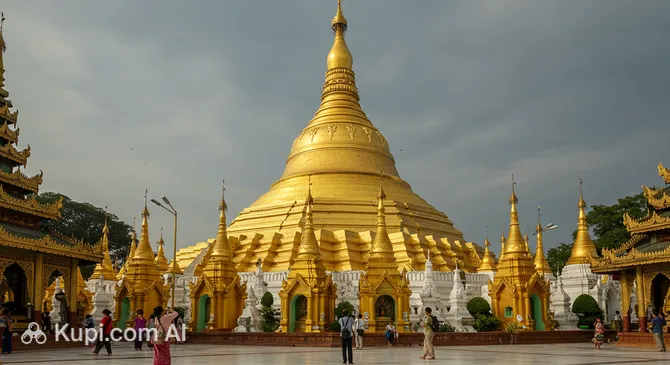
Kaba Aye Pagoda. Illustration.
Source: Kupi.com AI

Traveller photos:

The Kaba Aye complex impresses with its massive scale and beautifully maintained grounds, making it a popular destination for both locals and international tourists. A stroll through the area allows you to appreciate the magnitude of the vision and the harmony of the architectural design.

The pagoda is surrounded by picturesque gardens where numerous Buddha statues are set among greenery and flowers. This environment creates a unique atmosphere of peace and spiritual tranquility, perfect for contemplation and reflection. Visiting Kaba Aye is an opportunity not only to see a unique religious site but also to gain a deeper understanding of Myanmar's culture and spiritual traditions.

Contacts

To get the most up-to-date information on opening hours and contact details for the Kaba Aye Pagoda administration, it is recommended to consult the official tourist resources of Yangon or local information centers. Often, such sites do not have a dedicated telephone line for general inquiries, but visitor information is available on-site or through travel guides.

How to contactContact
AddressKabar Aye Pagoda Rd, Yangon, Myanmar (Burma)
Phone+95 9 969 116804

What to Do

Visiting the Kaba Aye Pagoda in Yangon offers tourists a unique opportunity to touch the spiritual life of Myanmar. You can take a leisurely walk through the vast grounds of the complex, admiring the majestic architecture of the pagoda itself, topped with a shining golden dome. Of particular interest is the Maha Pasana Guha artificial cave, created for the Sixth Buddhist Council, where important Buddhist services and ceremonies are still held today. It is also worth visiting the complex's library, which houses a rich collection of religious texts.

The Kaba Aye Pagoda, meaning "World Peace Pagoda," is richly decorated with gold leaf and precious stones, and inside and around it, you can see numerous statues and relics telling the history of Buddhism in the country. Many visitors and pilgrims take part in traditional offering rituals, meditate in designated halls, or simply enjoy the atmosphere of deep peace and silence that reigns in this sacred place. On certain days, large-scale religious gatherings and festivals are held here, offering a chance to dive deeper into the culture and traditions of Burmese Buddhism.

Getting There

The Kaba Aye Pagoda is located approximately 10 kilometers north of central Yangon, making it relatively accessible. Thanks to its proximity to the international airport and the city's main transport routes, reaching this sacred site is quite easy.

The most convenient and fastest way to reach the pagoda for most tourists is by taxi. A trip from central Yangon usually takes between 20 and 30 minutes, though this can vary depending on traffic and the time of day. Taxis are easy to find anywhere in the city or can be booked via a mobile app.

For those who prefer more budget-friendly options or want to dive deeper into local life, there is the possibility of using public transport. City buses and shared taxis heading to northern Yangon run to the Kaba Aye Pagoda. However, keep in mind that this method may be less comfortable and take more time, especially for those unfamiliar with the city's transport system. For international visitors planning to visit several attractions in this part of the city, renting a car with a driver can also be a good alternative.

Nearest city: Yangon

History & Facts

The Kaba Aye Pagoda, which translates to the "World Peace Pagoda," holds a special place in the spiritual life of Yangon and all of Myanmar. Its history began relatively recently, in 1952, when it was built on the initiative of Prime Minister U Nu. The primary purpose of its construction was to host the Sixth Buddhist Council, a landmark event for Buddhists worldwide, which took place here from 1954 to 1956. The pagoda's name itself reflects the desire for peace and harmony, which was particularly relevant in the post-war period.

Building a complex for an event as large-scale as the Sixth Buddhist Council was a matter of state importance. The government of Myanmar allocated an impressive 40-hectare site and significant financial resources, which was quite unusual for that time. More than 2,500 monks from different countries gathered for the council to collaborate on discussing and codifying Buddhist texts. This event not only strengthened the position of Buddhism in the region but also brought attention to the Kaba Aye Pagoda as an important spiritual center.

One of the unique features of the Kaba Aye Pagoda is that it was designed to accommodate thousands of devotees and participants in religious ceremonies. Beyond its architectural significance, the pagoda is an important pilgrimage site thanks to the sacred relics stored here. Among them are the bone relics of two of the Buddha's principal disciples, Sariputta and Moggallana, giving the site a special sanctity and drawing Buddhists from all over the world who seek to witness these precious artifacts.

Time Needed

To fully enjoy your visit to the Kaba Aye Pagoda in Yangon, we recommend setting aside 1.5 to 3 hours. This will allow you to see all the key elements of this unique site in Myanmar without rushing.

Within this time, you can not only carefully examine the pagoda itself—also known as the "World Peace Pagoda"—but also stroll through the surrounding grounds. Special attention should be given to the Maha Pasana Guha cave, where the Sixth Buddhist Council took place, and the extensive library of religious texts. These sites are an integral part of the Kaba Aye complex.

Additionally, if your visit coincides with religious ceremonies, you will have the opportunity to observe them, which will undoubtedly enrich your experience. Thus, the allotted hours will be sufficient for a complete introduction to the Kaba Aye Pagoda and its spiritual atmosphere.

Working Hours

The Kaba Aye Pagoda in Yangon typically opens its doors to visitors daily. Based on available information, the complex usually operates from 6:00 AM to 8:00 PM. This allows travelers significant flexibility in planning their visit throughout the day to enjoy the atmosphere of this sacred site.

Generally, visiting pagodas of this type does not require advance ticket booking or registration. However, as opening hours can occasionally change, especially during religious holidays or special events, it is always wise to check for current information on the official website (if available) or through local tourist sources just before your visit. The Kaba Aye Pagoda is accessible year-round, making it an attractive destination at any time of the year.

Open 24/7

Nearby

A visit to the Kaba Aye Pagoda in Yangon is undoubtedly a highlight, but you shouldn't limit yourself to just this iconic site. Exploring the surrounding area will allow you to dive deeper into the city's atmosphere, discover other interesting corners, and gain a more complete understanding of Myanmar's cultural and historical heritage. Often, it's the smaller, lesser-known attractions or authentic local spots that leave the warmest memories.

There are several notable sites near the Kaba Aye Pagoda that can complement your sightseeing program. Below is a list of some of them, along with approximate distances, so you can plan your time and route.

NameDistance
Swe Taw Myat Pagoda2.1 km
Yankin House3.6 km
Kyaikkasan Pagoda4.4 km
Kyauk Taw Gyi (White Marble Buddha)4.5 km
Byblos Pub & Grill4.6 km
Chaukhtatgyi Buddha Temple5.1 km
The Beer Factory Yangon5.3 km

Things to see in nearby cities

Reached the bottom of the page?

Looks like you know this route inside out