Support

The Secretariat

About

The Secretariat in Yangon is an impressive colonial-era architectural complex that is one of Myanmar's most iconic historical buildings. Built of red brick in a majestic Victorian style, it once served as the administrative heart of British colonial rule in Burma. Today, it is a prominent historical and architectural monument, drawing attention with its grand scale and rich past.
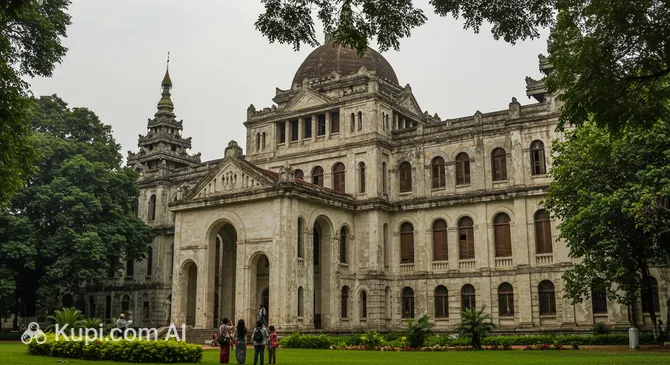
The Secretariat. Illustration.
Source: Kupi.com AI

Traveller photos:

Architecturally, The Secretariat, also known as the Ministers' Building, stands out for its massive corner towers, which give it a resemblance to medieval British fortresses. The majestic facades of the administrative blocks are connected by a complex system of long corridors and walkways, creating a sense of grandeur and power. This building is a prime example of colonial development, reflecting the ambitions and style of that era, and represents a unique monument of colonial architecture.

Located in Yangon's central business district, The Secretariat is not just a single building but an important part of the rich architectural heritage of the colonial period that has been remarkably preserved in the city. A visit to this site allows you to touch the history of Myanmar and appreciate the scale and craftsmanship of the builders of the past who left such a significant mark on the landscape of Yangon.

Contacts

To obtain up-to-date information about visiting The Secretariat in Yangon, including opening hours, entrance fees, and available contact details, we recommend visiting the attraction's official website, if one exists. You can also find useful information at tourist information centers in Yangon or on the city's tourism portals.

How to contactContact
AddressThein Phyu Road, Middle Block, Yangon, Myanmar (Burma)
Phone+95 9 45688 3044
Websitewww.facebook.com

What to Do

A visit to The Secretariat in Yangon is primarily an opportunity to connect with the colonial history and architecture of Myanmar. Tourists can explore the impressive facades of this grand Victorian-style building. Walking around, you can appreciate the scale of this architectural ensemble, which embodies the major traditions of British architecture from the era of Queen Victoria. It is a wonderful opportunity to take memorable photos and imagine what this place looked like in the past.

The main draw of The Secretariat is its rich history. Visitors can learn about key moments in the formation of modern Myanmar. It was within these walls that the first government of Burma worked after the formal separation from British India in 1937. It is also the site of the tragic events of July 19, 1947, when independence activists, including General Aung San, the father of Aung San Suu Kyi, were assassinated here. Learning these historical facts provides a deeper understanding of the country's path to sovereignty.

For those interested in the colonial past of Yangon, The Secretariat is a key point on the map. A visit is often included in itineraries through the city's historical center. Viewing The Secretariat can be combined with a walk through the central business district along the Yangon River, where other significant colonial-era buildings are preserved. This will provide a more complete picture of the city's architectural and historical heritage.

Getting There

The Secretariat, as one of the key landmarks in Yangon, is generally easily accessible from various parts of the city. Its location within the city limits makes it a convenient visit for tourists seeking to explore the rich historical and cultural heritage of Myanmar.

There are several ways to get to The Secretariat. One of the most popular options for travelers is a taxi, which can be hailed on the street or ordered using mobile apps common in Yangon. This provides a comfortable and relatively quick journey. You might also consider using local buses – a more economical way that allows you to experience the rhythm of the city's daily life, though it may require some prior research into the routes.

If your accommodation is in the central part of Yangon and the weather is pleasant, The Secretariat is quite reachable on foot. Such a walk offers the chance not only to enjoy the city views but also perhaps to discover other interesting corners along the way. In any case, before setting off, we suggest checking the attraction's exact location on a map to plan your route optimally.

Nearest city: Yangon

History & Facts

The Secretariat in Yangon, also known as the Ministers' Building, is one of Myanmar's most significant and recognizable colonial buildings. Its history is inextricably linked to the period of British rule. The decision to build this grand complex was made after the British consolidated their power in Rangoon (the former name of Yangon) and conquered Upper Burma in 1885. The construction contract was awarded to the family of Babu Naitram Rambux, an immigrant from India.

The construction of The Secretariat spanned many years, beginning in 1889 and finishing, according to various sources, in 1902 or 1905. This impressive Victorian-style complex with red brick walls and majestic towers immediately became the heart of the British administration in the colony. It was here that key decisions determining the life of Burma were made. In 1937, when Burma was formally separated from British India and granted dominion status, The Secretariat housed the first government of the new administrative unit.

With the proclamation of Burma's independence in 1948, The Secretariat did not lose its significance. The country's government continued to work within its walls, and the parliament held its sessions here. Even during the years of military rule, the complex remained the center of executive power. However, in November 2005, the government of Myanmar moved to the new capital, Naypyidaw. Since then, the majestic Secretariat building, which witnessed many historical events including the tragic assassination of General Aung San and several of his ministers in 1947, has stood as a monument to the colonial era and an important symbol of the country's history.

Time Needed

To explore The Secretariat in Yangon, the former colonial administration building, travelers usually need from 1 to 3 hours. This time is generally sufficient to appreciate the building's impressive architecture, walk through its courtyards and main accessible rooms, and soak in the historical atmosphere of this iconic landmark.

The duration of your visit may vary depending on several factors. If you simply want to take a few photos and get a general impression of the building, an hour will be quite enough. However, if you are interested in the history of Myanmar and the colonial past of Yangon, or if you decide to join a guided tour (if offered), it's worth setting aside more time, perhaps 2-3 hours. Some visitors also spend time studying information boards or exhibitions, if available at the time of the visit.

In general, when planning your day in Yangon, allocate at least a couple of hours for The Secretariat to leisurely explore this important historical and architectural structure without feeling rushed. This will allow you to better understand its significance and enjoy its unique atmosphere.

Working Hours

When planning a visit to The Secretariat in Yangon, it is important to check the current opening hours in advance. Usually, such iconic places have a set schedule that may change depending on the season or special events. We recommend checking the attraction's official website or contacting local tourist information centers for the most up-to-date information on visiting hours.

As for the need for advance ticket booking or tour registration, it is also best to find this out beforehand, especially if you plan to visit during the peak tourist season. Some popular sites may have a limited number of visitors per day. As a rule, large historical complexes like The Secretariat are open to the public year-round, but exceptions may occur due to public holidays or restoration work.

9:00 – 17:00

Nearby

A visit to The Secretariat in Yangon is undoubtedly a highlight, but you shouldn't limit yourself to just that. Exploring the surrounding area will allow you to dive deeper into the city's atmosphere, discover other interesting spots, and get a more complete picture of Myanmar's culture and history. Often, it is the small walks through neighboring streets and quarters that offer the most unexpected and pleasant experiences.

There are several noteworthy sites near The Secretariat that can complement your sightseeing program. Below is a list of some of them with their distances indicated, which will help you plan your route.

NameDistance
St Mary's Cathedral0.4 km
Sule Pagoda0.7 km
Sule Square0.8 km
Junction City1.3 km
Karaweik Palace2.2 km
National Museum of Myanmar2.9 km
Shwedagon Pagoda3.1 km

Things to see in nearby cities

Reached the bottom of the page?

Looks like you know this route inside out