Support

Sule Pagoda

About

Sule Pagoda is one of the most revered Buddhist stupas, located in the very heart of Yangon, Myanmar. It is considered not just a religious structure, but a true spiritual center of the city, embodying its historical and cultural beginnings. This ancient pagoda attracts both pilgrims and tourists with its tranquility and special atmosphere.
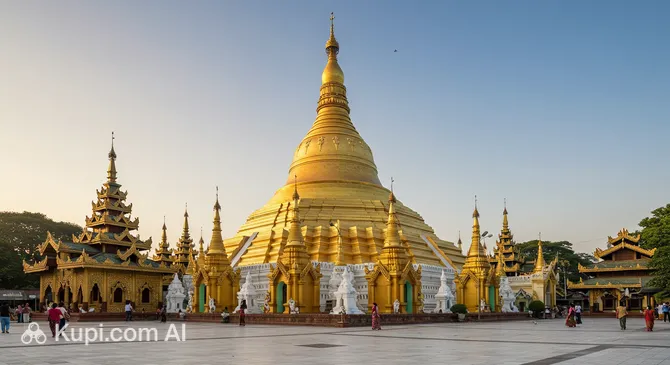
Sule Pagoda. Illustration.
Source: Kupi.com AI

Traveller photos:

One of the main architectural features of Sule Pagoda is its octagonal central stupa, which maintains this shape throughout its height, reaching 48 meters. This structure makes it unique among other Buddhist temples. Located in the center of a busy roundabout at the intersection of Sule Pagoda and Mahabandula Roads, the pagoda serves as an important landmark and contrasts strikingly with modern urban development.

Historically, Sule Pagoda played a significant role in the planning of Yangon. During British colonization, it was from this pagoda that the British began the street numbering for downtown Rangoon (the former name of Yangon). This fact highlights its central position and its importance as both a spiritual and geographical landmark of the city over the years.

Contacts

As Sule Pagoda is a significant religious and historical site, specific contact details for visitors are usually not published. Finding the pagoda is very easy: it is located in the heart of Yangon, at the busy intersection of Sule Pagoda and Mahabandula Roads, and serves as a prominent landmark.

For the most up-to-date information on opening hours, entrance fees (if applicable), and visiting rules, it is recommended to contact local tourist information centers in Yangon or check the details directly on-site before your visit.

How to contactContact
AddressJunction of Sule Pagoda Road, Maha Bandula Road, Yangon 11141, Myanmar (Burma)
Phone+95 1 371 561

What to Do

Visiting Sule Pagoda offers a unique opportunity to immerse yourself in the world of Buddhist architecture and religious traditions in Myanmar. Inside this sacred place, you can see various Buddhist relics, including, according to legend, a hair of the Buddha. Visitors can not only admire the elaborate decorations but also, if they wish, take part in traditional religious ceremonies or simply enjoy the incredibly peaceful and calming atmosphere within the ancient stupa.

However, the experience of Sule Pagoda is not limited to its interior. Be sure to notice the surrounding architectural ensemble. These are colonial buildings from the early 20th century, mostly built in the Baroque style. Although some may not look perfect, they still bear traces of former luxury and give this area of Yangon a special charm and allure. Interestingly, many of these buildings were designed by architects who had never visited Yangon, making their appearance even more unusual and noteworthy.

Getting There

Getting to Sule Pagoda is easy, as it stands proudly in the very heart of Yangon. This iconic structure is situated on a busy roundabout where Sule Pagoda and Mahabandula Roads meet, making it an easily recognizable landmark. Thanks to its central location, the pagoda is accessible from almost any part of the city.

You can choose the most convenient way for you to travel to Sule Pagoda. Yangon's public transport allows you to soak up the local atmosphere on your way to the pagoda. A taxi is a fast and comfortable option, especially if you value your time. If you are staying in the city center, a pleasant walk to the pagoda is a great way to start exploring this amazing place. Its historical role as the starting point for city planning during British colonization only highlights how convenient its location is for exploring the historic center of Yangon.

Nearest city: Yangon

History & Facts

Sule Pagoda is shrouded in many legends dating back to antiquity. It is believed that this sacred site is over 2,000 years old, and its history is inextricably linked with the most important relics of Buddhism. According to the most famous legend, a hair of the Buddha is enshrined here. In the language of the ancient Mon people, the pagoda was called Chak Athok, which literally translates as "Pagoda of the Sacred Hair," emphasizing its exceptional importance to believers.

Another popular legend links Sule Pagoda with the reign of King Ukkalapa. It is said that the monarch held important meetings here to discuss the construction of another famous Yangon shrine – the Shwedagon Pagoda. It is suggested that the Burmese word "Su-wei," meaning "meeting," eventually transformed into the modern name "Sule," immortalizing the pagoda's historical role as a place for making landmark decisions.

Other legends associated with Sule Pagoda exist, although they appeared much later. For instance, one story first recorded in chronicles only in the 19th century tells of the tragic fate of Prince Maung Di, who, according to the myth, fell from a tree and died while fleeing from a princess. More recently, attempts were made to link the stupa's history to King Anawrahta's conquest of Thaton, but these versions lack convincing historical evidence, remaining part of the rich folklore heritage surrounding this ancient shrine.

Time Needed

For an average visitor to see Sule Pagoda, it usually takes about 1-2 hours. This time is typically enough to walk around the perimeter, admire the golden stupa, examine the numerous shrines and Buddha statues located around the central structure, and soak in the atmosphere of this sacred place.

If you plan to do more than just a quick tour and want to study the architectural details, take photos from different angles, observe local rituals, or simply spend some time in silence and meditation, you should allow a bit more time. In this case, your visit may take up to 2-3 hours. It is also worth considering that the pagoda is located in the busy center of Yangon, and you may want to explore the surrounding colonial buildings, which will also add time to your walk through this area.

Working Hours

Sule Pagoda generally opens its doors to visitors daily and is accessible throughout the year. However, exact operating hours may vary, especially depending on the day of the week or special religious services and ceremonies. At the moment, we do not have exact data on the pagoda's schedule.

To ensure your visit to Yangon and your exploration of Sule Pagoda go smoothly, we strongly recommend checking the current opening hours immediately before your visit. This can be done by contacting official Yangon tourism sources or, if possible, checking the attraction's official website, if one exists. Usually, pre-booking for entry is not required, but special rules may apply during major holidays or festivals, so it's best to confirm this in advance.

4:00 – 23:00

Nearby

A visit to Sule Pagoda will undoubtedly be a highlight of your trip to Yangon. However, to make your experience even more complete and multifaceted, it's worth paying attention to other interesting sites located nearby. Exploring the surroundings will allow you to dive deeper into the city's atmosphere, see it from different angles, and discover new facets of its culture and history.

In the immediate vicinity of Sule Pagoda are several notable attractions that can complement your walk and enrich your stay in the capital of Myanmar. Below is a list of some of them, along with their distance from the pagoda:

NameDistance
Sule Square0.3 km
Junction City0.7 km
The Secretariat0.7 km
St Mary's Cathedral0.9 km
National Museum of Myanmar2.4 km
Karaweik Palace2.5 km
Thakhin Mya Park2.5 km

Things to see in nearby cities

Reached the bottom of the page?

Looks like you know this route inside out