Support

Jomsom

About

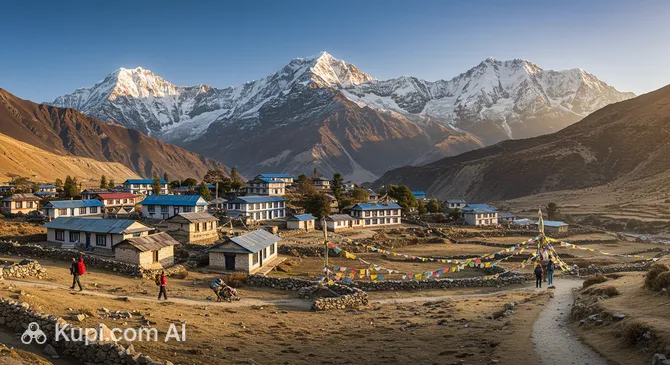
Jomsom is a stunning mountain town tucked away at an altitude of approximately 2,720 meters in the heart of the Himalayas. Located in the picturesque Kali Gandaki River valley, between the majestic snow-capped peaks of Annapurna and Dhaulagiri, it serves as the administrative center of the Mustang District. For many travelers arriving in Nepal, this town becomes the starting point for exploring the rugged yet alluring beauty of the high highlands.

Jomsom. Illustration.
Source: Kupi.com AI

Despite its modest population of fewer than two thousand people, Jomsom plays a vital role in the region. The town serves as a "gateway" to the mysterious Upper Mustang and is a key stop on the famous Annapurna Circuit trekking route. A unique atmosphere of seclusion reigns here: stone streets, crystal-clear mountain air, and a sense that time flows differently allow you to forget the hustle and bustle of the outside world.

The rich history of Jomsom is inextricably linked to the traditions of the Thakali people, whose hospitality is known far beyond the valley. One of the town's hallmarks is its extensive apple orchards, which create a striking contrast with the harsh mountain landscapes. Tourists come here not only for the pilgrimage to the Muktinath Temple but also to enjoy the silence and the incredible panoramas that open up from any point in the town.

Jomsom is worth visiting to feel as if you are at the "edge of the world," where the Himalayas reveal their true soul. It is an ideal place for those seeking inspiration in the grandeur of nature, wanting to touch ancient culture, and wishing to see one of the deepest river valleys on the planet with their own eyes.

Weather Overview

Climatic conditions in Jomsom are dictated by the high altitude of the Himalayas, so the weather remains cool or cold throughout the year. Winters are characterized by a harsh temperament: in January, the average temperature is around -13.3°C, and night frosts often reach -19.0°C. Precipitation during this period is extremely rare, totaling only 1-2 mm, and the days are predominantly dry.

The summer season brings a softening of the cold, but not heat. In July and August, the average temperature rises to +7°C, while maximum figures rarely exceed 10.2°C. A characteristic feature of summer is a high number of "wet" days (up to 31 days per month), although the total amount of precipitation remains modest—only about 9-10 mm. Expect a cool summer with frequent cloudiness or light drizzle and very cold, low-snow winters.

Due to these characteristics, it is important for travelers to choose their gear carefully. To pick the best time for a visit, we recommend checking what weather in Jomsom is expected in the near future, as conditions in the mountains can change very quickly.

Average monthly temperature

Average monthly precipitation

Interesting Facts

In addition to majestic mountain landscapes, Jomsom hides many surprising details that are not obvious at first glance. This town lives by its legends and ancient traditions, which reveal themselves only to curious travelers.

  • Hunting for sacred stones. In the waters of the Kali Gandaki River, one can find Shaligrams—unique fossils of ancient mollusks. Locals and pilgrims believe these black stones are incarnations of the god Vishnu, and finding them brings happiness and good luck.

  • An airport in the clouds. The city's air harbor is considered one of the most scenic and high-altitude airports in Nepal. A short flight on a small plane gives passengers unforgettable views of Himalayan eight-thousanders and a deep gorge, turning the journey into an adventure of its own.

  • Living history of trade. An ancient caravan route connecting India and Tibet passed through Jomsom for centuries. The traditions of exchanging salt and wool are still alive: at the local market, you can find rare Tibetan souvenirs, incense, and handicrafts that seem to have been transported from the past.

  • Architecture of hospitality. The town is the home of the Thakali people, known for their unique culture. Their traditional stone and wood houses with cozy inner courtyards have become a true hallmark of the region and a subject of admiration for architects.

How to Get There

Traveling to the heart of the Himalayas requires careful planning, as this region is remote from bustling metropolises. The road here is an adventure in itself, allowing you to enjoy the changing natural zones. You can find out more about how to get to Jomsom on a dedicated page, but here we will look at the main transport hubs through which tourists enter the area.

Most travelers arrive in the country via Tribhuvan International Airport (IATA: KTM). It is located in the capital, Kathmandu, and is the main air gateway to Nepal. The distance from the airport to Jomsom is approximately 196 km. However, given the complex mountain terrain and road conditions, the overland journey takes significant time and requires endurance. It is the country's largest airport with high passenger traffic, receiving flights from all over the world.

Another option is Bhairahawa Airport (IATA: BWA), located in the city of Siddharthanagar. This is the closest airport to Jomsom from the list provided, situated about 145 km away. Despite the shorter direct distance, the overland trip will also be challenging and long due to mountain switchbacks. It is important to remember that there are no major international airports in Jomsom itself, so after landing, you will need to transfer to ground transport or a local small aircraft.

For clarity, here is a summary of the main airports:

AirportPassenger trafficDistance
Pokhara Airport67 km
Bhairawa Airport70 000145 km
Tribhuvan International Airport5.0 mln196 km
Surkhet Airport20 000210 km
Simara231 291215 km

There is no railway service in this high-altitude region, so trains are not an option for traveling directly to Jomsom. The primary way to reach the town after arriving in the country is a combination of an internal flight and a trip by SUV or bus. The roads here pass through scenic but difficult mountain routes, often along the riverbed, so tourists should be prepared for long journeys and spectacular views.

Main Attractions

Dhumba Lake is a hidden natural gem located just a few kilometers from the town, on the opposite bank of the Kali Gandaki River. This emerald-green body of water is considered sacred by local Buddhists, and legends say its waters never completely freeze despite the harsh winters. For tourists, this place is primarily interesting for its scenic beauty: in windless weather, the snow-capped Nilgiri peak is reflected in the lake like a mirror, creating ideal conditions for landscape photography and meditative relaxation far from civilization.

For those who want to dive deeper into the region's culture, the Mustang Eco-Museum is a must-visit. Located near the airport, this museum offers a rich exhibition detailing the daily life, traditions, and history of the Thakali people. Here, you can see collections of medicinal herbs used in traditional medicine, ancient utensils, and models of ancient monasteries. Visiting the museum allows travelers to better understand the unique ecosystem of the region and learn how local residents have adapted to high-altitude life over centuries.

Although Muktinath Temple is not located in the center of Jomsom but slightly higher in the mountains, the town serves as the main starting point for pilgrimages to this sanctuary. This site is revered by both Hindus and Buddhists, attracting thousands of people from all over the world. The complex is famous for its 108 sacred water spouts, where bathing is believed to wash away sins, and the "eternal flame" that burns due to a natural gas vent. A trip here is an opportunity to experience the spiritual traditions of the Himalayas and enjoy breathtaking views of the mountain ranges along the way.

Local Cuisine

The gastronomic scene in Jomsom is a real discovery for foodies, as the town is rightfully considered the culinary center of the Mustang region. The cuisine of the Thakali people dominates here, famous for its richness of flavor and use of the freshest local products. The main dish every traveler must try is Thakali Dal Bhat. Unlike the classic version common in other parts of the country, this variant is served with special pickled snacks, aromatic lentil soup, and meat cooked with unique Himalayan spices.

Jomsom earned special fame for its apple orchards, so the fruit theme runs through many local treats. The local apples are considered among the best in Nepal. Travelers are strongly encouraged to try homemade apple pie or warm strudel, which pair perfectly with the mountain chill. Among drinks, natural apple juice and strong cider (brandy) are very popular, providing excellent warmth after long walks in the wind.

For a quick and hearty lunch, Tibetan-origin dishes that have firmly entered the local diet are excellent. In street cafes and lodges, it's worth ordering Thukpa—a thick and rich noodle soup—or the famous momo dumplings with meat or vegetable fillings. At local markets, you can buy delicious souvenirs for the road: hard yak cheese and dried meat prepared according to ancient recipes.

The food culture here is devoid of pretension: tourists and locals eat in cozy tea houses and small family restaurants where an atmosphere of warmth and hospitality prevails. Jomsom also regularly hosts gastronomic festivals where you can not only taste the best examples of Thakali cuisine but also attend masterclasses to take home the secret of preparing authentic Himalayan dishes.

Travel Tips

Preparing for a trip to Jomsom requires special attention, as it is not just a tourist town but a high-altitude outpost with a rugged character. To ensure your adventure in this amazing part of Nepal is as comfortable and safe as possible, we have gathered a list of the most important recommendations.

  1. Wind and sun protection. The Kali Gandaki valley is famous for its powerful winds. You will definitely need a quality windproof jacket, a buff or scarf to protect your face from dust, as well as reliable sunglasses and high SPF sunscreen—the sun is very active at high altitudes even in cool weather.

  2. Transport nuances. Within the town itself, people mostly move on foot. For trips to the surroundings (e.g., Muktinath), local jeeps or buses are used, which fill up as passengers arrive. Car rental without a driver is not common here due to difficult road conditions.

  3. Financial preparation. Rely exclusively on cash (Nepalese rupees). Although there are ATMs in Jomsom, they often don't work due to communication failures or lack of bills. Cards are only accepted in a few expensive hotels, so a cash reserve is essential.

  4. Health at altitude. The town is located at an altitude of about 2,700 meters. While this isn't a critical level, some may experience slight shortness of breath. Pack your own first-aid kit: local pharmacies have a basic assortment, and specific medicines may not be available.

  5. Staying connected. Wi-Fi is available in most lodges (guesthouses), but the speed often leaves much to be desired. Buy a SIM card (Ncell or Nepal Telecom) in advance in large cities, but be prepared for the signal to drop in the gorges.

  6. Local etiquette. Jomsom is a blending point for Buddhist and Hindu cultures. Always walk around stupas, temples, and mani walls (prayer stones) clockwise. It is customary to remove your shoes when entering homes or temples.

  7. What to avoid. Do not plan a flight out of Jomsom on the same day as your international flight home. Mountain weather is unpredictable, and flight cancellations due to wind or clouds are common. Always leave a buffer day.

  8. The "Before Noon" rule. Try to plan all important treks and excursions for early morning. A local quirk is that after 11:00 AM–12:00 PM, a very strong headwind rises in the valley, making walks exhausting.

Following these simple rules will help you avoid daily inconveniences and focus on the main thing—the incredible beauty of the Himalayas. May your journey to Jomsom be a source of vivid impressions and inspiration!

Entertainment & Nightlife

In Jomsom, you won't find typical urban entertainment like noisy nightclubs or shopping malls. Leisure here is inextricably linked to the unique nature of the Himalayas and the authentic culture of the region. For travelers visiting Nepal, this town offers a harmonious blend of active recreation and peaceful contemplation of mountain landscapes.

One of the most popular activities is hiking in the surrounding areas. Many tourists use Jomsom as a base for day trips, such as to the picturesque village of Marpha, located a few kilometers to the south. The path there runs along the riverbed, where you can see traditional architecture, visit ancient Buddhist monasteries, and walk through famous apple orchards without exhausting yourself with difficult climbs.

For fans of more dynamic pastimes, the Kali Gandaki valley offers excellent conditions for mountain biking. Rocky trails and dirt roads attract bikers with the opportunity to test themselves against the backdrop of "eight-thousanders." Horseback riding can also be organized here: locals offer horse rentals for trips to remote viewpoints, allowing you to feel like a participant in ancient trade caravans.

Evening relaxation in Jomsom is a time for coziness and gastronomic discoveries. After a windy day, travelers gather in the common rooms of lodges, often around a large wood-burning stove. This is the perfect moment to try warming local apple brandy or cider, read a book in silence, or exchange impressions with other trekkers while enjoying the atmosphere of being disconnected from the hustle of the big world.

Parks & Museums

In the town of Jomsom, the concept of a "park" or "museum" takes on a completely different meaning than in typical metropolises. There are no fenced-off squares with benches or huge exhibition complexes; instead, the entire region is a grand open-air natural reserve, and cultural treasures are kept in small but authentic institutions and ancient sanctuaries.

One of the main "green zones" of the town is the famous apple orchards, which can be called the true gardens of Jomsom. These well-tended plantations, especially picturesque during the spring blossom or autumn harvest, create a surprising contrast with the harsh rocky slopes of the mountains. A stroll among the trees allows you not only to enjoy the silence and the scent of fruit but also to see how local residents lovingly cultivate the land in challenging high-altitude climatic conditions.

The Kali Gandaki River valley serves the role of the main natural park. This is not just a shoreline but a unique geological zone where nature itself acts as an exhibition curator. Travelers descend to the riverbed to walk along the bottom of the ancient Tethys Ocean: it is here, among the stones, that one can find Shaligrams—fossilized ammonite shells that are millions of years old. This "park" offers breathtaking views of Nilgiri Peak and the chance to touch the planet's geological history.

Among cultural institutions, the Mustang Eco-Museum takes center stage. It is a compact but informative space located near the airport. The museum's exhibition is divided into several sections dedicated to the flora, fauna, and geology of the region. Of particular interest is the collection of traditional costumes and household items, which helps to deeply understand the way of life in harsh conditions. Tourists are also often shown documentaries about the culture and nature of Mustang, making the visit an excellent start before trekking.

While Jomsom doesn't have art galleries in the classic sense, Buddhist monasteries (gompas) fulfill this function. Local temples, such as Sakya Gompa, are true treasuries of sacred art. Inside, travelers can see exquisite wall paintings (thangkas), bright statues of deities, and ritual masks. Visiting a gompa is an opportunity to get acquainted with the living culture of the region, where art is inextricably linked to spiritual practice.

For those seeking hidden gems, we suggest stopping by the ACAP Information Center (Annapurna Conservation Area Project). Although it is an administrative office, you can often find detailed maps, displays with information about rare animals living in the reserve (such as the snow leopard), and get valuable advice from rangers who know every trail in the area.

Getting Around

The transport system in Jomsom is fundamentally different from typical urban infrastructure. You won't find subways, trams, or scheduled minibuses running between blocks. Since the town is very compact, the primary way to get around is walking. All key sites—hotels, shops, the airport, and administrative buildings—are within walking distance of each other, and you can walk across the town from end to end in just 20–30 minutes.

The role of public transport for connecting with surrounding villages and the Muktinath Temple is performed by local jeeps (usually Mahindra or Tata brands) and, less frequently, old buses. Jeeps operate as a "shared taxi": the vehicle departs only when all passenger seats are filled. This is the most reliable and fastest way to reach neighboring settlements in mountain off-road conditions. Buses run less frequently and are cheaper, but the journey takes longer and is less comfortable due to the bouncing on rocky roads.

The payment system here is simple and conservative: only cash is accepted. No transport cards, mobile apps, or validators exist. Tickets for buses or jeeps are purchased at special counters at the bus station (usually a small booth or table near the parking area) or directly from the driver. Prices for tourists are often fixed and may be higher than for locals, so it is better to clarify the cost in advance at your hotel or from other travelers.

As an alternative form of transport, mountain bike and motorcycle rentals are popular. This is a great option for independently exploring the valley if you are confident in your driving skills on gravel and rocks. An even more authentic way to get around is horseback riding. Local residents offer horse or mule rentals, which is especially relevant for climbing to high-altitude attractions or if you want to feel like part of an ancient caravan.

An important tip for tourists: plan any trips for the first half of the day. Transport communication in the mountains heavily depends on weather conditions. After noon, a strong wind often rises in the Kali Gandaki valley, which can not only make a trip in an open jeep or on a motorcycle uncomfortable but also lead to flight cancellations. Additionally, always carry small bills, as drivers often do not have change for large banknotes.

Accommodation

Accommodation options in Jomsom fully reflect its status as a key transit point on trekking routes. Here, you won't find hotel giants or ultra-modern skyscrapers. The main format of housing consists of cozy tea houses and lodges managed by local families. Comfort levels vary from basic rooms with shared facilities to more modern mid-range hotels offering rooms with private bathrooms and hot water—a true luxury in the mountains.

Geographically, the town is divided into two parts, and the choice of area depends on your goals. Tourists visiting Nepal for a short visit or preparing for a flight prefer to stay in New Jomsom, located in the immediate vicinity of the airport. This is convenient: administrative buildings, banks, and most shops are concentrated here. Those looking for authenticity and quiet choose Old Jomsom in the south of the town, where traditional architecture is preserved and a more relaxed atmosphere prevails.

When choosing accommodation, it is critically important to clarify details that might be taken for granted in regular cities. Be sure to ask about the availability of hot water (it is often heated by the sun and may not be available in the evening) and heat sources. There is no central heating here, so in cold weather, you might be offered electric blankets or simply warm quilts. In some lodges, a stove is lit in the common halls in the evenings, which becomes a focal point for all guests.

The price range in Jomsom can be described as budget and mid-range. The cost of a night's stay is often symbolic, provided you order breakfast and dinner at the hotel's restaurant—a common practice in Himalayan regions. Booking through major online platforms is available for only a few of the most famous hotels; most guesthouses operate on a "first-come, first-served" basis or via phone calls. However, during peak seasons (October–November and March–April), it is highly recommended to book in advance as the flow of tourists increases significantly.

Nearby Cities

For those who want to explore the surroundings, Jomsom serves as an excellent starting point for day trips to several interesting nearby locations:

One of the most popular destinations for a short outing is the village of Marpha, located just an hour and a half's walk to the south. This settlement is famous for its unique architecture: whitewashed stone houses with flat roofs where firewood is dried, and clean paved streets create a unique atmosphere. Marpha is also known as the "apple capital" of the country, where you can taste the best pies and cider in the region.

Another exciting option is a trip to Kagbeni—an ancient fortified village located north of the city. It is considered the gateway to the forbidden kingdom of Upper Mustang and has preserved its medieval character. Here, travelers can wander through a labyrinth of narrow alleys, see an ancient Buddhist monastery, and enjoy views of desert landscapes contrasting with the greenery of oases.

Below is information about major cities located relatively close to Jomsom that could serve as the next points on your itinerary:

CityPopulationDistance
Manang6 50027 km
Sanwal72 62154 km
Baglung29 36058 km
Pokhara353 84166 km
Dolpa74 km

These nearby destinations provide insight into the diverse culture and landscapes of the region.

Shopping & Souvenirs

Shopping in Jomsom is fundamentally different from the typical store visits in major tourist centers. Here, you won't find fashion boutiques, neon signs, or seasonal sales of branded clothing. Trade in this high-altitude town is purely practical and traditional, focusing primarily on the needs of locals and trekkers heading out on the Annapurna Circuit. Nevertheless, it is here that you can purchase truly unique and authentic items steeped in the spirit of the Himalayas.

There are no clearly defined shopping districts or pedestrian zones in the European sense. Most commercial activity is concentrated along the main street in the New Jomsom area, in the immediate vicinity of the airport. Small shops are located here, offering trekking gear (often knock-offs of famous brands but of acceptable quality), warm clothing, food products, and souvenirs. Strolling along this street, tourists can find everything needed to continue their journey into the mountains, from sunglasses to warm yak wool hats.

There are no large shopping centers or supermarkets in Jomsom. All trade is conducted in small private shops, often located on the ground floors of residential buildings. The assortment in them is quite limited but carefully selected for the needs of travelers in high-altitude conditions. This adds a special flavor to the shopping process: often the shop owner is the same person who hosts you in a guesthouse or prepares your dinner.

Markets here also do not have the scale of Kathmandu's noisy bazaars. Rather, they are individual stalls set up by locals directly on the street or at the entrance to their homes. Of particular interest are improvised sales points trading seasonal fruits and vegetables grown in the valley. This is where you can buy the freshest apples for which the region is famous, or apricots if you arrive during harvest season.

The main value for a tourist in Jomsom lies in locally produced souvenirs. First and foremost, you should look for:

  • Shaligrams — fossilized ammonite shells found in the Kali Gandaki riverbed. For Hindus, they are sacred symbols of the god Vishnu, and for tourists, a unique geological souvenir millions of years old.
  • Apple products. Since the Mustang region is the apple orchard of Nepal, be sure to buy dried apple rings (chips), jams, or the famous local apple brandy (Marpha brandy).
  • Woolen items. Warm socks, hats, scarves, and blankets made of yak or sheep wool are cheaper here than in the capital and feature a rugged but very warm knit.
  • Tibetan artifacts. In the shops, you can find singing bowls, prayer flags, beads, and jewelry with turquoise and coral, reflecting the cultural influence of Tibet.

Shops in Jomsom usually open early in the morning, around 7:00–8:00 AM, and operate until dark. Given that it gets dark early in the mountains and life slows down after sunset, it is better to plan your shopping for the first half of the day. Some shops have a lunch break with no fixed time.

The payment system here is extremely conservative: cash only. Nepalese rupees are the only currency accepted with joy. Credit cards are practically never used in shops and souvenir stalls due to the lack of terminals and unstable connections. Although there are ATMs in town, they are often empty or out of order, so it is highly recommended to bring the necessary cash with you from Pokhara or Kathmandu. There is no Tax Free system in this remote region.
Have you reached the end of the page?

So the route has been studied inside and out